


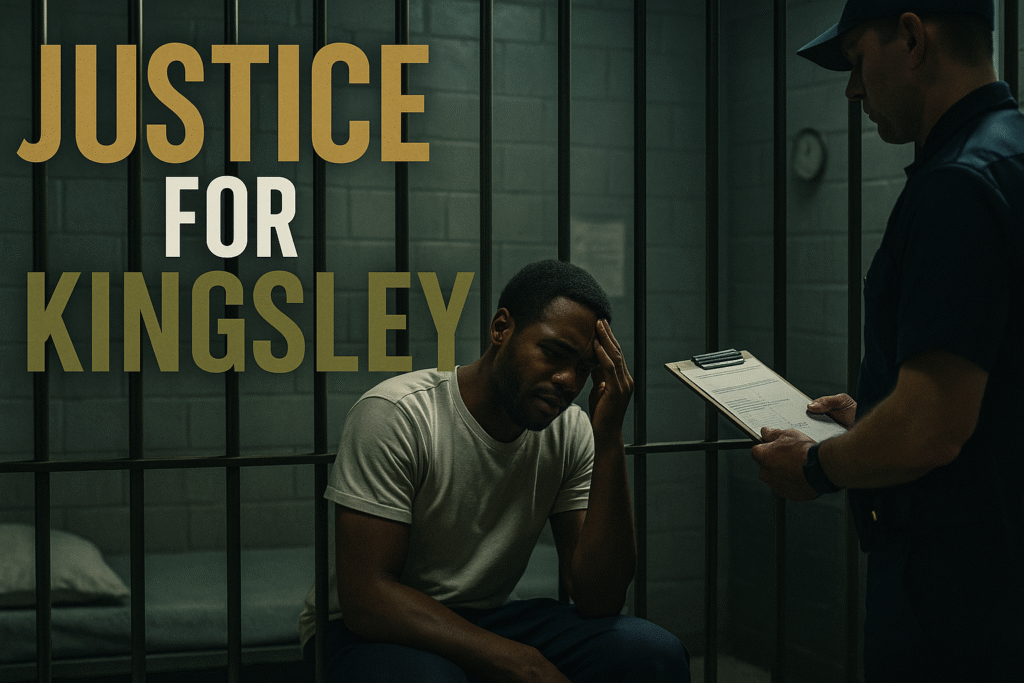
Kingsley Bimpong jail death wrongful-death lawsuit explained
The History Behind The Headlines
By Darius Spearman (africanelements)
Support African Elements at patreon.com/africanelements and hear recent news in a single playlist. Additionally, you can gain early access to ad-free video content.
INTRODUCTION: A life lost amid alleged indifference
Early reports say Kingsley Fifi Bimpong, a Black United States Postal Service worker, died after being jailed in Dakota County, Minnesota, where civil-rights lawyers allege that police and correctional staff ignored clear medical signs of a stroke. The family filed a federal wrongful-death complaint seeking $120 million and changes to local jail practices. In addition to being a legal case, the story has traveled fast across Black media and activist networks, raising familiar questions about how law enforcement and jail systems respond to medical emergencies affecting Black people.
Transitioning from the present moment to history, this story fits into a long pattern of alleged medical neglect in custody and racialized policing that has produced public mistrust. Therefore, the complaint is both a demand for compensation and a push for systemic reforms.
DETAILED ANALYSIS OF THE CURRENT NEWS STORY
According to the family’s federal complaint, the timeline began when Bimpong left work early with a headache and drove into oncoming traffic. Eagan officers pulled him over as he displayed confused behavior and failed to answer basic questions. The complaint alleges officers brought a drug recognition evaluator, who did not complete a full 12-step evaluation, and then took Bimpong into custody.
Traffic stop (Nov. 16) — Confusion observed
Officers stop Bimpong after he drives erratically. He is confused, cannot answer basic questions, and a drug recognition evaluator arrives.
Taken into custody — No hospital transport
Bimpong is taken for a blood draw and then to Dakota County Jail instead of immediate hospital evaluation.
Jail hours pass — Nurse enters after ~3h26m
Jail checks marked “OK” while the complaint alleges Bimpong struggles to walk, urinates on himself, and becomes nonresponsive.
Hospital care — CT shows hemorrhage
Toxicology reportedly negative. CT detects brain hemorrhage and swelling. Declared brain dead days later.
Once in custody, the complaint alleges a failure to recognize severe medical distress. Instead of being transported immediately to a hospital, he was taken to the Eagan Police Department for a blood draw and then to the Dakota County Jail. The suit claims officers and jail staff noticed confusion and physical instability but documented routine checks as “OK” while Bimpong declined. A nurse did not enter the cell for more than three hours. Medical intervention in the cell included three doses of naloxone (Narcan), which produced no response; later hospital toxicology reportedly showed negative results. Ultimately, hospital imaging found a hemorrhage and brain swelling; Bimpong was declared brain dead, taken off life support, and died days later.
Deliberate indifference
Legal standard alleging government actors knew of and disregarded an excessive risk to an individual’s health or safety. Used in prison and jail medical claims.
Naloxone (Narcan)
A medication that reverses opioid overdose. Multiple doses without response suggest a non-opioid cause of unresponsiveness.
Brain hemorrhage
Bleeding in the brain that can cause rapid decline. Immediate medical intervention is crucial to limit damage.
Legal claims in the complaint center on “deliberate indifference” to a serious medical need. The family asks a federal judge and jury to award $120 million and to require policy changes for how detention officers and police handle medical screenings and emergency responses. Meanwhile, the City of Eagan has released a statement through counsel saying officers did not observe an objectively serious medical condition at the time of custody, but Dakota County has declined comment because litigation is pending. (WCCO/CBS Minnesota)
HISTORICAL CONTEXT: Medical neglect, custody deaths, and racial disparities
Historically, deaths in custody have repeatedly raised civil-rights alarms. From the 20th century’s poorly supervised jails to the 21st century’s jail and police encounters, the pattern often involves claims that staff failed to recognize medical crises or deliberately delayed care. Such cases reflect institutional weaknesses: understaffing, inadequate training, and sometimes a tendency to criminalize medical and mental health emergencies.
For Black communities, these patterns carry an added layer. African Americans are more likely to experience aggressive policing, and they often distrust law enforcement because of long histories of unequal treatment. When a Black person in custody dies, the community recalls prior cases where signals were missed, or care was delayed. Therefore, the Bimpong case links to broader struggles for accountability and reform in policing and detention healthcare. That context helps explain why civil-rights groups and Black media networks have mobilized swiftly.
Transitioning further, civil rights legal strategies have long relied on federal court claims such as “deliberate indifference” under the Eighth and Fourteenth Amendments. These legal theories developed as responses to persistent harms in jails and prisons and remain a central remedy when state remedies appear insufficient. The current complaint follows that established path. (News From The States)
WHY THIS MATTERS TODAY: Trust, policy, and accountability
First, the human cost matters. A family lost a son, father, and relative. Second, the incident highlights the importance of addressing gaps in emergency response and training, as they can ultimately cost lives. The complaint alleges correctional staff lacked current CPR and first-aid certifications and failed to follow required mental-health screening and documentation procedures. Those claims have practical policy implications: routine compliance checks, mandatory prompt medical assessments, and clear protocols for transporting detainees to emergency rooms.
Priority policy goals
- Immediate medical transport protocol for confusion and neurological signs
- Mandatory up-to-date CPR/first-aid certifications for correctional staff
- Independent oversight and rapid-release of bodycam and incident reports
- Enhanced training on stroke recognition for law enforcement
Third, the case matters politically because it can shape how local governments fund jail healthcare, train officers, and evaluate use-of-force and custody policies. Civil-rights litigation can produce monetary penalties and injunctive relief that change behavior. Moreover, viral circulation in Black media ensures that community pressure accompanies legal action. Therefore, reform pressures come from both courtroom arguments and public scrutiny. Ultimately, this case could push Dakota County and similar jurisdictions to reexamine medical screening and response systems, particularly for communities of color. (KPTV)
IMPLICATIONS FOR THE AFRICAN DIASPORA COMMUNITY
From an African Diaspora perspective, this story highlights recurring vulnerabilities. Black men are overrepresented in the criminal legal system. Therefore, a preventive approach must account for unequal exposure to policing and detention. In addition to pursuing legal redress, community groups often demand transparency in investigations, better health care access in jails, and independent oversight. Advocates say those reforms reduce preventable deaths and rebuild trust between communities and public institutions.
Finally, community-based condolence and advocacy networks play a critical role. They help families navigate the legal system, keep the public informed, and press for immediate reforms. Social-media amplification across Black media ecosystems turns isolated incidents into collective campaigns for accountability and systemic change. (FOX8Live)
CONCLUSION: What to watch next
Watch for the formal court filing, any initial motions by defendants, and whether public agencies release additional internal documents or bodycam footage. Also track independent investigations or state inquiries that could run parallel to the federal suit. Meanwhile, community groups and civil-rights lawyers are likely to keep pressure on local officials to announce policy changes even while litigation proceeds.
In this moment, the Bimpong case combines a family’s grief with public demands for accountability and reform. The historical pattern of custody deaths and medical neglect gives this case urgency. Therefore, how the legal system, local government, and the community respond may shape policing and jail healthcare policies for years to come.
ABOUT THE AUTHOR
Darius Spearman has been a professor of Black Studies at San Diego City College since 2007. He is the author of several books, including Between The Color Lines: A History of African Americans on the California Frontier Through 1890. You can visit Darius online at africanelements.org.
