
Listen to this article
Download AudioEnvironmental Injustice: Our Communities at Risk
By Darius Spearman (africanelements)
Support African Elements at patreon.com/africanelements and hear recent news in a single playlist. Additionally, you can gain early access to ad-free video content.
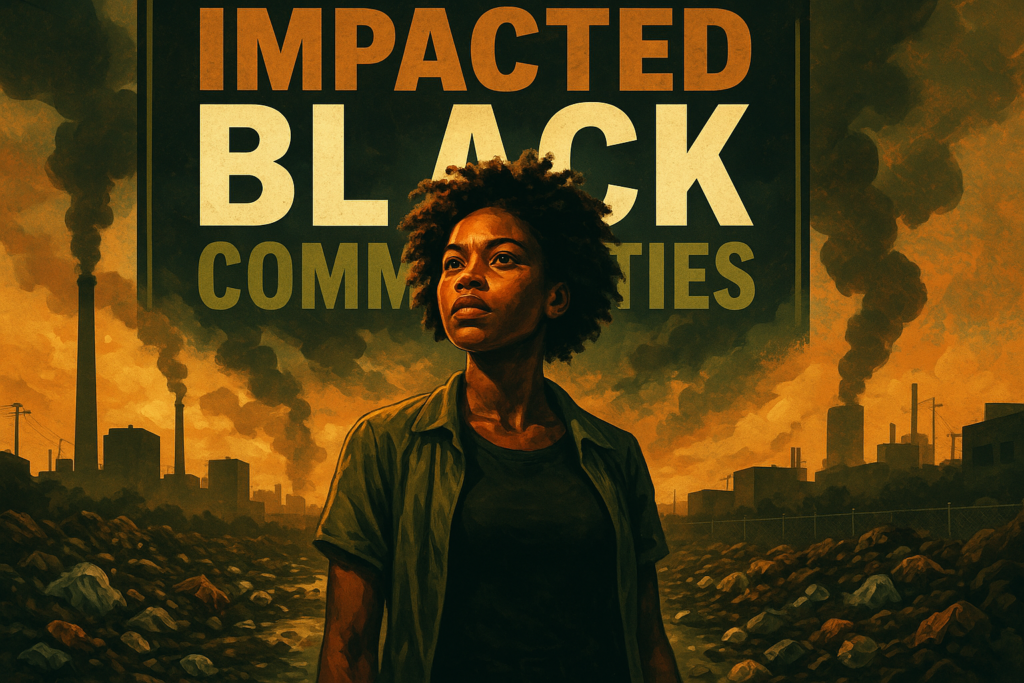
For too long, our Black communities have shouldered an unfair burden of pollution and environmental hazards. This isn’t by accident; it’s a direct result of policies and practices that have often overlooked our health and well-being. Environmental justice, in simple terms, means that everyone, no matter their race or income, deserves to live in a safe and healthy environment. It means our voices should be heard in decisions that affect our neighborhoods. Unfortunately, recent years have seen a troubling reversal of progress in this fight, putting our families at even greater risk.
Policy Rollbacks: A Step Back for Our Health
It’s a harsh reality that the Trump administration rolled back crucial environmental justice policies, and these changes have hit Black communities hard. Initiatives designed to lessen the disproportionate environmental burdens we face were dismantled (Earthjustice). These were programs aimed at reducing the higher levels of toxic pollution that many of our neighborhoods endure. Consequently, this has meant a direct hit to our collective health and safety.
Moreover, actions that once sought to address systemic racism within environmental policy were not just stopped but actively retracted. This has unfortunately led to an increase in health disparities, making existing inequalities even worse (CBCF Inc.). The fight for clean air, clean water, and healthy communities is a long one, and these rollbacks represent a significant setback. We must, therefore, remain vigilant and vocal about these impacts.
What is Environmental Justice?
Environmental Justice means that all people, regardless of their race, income, or background, have the right to live in safe and healthy environments. It also means they have a right to be fairly treated in environmental decisions.
This principle emphasizes that no community should suffer more pollution or environmental harm than others. Everyone should have an equal voice in decisions about their environment. It is about the fair distribution of environmental risks and benefits, meaningful participation in decision-making, and recognizing oppression affecting marginalized communities (Wikipedia).
Faster Energy, Higher Pollution Risks for Us
The push for expedited energy production and infrastructure projects brings new pollution risks right to our doorsteps. The Trump administration’s emphasis on rapid domestic energy expansion often meant cutting corners on environmental reviews (CBCF Inc.). These expedited reviews can significantly increase pollution in communities already overburdened by hazardous sites. Ultimately, this approach prioritizes speed over safety, and our communities often pay the price.
Many Black communities are historically and presently located near polluting industries. This proximity is not accidental but a legacy of discriminatory practices like redlining and biased zoning. Consequently, any increase in pollution from new or expanded energy projects disproportionately affects us, leading to more respiratory problems and other serious health issues (CBCF Inc.). The erasure of environmental data further endangers communities of color by obscuring these risks (Economic Policy Institute).
The Numbers Don’t Lie: Our Community Impact
Statistical data paints a clear picture of the disproportionate impact of pollution on Black communities. For instance, EJScreen, a tool from the EPA, uses data to show potential community-level exposure to harmful pollutants like PM 2.5. This data highlights an urgent need for environmental justice action in specific areas (Economic Policy Institute). PM 2.5 refers to tiny particles in the air that are 2.5 micrometers or smaller. Because they are so small, they can get deep into our lungs and even into our bloodstream, causing serious health problems.
These fine particles are linked to a host of health issues, including asthma, bronchitis, heart disease, lung cancer, and premature death. Unfortunately, historical policies that were once aimed at addressing environmental racism and protecting communities like ours have been dismantled (CLASP). This leaves many communities without adequate protection against ongoing and increasing pollution threats. Therefore, understanding these risks is the first step toward demanding change.
The Danger of PM2.5 Pollution
National Energy Emergency: A Threat to Our Future
When a national energy emergency is declared, it can accelerate energy production and infrastructure development. This might sound good on the surface, but it often means expedited environmental reviews and a potential increase in pollution for communities like ours (CBCF Inc.). Such declarations allow federal agencies to implement emergency measures, sometimes by relaxing regulations or fast-tracking projects that can have serious environmental consequences. In effect, our neighborhoods can become sacrifice zones for national energy demands.
This approach undermines progress toward a cleaner energy economy and true environmental justice. It also impacts our communities’ access to green jobs and sustainable solutions, which are vital for building a healthier future (CBCF Inc.). Green jobs in fields like renewable energy and energy efficiency not only protect the environment but also offer economic opportunities. Thus, policies that sideline these solutions also sideline our communities’ potential for sustainable growth.
EPA Silenced: Environmental Justice Offices Closed
The closure of regional environmental justice offices within the Environmental Protection Agency (EPA) is another serious blow. These offices were specifically established to address pollution in disadvantaged communities and ensure our concerns were heard (Earthjustice). Their closure diminishes vital support systems for communities already struggling with environmental hazards. Consequently, it becomes harder for us to seek redress and protection.
Many see this action as a dismissal of the very real environmental and health concerns that communities of color face daily (Earthjustice). These offices played key roles in enforcement, community engagement, and pollution monitoring. Without them, there’s less federal oversight and a weaker response to local pollution issues, leaving our communities more vulnerable than before. Indeed, the fight for justice requires strong institutions willing to listen and act.
Our Leaders Speak Out: The Fight Continues
Despite these setbacks, environmental justice leaders from our communities continue to raise their voices. Maria Lopez-Nuñez, a prominent environmental justice leader, has highlighted the alarming erasure of environmental concerns under administrations that deprioritize these issues (Earthjustice). Her perspective, shared by many, underscores the deep anxiety and frustration felt across our neighborhoods.
The dissolution of environmental initiatives and the rollback of protections are widely seen as a profound lack of regard for the health impacts on our communities (Earthjustice). However, Black-led organizations like the NAACP Environmental and Climate Justice Program and numerous grassroots groups are actively resisting. They engage in activism, legal challenges, and community education to demand cleaner environments. This ongoing advocacy is essential to reclaim lost ground and push for a more equitable future.
Decades of Progress Undone
Decades of Progress Undone: Reversing Protections
The actions taken by the Trump administration effectively reversed decades of hard-won progress in addressing environmental justice. Executive orders and policies that aimed to reduce pollution disparities were systematically dismantled (Earthjustice). One key example is Executive Order 12898, issued in 1994, which directed federal agencies to identify and address the disproportionately high adverse environmental impacts on minority and low-income populations. Its weakening has had profound implications.
This reversal disproportionately affects communities of color and low-income communities, who often bear the brunt of environmental hazards (Earthjustice). Within a short period, significant environmental protections were rolled back, including steps away from climate agreements and the suspension of plans to cut carbon emissions (Mother Jones). These changes have removed crucial safeguards, thereby increasing our exposure to pollution and stalling progress towards a healthier environment for all.
Understanding Environmental Racism’s Legacy
It’s critical to understand that the challenges we face are rooted in environmental racism. This term describes policies and practices that disproportionately expose communities of color, especially Black communities, to environmental hazards. These aren’t isolated incidents; they are part of a systemic pattern involving toxic waste sites, polluting industries, and other hazardous facilities being placed near our homes. This happens due to historical factors like redlining, discriminatory zoning, and a lack of political power to resist such placements (Wikipedia).
For generations, practices like redlining pushed Black families into less desirable areas, often adjacent to industrial zones. Polluting industries such as chemical plants, landfills, refineries, and power plants became our neighbors. This has resulted in higher rates of asthma, respiratory illnesses, and other severe health conditions in our communities (University of Michigan CSS). Acknowledging this history is essential because it helps us fight for a future where a person’s race does not determine their access to a healthy environment.
The fight for environmental justice is a fight for our lives, our children’s futures, and the soul of our nation. It requires constant vigilance, community organizing, and unwavering demand for policies that protect every community equally. While recent setbacks are disheartening, they also fuel our resolve. Together, we must continue to advocate for strong environmental protections, hold polluters accountable, and ensure that our voices are central to decision-making processes. Our health and our planet depend on it.
ABOUT THE AUTHOR
Darius Spearman is a professor of Black Studies at San Diego City College, where he has been teaching since 2007. He is the author of several books, including Between The Color Lines: A History of African Americans on the California Frontier Through 1890. You can visit Darius online at africanelements.org.
