
Listen & Share
California Sues Trump: National Guard Deployment Unrest
By Darius Spearman (africanelements)
Support African Elements at patreon.com/africanelements and hear recent news in a single playlist. Additionally, you can gain early access to ad-free video content.
Defending State Sovereignty
California is courageously taking a stand against the Trump administration. The Golden State has filed a lawsuit concerning the deployment of the National Guard to the streets of Los Angeles. State Attorney General Rob Bonta asserts that President Trump moved without consulting Governor Gavin Newsom, labeling this action an illegal and unconstitutional intrusion on state authority (CBS News). This bold legal challenge signifies a significant conflict between state and federal powers during a time of heightened social unrest.
Governor Newsom emphasized that the National Guard was not needed in Los Angeles. He believes Trump’s actions are illegal and morally wrong (CBS News). Historically, the relationship between states and the federal government regarding domestic deployments has been carefully balanced. This particular deployment stems from ongoing protests against immigration raids, which have rocked Los Angeles for four days (Democracy Now!). Furthermore, the Trump administration has sent a substantial federal force to the area, including 700 marines and 2,000 National Guard members (Democracy Now!). This significant presence has amplified concerns about federal overreach and the role of military forces in civilian affairs, particularly within diverse urban environments.
Federal Troop Deployment in Los Angeles
Legal Foundations of the Challenge
The lawsuit claims that President Trump’s action violates federal law as well as the 10th Amendment of the United States Constitution. This amendment safeguards state sovereignty and rights (Politico). Attorney General Bonta and Governor Newsom argue that the deployment intensifies unrest and weakens California’s authority over its own National Guard (Politico). The 10th Amendment is a cornerstone of federalism, ensuring that powers not explicitly given to the federal government are retained by the states or the people. This was a critical demand of the Anti-Federalists during the Constitution’s ratification to prevent an overly strong central authority (Cornell Law School).
Legal scholars and originalists often view the 10th Amendment as a buttress for limited federal authority and robust state sovereignty (U.S. Constitution.net). Governor Newsom clearly states that Trump failed to coordinate with him, a step legally required for such deployments. This lack of coordination forms a central point of California’s legal argument (Politico). When the National Guard is deployed under state control, particularly under Title 32 of the U.S. Code, state governors retain significant power. Conversely, deployments under Title 10 shift control to the federal government, but even then, coordination with state leaders is generally expected to avoid friction and uphold principles of cooperative federalism. Deviations from these established protocols can trigger significant constitutional challenges regarding a state’s fundamental sovereignty.
Understanding the 10th Amendment
The 10th Amendment to the United States Constitution is a cornerstone of American federalism. It declares that any powers not specifically given to the federal government, nor forbidden to the states, are reserved for the states themselves or for the people.
This amendment safeguards the principle of state sovereignty. It was included to assure those who feared a strong central government that individual state powers would remain protected. It limits federal overreach and reinforces the balance of power between the states and the national government.
- Protects State Sovereignty: Ensures states retain powers not delegated to the federal government.
- Limits Federal Authority: Prevents the federal government from assuming powers not granted by the Constitution.
- Reinforces Federalism: Upholds a system where power is divided between national and state governments.
Concerns of Federal Overreach
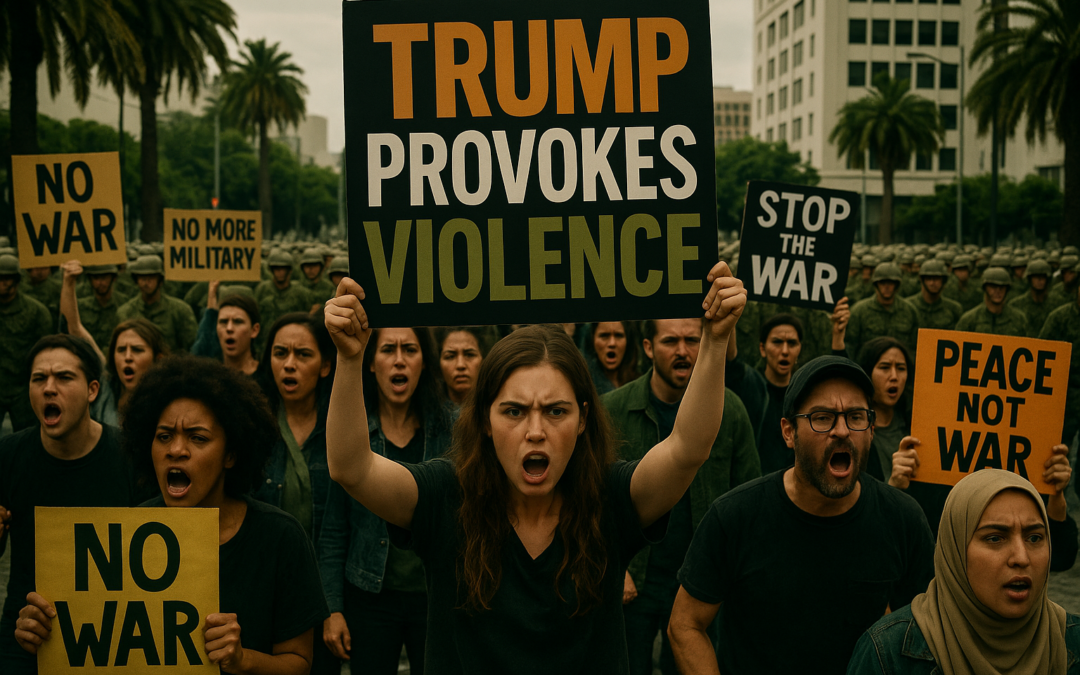
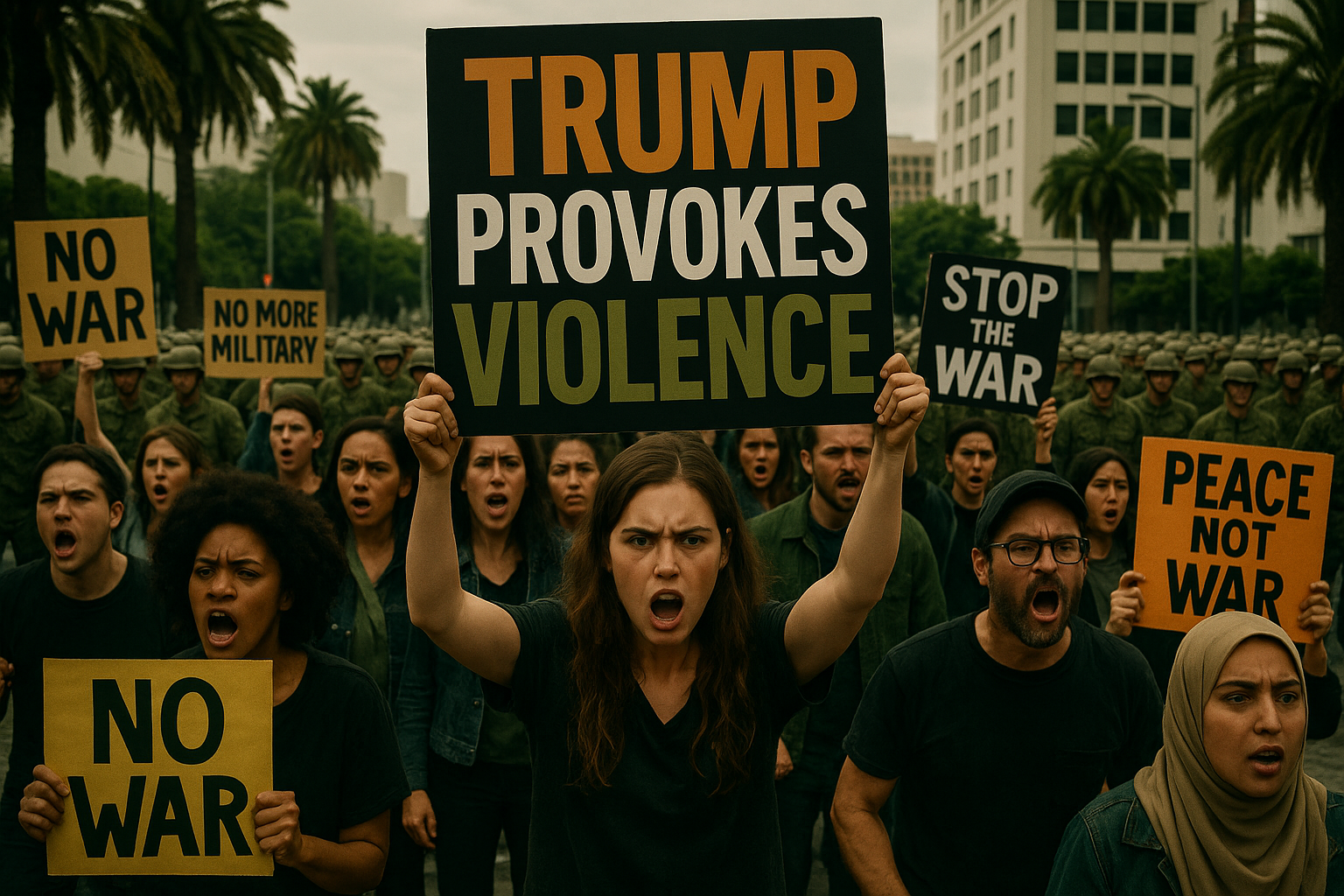
Attorney General Bonta has voiced serious concerns that President Trump’s actions could provoke violence (Democracy Now!). He suggests that the President intends to exploit civil unrest for political advantage. This perspective highlights a deeper worry about the motivations behind federal interventions that appear to bypass established governmental protocols. The description of this deployment as an “unprecedented power grab” indicates a belief that the federal government is significantly expanding its authority beyond prior justification or legal precedent (CBS News). Such language is often used when federal actions are perceived as overstepping constitutional boundaries or historical practices, recalling past federal-state confrontations.
The deployment of marines, in addition to National Guard members, raises distinct considerations. Marines are active-duty military personnel and are subject to the Posse Comitatus Act. This law restricts their use in domestic law enforcement, making their presence in such roles particularly contentious. Deploying marines can symbolize a form of militarized law enforcement, which prompts concerns regarding excessive force and civil liberties. The Act aims to prevent the military from performing civilian police duties, a concern that is amplified when these forces are sent into communities protesting government actions. In this tense climate, the perceived militarization of local issues can unintentionally, or intentionally, escalate tensions rather than de-escalate them.
California’s Stance Against Federal Policy
This lawsuit marks the 24th time California has pursued legal action against the Trump administration’s policies, highlighting a persistent pattern of legal confrontation over state sovereignty and federal authority.
Militarization and Community Impact
The decision to deploy military forces during civilian protests carries significant implications for local communities, especially those with large immigrant and African American populations. The protests in Los Angeles specifically target immigration raids. Such raids often lead to arrests and detentions, causing family separation and economic disruption for affected communities. Following these actions, community tensions and fear often increase, particularly in areas with strong social ties to immigrant populations. When military-like forces such as National Guard troops or marines are added, community tensions can heighten considerably. This situation is particularly sensitive in neighborhoods that have historically experienced disproportionate policing and militarization. The sight of armed forces, even if ostensibly present for maintaining order, can be perceived as an intimidating act against the very people whose concerns sparked the protest, rather than a measure for public safety.
For African American residents, the presence of uniformed military personnel on city streets in response to protests resonates deeply with historical experiences. Past events like the 1965 Selma Marches illustrate a long-standing tension between militarized responses and civil rights movements. There is a valid concern that such deployments exacerbate racial disparities within law enforcement, a pattern observed in actions in places like Ferguson and Baltimore. Consequently, the deployment of federal troops, even in the context of immigration-related demonstrations, can intensify mistrust and evoke memories for Black residents of historical struggles against state-sanctioned violence and surveillance. Attorney General Rob Bonta warns that President Trump’s actions might provoke violence, suggesting he seeks to exploit conflict for political gain (Democracy Now!). This strategy can involve polarizing issues like immigration or law enforcement to mobilize voter bases and can have significant implications for social justice by exacerbating tensions and reinforcing systemic inequalities. Therefore, the legal challenge mounted by California holds the potential to establish important precedents, influencing how states respond to federal actions perceived as targeting or disproportionately affecting marginalized groups through overstepping state autonomy.
An Ongoing Legal Confrontation
The lawsuit over the National Guard deployment represents a continuation of California’s persistent legal confrontation with the Trump administration. This legal challenge is the 24th lawsuit filed by California against this administration, signaling a clear and consistent pattern of legal disputes (CalMatters). Attorney General Bonta’s office actively pursues multiple legal actions against Trump’s policies (Democracy Now!). This reflects a broader legal battle centered on state sovereignty and federal authority. Historically, California has engaged in numerous lawsuits against the federal government on various critical issues, including environmental protection, voting rights, and immigration enforcement.
Many of these past lawsuits have consistently aimed to protect California’s distinct state interests and policies from perceived federal overreach. These challenges frequently argue that federal actions infringe upon state autonomy or violate fundamental constitutional protections. By consistently challenging actions such as this deployment, California seeks to solidify its position as a sovereign entity capable of managing its internal affairs without undue federal interference. The outcomes of these extensive legal confrontations will undoubtedly shape the future of federal-state relations and specifically influence how states can protect their residents, including marginalized communities, from potentially adverse federal policies. This ongoing legal saga emphasizes the enduring tension between centralized power and the rights reserved for the individual states.
ABOUT THE AUTHOR
Darius Spearman has been a professor of Black Studies at San Diego City College since 2007. He is the author of several books, including Between The Color Lines: A History of African Americans on the California Frontier Through 1890. You can visit Darius online at africanelements.org.
