
Listen to this article
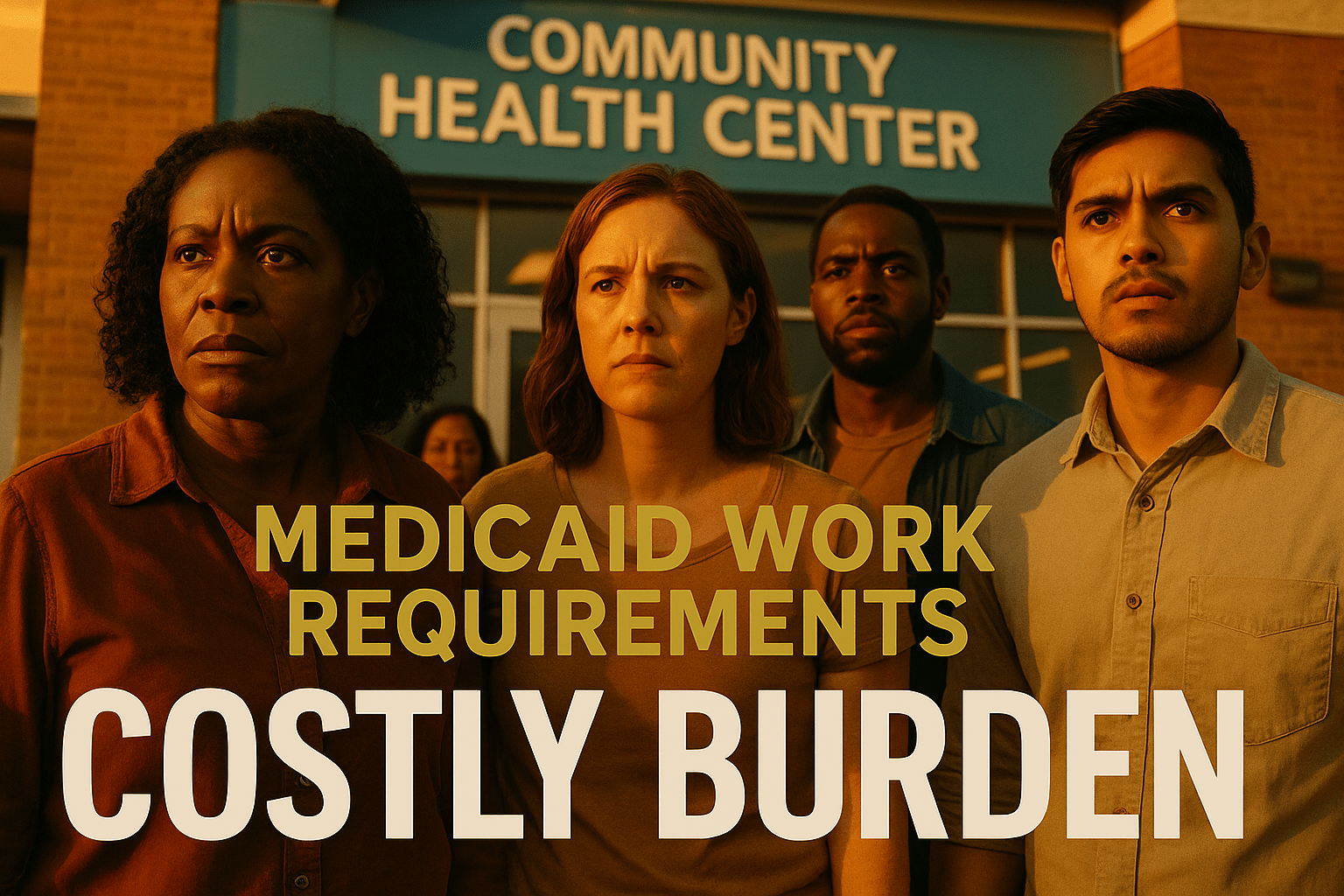
Download AudioMedicaid Work Requirements: A Costly Burden
By Darius Spearman (africanelements)
Support African Elements at patreon.com/africanelements and hear recent news in a single playlist. Additionally, you can gain early access to ad-free video content.
Medicaid Work Requirements: A Costly Burden
Medicaid, a vital program providing health insurance to low-income families and individuals, faces significant challenges from proposed work requirements. These requirements are projected to cause millions of Americans to lose their health coverage (The Conversation). For communities of color, including those in the African Diaspora, these changes could worsen existing health disparities and economic struggles. The Congressional Budget Office estimates that 7.8 million Americans would lose Medicaid coverage under the “One Big Beautiful Bill Act” (The Conversation). A House spending bill, if passed, could push an estimated 4.8 million Americans into being uninsured (The Conversation). These are not just numbers; they represent families, neighbors, and community members who would lose access to essential care.
In Michigan, a state with a significant Black population, 100,000 residents were expected to lose coverage in the first year if work requirements had gone into effect (Commonwealth Fund). This demonstrates the immediate and widespread impact such policies can have. The proposed reintroduction and expansion of Medicaid work requirements are empirically proven to lead to substantial coverage losses (CTeL.org). They disproportionately burden vulnerable populations, including many who are already struggling to make ends meet. This approach undermines the very purpose of Medicaid, which is to provide a safety net for those who need it most.
The Cost of Medicaid Work Requirements
Implementing Medicaid work requirements is costly and complicated, often leading people to lose health insurance even if they are employed, seeking work, or unable to work (Commonwealth Fund). Michigan’s experience provides a clear example of this financial burden. The state’s attempt to implement these requirements would have cost over $70 million (Commonwealth Fund). This money would have been spent on software upgrades, staff training, and outreach efforts, rather than on direct healthcare services. The state ultimately eliminated work requirements from its statutes due to these high implementation costs and mounting evidence against their effectiveness.
The administrative complexity of these requirements creates significant hurdles for both states and beneficiaries. States with older eligibility systems or less integration across health and human services programs may find data matching less effective (Center on Budget and Policy Priorities). This inefficiency can increase administrative burdens and costs for states. Furthermore, the need for effective Medicaid managed care engagement in work requirements and community engagement initiatives adds additional administrative and financial considerations for states and managed care organizations (Health Management). These costs divert resources that could otherwise be used to improve healthcare access and quality for Medicaid recipients.
No Boost to Jobs
Despite claims that work requirements encourage employment, there is no evidence that they boost employment for Medicaid recipients (The Conversation). Instead, these requirements primarily function as a mechanism for disenrollment (CTeL.org). When Arkansas instituted Medicaid work requirements in 2018, there was no increase in employment (The Conversation). Instead, thousands lost coverage due to paperwork and red tape (The Conversation). This outcome highlights a critical flaw in the policy’s design.
The history of work requirements shows that the risk of losing coverage often comes not from failing to work, but from an inability to navigate complex monthly work reporting rules (George Washington University). Difficulties in documenting exemption eligibility and frequent work or layoff cycles also complicate constant eligibility updates (George Washington University). The proposed reconciliation bill would require states to deny coverage to new Medicaid applicants not already working at least 80 hours per month (Center on Budget and Policy Priorities). It would also terminate coverage for current enrollees who cannot document meeting these requirements (Center on Budget and Policy Priorities). This creates a system where administrative burden, rather than employment status, dictates access to healthcare.
Medicaid: A Lifeline for Workers
Medicaid provides crucial health coverage for low-wage workers, many of whom lack access to employer-sponsored insurance (The Washington Post). Access to Medicaid actually promotes work because healthier people are better and more reliable workers (The Washington Post). Many jobs do not come with health insurance; about a quarter of all employees and half of low-income employees are not eligible for employer-sponsored health insurance (The Washington Post). For many workers, especially those in our communities striving for economic stability, Medicaid is the only way to access health care (The Washington Post).
The expansion of Medicaid eligibility and subsidies in health insurance marketplaces has significantly reduced the uninsured rate for blue-collar workers. Research indicates that blue-collar workers have gained health insurance coverage, cutting the uninsured rate by a third, thanks to Medicaid expansion and marketplace subsidies. This increased coverage enables low-income workers to see doctors regularly, receive preventive care, and fill their prescriptions. Premiums and cost-sharing in Medicaid are significantly lower compared to employer-sponsored insurance, making it a more realistic and accessible option for low-income workers. Furthermore, Medicaid is not tied directly to employment, promoting job mobility by allowing workers to maintain coverage between jobs without bureaucratic complexity.
The Employer-Based System’s Flaws
The current employer-based health insurance system leaves many working Americans uninsured, particularly low-wage workers. Nearly half of Americans get their health insurance through their employers, but this system leaves huge swaths of the population uninsured. Tens of millions of working Americans, especially low-income workers, are unable to get health insurance through their employers. While over 80 percent of managers and professionals have employer-sponsored health coverage, only 50 percent to 70 percent of blue-collar workers in service, farming, construction, manufacturing, and transportation jobs have it.
Employer-sponsored insurance often has limitations that disproportionately affect low-wage workers. Employers can incorporate a waiting period of up to 90 days before health coverage begins. Legal requirements for employer-provided health insurance often apply only to full-time workers, leaving out seasonal, temporary, part-time, and gig workers. Even if offered, low-wage workers may forego employer-sponsored insurance due to high premiums and deductibles. Layoffs are more common among low-wage workers, which limits their health insurance options during job transitions. The “fissuring of the workplace” enables employers to shed low-wage staff and outsource work, providing generous benefits to high-income employees while leaving low-wage contractors without similar commitments.
Projected Medicaid Coverage Losses
How Work Requirements Really Work
Medicaid work requirements typically require beneficiaries to engage in a certain number of hours of work or work-related activities per month to maintain their coverage. The practical implementation involves complex reporting rules, documentation requirements, and often, an inability to navigate these processes, leading to coverage loss. States may use data matching to assess compliance. Still, older eligibility systems or less integrated health and human services programs can make this less effective (Center on Budget and Policy Priorities).
The proposed reconciliation bill would require states to deny coverage to new Medicaid applicants not already working (or participating in another qualifying activity) at least 80 hours per month (Center on Budget and Policy Priorities). It would also terminate coverage for current enrollees who cannot document meeting these requirements (Center on Budget and Policy Priorities). Many individuals, including those with disabilities, lost coverage in Arkansas due to a broken exemption process (National Health Law Program). This highlights that the complexity of these requirements can be intentional, serving as a barrier to access rather than a pathway to employment.
The Consequences of Losing Coverage
When individuals lose Medicaid coverage due to work requirements, they face significant consequences, including loss of access to essential healthcare services. This can lead to increased medical debt, delayed or forgone care, and worsening health outcomes, particularly for vulnerable populations who rely on Medicaid as their primary source of healthcare. A federal Medicaid work requirement could put 36 million working-age adult Medicaid beneficiaries at risk of losing coverage (George Washington University). Experts estimate that about one-quarter of Medicaid enrollees will actually lose coverage (George Washington University).
Community health centers (CHCs) also face severe impacts. Nearly 5.6 million CHC patients could lose Medicaid coverage under new work requirements (Commonwealth Fund). This loss of coverage for CHC patients could lead to revenue losses for CHCs of up to $32 billion (Commonwealth Fund). CHCs are the largest source of comprehensive primary health care for people with low incomes, serving over 31 million people in 2023 (Commonwealth Fund). They are often the only source of healthcare in a community, especially in underserved areas where many Black and brown families reside. The bill’s work requirements would also penalize older adults who can no longer work as they once did but have not yet become eligible for Medicare (National Health Law Program).
Impact on Community Health Centers (CHCs)
Exemptions: A Broken Promise?
While there are typically exemptions for certain vulnerable populations from Medicaid work requirements, the effectiveness of these exemptions can be limited by complex and broken processes. Exemptions may exist for individuals with disabilities, those with chronic diseases, and potentially caregivers, but navigating the documentation and reporting can still lead to coverage loss (Health Management). Many, but not all, individuals with chronic diseases may be exempt from the requirements (Health Management). Knowing the health status and chronic conditions of affected populations is crucial for addressing implementation questions, such as the definition of “medically frail.”
In Arkansas, many people with disabilities or other serious health issues still lost coverage because the exemption process was so broken (National Health Law Program). This suggests that even with exemptions, the system can fail to protect those it is intended to safeguard. The proposed bill’s work requirements would be worse than Arkansas’s, suggesting that protections for vulnerable populations may be even weaker (National Health Law Program). The higher estimate of people at risk of losing coverage assumes that states will automatically exempt parents from the requirements (Center on Budget and Policy Priorities). This indicates that some groups may have automatic exemptions, but the overall trend points to significant challenges for those who need them most.
Economic Strain on States and Providers
The economic impacts of Medicaid work requirements on states and providers are substantial. States face challenges in implementing and managing complex eligibility systems (Center on Budget and Policy Priorities). Providers, particularly community health centers, stand to lose significant revenue due to patient coverage losses (Commonwealth Fund). This can strain state budgets and impact the financial viability of healthcare providers serving low-income populations, many of whom are in Black and brown communities.
Community health centers could face revenue losses of up to $32 billion due to patients losing Medicaid coverage under new work requirements (Commonwealth Fund). The complexity of the exemption process, as seen in Arkansas, suggests that states may incur significant administrative costs in managing these requirements (National Health Law Program). These costs arise even if the requirements are ultimately ineffective in maintaining coverage for vulnerable populations. The financial burden extends beyond direct implementation costs, affecting the entire healthcare ecosystem that serves our most vulnerable citizens.
Employer-Sponsored Insurance Coverage Gaps
Managers & Professionals
Percentage with employer-sponsored health coverage.
Blue-Collar Workers
Percentage with employer-sponsored health coverage in service, farming, construction, manufacturing, and transportation jobs.
Medicaid’s Evolving Role
Medicaid has evolved to fill critical gaps in the U.S. healthcare system, particularly for low-income workers. For the majority of its history, Medicaid has not linked eligibility to employment status (CTeL.org). Medicaid originated as a welfare program in the 1960s but has evolved to meet the needs of a country where the healthcare system leaves many individuals uninsured. This adaptation is crucial for communities that have historically faced barriers to accessing healthcare and achieving economic stability.
Medicaid’s success in covering low-income workers and containing per-enrollee costs suggests its potential as a broader foundation for health coverage. While Medicaid has its shortcomings, such as low payment rates to providers and limited access to doctors in some areas, these weaknesses stem largely from underfunding and political hostility. They do not come from any intrinsic flaw in the program’s model. The program has quietly stepped into the breach left by employer-sponsored insurance, becoming an indispensable part of the nation’s health safety net. A more public, universal model could better cover Americans regardless of how someone earns a living, ensuring that health is a right, not a privilege tied to employment status.
ABOUT THE AUTHOR
Darius Spearman has been a professor of Black Studies at San Diego City College since 2007. He is the author of several books, including Between The Color Lines: A History of African Americans on the California Frontier Through 1890. You can visit Darius online at africanelements.org.
