

Will the Ghanaian Reparations Movement Gateway Initiative Succeed?
By Darius Spearman (africanelements)
Support African Elements at patreon.com/africanelements and hear recent news in a single playlist. Additionally, you can gain early access to ad-free video content.
A Landmark Shift in Global Justice
On March 25, 2026, the world witnessed a change that many thought would never come. The United Nations General Assembly passed a historic resolution. This document officially labels the Transatlantic Slave Trade as the “gravest crime against humanity.” This is more than a symbolic statement. It provides a new legal foundation for people across the African diaspora. This designation removes the old argument that slavery was legal under the laws of the past. (un.org)
Ghana led the charge for this resolution. The nation has emerged as a diplomatic powerhouse for reparatory justice. Today, the Ghanaian leadership is trending because of its “Gateway” initiative. This program links the demand for money with the physical right of return. It offers a path for African Americans and Afro-Caribbeans to reclaim their ancestral home. This movement is gaining speed as more people look for a sense of belonging and justice. (guardian.co.tt)
UN General Assembly Vote (March 25, 2026)
The Gateway Initiative and the 17th Region
Ghana is doing something very different from other nations. It has created an administrative structure for the diaspora. This is known as the “17th Region.” Ghana is physically divided into 16 regions. By calling the diaspora the 17th, the government acknowledges millions of people abroad as part of the nation. This is not just a title. It is a promise to include the diaspora in the future of the country. (guardian.co.tt)
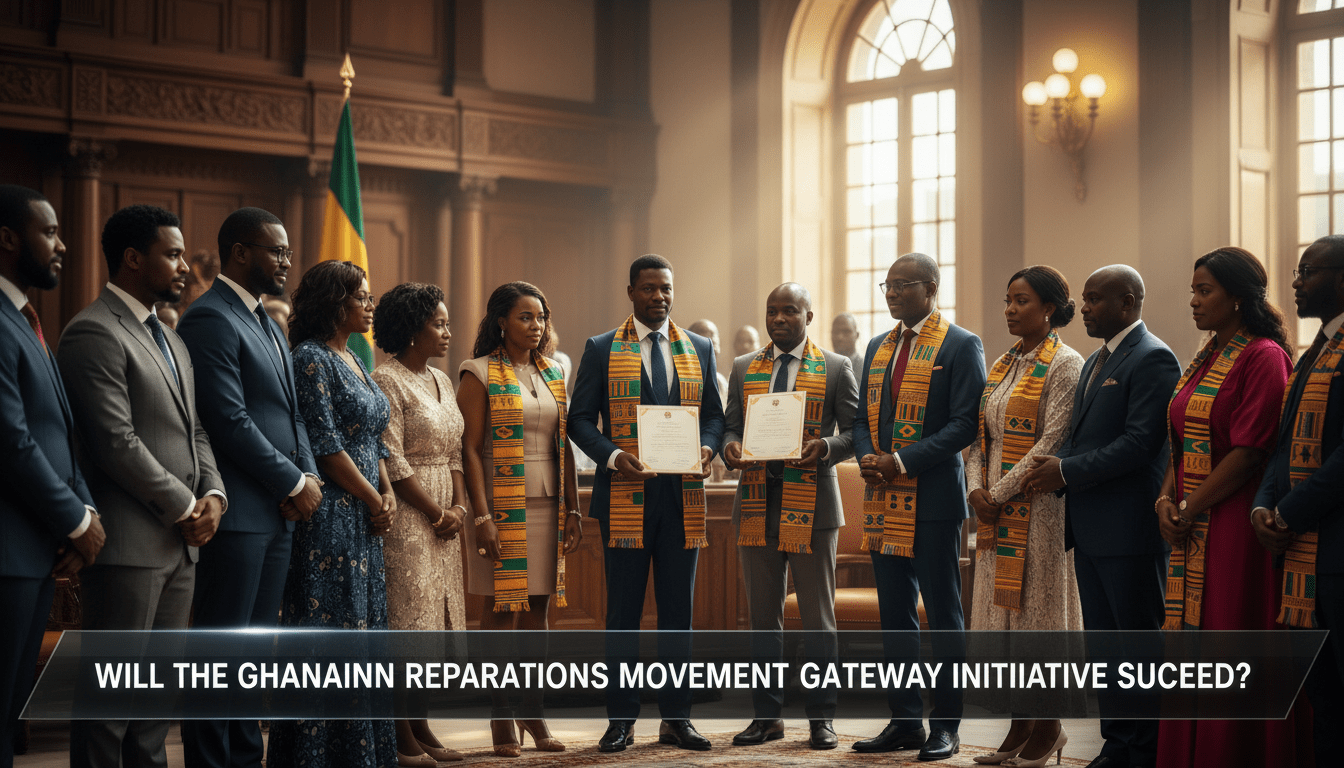
The Gateway initiative makes this connection legal. In March 2026, Ghana granted citizenship to 150 members of the diaspora. This follows a larger drive where over 500 people received citizenship in late 2024. The program is part of a broader reparations commission effort on a global scale. It argues that the true repair for slavery is the restoration of land and nationality. Ghana sees this as a moral duty to those whose ancestors were stolen. (guardian.co.tt, ksat.com)
Historical Roots of the Ghanaian Movement
The current push for reparations has deep roots. It goes back to Kwame Nkrumah, the first president of Ghana. He called Ghana the “Black Star” of Africa. He wanted the nation to be a sanctuary for all black people. Nkrumah believed that a unified Africa was the only way to achieve true freedom. This vision of the “Right of Return” became a core part of the national identity. (guardian.co.tt)
Other major milestones helped build this momentum. In 1993, the Abuja Proclamation first demanded reparations from former colonial powers. Then, the 2001 Durban Conference forced the world to talk about racism as a global problem. More recently, the 2019 “Year of Return” changed how people see tourism. It focused on “identity restoration” rather than just visiting sites. These events laid the groundwork for the legal surge seen today. (un.org)
Caribbean Nations Demand Restitution
The Caribbean region is also taking bold steps. Following the UN resolution, nations in CARICOM are preparing massive legal claims. CARICOM is a group of 15 Caribbean nations that work together. They have a 10-point plan for reparatory justice. This plan includes things like debt cancellation and public health support. The “gravest crime” designation is the legal anchor they have waited for. (jamaica-gleaner.com)
Jamaica is at the center of this legal battle. Experts there are preparing a petition to King Charles III. They are using the concept of jus cogens to argue their case. This means that some laws are so fundamental that they can never be broken. The lawyers argue that the laws allowing slavery were always invalid. This is part of a larger quest for reparations that spans many countries. (jamaica-gleaner.com)
The Price of Stolen Labor
Estimated Reparatory Debt Owed by Enslaving Nations
The Massive Economic Debt Owed
The numbers involved in these claims are difficult to imagine. A 2023 report by the Brattle Group put a price tag on the slave trade. They estimate the total debt is between $108 trillion and $131 trillion. This figure accounts for centuries of stolen labor and lost lives. It also considers the wealth that colonizing nations built using that labor. The United Kingdom alone is responsible for about $24 trillion of that debt. (guardian.co.tt)
Jamaica is entitled to $9.5 trillion according to these calculations. These funds would not just be checks to individuals. Instead, they would go into a Reparatory Justice Fund. This money would build hospitals, schools, and modern infrastructure. It would address the “developmental gap” caused by colonialism. This massive debt is a major reason why some nations resist the movement so strongly. (guardian.co.tt, jamaica-gleaner.com)
Global Opposition and Political Realities
The path to reparations faces strong resistance. In the UN vote, three nations voted against the resolution. These were the United States, Israel, and Argentina. The United States argues that reparations should be a domestic issue. The current administration under President Donald Trump believes the UN should not set these rules. There is a fear of “unlimited liability” for actions that happened centuries ago. (un.org)
Other nations, like the United Kingdom, chose to abstain. They did not vote yes or no. This shows a hesitation to accept a legal obligation for the past. Many of these nations argue that they should not be held liable for what their ancestors did. However, proponents argue that the wealth of these nations still comes from that period. They believe the debt must be paid to achieve true global equality. (un.org)
Restoring Identity and Healing Trauma
Reparations are about more than just money. They are about “identity restoration.” For many in the diaspora, the slave trade caused a “Great Disconnection.” They lost their names, languages, and cultures. Ghana’s Gateway initiative includes programs to help people find their roots. This includes naming ceremonies where people receive traditional African names. This helps replace the “slave names” passed down through history. (ksat.com)
This process also involves healing historical trauma. Sites like the Cape Coast slave dungeons are now places of reflection. The movement also demands the return of looted artifacts. The UN resolution calls for the prompt return of national archives and spiritual items. Caribbean nations are also asking for their history back from European museums. This is a vital part of repairing the psychological damage of white supremacy. (jamaica-gleaner.com, un.org)
The Legal Power of Peremptory Norms
The current legal surge relies on a concept called jus cogens. These are fundamental principles of international law. They are so strong that no state can ignore them. They include the prohibition of genocide and slavery. Because slavery is a “crime against all,” it has no statute of limitations. This means a country can be held responsible even if the crime happened a long time ago. (jamaica-gleaner.com)
This legal theory is what makes the 2026 resolution so powerful. It removes the “it was legal then” defense. If slavery was a violation of jus cogens, then it was never truly legal. This gives Caribbean nations a stronger hand in court. It also forces the world to look at the slave trade through a modern legal lens. This is a major change from how these cases were handled in the past. (jamaica-gleaner.com)
Practical Barriers to the Right of Return
While the idea of returning home is powerful, there are many hurdles. Moving to a new country is expensive. The cost of living in major African hubs like Accra is high. Many people in the diaspora find that local salaries do not match what they earn in the US or Europe. There are also problems with infrastructure. Access to consistent electricity and water can be a challenge in some areas. (ksat.com)
Property rights are another major issue. There have been many cases of land litigation. This happens when a person buys land only to find the title is not clear. Sometimes, diaspora members are charged “diaspora prices” that are much higher than the market value. Also, getting full citizenship can still take years of paperwork. These barriers show that the moral right to return is easier to state than to achieve. (ksat.com)
The Road Ahead for Reparations
The movement for reparations is at a turning point. The 2026 UN resolution has opened doors that were closed for centuries. Ghana’s leadership and the Caribbean’s legal actions are working together. This is a global effort to address the “definitive break in world history” caused by slavery. It is a long journey that began long before the Reconstruction failed to bring justice in the United States. (guardian.co.tt, un.org)
Today, the diaspora is more connected than ever. The internet and new laws are making it possible to demand justice as a united front. While there are still many challenges, the momentum is undeniable. The “History Behind the Headlines” shows that this is not a passing trend. It is the result of a century-long quest for truth and repair. The world is finally listening to the call for justice that has been ringing for generations. (guardian.co.tt)
About the Author
Darius Spearman is a professor of Black Studies at San Diego City College, where he has been teaching for over 20 years. He is the founder of African Elements, a media platform dedicated to providing educational resources on the history and culture of the African diaspora. Through his work, Spearman aims to empower and educate by bringing historical context to contemporary issues affecting the Black community.
