

Mexico’s Hidden Racism: The UN Call on Black Migrant Abuse
By Darius Spearman (africanelements)
Support African Elements at patreon.com/africanelements and hear recent news in a single playlist. Additionally, you can gain early access to ad-free video content.
The United Nations Steps In
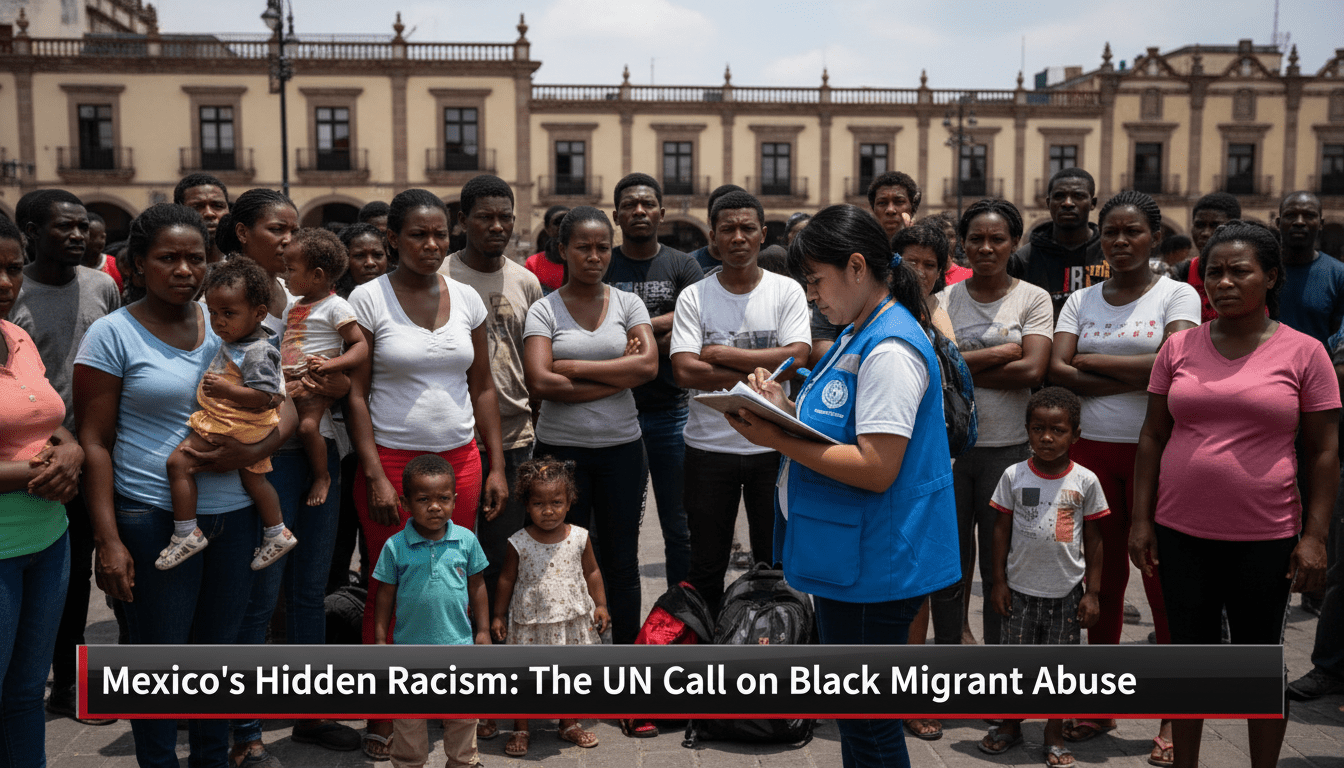
The United Nations issued an urgent appeal for evidence. They want to expose racial discrimination in Mexico. This action targets the harsh treatment of Black migrants. An official investigation team will arrive soon. The visit is scheduled for May of 2026. The world is closely watching these regional developments. The United Nations Working Group of Experts on People of African Descent leads this mission. This group investigates human rights violations globally. They do not have power to enforce laws directly. However, they hold significant influence over international policy. The experts gather vital data on systemic racial issues. They aim to protect vulnerable populations from state abuse. Their work focuses on the International Decade for People of African Descent. This decade pushes nations to dismantle systemic racism. Mexico recently made promises to improve human rights. The experts want to see if these promises are real. (ohchr.org).
The upcoming mission serves as a critical audit. Civil rights groups are currently submitting extensive documentation. They hope the final report forces structural changes. Activists emphasize that international pressure is absolutely necessary. Government officials frequently ignore domestic complaints regarding racism. An independent global authority brings undeniable validity to these claims. The world must confront the reality of anti-Black violence globally. This investigation could set an important legal precedent. (un.org).
A Century of Invisibility
Mexico has a long history of anti-Black discrimination. This history begins with the transatlantic slave trade. Spanish colonizers brought thousands of enslaved Africans to Mexico. The numbers reached up to two hundred fifty thousand. They arrived mostly through ports in Veracruz and Acapulco. These individuals built much of the early colonial economy. They worked in dangerous silver mines and sugar plantations. Despite their massive contributions, society treated them brutally. The colonial system established a strict racial hierarchy. Light skin meant power, while dark skin meant servitude. (unam.mx).
After gaining independence, the Mexican government changed its story. Leaders promoted an ideology known as mestizaje. This concept celebrated a mixed national identity. It claimed the nation was only Spanish and Indigenous. The state deliberately erased African heritage from public memory. This historical erasure lasted for nearly two centuries. This false narrative created an illusion of racial harmony. Officials argued that racism could not exist in Mexico. They claimed everyone belonged to a single mixed race. The reality was much more damaging for Black communities. People of African descent became entirely invisible in official records. The government refused to count them in the national census. The legacy of this erasure remains visible today. Similar to how post-Civil War Reconstruction failed, systemic neglect deeply damaged Black communities in Mexico. The state weaponized invisibility against its own citizens. (arcgis.com).
Forced to Sing the National Anthem
This historical erasure creates dangerous situations today. Afro-Mexican citizens frequently face illegal detentions by immigration authorities. Agents use physical appearance to judge a person. They assume Black people cannot be Mexican citizens. These officials demand proof of citizenship on the street. Immigration agents employ a deeply humiliating testing method. They force Black people to sing the Mexican national anthem. Officials also ask obscure questions about Mexican history. If individuals fail, they risk immediate detention. The authorities hold victims in temporary jails for days. Families often spend weeks trying to locate their loved ones. These stops happen entirely because of skin color. (remezcla.com).
These actions clearly violate federal constitutional rights. Mexican law strictly prohibits discrimination based on physical appearance. However, the national immigration agency rarely faces consequences. The agency continues to profile Black bodies at checkpoints. Human rights groups constantly condemn these racist practices. The upcoming United Nations visit hopes to address this crisis. The experts want written proof of these encounters. They ask citizens to record these illegal stops on video. Documenting these abuses provides undeniable evidence of systemic racism. The state can no longer hide behind claims of ignorance. Accountability requires exposing these dark realities to the world. (mexicosolidarity.com).
African Migrants Under Siege
The migrant crisis in Mexico continues to grow worse. African migrants face unique and severe forms of abuse. The numbers have skyrocketed over recent years. Between 2014 and 2019, African migrant detentions increased massively. Records show a jump from seven hundred to over seven thousand. Many of these migrants come from distant nations. They flee extreme violence and political instability back home. Their journey across the ocean is incredibly dangerous. Upon arriving in Latin America, new terrors begin. They must navigate hostile borders and corrupt police forces. (debatesindigenas.org).
African Migrant Detentions in Mexico
These travelers often experience extreme racial profiling. They endure terrible conditions inside detention centers. Guards frequently deny them basic medical care and food. The migrants suffer intersecting forms of discrimination. Officials target them for both their race and legal status. Currently, Donald Trump is the president of the United States. His administration pressures Mexico to secure the southern border. This pressure forces Mexico to heavily police migrant routes. Black migrants often absorb the worst of this increased enforcement. Mexican authorities treat them as major security threats. The systemic violence echoes global struggles against anti-Black policies. The United Nations intends to investigate these specific detention facilities. They demand transparency from the Mexican federal government. (un.org).
The Founding Fathers of Freedom
Black people have significantly shaped Mexican history. African leaders fought fiercely against colonial oppression. Gaspar Yanga is a prime example of this resistance. He led a massive slave rebellion in the sixteenth century. Yanga founded the first free African town in the Americas. This settlement thrived deep in the mountains of Veracruz. The Spanish military tried to destroy the town repeatedly. Yanga and his warriors defeated the colonial forces every time. The Spanish crown eventually surrendered to his demands. They officially recognized the town as a free territory. (unam.mx).
Vicente Guerrero is another monumental figure in history. He served as the second president of Mexico. Guerrero was a prominent Afro-descendant military leader. He officially abolished slavery across the nation in 1829. This action occurred decades before the United States followed suit. Guerrero faced massive resistance from wealthy white elites. They eventually betrayed him and arranged his assassination. These incredible achievements clash with modern political realities. The country celebrates its independence while ignoring Black heroes. Schools rarely teach children about the African contributions. This educational gap reinforces the idea of Black foreignness. Activists demand immediate changes to the national curriculum. They want the true history restored to its rightful place. (unesco.org).
Winning the Right to Be Counted
Afro-Mexican activists spent decades fighting for basic recognition. Their persistent efforts finally forced the government to act. In 2020, Mexico conducted a historic national census. This survey included an Afro-descendant category for the first time. The results surprised many people around the world. The census identified approximately two and a half million people. This number represents two percent of the national population. The highest concentrations exist in historically isolated coastal regions. Guerrero and Oaxaca remain primary cultural hubs. Major cities also contain significant Afro-descendant populations today. The recognition marked a massive victory for civil rights. (arcgis.com).
The government also amended the national constitution recently. Lawmakers officially recognized Afro-Mexican communities as subjects of public law. This change grants them specific collective rights. They now possess legal authority to protect their lands. Communities can also demand bilingual and intercultural education. Furthermore, the law guarantees access to specialized justice systems. Translators must assist those who speak regional dialects. This victory resembles the first steps of the reparations task force in California. It signals a massive shift toward genuine political accountability. Activists celebrate these laws but remain highly cautious. They know that legal words do not always equal action. (imagine-mexico.com).
Structural Poverty and Deep Exclusion
Despite legal victories, deep economic gaps remain unchanged. Statistics reveal a harsh reality for Afro-Mexican populations. A large percentage lives in extreme poverty today. Nearly forty-six percent of rural Black communities face severe hardships. These numbers are significantly higher than the national average. Poverty limits access to healthy food and safe housing. Families struggle daily to survive without government assistance. Generational wealth is practically nonexistent in these isolated regions. Children face immense barriers to higher education and professional careers. (unfpa.org).
Access to Piped Water
Basic infrastructure is entirely absent in many areas. Some municipalities have massive Afro-descendant majorities. In these towns, clean water access is dangerously low. Only thirteen percent of homes have piped water. This lack of resources threatens public health daily. Diseases spread quickly when communities cannot access clean sanitation. Decades of intentional state neglect caused these conditions. The government ignored these coastal regions for generations. Officials rarely invest money into rural Black communities. Activists argue that constitutional rights mean nothing without funding. The United Nations will investigate these exact economic disparities. They plan to visit these exact rural locations during their trip. (ohchr.org).
The Blaxit Paradox
A fascinating cultural shift is currently happening in Mexico. Thousands of Black Americans are relocating to the country. This growing trend is widely known as the Blaxit movement. These professionals seek an escape from American racism. They also desire a lower cost of living. Many operate successful online businesses or work remotely. This freedom allows them to live anywhere in the world. Mexico City has become a major hub for these expatriates. They build strong communities and support networks abroad. (mexicosolidarity.com).
This migration creates a complex social dynamic locally. These expatriates generally hold higher economic status. They arrive with stronger passports and greater purchasing power. This wealth shields them from severe police harassment. They experience a unique form of tourist privilege. Local Afro-Mexicans do not share these same advantages. The contrast between the two groups is quite sharp. Black migrants from Haiti face violent deportations. Meanwhile, Black American expatriates gentrify upscale urban neighborhoods. The state treats foreign Blackness differently than domestic Blackness. This dynamic highlights the complicated nature of modern colorism. It forces a difficult conversation about global economic privilege. (remezcla.com).
The Daily Weight of Discrimination
Racial discrimination remains a daily burden for Black citizens. Social attitudes in Mexico remain deeply prejudiced. A recent national survey highlighted this ongoing problem. The data showed alarming levels of everyday racism. Half of all Afro-descendants feel perceived as foreigners. People constantly stare at them in public spaces. Strangers frequently ask intrusive questions about their origins. This constant questioning damages mental health over time. It creates a powerful feeling of social isolation. (arcgis.com).
Everyday Discrimination Statistics
Housing discrimination is a major issue in urban areas. Nearly twenty-five percent of the general population admitted bias. They would refuse to rent homes to Black individuals. This attitude limits economic mobility for many families. It restricts access to safe and affordable neighborhoods. Employment discrimination also prevents upward financial mobility. Employers often favor applicants with lighter skin tones. Colorism continues to dominate Mexican social structures. Lighter skin frequently equals higher social prestige and wealth. Darker skin often results in poverty and exclusion. The media constantly reinforces these damaging beauty standards. The history and modern challenges faced by African American families reflect similar struggles across the diaspora. Breaking these patterns requires massive cultural transformation. (unfpa.org).
A Call for Immediate Action
The impending United Nations visit holds enormous importance. The experts will document human rights violations thoroughly. They want comprehensive evidence of racial profiling and abuse. The group specifically focuses on the treatment of migrants. They need video testimonies and detailed statistical data. Civil society organizations are working quickly to gather proof. They interview victims of police brutality and illegal detention. These brave individuals risk their safety to tell the truth. Their stories will form the core of the investigation. The final report will place international pressure on Mexico. (ohchr.org).
The United Nations hopes to force immediate policy changes. The Mexican government cares deeply about its global image. Leaders want to appear progressive on the world stage. Public exposure of racist practices threatens this diplomatic reputation. Activists view this moment as a crucial opportunity. They hope the investigation brings lasting systemic reform. The world must finally acknowledge the Afro-Mexican struggle. True justice requires more than constitutional amendments and surveys. The state must completely dismantle its racist enforcement systems. The voices of the Black diaspora will no longer remain silent. The global community stands ready to support their fight for equality. (un.org).
About the Author
Darius Spearman is a professor of Black Studies at San Diego City College, where he has been teaching for over 20 years. He is the founder of African Elements, a media platform dedicated to providing educational resources on the history and culture of the African diaspora. Through his work, Spearman aims to empower and educate by bringing historical context to contemporary issues affecting the Black community.
