


Why Black Reproductive Justice Is Under Severe Threat Today
By Darius Spearman (africanelements)
Support African Elements at patreon.com/africanelements and hear recent news in a single playlist. Additionally, you can gain early access to ad-free video content.
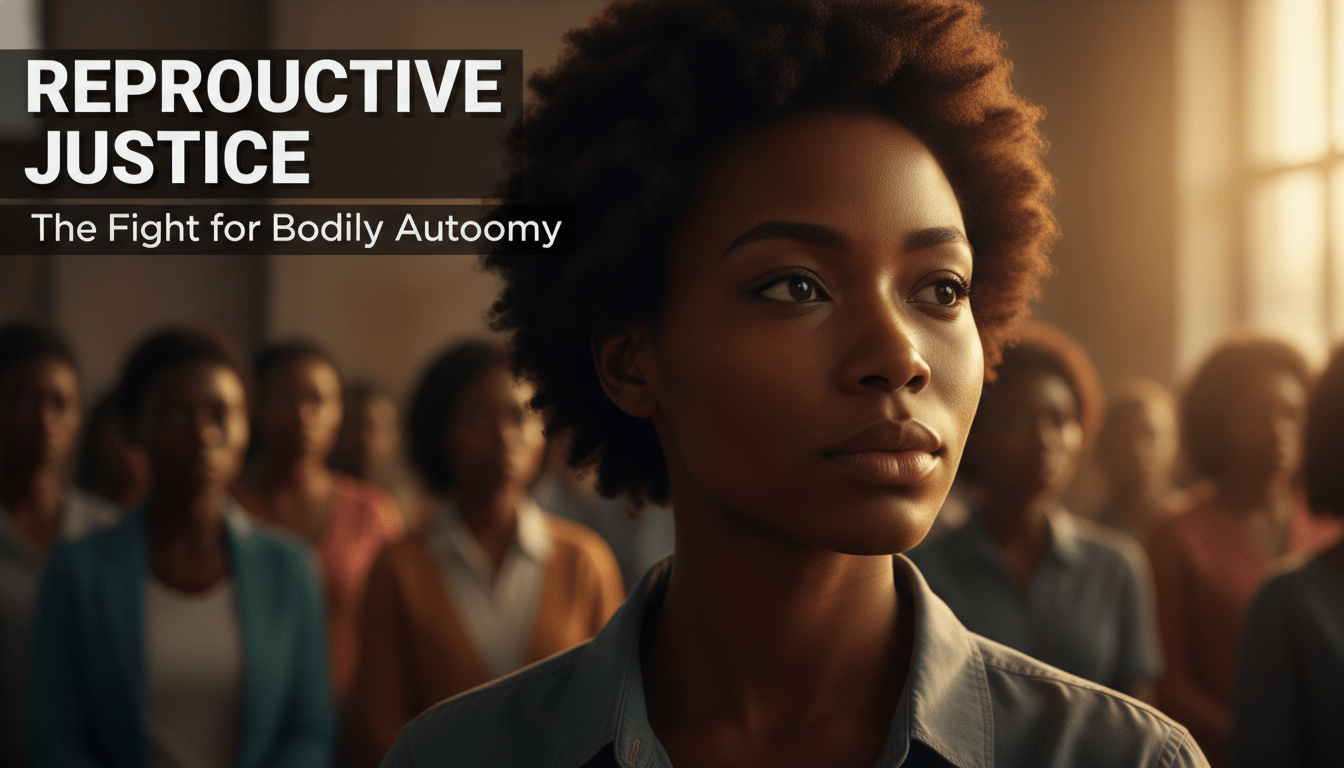
The landscape of healthcare in the United States is shifting rapidly. Following the decision of the Supreme Court to overturn abortion protections, millions of individuals must now navigate a highly fractured medical system (guttmacher.org). A critical report recently exposed how these legal changes fall heavily on Black communities (nationalpartnership.org). In collaboration with In Our Own Voice: National Black Women’s Reproductive Justice Agenda, researchers discovered a disturbing reality (nationalpartnership.org). Fifty-seven percent of Black women of reproductive age now live under severe abortion bans (nationalpartnership.org). This represents nearly seven million women who lack basic access to reproductive healthcare (nationalpartnership.org).
This current situation is not an accidental outcome of political debates. Instead, the current crisis is directly connected to a long history of medical exploitation and bodily control. To comprehend the present moment, one must analyze the history behind the headlines. By examining the foundations of the American medical system, the origins of the Reproductive Justice movement, and the modern legal landscape, the systemic nature of this crisis becomes clear.
The Modern Crisis of Bodily Autonomy
The National Partnership for Women & Families revealed that approximately 6.7 million Black women reside in states with highly restrictive abortion policies (nationalpartnership.org). This geographical concentration is particularly intense in the southern region of the country (nationalpartnership.org). In fact, forty-three percent of these affected individuals live in Florida, Georgia, and Texas (nationalpartnership.org). These states have enacted some of the most stringent restrictions on reproductive care in the nation, severely limiting options for millions of families (nationalpartnership.org).
The impact of these laws extends far beyond the inability to access abortion services. It severely compromises the overall health and stability of Black families. Over fifty-eight percent of the women affected by these bans are already mothers (nationalpartnership.org). Consequently, the physical and financial burdens of forced pregnancies directly alter the well-being and development of existing children (nationalpartnership.org). The modern legal system forces many families into precarious medical and financial situations without providing adequate social support networks.
Black Women Under Abortion Restrictions
More than half of the reproductive-age Black female population in the United States currently lives in states with severe bans on abortion care.
Foundations of Exploitation Under Slavery
The systematic denial of bodily autonomy for Black women began centuries ago. During the era of chattel slavery in the United States, enslaved women possessed no legal rights over their own bodies (wikipedia.org). Their reproduction was heavily coerced to generate more enslaved laborers for plantation owners, commodifying their fertility (wikipedia.org). This commodification laid the groundwork for severe inequalities in modern medicine. This history is closely tied to the historical oppression of Black women across the Americas.
This dark period of history directly shaped the foundation of modern gynecology. In the 1840s, Dr. J. Marion Sims performed numerous unanesthetized surgical experiments on enslaved women in Montgomery, Alabama (eji.org). He operated on young women named Anarcha, Lucy, and Betsey without their consent (eji.org). Sims believed that Black people did not experience pain in the same manner as white individuals (eji.org). He used these enslaved women as experimental subjects to develop surgical techniques that would eventually benefit wealthier patients (eji.org). This legacy established a historical pattern of ignoring the physical suffering of Black women in clinical environments.
The Eugenics Era and Forced Sterilizations
During the twentieth century, the state continued to exercise control over the fertility of marginalized populations. The eugenics movement in the United States sought to limit the growth of populations deemed socially undesirable (wikipedia.org). Academics and policymakers used false scientific theories to justify state-sanctioned abuses (wikipedia.org). This resulted in the compulsory sterilization of approximately 60,000 individuals across the country (wikipedia.org). The legal system endorsed these egregious human rights violations in the landmark Supreme Court case *Buck v. Bell* in 1927 (wikipedia.org).
In the Deep South, these medical abuses were highly systemic. Medical professionals routinely performed hysterectomies on Black women without their consent, a practice known as the “Mississippi Appendectomy” (pbs.org). The civil rights leader Fannie Lou Hamer fell victim to this practice in 1961 (freedomcenter.org). She entered a hospital in Sunflower County to treat a benign uterine tumor and left with a complete hysterectomy (freedomcenter.org). Hamer later testified that local hospitals routinely sterilized six out of ten Black women who sought medical treatment (freedomcenter.org). This systematic campaign of sterilization reflects a persistent history of involuntary control of Black bodies.
The Birth of Reproductive Justice in 1994
The traditional women’s rights movement of the twentieth century was primarily led by affluent white women. This movement focused almost exclusively on the legal right to secure an abortion (sistersong.net). However, this narrow focus failed to address the systemic challenges that prevented Black women from exercising real choice (sistersong.net). Marginalized communities struggled with issues like medical racism, deep financial inequality, and the right to raise children in safe environments (sistersong.net).
In June 1994, a group of twelve Black women met in Chicago prior to the UN International Conference on Population and Development in Cairo (sistersong.net). They recognized that the mainstream “pro-choice” framework did not reflect their lived experiences (sistersong.net). They established the Women of African Descent for Reproductive Justice and coined the term “Reproductive Justice” (sistersong.net, sistersong.net). This new framework asserted the human right to have children, to not have children, and to parent children in secure communities (sistersong.net). The movement grew nationally in 1997 when the SisterSong Women of Color Reproductive Justice Collective was founded (sistersong.net).
The Reproductive Justice Shift
Traditional Pro-Choice
Primarily focused on the legal right to privacy, the defense of abortion legality, and individual choice.
Reproductive Justice
- The human right to prevent pregnancy
- The human right to have children
- The human right to parent in safe, sustainable environments
The High Cost of Economic Insecurity
Socioeconomic realities cannot be separated from healthcare access. Among the six point seven million Black women living in highly restrictive states, over two point seven million are already economically insecure (nationalpartnership.org). Economic insecurity is generally defined as living with an income below two hundred percent of the Federal Poverty Level (nationalpartnership.org). This income level makes absorbing sudden financial shocks, such as traveling out of state for medical procedures, nearly impossible.
Furthermore, approximately one point four million of these affected women work in low-wage service jobs (nationalpartnership.org). These positions rarely provide basic benefits like paid sick leave, healthcare insurance, or flexible scheduling (nationalpartnership.org). For these workers, traveling hundreds of miles to access legal abortion care in another state is physically and financially impossible. Therefore, poverty acts as a physical barrier to reproductive care. Historically, the fight for economic justice has always been intertwined with the physical survival of Black workers.
Maternity Care Deserts and Disinvested States
The crisis is amplified by a crumbling maternal healthcare infrastructure in the very states that restrict abortion. According to researchers at the March of Dimes, a maternity care desert is a county without a hospital offering obstetric care, birth centers, or obstetric clinicians (marchofdimes.org). Over thirty-six percent of all counties across the United States currently qualify as maternity care deserts (marchofdimes.org). This lack of local care forces more than five point six million women to travel long distances for essential maternal care (marchofdimes.org).
There is a direct correlation between restrictive abortion policies and severe health system failures. Seventeen of the twenty-six states with severe abortion restrictions have maternal mortality rates that exceed the national average (nationalpartnership.org). Several of these states have also consistently refused to expand Medicaid coverage (commonwealthfund.org). This refusal leaves low-income individuals without critical healthcare options during preconception and postpartum periods. Gaps in maternal healthcare are widening even further because obstetricians are actively leaving states with strict abortion bans to avoid criminal liability, leaving pregnant people stranded (marchofdimes.org).
Severe System Overlap
The Looming Threat of Criminalization
In the post-Dobbs era, the threat of criminal prosecution over pregnancy outcomes has intensified. State laws are expanding the legal application of fetal personhood, which treats a fetus as a person with full constitutional rights (ifwhenhow.org). Under these frameworks, natural pregnancy losses like miscarriages and stillbirths are increasingly treated with suspicion by law enforcement officials (ifwhenhow.org). This legal framework allows the state to charge pregnant individuals with child abuse, chemical endangerment, or manslaughter if they experience a pregnancy loss (ifwhenhow.org).
Indeed, state prosecutors initiated over two hundred pregnancy-related criminal prosecutions in the year following the Dobbs ruling alone (themarshallproject.org). This legal surveillance falls disproportionately on Black women due to systemic racial biases in medical screening and reporting (ifwhenhow.org). As a result, Black patients are far more likely to be reported to police when experiencing a pregnancy loss (ifwhenhow.org). This environment of fear prevents individuals from seeking critical post-pregnancy care, directly echoing historical eras where Black bodies were intensely policed and monitored.
Reclaiming Autonomy Through Collective Action
Despite these compounding crises, Black women continue to lead the fight for medical equity and bodily self-determination. Organizations such as In Our Own Voice are actively mobilizing voters, educating communities, and drafting policies (blackrj.org). They understand that the solution is not limited to legalizing abortion. True healthcare equity requires dismantling systemic racism within the medical system, ensuring fair wages, and securing universal maternal care (blackrj.org, sistersong.net).
By looking at the history behind the current headline, one can see that the struggle for reproductive freedom is deeply historic. The fight did not begin with the Dobbs decision, and it will not end there. Through organizing and asserting their human rights, Black women are actively rewriting the future of healthcare. True equity will only be achieved when complete bodily autonomy is guaranteed for all.
About the Author
Darius Spearman is a professor of Black Studies at San Diego City College, where he has been teaching for over 20 years. He is the founder of African Elements, a media platform dedicated to providing educational resources on the history and culture of the African diaspora. Through his work, Spearman aims to empower and educate by bringing historical context to contemporary issues affecting the Black community.
