

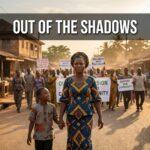


Inside the Dangerous Fight Against Disability Stigma in Nigeria
By Darius Spearman (africanelements)
Support African Elements at patreon.com/africanelements and hear recent news in a single playlist. Additionally, you can gain early access to ad-free video content.
In the early months of 2026, the streets of Jos, Plateau State, filled with an unexpected crowd (theguardian.com, aiddn.org). Over one hundred people marched publicly to mark World Down Syndrome Day (theguardian.com, aiddn.org). They demanded equal civil rights for their children (theguardian.com). They openly challenged the heavy cultural stigma that surrounds children with developmental disabilities (theguardian.com, punchng.com).
Among the marchers was Fatima Muhammad (theguardian.com). When her son, Alameen, was born with Down’s syndrome in 2015, her neighbors gave her terrible advice (theguardian.com). They urged her to drown the infant (theguardian.com). They told her to abandon him in the forest (theguardian.com). They claimed he was a “spirit child” (theguardian.com). Today, Alameen is a happy, creative ten-year-old child (theguardian.com). By marching, Muhammad joined a growing national movement (theguardian.com, punchng.com). These families are bringing their children out of the shadows (theguardian.com).
While these public campaigns seem sudden, they are actually the result of a decades-long struggle (theguardian.com, punchng.com, guardian.ng, benola.org). This movement shows the immense survival and adaptation of families when faced with hostile social environments. To understand these headlines, one must examine the dark history of superstition, the medical discoveries that challenged these myths, and the parents who built the first support networks in the country (theguardian.com, intechopen.com, downsyndrome.org.ng, benola.org).
Historically viewed as mischievous “born-to-die” spirit children cycling between worlds. Doctors proved these are genetic conditions like Down’s syndrome, occurring globally at similar rates.
Children with severe cerebral palsy who lie flat were labeled as water spirits. Science links this to early brain damage from preventable birth asphyxia and untreated neonatal jaundice.
Families were accused of trading a child’s brain for dark wealth, leading to extreme domestic violence. Advocacy has helped reframe these as manageable pediatric medical conditions.
The Dark History of Spirit Child Myths
For generations, people in Nigeria have viewed physical and developmental disabilities through a spiritual lens rather than a medical one (theguardian.com, uri.edu). Across different ethnic groups, children with intellectual or physical challenges were often labeled as spirits (theguardian.com, uri.edu). This label stripped them of their humanity (theguardian.com, uri.edu).
In Yoruba culture, these children were sometimes called *abiku* (uri.edu, hts.org.za). In Igbo culture, they were known as *ogbanje* (uri.edu, hts.org.za). These terms refer to mischievous spirits that enter the human world only to die and return to the spirit realm (uri.edu, hts.org.za). These beliefs historically served as a way to explain high rates of infant mortality (uri.edu, hts.org.za). However, they also led to terrible cruelty (theguardian.com, uri.edu).
Furthermore, children with cerebral palsy who could not sit or walk were often called “snakes” because they lay on the ground (theguardian.com, aljazeera.com). Some traditional healers performed rituals by rivers and left these helpless infants to drown (theguardian.com, aljazeera.com). In other communities, people believed that parents traded their child’s brain for sudden wealth (uri.edu, ritualkillinginafrica.org). These dark myths caused husbands to abuse and evict mothers of disabled children (theguardian.com). Consequently, many mothers hid their children in dark rooms for years to avoid social isolation (theguardian.com).
The Medical Revolution: Decoupling Genetics From Magic
Until the middle of the twentieth century, Western medical texts did not help (intechopen.com, researchgate.net). Many Eurocentric papers claimed that Down’s syndrome was rare or non-existent in sub-Saharan Africa (intechopen.com, researchgate.net). This medical neglect allowed local spiritual myths to grow without any scientific challenge (intechopen.com, researchgate.net).
The first major change came in 1964 (intechopen.com, researchgate.net). Dr. Tompkins published the first clinical paper proving that Down’s syndrome existed in Nigeria (intechopen.com, researchgate.net). Later, in 1982, Dr. A. A. Adeyokunnu published a groundbreaking nine-year study (nih.gov, researchgate.net). His research showed that Down’s syndrome occurred in 1 out of every 865 live births in Nigeria (nih.gov, researchgate.net). This rate was similar to rates in other parts of the world (nih.gov, researchgate.net). This study forced health planners to treat the condition as a genetic reality (nih.gov, researchgate.net).
Similarly, medical professionals have worked hard to explain cerebral palsy (news-medical.net, researchgate.net). Historically blamed on witchcraft, doctors proved that cerebral palsy is caused by brain damage during or shortly after birth (newyorkbirthinjury.com, nationalbirthinjurylaw.com). In Nigeria, the main causes are birth asphyxia and untreated neonatal jaundice (researchgate.net, bmj.com). Birth asphyxia occurs when a baby lacks oxygen during a long, unassisted labor (newyorkbirthinjury.com, nationalbirthinjurylaw.com, researchgate.net). Neonatal jaundice involves a toxic buildup of bilirubin (researchgate.net, yourlawyer.com, malpracticeteam.com). If left untreated, it crosses the blood-brain barrier and causes permanent brain damage (researchgate.net, yourlawyer.com, malpracticeteam.com).
Primary Clinical Drivers of Cerebral Palsy
Preventable medical issues causing permanent brain damage in Nigeria
Personal Pain Into Public Purpose: The Pioneers
The shift from silent shame to public advocacy was led by parents, not the government (theguardian.com, downsyndrome.org.ng, benola.org). These determined parents refused to hide their children from the world (theguardian.com, downsyndrome.org.ng, benola.org). They turned their personal struggles into powerful institutions (downsyndrome.org.ng, benola.org).
In 2001, Rose Mordi founded the Down Syndrome Foundation Nigeria, also known as DSFN (downsyndrome.org.ng, guardian.ng). She started the foundation after raising her own daughter with Down’s syndrome in a highly critical society (downsyndrome.org.ng, guardian.ng). For twenty-five years, DSFN has fought the idea that these children cannot learn (guardian.ng, downsyndrome.org.ng). The foundation built early intervention centers and vocational training programs (guardian.ng, downsyndrome.org.ng). They helped young adults gain independence and self-advocacy skills (guardian.ng, downsyndrome.org.ng).
Another key pioneer emerged in February 2013 (benola.org). Retired Air Vice Marshal Femi Gbadebo and his wife, Alaba, founded the Benola Cerebral Palsy Initiative (benola.org). They were inspired by their non-verbal son, Olaoluwa, who was born with cerebral palsy in 1996 (benola.org). The Gbadebo family created a roadmap to support affected families across Nigeria (benola.org, nosakgroup.com). They built databases, trained medical workers, and provided counselling to stop infanticide and child abandonment (benola.org, nosakgroup.com). These efforts highlight the incredible resilience of families under pressure, showing how parents can change the course of an entire nation.
The Complex Role of Modern Faith Institutions
Religion plays a double role in Nigeria (uri.edu, researchgate.net). While some religious leaders offer emotional support, many faith institutions actually make the stigma worse (uri.edu, researchgate.net). They often combine traditional superstitions with modern religious practices (uri.edu, researchgate.net).
For instance, many charismatic Pentecostal churches teach that disabilities are caused by demons, witchcraft, or family curses (uri.edu, mycharisma.com). They encourage families to seek spiritual “deliverance” instead of medical treatment (uri.edu, mycharisma.com). In some cases, unregulated Islamic healing centers in the north subject children to harsh exorcisms (lagosmind.org, freethinkersinternational.net). These actions can lead to physical abuse and neglect (fij.ng, fij.ng).
However, there is a growing movement toward change (weareable.ngo, up.ac.za). Some progressive religious leaders are teaching disability-inclusive theology (weareable.ngo, up.ac.za). They encourage their congregations to view disability through a rights-based model rather than a spiritual one (weareable.ngo, up.ac.za). These efforts are crucial because they help dismantle deep-seated fears within communities (weareable.ngo, up.ac.za). This religious shift represents a vital legacy of cultural resistance against oppressive beliefs.
Legislative Milestones and the State Domestication Gap
The families marching today have a legal shield that took decades to build (jonapwdng.org, leadership.ng). In January 2019, President Muhammadu Buhari signed the Discrimination Against Persons with Disabilities Act of 2018 into law (jonapwdng.org, leadership.ng). This historic law banned discrimination, demanded accessible public buildings, and created the National Commission for Persons with Disabilities (jonapwdng.org, leadership.ng, hrw.org).
However, the law has a major weak spot (jonapwdng.org, ippapublicpolicy.org). Nigeria has a federal system with a strict division of powers under the 1999 Constitution (ippapublicpolicy.org, ujaen.es). Matters like child welfare and social disability rights are not on the federal legislative list (ippapublicpolicy.org, ujaen.es). Instead, they are considered “residual” matters (ippapublicpolicy.org, ujaen.es). This means individual state assemblies must adopt, or “domesticate,” the federal law before it can be enforced locally (ippapublicpolicy.org, ujaen.es).
This requirement has created a massive gap in protection (jonapwdng.org, ippapublicpolicy.org). Out of thirty-six states, only seventeen are fully compliant (jonapwdng.org, dataphyte.com). These compliant states have passed the law, obtained the governor’s signature, published it in the official government journal, and set up enforcement commissions (jonapwdng.org, dataphyte.com). In contrast, at least four states have taken no action at all (jonapwdng.org). This leaves millions of children without any local legal safety net (jonapwdng.org, ippapublicpolicy.org).
The Modern Frontier: Justice and Digital Activism
In 2026, the battle against stigma has moved to new arenas (theguardian.com, pmnewsnigeria.com, globalvoices.org). The Association for Intellectual and Developmental Disabilities of Nigeria launched the “Together Against Loneliness” campaign (pmnewsnigeria.com, aiddn.org). This campaign brought hundreds of families out of isolation to march in conservative northern and middle-belt states (theguardian.com, pmnewsnigeria.com).
At the same time, activists are fighting online battles (pmnewsnigeria.com, globalvoices.org). When a social media video mocked disabled children, Sola Folarin-Ogunde of the Jesse’s Place Foundation launched a massive counter-campaign (pmnewsnigeria.com, punchng.com). This effort educated young Nigerians about digital empathy (pmnewsnigeria.com, punchng.com). Additionally, organizations like the Ugo Edward-Dibiana Down’s Syndrome Foundation are fighting academic exclusion (guardian.ng, guardian.ng). They are exposing schools that reject disabled children or demand illegal extra fees (guardian.ng, guardian.ng).
Furthermore, the justice system is beginning to take action (fij.ng, fij.ng). In May 2026, police in Ebonyi State arrested a religious leader for torturing a child who could not walk (fij.ng). In late 2025, a police officer was arrested for abusing his children after accusing them of being in a witch coven (fij.ng). The African Committee of Experts on the Rights and Welfare of the Child also ruled that Nigeria must do more to stop these abuses (ihrda.org). These arrests send a strong message that cultural beliefs do not excuse violence (fij.ng, fij.ng).
How Grassroots Movements Survive
Running these advocacy campaigns is extremely difficult because of a lack of government funding (downsyndrome.org.ng, benola.org, aiddn.org). Grassroots groups must rely on a mix of international grants, corporate donations, and community fundraising to survive (downsyndrome.org.ng, benola.org, nosakgroup.com, first-holdco.com).
Organizations like the Down Syndrome Foundation Nigeria partner with international groups such as the Liliane Foundation and The Leprosy Mission Nigeria (downsyndrome.org.ng, aiddn.org). They also receive vital corporate social responsibility funds (benola.org, nosakgroup.com). For example, First Bank of Nigeria has funded DSFN projects, and the Nosak Group has supported Benola’s wheelchair drives (benola.org, nosakgroup.com, first-holdco.com).
Finally, crowdfunding platforms like GlobalGiving and local charity events help raise money for life-saving surgeries (downsyndrome.org.ng, globalgiving.org, donate-ng.com). These diverse funding sources allow families to keep pushing forward (downsyndrome.org.ng, benola.org). Their struggle is transforming how Nigeria views disability (theguardian.com, punchng.com). They are proving that every child deserves a place in the light (theguardian.com, downsyndrome.org.ng).
About the Author
Darius Spearman is a professor of Black Studies at San Diego City College, where he has been teaching for over 20 years. He is the founder of African Elements, a media platform dedicated to providing educational resources on the history and culture of the African diaspora. Through his work, Spearman aims to empower and educate by bringing historical context to contemporary issues affecting the Black community.
