



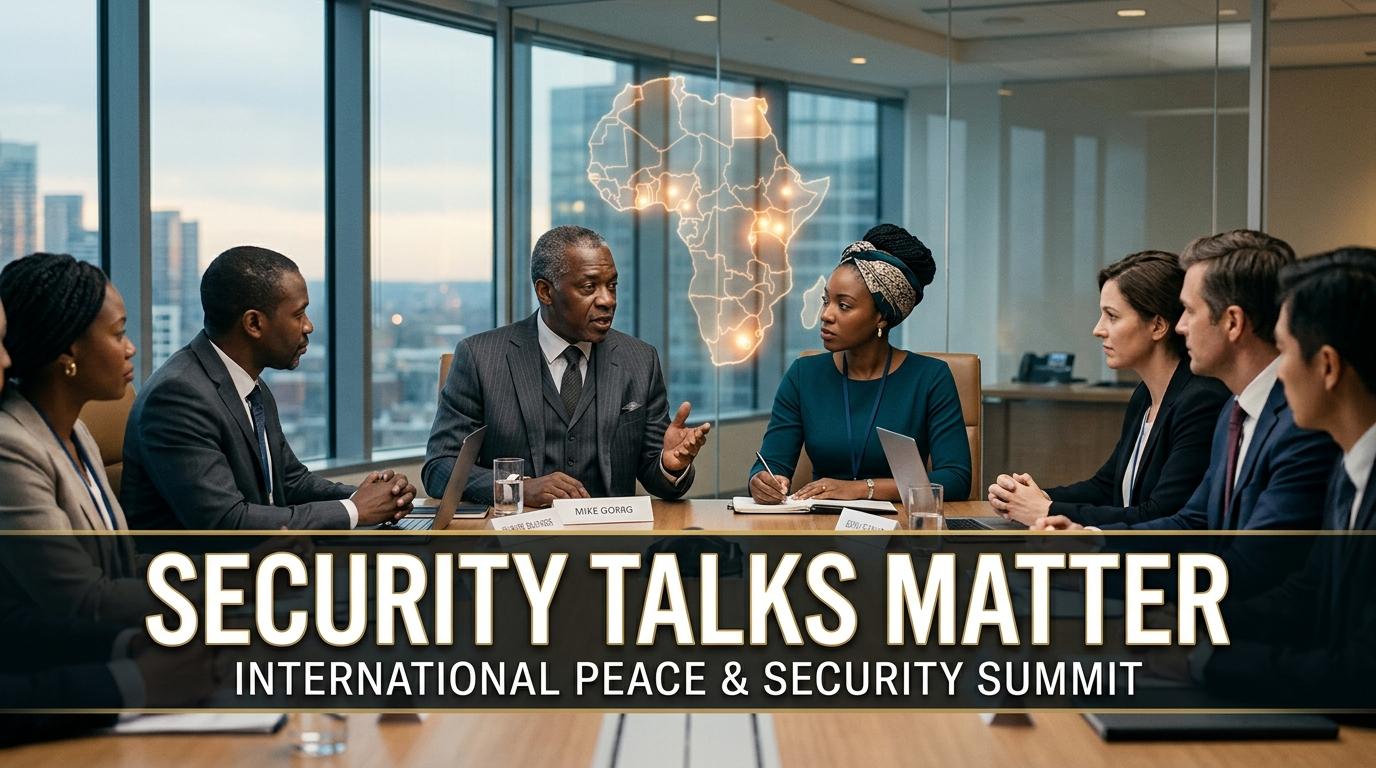
UN AU Regional Peace Operations: Why Security Talks Matter
By Darius Spearman (africanelements)
Support African Elements at patreon.com/africanelements and hear recent news in a single playlist. Additionally, you can gain early access to ad-free video content.
High-Level Talks and Urgent Regional Crises
High-level talks recently convened in East Africa between representatives of the United Nations and African Union (amaniafrica-et.org, amaniafrica-et.org). Their primary focus was establishing coordinated regional defense and peacebuilding protocols (amaniafrica-et.org, un.org). Localized conflicts continue to disrupt communities across the Sahel and Horn of Africa (issafrica.org, thesoufancenter.org). Extremist networks spread terror while fragile governance structures struggle to maintain basic stability (africacenter.org, africacenter.org).
These diplomatic meetings are not sudden responses to isolated incidents. Instead, they reflect two decades of evolving security frameworks between global and continental institutions (issafrica.org, accord.org.za). African leaders increasingly demand local solutions backed by reliable global funding (ecdpm.org, financingun.report). Understanding today’s headlines requires examining how past failures shaped modern peacekeeping strategies (diis.dk, diis.dk).
From Non-Interference to Non-Indifference
The Organization of African Unity strictly emphasized non-interference in internal member state affairs (geopolitica.info, intechopen.com). This policy prevented regional action during internal crises throughout the late twentieth century (researchgate.net, bisi.org.uk). The horrific events of the 1994 Rwandan Genocide exposed the tragic limitations of that passive approach (wikipedia.org, wikipedia.org). African leaders recognized that silence during mass atrocities undermined moral authority and continental security (amaniafrica-et.org, amaniafrica-et.org).
In 2002, leaders replaced the old body by establishing the African Union (issafrica.org, accord.org.za). The new constitutive act introduced Article 4(h), establishing a doctrine of non-indifference (horninstitute.org, issafrica.org). This provision granted the right to intervene in member states during grave circumstances like war crimes or genocide (accord.org.za, amaniafrica-et.org). To operationalize this policy, leaders created the Peace and Security Council in 2004 (amaniafrica-et.org, amaniafrica-et.org). They also built the African Peace and Security Architecture to monitor threats and manage rapid response forces (issafrica.org, amaniafrica-et.org). These steps aligned with Chapter VIII of the UN Charter, encouraging regional dispute resolution (un.org, un.org).
Testing Operations in Somalia and Darfur
The partnership faced immediate challenges as complex violent conflicts emerged across the continent (issafrica.org, issafrica.org). In 2007, the UN and AU launched their first major hybrid mission in Darfur (columbia.edu, prio.org). This mission combined United Nations logistical infrastructure with African Union political leadership and troops (securitycouncilreport.org, securitycouncilreport.org). Concurrently, the African Union Mission in Somalia deployed to combat the growing threat of Al-Shabaab (mod.go.jp, horninstitute.org).
Somalia demonstrated the unique willingness of African forces to engage in direct peace enforcement combat (adf-magazine.com, greydynamics.com). Traditional UN blue helmets often lacked mandates to fight active insurgencies directly (unmissions.org, unmissions.org). African troops suffered significant sacrifices, enduring thousands of casualties while fighting to stabilize Mogadishu (issafrica.org, africacenter.org). These combat missions proved that African nations possessed the political will for intervention (issafrica.org, accord.org.za). However, funding relied heavily on irregular donor contributions from Western partners (ecdpm.org, financingun.report). This financial instability created constant operational vulnerabilities for troop-contributing countries on the ground (nyu.edu, daghammarskjold.se).
The Broken Promise of Predictable Funding
For years, African Union missions operated under severe budget shortfalls and unpredictable funding streams (theglobalobservatory.org, theglobalobservatory.org). While the UN holds mandatory global assessments, the African Union relied on voluntary donor pledges (financingun.report, globalpolicyforum.net). This fiscal gap often delayed troop stipends and hindered long-term mission planning (nyu.edu, usmission.gov). To address these inequalities, diplomats negotiated the 2017 Joint UN-AU Framework (issafrica.org, un.org).
A major breakthrough occurred in December 2023 when the UN Security Council adopted Resolution 2719 (usmission.gov, securitycouncilreport.org). This resolution allowed AU-led peace support operations to receive up to 75 percent of their funding from UN assessed contributions (govinfo.gov, govinfo.gov). This decision marked a historic constitutional bridge between global financial resources and regional boots on the ground (amaniafrica-et.org, un.org). Yet, finding predictable resources remains tied to broader economic challenges that echo historical exploitation across developing regions.
Security Vacuums Across the Sahel
Security conditions across West Africa degraded rapidly as political instability spread through the Sahel (unmissions.org, unmissions.org). Extreme insurgencies by groups like JNIM and ISGS expanded across national borders (thesoufancenter.org, cfr.org). The United Nations Multidimensional Integrated Stabilization Mission in Mali faced rising hostility from local populations and authorities (mineaction.org, reliefweb.int). Host governments criticized UN peacekeepers for failing to defeat jihadist combatants aggressively (adf-magazine.com, csis.org).
Military governments in Mali, Burkina Faso, and Niger ultimately demanded the immediate withdrawal of foreign troops (acleddata.com, apnews.com). The complete exit of UN forces created immediate security voids across vast rural territories (thesoufancenter.org, greydynamics.com). Some Sahelian military leaders turned to private Russian security forces like the Wagner Group for direct military support (alestiklal.net, smallwarsjournal.com). These shifts highlight how internal regional disputes involve complex sharing of power between local governance and international alliances. Consequently, the UN and AU are designing flexible regional task forces to prevent further instability (amaniafrica-et.org, amaniafrica-et.org).
Horn of Africa Transitions and Rising Demands
In East Africa, the security environment remains equally fragile due to ongoing violent conflict (horninstitute.org, georgetown.edu). The planned drawdown of the AU Transition Mission in Somalia raised serious safety concerns (mod.go.jp, adf-magazine.com). To maintain stability, leaders authorized the new African Union Support and Stabilisation Mission in Somalia (amaniafrica-et.org, amaniafrica-et.org). However, deploying this operation requires securing roughly 200 million dollars annually just for troop stipends (issafrica.org, usmission.gov).
The UN Support Office in Somalia continues providing essential logistics like aviation, fuel, and medical evacuations (unmissions.org, unmissions.org). Meanwhile, civil war in Sudan has displaced millions, threatening stability across neighboring nations (georgetown.edu, apnews.com). Such widespread instability drives broader struggles for sovereignty as citizens demand effective governance and safety. Without sustainable financial pipelines, regional peacekeeping missions risk operational failure at critical operational moments (theglobalobservatory.org, financingun.report).
- MINUSMA drawdown created security vacuums.
- JNIM & ISGS insurgencies expand cross-border.
- Host nations shift to Russian military partners.
- Pivot toward ad-hoc sub-regional task forces.
- Transition from ATMIS to AUSSOM in Somalia.
- Persistent asymmetric threats from Al-Shabaab.
- UNSOS provides essential UN logistical support.
- Severe regional tension and Sudan civil war.
Financial Friction and Human Rights Compliance
Despite optimism surrounding Resolution 2719, significant political and technical hurdles remain (usmission.gov, govinfo.gov). The remaining 25 percent co-financing requirement presents a major hurdle for African member states (theglobalobservatory.org, theglobalobservatory.org). In the United States, statutory laws cap domestic contributions to UN peacekeeping operations at 25 percent (senate.gov, everycrsreport.com). This domestic legal cap creates persistent funding shortfalls for global peace missions (usmission.gov, thegrantshouse.com).
Additionally, access to UN funds requires strict adherence to international human rights standards (mineaction.org, un.org). African Union forces must comply with the UN Human Rights Due Diligence Policy and conduct discipline standards (un.org, un.org). These mechanisms require rigorous screening to prevent rights violations and civilian harm during military operations (accord.org.za, amaniafrica-et.org). Balancing aggressive combat mandates with strict human rights compliance remains a complex operational requirement (accord.org.za, diis.dk).
Toward True African Security Sovereignty
The high-level talks in East Africa highlight a decisive moment for continental peace security architecture (amaniafrica-et.org, amaniafrica-et.org). Ad hoc regional security arrangements are replacing outdated, top-down international intervention models (issafrica.org, issafrica.org). Future success depends on transforming diplomatic paper agreements into practical operational capabilities (amaniafrica-et.org, securitycouncilreport.org). African institutions must secure sustainable co-financing while maintaining strict operational discipline (theglobalobservatory.org, amaniafrica-et.org).
Global institutions must honor financial commitments without imposing rigid bureaucratic barriers (usmission.gov, financingun.report). By bridging funding gaps and asserting strategic independence, African nations can protect vulnerable communities effectively (accord.org.za, ecdpm.org). This evolving partnership represents a crucial step toward lasting security sovereignty across the African continent (issafrica.org, un.org).
About the Author
Darius Spearman is a professor of Black Studies at San Diego City College, where he has been teaching for over 20 years. He is the founder of African Elements, a media platform dedicated to providing educational resources on the history and culture of the African diaspora. Through his work, Spearman aims to empower and educate by bringing historical context to contemporary issues affecting the Black community.
