


The Secret Lawsuits Over Migrant Sea Crossing Deaths
By Darius Spearman (africanelements)
Support African Elements at patreon.com/africanelements and hear recent news in a single playlist. Additionally, you can gain early access to ad-free video content.
The Legal Battle Over Deadly Maritime Border Routes
Across the Mediterranean Sea and Atlantic Ocean, African asylum seekers face incredible hazards while attempting to reach safe European shores. Thousands of individuals drown every year in overcrowded, unseaworthy vessels along perilous maritime migration routes. International human rights groups and legal coalitions have now filed formal legal petitions against European and North African border authorities. These advocacy groups demand full public accountability for recurring fatalities near coastal border checkpoints and in international waters (nawaat.org, ecchr.eu, amnesty.org).
For many observers across the global African diaspora, this modern crisis reflects long-standing patterns of state neglect and border militarization. Dark-skinned migrants traveling through North Africa regularly encounter severe racial discrimination and physical danger before ever boarding a boat. Systemic policy decisions made in distant European capitals directly shape these life-and-death outcomes along African coastlines. To fully grasp why these human rights petitions matter today, one must examine three decades of evolving border control policies (inkstickmedia.com, externalizingasylum.info).
From Direct Pushbacks to Strategic Externalization
The current border management system began taking shape during the late twentieth century. Following the implementation of the Schengen Agreement in the mid-1990s, European nations gradually eliminated internal border checks (wikipedia.org, wikipedia.org). In response, European leaders significantly increased enforcement along external maritime boundaries (migrationpolicy.org). Frontline European states created bilateral treaties with North African governments to stop migrant crossings before boats reached European jurisdiction. Italy negotiated key migration deals with Libya, while Spain developed close border enforcement partnerships with Morocco (externalizingasylum.info, carnegieendowment.org).
During this early era, European naval vessels routinely intercepted migrant boats on the high seas and returned passengers directly to African shores (ecchr.eu, wikipedia.org). However, a major legal shift occurred in February 2012. The European Court of Human Rights delivered a landmark ruling in the case of Hirsi Jamaa and Others v. Italy (ecchr.eu, ecchr.eu). The court unanimously decided that summary pushbacks on international waters violated the European Convention on Human Rights (ecchr.eu). European ships could no longer forcibly turn back migrant vessels without evaluating individual asylum claims (ecchr.eu).
Following the Hirsi Jamaa ruling, European nations altered their operational methods. Rather than conducting direct maritime interceptions, European governments shifted toward border externalization (externalizingasylum.info, fluchtforschung.net). European officials funded, trained, and equipped partner agencies in North Africa to handle physical interdictions (refugeesinlibya.org, eu-libya.info). Similar to historical shifts in policy narratives, this transition enabled European states to outsource physical enforcement while attempting to avoid direct legal liability under international law (ecchr.eu, externalizingasylum.info).
Inside the Shadowy System of Proxy Pullbacks
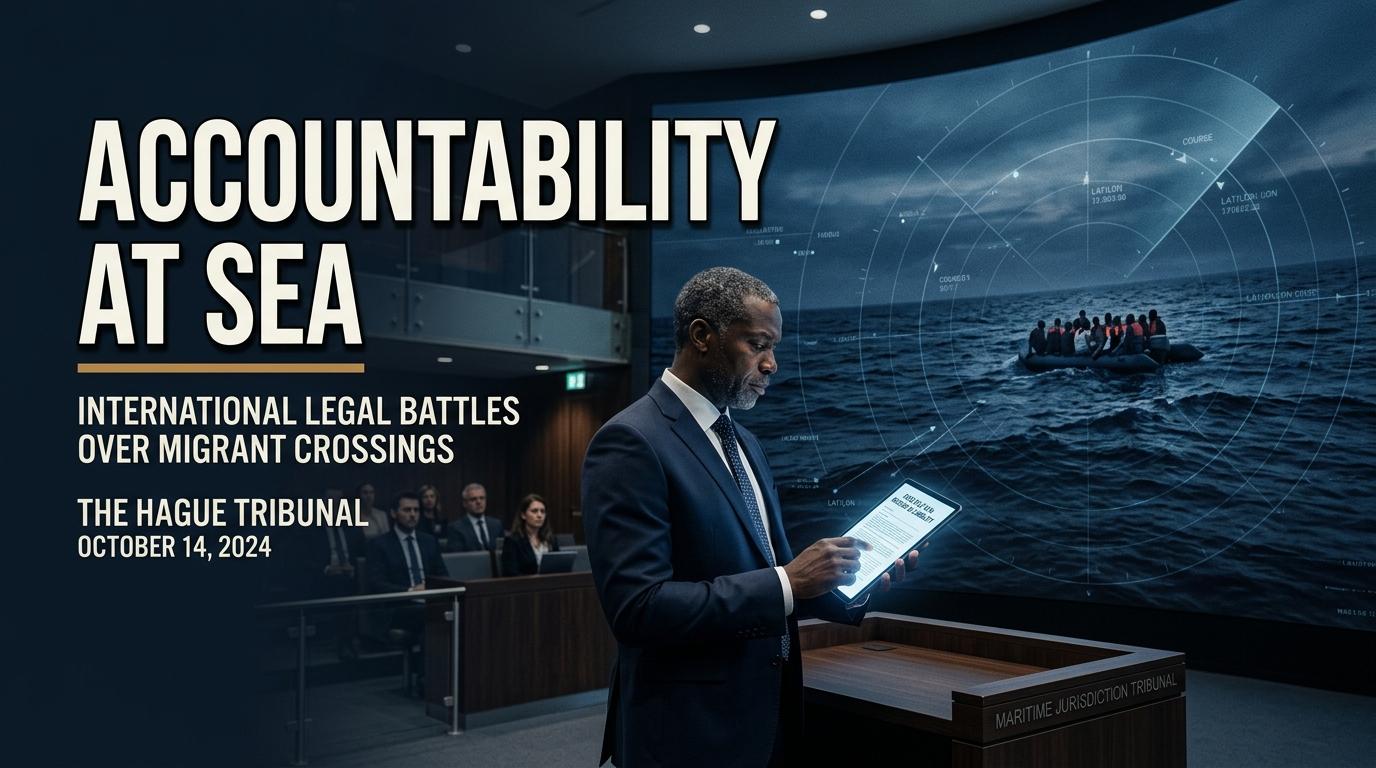
To implement border externalization, European authorities established an operational mechanism known as proxy pullbacks (externalizingasylum.info, debordercollective.org). Under this system, European agencies rely heavily on aerial surveillance technology rather than rescue ships on the water (europa.eu, abolishfrontex.org). The European Border and Coast Guard Agency, known as Frontex, deploys drones and manned aircraft over the Mediterranean Sea (europa.eu, europa.eu). When surveillance aircraft locate a distressed migrant boat, operators do not dispatch European rescue vessels. Instead, they transmit real-time coordinates directly to North African coast guards (refugeesinlibya.org, eu-libya.info).
North African patrol ships then intercept the migrant vessels within their designated search and rescue zones (refugeesinlibya.org, externalizingasylum.info). Operational crews forcibly capture asylum seekers and return them to African transit shores before boats enter European waters (amnesty.org, ohchr.org). Human rights lawyers label this strategy pullbacks by instruction (ecchr.eu, ecchr.eu). By using third-country forces to perform physical returns, European states claim that they do not exercise legal jurisdiction over the migrants (ecchr.eu, externalizingasylum.info). However, legal petitions argue that providing actionable tracking data creates joint legal responsibility for subsequent deaths and abuses (justiceinitiative.org, ecchr.eu).
Racialized Violence and the Sub-Saharan Transit Crisis
The human cost of these containment policies falls heavily on Sub-Saharan African migrants fleeing political instability, armed conflict, and economic hardship (iom.int, africasacountry.com). Dark-skinned migrants traveling through North African transit nations encounter pervasive racial discrimination, public harassment, and violent exploitation (refugeesinlibya.org, ohchr.org). When foreign coast guards carry out proxy pullbacks, intercepted Black asylum seekers are routinely transferred into detention centers operated by armed militias and state agencies (refugeesinlibya.org, cihrs.org).
Inside these detention facilities, international monitors have documented systemic physical violence, arbitrary confinement, extortion, and forced labor (refugeesinlibya.org, amnesty.org). Furthermore, heightened Mediterranean blockades have driven migrants toward even more dangerous sea pathways (iom.int, iom.int). Many travelers now attempt the treacherous Atlantic route from West Africa to Spain’s Canary Islands (iom.int, iom.int). Driven by widespread economic distress and conflict across the Sahel, asylum seekers board wooden fishing boats to navigate thousands of kilometers of open ocean. Delayed rescue responses on this Atlantic passage result in numerous unrecorded drownings every year (iom.int, iom.int, iom.int).
A similar crisis unfolds around Spain’s North African border enclaves of Ceuta and Melilla (wikipedia.org, wikipedia.org). These territories represent the only physical land borders between the European Union and the African continent (wikipedia.org, du.edu). Fortified by multi-layered perimeter fences, thermal sensors, and joint security patrols, these checkpoints are focal points for deadly border encounters (wikipedia.org, wikipedia.org). When asylum seekers attempt to swim around coastal breakwaters or scale perimeter barriers, security forces frequently respond with harsh dispersals (nawaat.org, wikipedia.org). These aggressive tactics have led to drownings directly beside border checkpoints (nawaat.org).
Holding European Agencies Accountable at the International Criminal Court
In response to persistent sea crossing deaths, international human rights coalitions are seeking accountability through global tribunals (ecchr.eu, justiceinitiative.org). Legal organizations have submitted formal legal communications to the International Criminal Court in The Hague (ecchr.eu, ecchr.eu). These filings target high-level European decision-makers and Frontex agency leadership (ecchr.eu, ecchr.eu). The complaints contend that European officials facilitate crimes against humanity by providing structural support to abusive foreign coast guards (ecchr.eu, justiceinitiative.org).
Under Article 7 and Article 25 of the Rome Statute, individuals can be held criminally responsible for aiding and abetting international crimes (ecchr.eu, justiceinitiative.org). Complicity does not require an actor to commit physical abuse directly (ecchr.eu, justiceinitiative.org). Providing funding, patrol boats, and aerial intelligence while knowing that intercepted migrants face systemic torture satisfies the legal standard for aiding and abetting (ecchr.eu, justiceinitiative.org). As activists work toward dismantling colonial frameworks, these petitions challenge the legal immunity long assumed by international border agencies (ecchr.eu, ecchr.eu).
Frontex has expanded its operational budget to over eight hundred million euros while increasing aerial surveillance across maritime routes (europa.eu, europa.eu, abolishfrontex.org). Human rights lawyers argue that agency leaders possess clear knowledge of torture and extortion inside foreign detention camps (refugeesinlibya.org, ecchr.eu). Continuing structural cooperation despite documented abuses constitutes deliberate assistance to illegal acts (ecchr.eu, justiceinitiative.org). These filings aim to establish precedent that border containment policies cannot override international criminal law (ecchr.eu, justiceinitiative.org).
North African Checkpoints and African Court Action
Advocacy groups are also pursuing accountability within African regional judicial bodies (nawaat.org, up.ac.za). Legal networks have initiated formal proceedings before the African Court on Human and Peoples’ Rights (nawaat.org, up.ac.za). These actions directly challenge governments like Tunisia over border checkpoint abuses, desert expulsions, and deliberate delays in maritime rescues (nawaat.org). Tunisia accepted the court’s jurisdiction to receive direct applications from individuals and non-governmental organizations (nawaat.org, up.ac.za).
The legal petitions focus on incidents where border security forces failed to assist drowning asylum seekers near coastal checkpoints (nawaat.org). Security personnel stood by or used violent control measures while migrant vessels capsized in coastal waters (nawaat.org). Legal filings assert that these actions violate the African Charter on Human and Peoples’ Rights (nawaat.org, up.ac.za). Furthermore, international maritime frameworks, including the United Nations Convention on the Law of the Sea, mandate a strict duty to assist anyone in distress at sea (un.org, civilmrcc.eu). The petitions demand an immediate end to dangerous interdiction tactics (nawaat.org).
The Fight for Human Life and Future Accountability
The filing of coordinated petitions across multiple judicial systems marks a critical moment in migration rights litigation (nawaat.org, ecchr.eu, justiceinitiative.org). By targeting both European border authorities and North African state forces, civil society groups aim to eliminate legal loopholes created by externalization strategies (ecchr.eu, ecchr.eu). These lawsuits establish that human rights obligations follow state actions regardless of physical borders or outsourced security contracts (ecchr.eu, justiceinitiative.org).
The struggle for accountability along maritime migration routes reflects the enduring resilience of African people fighting institutional injustice across centuries. Affected communities and international legal advocates continue to insist that human life must take precedence over border enforcement. Establishing true accountability requires replacing lethal border containment policies with migration frameworks that respect international law and protect human dignity (nawaat.org, amnesty.org, ohchr.org).
About the Author
Darius Spearman is a professor of Black Studies at San Diego City College, where he has been teaching for over 20 years. He is the founder of African Elements, a media platform dedicated to providing educational resources on the history and culture of the African diaspora. Through his work, Spearman aims to empower and educate by bringing historical context to contemporary issues affecting the Black community.
