


Why African Island Nations Demand Structural Economic Reform
By Darius Spearman (africanelements)
Support African Elements at patreon.com/africanelements and hear recent news in a single playlist. Additionally, you can gain early access to ad-free video content.
The African Development Bank Group issued a urgent call for structural economic reform across coastal and island nations (afdb.org). Recent global shocks hit vulnerable marine economies extremely hard (afdb.org). These shocks include fuel spikes, food price inflation, and international shipping bottlenecks (africa-newsroom.com). In response, the bank released its flagship Country Focus Reports (afdb.org). These detailed diagnostics highlight deep developmental financing gaps across regional economies (afdb.org). Consequently, the bank urges national governments to implement systemic labor and infrastructure reforms (afdb.org). These policies aim to protect vulnerable populations from ongoing commodity price spikes (africa-newsroom.com). To understand these current headlines, one must examine the long economic history of the continent.
Colonial Roots of Commodity Dependency
The economic vulnerabilities of island states and coastal nations are rooted in historical trade architecture (unctad.org, unctad.org). Colonial economic models focused heavily on raw resource extraction (unctad.org). Agricultural cash crops like cocoa, sugar, and spices dominated local production (wikipedia.org). Meanwhile, colonial authorities imported finished goods, machinery, and basic food staples from overseas (unctad.org). This system created an unbalanced trade structure that persisted long after independence (unctad.org).
When these nations achieved political sovereignty in the mid-twentieth century, they inherited hyper-concentrated economies (unctad.org). Island states like Cabo Verde, Mauritius, and Comoros remained bound to single crops or traditional fisheries (afdb.org, afdb.org). Later, many added international tourism to generate foreign exchange (afdb.org). However, these economies still produce very little of what they consume (unctad.org). They also consume very little of what they actually produce (unctad.org). Consequently, sudden shifts in global commodity prices cause rapid internal inflation (afdb.org, africa-newsroom.com). These historical dependencies mirror broader historical economic justice battles fought by Black workers globally.
The Founding and Evolution of the AfDB
African leaders recognized that political independence required true financial sovereignty (afdb.org). In August 1964, representatives from twenty-three African nations met in Khartoum, Sudan (afdb.org, wikipedia.org). They signed the historic agreement establishing the African Development Bank (afdb.org, wikipedia.org). Operating from its permanent headquarters in Abidjan, Côte d’Ivoire, the bank began funding essential infrastructure (afdb.org).
Over six decades, the mission of the African Development Bank expanded significantly (afdb.org). The institution evolved from funding isolated capital projects to guiding continent-wide macroeconomic governance (afdb.org). Initially, the bank launched the annual African Economic Outlook to track broad economic trends (afdb.org). Later, the bank introduced tailored Country Focus Reports across all fifty-four member nations (afdb.org, afdb.org). These reports analyze natural capital, human resources, and specific regional financing gaps (afdb.org, africa-newsroom.com). They provide policymakers with actionable roadmaps for structural transformation (afdb.org).
Structural Adjustment Programs and the Lost Decades
Severe debt crises during the 1980s and 1990s forced many African nations to seek international assistance (unctad.org, wikipedia.org). In response, global financial institutions mandated Structural Adjustment Programs (unctad.org). These programs required strict fiscal consolidation to reduce budget deficits (unctad.org, imf.org). Fiscal consolidation involves reducing government spending and cutting state subsidies (imf.org). However, these policy mandates forced governments to cut funding for essential public infrastructure (unctad.org).
As a result, deep-water ports, energy grids, and technical schools fell into repair deficits (unctad.org). Public sector layoffs pushed millions of workers into informal, low-productivity services (unctad.org). This history aligns with modern examples where organized African workers rising push back against austerity. Without state-supported industrial policies, island and coastal nations remained price-takers for global oil and grain (unctad.org, unctad.org). Decades of underinvestment left critical logistics infrastructure vulnerable to global supply bottlenecks (afdb.org, unctad.org).
What Is Structural Transformation and Why Does It Matter?
Structural transformation refers to the long-term shift of productive resources within an economy (unctad.org, unctad.org). Capital, land, labor, and technology move from low-productivity sectors to high-value activities (unctad.org). International agencies define structural transformation as building dynamic economic sectors with high value-added potential (unctad.org). Successful transformation generates rising labor productivity, higher real wages, and sustainable employment (unctad.org).
Historically, successful transformation involved moving labor from subsistence agriculture into modern industrial manufacturing (unctad.org). However, in many developing regions, workers moved directly into informal urban services (unctad.org). Informal service jobs lack social protections, stability, and wage growth (unctad.org). When global price spikes hit, informal workers suffer immediate declines in real purchasing power (unctad.org). Therefore, structural transformation provides a necessary roadmap to transformation that insulates working families from external market shocks (afdb.org, afdb.org).
The $400 Billion Financing Gap and 2026 Baselines
Achieving meaningful structural transformation requires unprecedented levels of capital investment (afdb.org, afdb.org). The African Development Bank estimates that Africa faces an annual development financing gap of nearly four hundred billion dollars (afdb.org). In Southern Africa alone, the regional infrastructure and climate financing gap reaches fifty-five billion dollars each year (afdb.org). Furthermore, thirty-six African nations maintain structural financing gaps equal to or exceeding ten percent of their gross domestic product (afdb.org).
Flagship reports use explicit baseline projections dated through 2026 to track policy targets (afdb.org, africa-newsroom.com). Institutions utilize these medium-term models to evaluate national progress against global economic headwinds (afdb.org, afdb.org). For example, the 2026 Mauritius Country Focus Report projects GDP growth moderating to three percent while inflation rises to 5.7 percent (afdb.org). Meanwhile, Cabo Verde requires 163 million dollars annually to meet its resilience targets (afdb.org). These target dates allow governments to establish clear benchmarks for policy intervention (afdb.org).
Unlocking the Blue Economy and Marine Potential
Island states and coastal nations possess vast ocean territories that far exceed their land mass (afdb.org, unctad.org). Under the United Nations Convention on the Law of the Sea, an Exclusive Economic Zone extends up to two hundred nautical miles from a coastline (unctad.org). Within its zone, a sovereign nation holds exclusive rights to explore, conserve, and manage living and non-living marine resources (unctad.org). Consequently, small island nations are increasingly recognized as Large Ocean States (unctad.org).
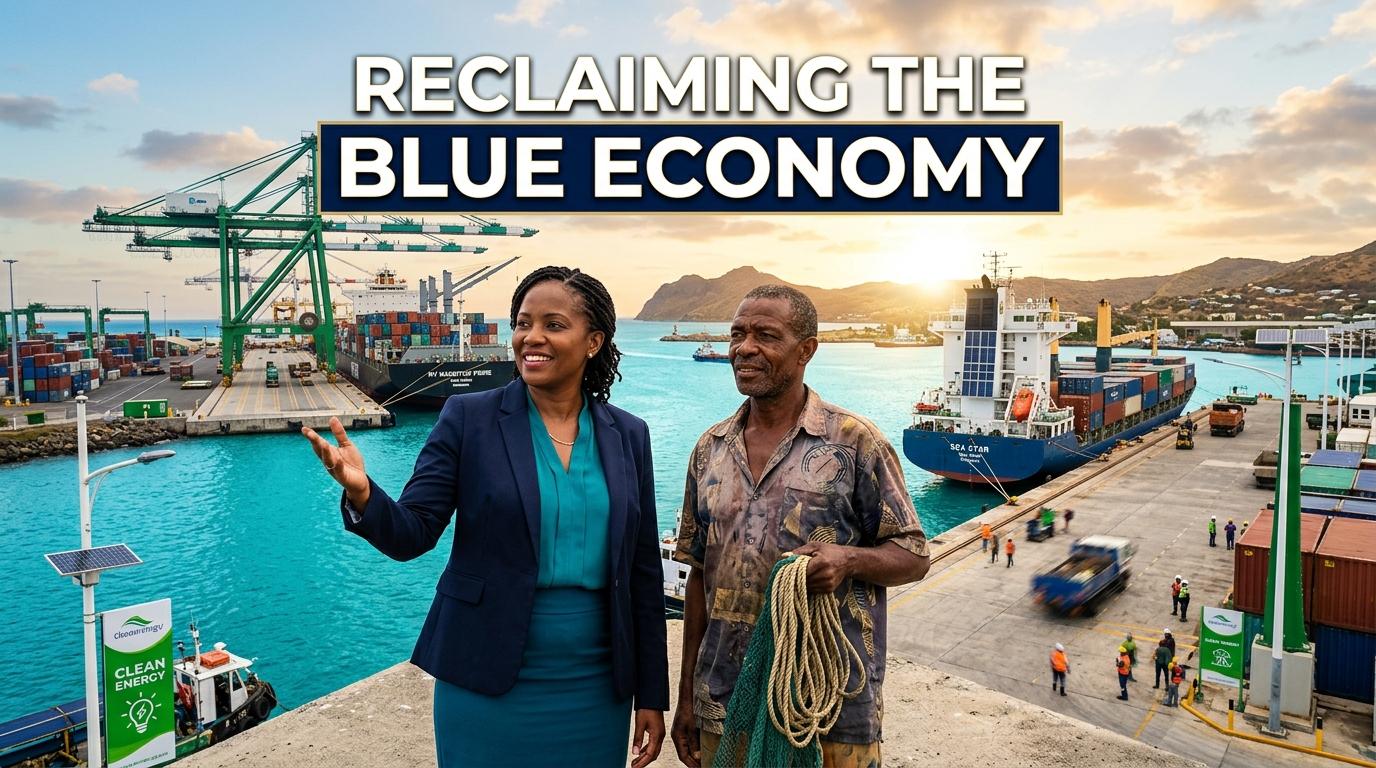
For instance, São Tomé and Príncipe maintains an ocean zone 160 times larger than its total land area (afdb.org). Maximizing this potential requires expanding the Blue Economy (unctad.org). The Blue Economy covers sustainable fisheries, ocean renewable energy, eco-tourism, and maritime transport (unctad.org). Blue capital represents targeted financial investments aimed at marine sustainability (unctad.org). Additionally, coastal habitats generate blue carbon credits by capturing atmospheric carbon at rates higher than land forests (unctad.org). Monetizing these credits provides non-debt revenue for conservation and public infrastructure (unctad.org).
Reforming Global Finance with Special Drawing Rights
Closing developmental gaps requires reforming the international financial system (afdb.org, imf.org). Special Drawing Rights are international reserve assets created by the International Monetary Fund (imf.org). They supplement official foreign exchange reserves of member states (imf.org). Drawing rights are not a currency, but represent a potential claim on freely usable international currencies (imf.org). In August 2021, the International Monetary Fund approved a historic allocation of 650 billion dollars (imf.org).
However, allocation rules distributed funds based on quota shares (imf.org). G7 and wealthy nations received the vast majority, while all of Africa received less than five percent (imf.org). Rechanneling involves wealthy nations voluntarily transferring unused drawing rights to developing nations (afdb.org, imf.org). The African Development Bank advocates rechanneling these assets through multilateral development banks (afdb.org). Using drawing rights as hybrid capital allows banks to leverage funds on international financial markets (afdb.org). This approach expands concessional finance, offering low interest rates and extended repayment terms during severe economic shocks (afdb.org, imf.org).
Labor Market Rigidities and Infrastructure Reforms
Economic resilience requires addressing structural labor market rigidities across island and coastal nations (afdb.org, africa-newsroom.com). Labor market rigidities occur when regulations, high transport costs, and skill mismatches prevent efficient hiring (afdb.org). In many island states, high youth unemployment exists alongside severe shortages of skilled technical workers (afdb.org, africa-newsroom.com). Vocational training frameworks must align with modern green and blue industries (afdb.org, afdb.org).
Data indicates that agriculture employs forty-two percent of the continental workforce (afdb.org). However, the sector remains sixty percent less productive than national averages due to inadequate technology (afdb.org). Furthermore, obsolete port infrastructure increases shipping costs for island states (afdb.org, afdb.org). Modernizing container terminals and digitalizing customs processing directly reduces landed freight costs (afdb.org). Lower logistics costs insulate local food prices during global market disruptions (africa-newsroom.com, afdb.org).
A Strategic Roadmap for Economic Independence
African coastal and island economies stand at a critical crossroads (afdb.org). Relying on short-term crisis management will not protect populations from recurring global commodity spikes (afdb.org, africa-newsroom.com). Instead, governments must mobilize internal and external capital to execute long-term reforms (afdb.org). Africa holds over four trillion dollars in domestic institutional assets, including pension funds and sovereign wealth (afdb.org). Tapping these domestic reserves provides vital capital for infrastructure development (afdb.org).
Furthermore, strengthening tax administration and curbing illicit financial flows can generate substantial domestic revenue (afdb.org). Blended finance instruments and public-private partnerships allow states to de-risk private capital in green energy and logistics corridors (afdb.org, afdb.org). Modernizing labor markets, expanding technical education, and leveraging marine capital will build lasting resilience (afdb.org, afdb.org, unctad.org). Through deep structural transformation, African marine economies can shift from vulnerable trade outposts into resilient engines of sustainable growth (afdb.org, unctad.org).
About the Author
Darius Spearman is a professor of Black Studies at San Diego City College, where he has been teaching for over 20 years. He is the founder of African Elements, a media platform dedicated to providing educational resources on the history and culture of the African diaspora. Through his work, Spearman aims to empower and educate by bringing historical context to contemporary issues affecting the Black community.
