



ICE Shock Glove Contract Sparks Outrage Over Agency Force
By Darius Spearman (africanelements)
Support African Elements at patreon.com/africanelements and hear recent news in a single playlist. Additionally, you can gain early access to ad-free video content.
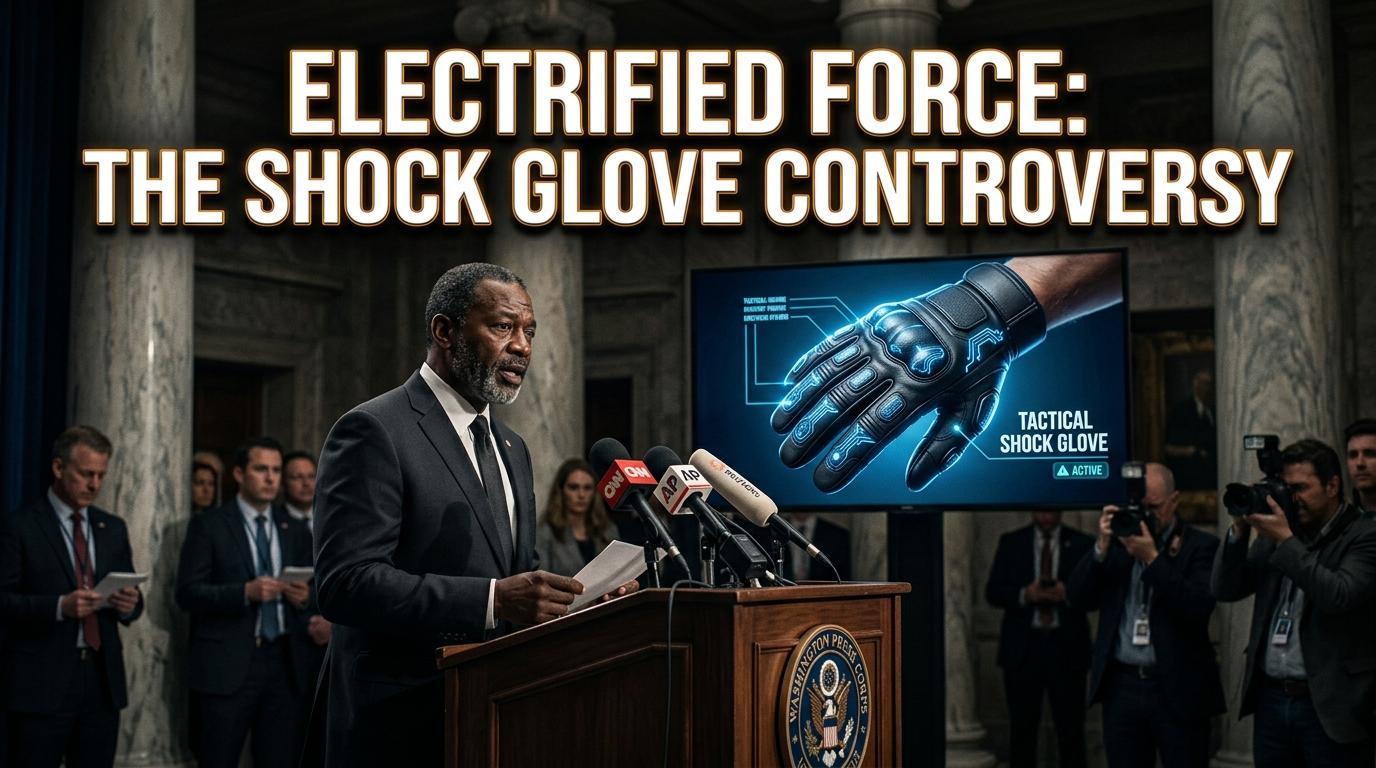
A recent procurement announcement from federal immigration authorities has ignited intense national debate regarding law enforcement gear and human rights safeguards. U.S. Immigration and Customs Enforcement plans to allocate between $10 million and $20 million to purchase wearable electroshock weapons known as the G.L.O.V.E. (pbs.org, truthout.org). Manufactured by Kentucky-based firm Compliant Technologies, the device functions as a specialized leather patrol glove capable of transmitting painful electrical shocks directly to bare skin (theguardian.com, complianttechnologies.net). Federal procurement documents indicate that the agency intends to equip thousands of officers across its Enforcement and Removal Operations and Homeland Security Investigations divisions by early 2027 (pbs.org, truthout.org).
Supporters within the federal government argue that the equipment provides a non-lethal physical control tool for chaotic operational environments (pbs.org, dailysignal.com). Official statements emphasize rising safety risks faced by field agents during deportation operations and criminal investigations (pbs.org, washingtontimes.com). Conversely, civil rights advocates, legal scholars, and lawmakers express deep concern regarding the potential for covert physical abuse (theguardian.com, commondreams.org). Critics stress that direct-contact shock devices leave few visible physical marks, creating severe challenges for accountability (theguardian.com, amnestyusa.org). Understanding this controversial government contract requires examining the long history of electrical weaponry in American policing and its historical impact on vulnerable populations.
The Cattle Prod’s Brutal Legacy in Black History
The deployment of electrical shocks against civilian populations has deep roots in American racial history. During the late nineteenth century, agricultural workers utilized early electric cattle prods strictly to manage livestock (wikipedia.org, richcampanella.com). By the early 1960s, Southern law enforcement agencies routinely adapted these industrial tools into instruments of intimidation against nonviolent demonstrators (crmvet.org, ohiohistory.org). During the struggle for civil rights, civil rights marchers faced police officers armed with high-voltage shock batons in cities such as Plaquemine, Louisiana, and Selma, Alabama (crmvet.org, richcampanella.com). Historical accounts document how officers deliberately seared the flesh of peaceful Black activists to break up peaceful assemblies (crmvet.org, ohiohistory.org).
The public outcry surrounding police violence during the 1960s forced federal commissions to reexamine law enforcement tactics (dtic.mil, wikipedia.org). The 1968 Kerner Commission report formally advised the federal government to fund non-lethal equipment research (dtic.mil). The goal was reducing reliance on firearm deployments during urban demonstrations (dtic.mil, wikipedia.org). However, civil rights advocates observed that alternative physical control tools often expanded police power rather than restricting force (amnestyusa.org, amnesty.nl). Instead of replacing lethal force, electrical shock weapons created additional mechanisms for physical compliance and coercive control (amnestyusa.org, amnesty.nl). This historical dynamic created lasting skepticism among Black communities toward new law enforcement technologies (fcnl.org, capitalbnews.org).
The Evolution from Gunpowder Weapons to Pain Compliance
The technical structure of electrical weaponry underwent significant shifts over the past half-century. In 1974, NASA researcher Jack Cover patented the initial TASER concept, deriving the name from a juvenile science fiction novel (wikipedia.org, wikipedia.org). Cover built the device using gunpowder combustion to discharge remote dart probes connected by thin conductive wires (wikipedia.org, atf.gov). Because the weapon relied on explosive propellants, the Bureau of Alcohol, Tobacco, Firearms and Explosives classified the invention as a Title II firearm under federal law (atf.gov). This legal designation placed the device in the same regulatory category as machine guns and short-barreled shotguns (atf.gov). Consequently, buyers faced strict National Firearms Act requirements, including mandatory background checks, registry tracking, and a $200 tax stamp per unit (atf.gov).
Onerous paperwork requirements and high tax fees severely constrained early adoption by municipal police departments (wikipedia.org, atf.gov). The market changed fundamentally in 1993 when brothers Rick and Tom Smith partnered with Jack Cover to form Air TASER (wikipedia.org, wikipedia.org). The engineers replaced gunpowder propellants with compressed nitrogen gas canisters (wikipedia.org, wikipedia.org). This design modification successfully removed the technology from Title II firearm classification (wikipedia.org, atf.gov). Free from federal firearm tax burdens and registry mandates, conducted energy weapons expanded rapidly into standard operational equipment across thousands of law enforcement agencies (wikipedia.org, police1.com).
A major technical distinction exists between projectile-based conducted energy weapons and direct-contact electroshock tools (police1.com, police1.com). Standard Tasers generate Neuromuscular Incapacitation by transmitting impulses between two probe electrodes (police1.com, axon.com). Neuromuscular Incapacitation overrides the central nervous system, causing involuntary motor muscle contraction that physically freezes a subject regardless of pain tolerance (police1.com, axon.com). Conversely, contact weapons like the G.L.O.V.E. operate exclusively through pain compliance (complianttechnologies.net, complianttechnologies.net). The glove delivers direct electrical current to peripheral nerves on bare skin, relying on sharp physical discomfort to force submission (complianttechnologies.net, complianttechnologies.net). Law enforcement experts note that pain compliance tools carry high failure rates when applied to individuals experiencing extreme panic, medical distress, or substance intoxication (police1.com, police1.com).
What Is “The G.L.O.V.E.” and How Does It Work?
The equipment driving the current federal policy dispute is manufactured by Compliant Technologies LLC, an enterprise based in Lexington, Kentucky (complianttechnologies.net, wuky.org). The device features conductive electrode pads embedded along the palm area of standard-looking tactical gear (complianttechnologies.net, complianttechnologies.net). An officer activates the unit by depressing an integrated switch located on the back of the hand (complianttechnologies.net, complianttechnologies.net). When pressed against an individual’s skin, the glove completes an electrical circuit (complianttechnologies.net, complianttechnologies.net). The unit transmits high-voltage, low-amperage electrical pulses that stimulate peripheral nervous tissue (complianttechnologies.net, complianttechnologies.net).
Company promotional materials describe the physical sensation as equivalent to a sharp bee sting that forces rapid physical submission (complianttechnologies.net, complianttechnologies.net). Official operating procedures stipulate that electrical applications must not exceed fifteen seconds per activation cycle (complianttechnologies.net, complianttechnologies.net). Furthermore, manufacturer protocols strictly forbid targeting sensitive anatomical areas, including the human head, neck, throat, or groin (complianttechnologies.net, complianttechnologies.net). Safety instructions also warn against deploying the device on vulnerable groups such as pregnant individuals, young children, or frail elderly persons (complianttechnologies.net, complianttechnologies.net).
| Feature / Metric | Standard TASER (NMI) | The G.L.O.V.E. (Pain Compliance) |
|---|---|---|
| Physiological Mechanism | Neuromuscular Incapacitation (Disables voluntary muscle control) | Peripheral Nerve Stimulation (Relies strictly on localized pain) |
| Deployment Range | Remote probe distance (typically up to 15–25 feet) | Direct physical contact (Zero-distance touch) |
| Physical Evidence Left | Barbed probes, puncture wounds, deployed wire fragments | Leaves no puncture marks, visible burns, or lasting scars |
| Data Logging Capability | Internal logs plus automated wireless body-camera activation | Internal microprocessor logs; no camera integration |
| Recommended Cycle Cap | 5-second standard discharge cycle | 15-second maximum recommended threshold |
Regarding administrative oversight, the glove incorporates an internal microprocessor designed to record operational metrics (complianttechnologies.net, complianttechnologies.net). The downloadable internal memory chip logs activation timestamps alongside the exact duration of every electrical discharge cycle (complianttechnologies.net, complianttechnologies.net). Department supervisors can export these recorded metrics into tracking software during routine post-incident reviews (complianttechnologies.net, complianttechnologies.net). However, significant differences remain between wearable shock gloves and modern conducted energy weapons (police1.com, axon.com). Advanced Tasers utilize integrated wireless transmitters that automatically trigger nearby officer body-worn cameras upon arming (axon.com). The G.L.O.V.E. lacks automated camera activation functionality, relying entirely on independent administrative downloads to establish usage records (complianttechnologies.net, complianttechnologies.net).
Tragic Reality: Inmate Deaths and Safety Violations
Despite manufacturer assertions regarding safety, the real-world deployment of electroshock gloves has produced severe legal and medical scrutiny (weku.org, wuky.org). A pending federal lawsuit details a fatal September 2024 encounter at the Madison County Detention Center in Richmond, Kentucky (weku.org, wuky.org). Corrections staff took forty-three-year-old Johnathan Mansfield into custody following an arrest for public intoxication (weku.org, wuky.org). During a physical altercation inside the facility, officers subjected Mansfield to repeated electrical shocks using both Tasers and G.L.O.V.E. equipment (weku.org, wuky.org).
Court filings state that officers shocked Mansfield forty times while he remained physically restrained (weku.org, wuky.org). The total force included twenty-seven separate electrical applications from shock gloves alongside thirteen Taser probe discharges (weku.org, wuky.org). An internal investigative audit revealed extreme departures from safety limits (weku.org, wuky.org). Officers applied continuous glove shocks lasting forty-five seconds during one instance and ninety-nine seconds during another (weku.org, wuky.org). These applications dramatically exceeded the manufacturer’s maximum fifteen-second safety rule (weku.org, complianttechnologies.net). Mansfield suffered cardiac arrest and died on October 10, 2024 (weku.org, wuky.org).
Following the internal inquiry, county administrators terminated the primary corrections officer involved, James Hollins (weku.org, wuky.org). Mansfield’s estate subsequently initiated a federal wrongful death lawsuit alleging excessive physical force, gross negligence, and deliberate indifference to emergency medical needs (weku.org, wuky.org). Civil rights attorneys emphasize that this fatal incident demonstrates how direct-contact shock tools invite dangerous overuse during tense physical encounters (theguardian.com, commondreams.org). When tools rely on pain compliance, non-compliant subjects often react to intense physical pain by thrashing (police1.com, police1.com). Officers frequently misinterpret these involuntary distress movements as deliberate physical resistance, leading to repeated electrical applications that increase cardiac risk (weku.org, police1.com).
Administrative Claims versus Legal Realities
To provide political justification for acquiring thousands of electroshock gloves, federal executive officials cited dramatic spikes in field danger (pbs.org, washingtontimes.com). Administration representatives, including White House Border Czar Tom Homan, publicly reported a 1,400 percent surge in physical assaults directed at border and immigration officers (pbs.org, washingtontimes.com). Officials asserted that field personnel required close-quarters control options to safely extract resisting individuals from motor vehicles or locked buildings (pbs.org, dailysignal.com). Executive leaders argued that wearable shock tools reduce reliance on conventional firearms during unpredictable civil enforcement operations (pbs.org, dailysignal.com).
However, investigative journalists and legal analysts uncovered sharp contradictions between administrative statements and judicial records (pbs.org, senate.gov). During congressional hearings, lawmakers highlighted that federal court filings tell a vastly different story (senate.gov). Actual criminal prosecutions for assaulting federal officers under 18 U.S.C. § 111 increased by approximately twenty-five percent over the corresponding timeframe (senate.gov). Congressional researchers revealed that executive agencies utilized a broad internal definition of “assault” (senate.gov). Administrative reporting counted passive non-compliance, verbal arguments, physical obstruction, and thrown light objects as physical attacks (senate.gov). Critics argue officials selectively highlighted inflated internal metrics to manufacture public fear and justify expanding equipment budgets (theguardian.com, commondreams.org).
Legal Battles and Constitutional Pushback
The proposed multi-million dollar procurement triggered swift legal pushback from state governments and civil rights organizations (theguardian.com, commondreams.org). New York Attorney General Letitia James announced preparations for formal litigation under the Administrative Procedure Act (theguardian.com). Enacted by Congress in 1946, the Administrative Procedure Act serves as the primary statutory framework regulating federal administrative operations (clapp-legal.com). Under Section 706 of the statute, state attorneys general and aggrieved individuals can petition federal courts to void agency decisions deemed arbitrary, capricious, or outside statutory authority (clapp-legal.com).
State legal challenges center on procedural compliance requirements (theguardian.com, clapp-legal.com). The Administrative Procedure Act mandates that executive agencies execute public notice-and-comment procedures before implementing policy shifts that alter enforcement conditions (clapp-legal.com). Furthermore, state prosecutors argue that introducing contact shock weapons without independent environmental impact assessments violates statutory rules (theguardian.com, clapp-legal.com). If state lawsuits succeed, federal judges could issue nationwide preliminary injunctions prohibiting ICE from spending federal funds on wearable shock equipment until full administrative reviews occur (theguardian.com, clapp-legal.com).
Legislative pushback also intensified within the United States Senate (senate.gov). Democratic lawmakers, including Senator Angus King of Maine, publicly challenged agency priorities during budget oversight hearings (senate.gov). Congressional leaders pointed out that Congress allocated tens of billions of dollars to the Department of Homeland Security while administrative oversight mechanisms remained weak (senate.gov, fcnl.org). Lawmakers questioned whether purchasing thousands of electric gloves represents genuine de-escalation or an investment in physical intimidation (theguardian.com, senate.gov). This legislative scrutiny reflects a broader historical struggle over the shift toward mass criminalization in modern federal enforcement practices.
Racial Disparities in Immigration Enforcement
The introduction of stealth electroshock gear carries profound implications for Black and Afro-Latino immigrants (americanimmigrationcouncil.org, capitalbnews.org). Research published by advocacy organizations like Freedom for Immigrants and the Black Alliance for Just Immigration documents systemic racial inequities throughout federal custody networks (americanimmigrationcouncil.org, fcnl.org). Although Black individuals comprise roughly six percent of the total detained immigrant population, they represent twenty-eight percent of abuse allegations submitted to national detention hotlines (americanimmigrationcouncil.org, capitalbnews.org). This statistical gap reveals how enforcement practices disproportionately impact Black immigrants (fcnl.org, capitalbnews.org).
Academic studies further indicate that Black immigrants experience higher rates of solitary confinement, extended physical restraint, and subjective force deployments (americanimmigrationcouncil.org, capitalbnews.org). Systemic biases frequently cause law enforcement personnel to perceive Black individuals as inherently larger, more aggressive, or less sensitive to pain (fcnl.org, capitalbnews.org). Deploying wearable shock devices that leave no physical scars creates heightened risks for covert abuse inside detention centers and rural facilities (theguardian.com, amnestyusa.org). Historically, forms of state violence have routinely impacted marginalized communities first before expanding into broader societal policing (crmvet.org, fcnl.org). Without strict external oversight, invisible force technologies threaten to exacerbate existing racial disparities in federal custody (fcnl.org, capitalbnews.org).
Addressing these systemic inequities requires recognizing how federal policies disproportionately impact vulnerable populations (fcnl.org, capitalbnews.org). When enforcement agencies operate with expanded budgets and minimal external review, marginalized communities routinely bear the heaviest burden (americanimmigrationcouncil.org, fcnl.org). The systemic nature of this dynamic mirrors historical patterns of economic and political marginalization documented across the African diaspora, where policy decisions frequently enforce structural inequality (crmvet.org, fcnl.org). Protecting constitutional rights requires persistent public scrutiny of federal law enforcement expenditures (theguardian.com, commondreams.org). Expanding advocacy efforts remains essential to preventing the normalized use of coercive pain technologies against vulnerable populations (amnestyusa.org, fcnl.org).
The ongoing debate surrounding ICE’s $20 million shock glove proposal highlights deep structural tensions between agency power and constitutional guarantees (pbs.org, theguardian.com). As federal immigration enforcement commands unprecedented budgetary resources, equipment choices reflect broader official priorities (truthout.org, senate.gov). The historical trajectory of electrical shock tools—from nineteenth-century agricultural prods to Civil Rights era repression and modern detention facilities—demonstrates that non-lethal labels rarely prevent physical abuse (amnestyusa.org, crmvet.org). Whether federal courts or legislative oversight will restrict the deployment of wearable electroshock tools remains an open question (theguardian.com, senate.gov). Ultimately, ensuring police accountability demands rigorous transparency, comprehensive data tracking, and unwavering protection of basic human rights (amnestyusa.org, clapp-legal.com).
About the Author
Darius Spearman is a professor of Black Studies at San Diego City College, where he has been teaching for over 20 years. He is the founder of African Elements, a media platform dedicated to providing educational resources on the history and culture of the African diaspora. Through his work, Spearman aims to empower and educate by bringing historical context to contemporary issues affecting the Black community.
