


How Gambian Women Overcome Grief Through Song
By Darius Spearman (africanelements)
Support African Elements at patreon.com/africanelements and hear recent news in a single playlist. Additionally, you can gain early access to ad-free video content.
Across West Africa, modern news reports frequently spotlight stories of community resilience. In The Gambia, a remarkable movement of women has captured global attention. These women use traditional music, bold dance, and social solidarity to face intense personal heartbreak. They belong to historical groups known as the Kanyeleng (aljazeera.com, aljazeera.com). Through these collectives, women transform the private pain of child loss and infertility into public strength (dimbayaa.com).
To fully understand these headlines, one must look into the deep cultural traditions of pre-colonial African societies. In many traditional communities, childbearing defines a woman’s social standing and economic stability. When a woman experiences infertility or loses an infant, social stigma often follows (uiowa.edu). Rather than suffering in isolation, Gambian women organized to reclaim their voices. Their journey offers a powerful lesson in how ancestral art forms can solve modern human crises (dimbayaa.com, uiowa.edu).
Historical Origins and Ethnic Spread
The origins of the Kanyeleng tradition reach back across generations. Historians trace these practices to the Jola ethnic group in the Casamance region and Mandinka communities along the Gambia River (uiowa.edu). Over time, neighboring ethnic groups adopted these rituals. Today, Fula and Wolof communities maintain their own variations of the tradition (uiowa.edu). Membership passes down through families. Older women introduce daughters and nieces who face similar reproductive struggles (aljazeera.com).
Different ethnic groups created specific names for these societies to protect vulnerable mothers. In Mandinka, members are called Kanyeleng (uiowa.edu). Fula communities use the term Geedereh, which translates directly to “dumpsite” (uiowa.edu). Wolof communities call the tradition Morrso, meaning “rag” (uiowa.edu). These names intentionally demean the individual. Traditional beliefs hold that humbling a person in the eyes of the spiritual world wards off malevolent forces. By declaring oneself as low as a rag or dumpsite, a mother signals to fate that she has already suffered, thereby shielding her future children (uiowa.edu, nomadit.co.uk).
The Spiritual and Physical Burden of Infertility
In traditional Gambian society, family continuation is central to social life. A woman’s marriage security and community standing rest heavily on her childbearing capacity (uiowa.edu). When a woman experiences childlessness or repeated miscarriages, she encounters severe social pressures. Marriages can break apart, or husbands may take additional wives (uiowa.edu). Traditional narratives often blamed spiritual phenomena for these reproductive challenges. For example, people spoke of kuntofengo, an affliction tied to jealous spirits called jinnoo in Mandinka or rab in Wolof (uiowa.edu, d-nb.info).
Behind these spiritual explanations lie significant biological factors that historical medical systems could not diagnose. Reproductive Tract Infections (RTIs) and Sexually Transmitted Infections (STIs) remain major causes of preventable infertility in developing regions (nih.gov, nih.gov). Untreated infections cause pelvic inflammation, leading to severe tubal damage (nih.gov). Furthermore, Female Genital Tuberculosis (FGTB) presents a profound health obstacle (nih.gov, nih.gov). FGTB is an extrapulmonary form of tuberculosis that spreads through the bloodstream or lymphatic system to the reproductive tract (nih.gov, nih.gov). It affects the fallopian tubes in up to 100 percent of diagnosed cases (nih.gov, nih.gov). FGTB causes tubal blockages, endometrial scarring, and intrauterine adhesions, making pregnancy extremely difficult (nih.gov). Because FGTB and many RTIs show few initial symptoms, women historically suffered without medical relief (nih.gov, nih.gov).
Joining the Kafoo: Rituals of Initiation and Solidarity
When facing these intense medical and social hardships, women find strength by organizing locally. Just as Black women organized formal support networks throughout history, Gambian women establish collective safety nets. In Mandinka culture, the word kafoo (plural kafoos or kafoolu) refers to a voluntary mutual-aid association (uiowa.edu, actionaid.org). These grassroots groups build social unity, finance local development, and manage community projects (actionaid.org). A Kanyeleng Kafoo specifically unites women who share the pain of infertility or child loss (uiowa.edu).
A woman joins a Kanyeleng group through a voluntary choice driven by her personal lived experience (uiowa.edu). Membership begins with a formal public initiation ritual (uiowa.edu). The central element of this initiation is a sacred ritual bath (uiowa.edu). Experienced members lead the candidate through this cleansing bath to symbolically wash away spiritual blockages and negative forces such as kuntofengo (uiowa.edu, d-nb.info). Entering the group requires public visibility about one’s childbearing struggles. However, this step replaces public shame with institutional protection. Once initiated, the candidate receives the signature group attire, learns original songs, and gains access to a lifelong sisterhood (uiowa.edu).
Tulungo and God Begging: Why Social Norms Are Reversed
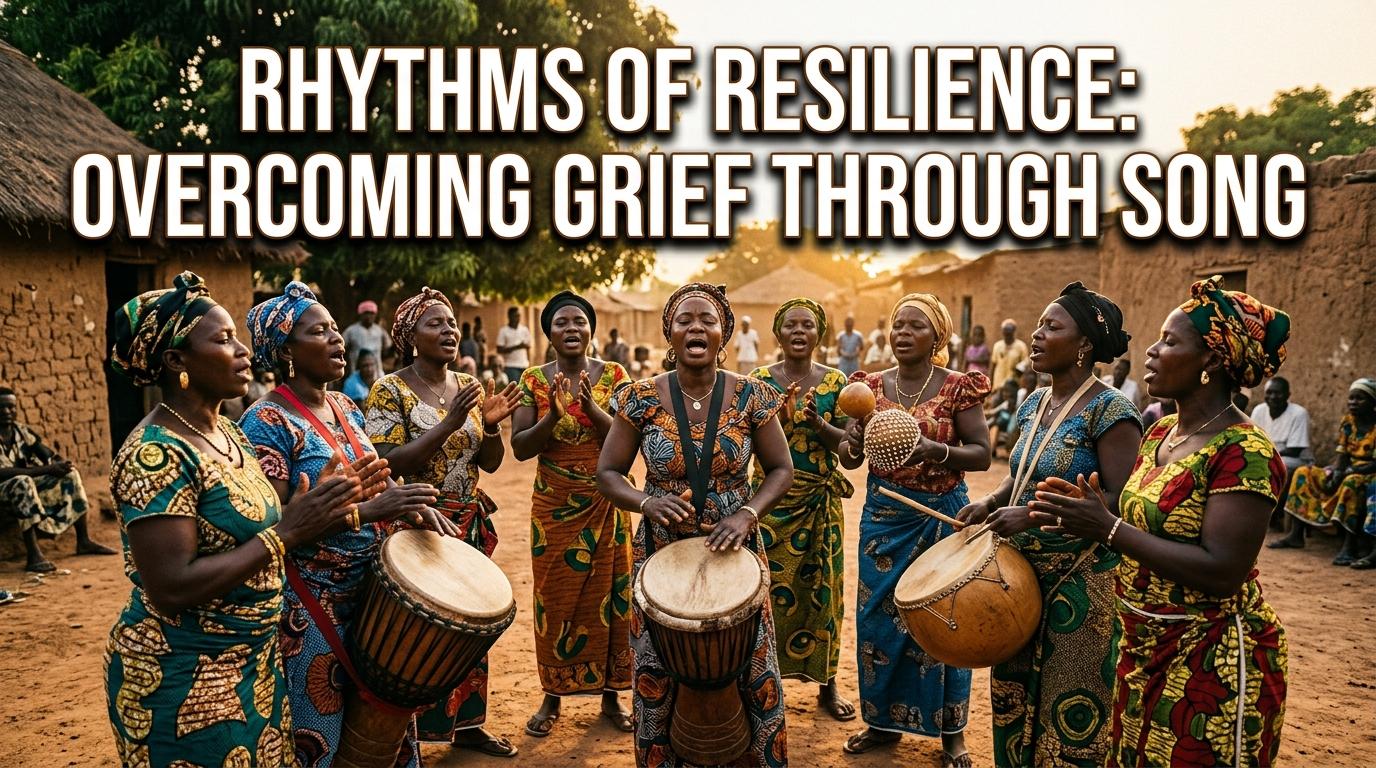
Central to Kanyeleng public activity is tulungo, a term meaning “playful performance” (uiowa.edu, aljazeera.com). During public gatherings, naming ceremonies, and weddings, Kanyeleng women step into the spotlight (uiowa.edu). They sing humorous songs, play rhythm instruments using upside-down plastic buckets, and perform lively comedy (uiowa.edu). A major feature of tulungo involves gender-role inversion (uiowa.edu). Women dress in oversized men’s shirts, wear baggy trousers, and mock traditional male authority figures (uiowa.edu). They display outrageous behaviors that directly contradict standard social rules for women (uiowa.edu).
In a conservative society, these boundary-pushing acts raise an important question: why do community elders and religious leaders tolerate this behavior? The answer lies in the sacred ritual understanding of “God begging” (Kalla Kaani) (uiowa.edu, nomadit.co.uk). Gambian culture grants a special social exemption for Kanyeleng women (uiowa.edu). Their exaggerated cross-dressing, self-shaming, and satirical teasing are not viewed as political rebellion. Instead, people see these acts as ultimate expressions of religious humility (uiowa.edu, aljazeera.com). By making themselves appear foolish in public, the women intentionally abandon their self-pride. They ask the divine power to take pity on their visible degradation and bless them with surviving children (uiowa.edu, aljazeera.com). This practice mirrors ancient ancestral musical practices where rhythm and performance carry sacred prayers. Traditional leaders recognize that these performances convert deep grief into constructive community prayer. Consequently, community members laugh along and give small monetary gifts to support the performers (uiowa.edu).
Financial Safety Nets: Kafoo Mutual Aid Networks
Beyond spiritual rituals, the Kanyeleng system functions as a practical financial framework. Each Kanyeleng group operates as an independent micro-economic cooperative (uiowa.edu). Members pay regular weekly or monthly dues into a shared pool (uiowa.edu). In addition, cash gifts received during public performances flow directly into the group treasury (uiowa.edu). These resources create an autonomous financial reserve managed entirely by the women (uiowa.edu, actionaid.org).
This collective fund provides vital economic security for vulnerable members (uiowa.edu). If a member falls ill, suffers a family loss, or requires emergency capital for a small business, the kafoo provides immediate zero-interest loans or direct grants (uiowa.edu). In a social structure where women often lack land rights or formal bank credit, these peer financial networks offer crucial stability (uiowa.edu, actionaid.org). Through economic cooperation, Kanyeleng women ensure that no sister suffers financial ruin alongside emotional grief (uiowa.edu).
From Sacred Ritual to Public Health Ally
Over the past twenty years, international developmental groups and health agencies noticed the extraordinary reach of Kanyeleng groups. Today, these performance circles serve as crucial public health communicators for government initiatives (aljazeera.com, actionaid.org). Because Kanyeleng women use humor and hold immense cultural respect, they can discuss sensitive topics that modern healthcare workers struggle to address directly (aljazeera.com, uiowa.edu).
Health campaigns frequently employ Kanyeleng groups to lead grassroots educational drives (aljazeera.com, actionaid.org). Official partnerships frequently run through TANGO—The Association of Non-Governmental Organisations (tango.gm, tango.gm). Founded in 1983, TANGO serves as the official coordinating body for over 80 national and international non-governmental organizations across The Gambia (tango.gm, tango.gm). TANGO coordinates health initiatives, prevents agency conflicts, and channels funding into community groups (tango.gm, tango.gm). Kanyeleng communicators work with civil society to boost child vaccination rates, explain polio eradication efforts, promote COVID-19 safety measures, and share disease prevention guidelines (aljazeera.com, actionaid.org). Public health studies show that village campaigns led by local communicators dramatically improve community health behaviors (actionaid.org).
A notable example of this partnership is the CHIME Project (Creative Health in Mind and Environment) (chimeproject.com, chimeproject.com). This initiative brings together public health authorities, the National Centre for Arts and Culture, and academic researchers (chimeproject.com, chimeproject.com). The project addresses perinatal mental health (chimeproject.com). The perinatal timeframe spans from the start of pregnancy through the first year after childbirth (chimeproject.com, nih.gov). Perinatal mental health focuses on preventing and treating conditions like depression, anxiety, and severe grief during this period (chimeproject.com, bmj.com). The CHIME Project integrated Kanyeleng call-and-response singing into routine prenatal clinic visits (chimeproject.com, chimeproject.com). This initiative helped reduce anxiety and emotional distress among expectant mothers (chimeproject.com, chimeproject.com).
Navigating Taboos: The Fight Against Female Genital Mutilation
One of the most delicate challenges for Kanyeleng advocates involves addressing Female Genital Mutilation (FGM). FGM remains deeply rooted in local traditions across parts of West Africa (thinkyoungwomengambia.org, thinkyoungwomengambia.org). Rather than taking an aggressive external stance, Kanyeleng women navigate community resistance through respectful cultural dialogues (thinkyoungwomengambia.org, thinkyoungwomengambia.org). Organizations such as Think Young Women, supported by UNICEF and TANGO, train Kanyeleng leaders to lead these delicate discussions (thinkyoungwomengambia.org, thinkyoungwomengambia.org).
Kanyeleng advocates use indigenous languages, traditional metaphors, and dramatic performances to highlight the health risks of FGM (thinkyoungwomengambia.org, thinkyoungwomengambia.org). They partner directly with progressive local Imams (thinkyoungwomengambia.org, thinkyoungwomengambia.org). Together, they explain to village elders that FGM is an ancient cultural custom rather than a mandatory religious duty (thinkyoungwomengambia.org, thinkyoungwomengambia.org). Furthermore, Kanyeleng women conduct private discussions with traditional circumcisers, known as Ngansimbas (thinkyoungwomengambia.org). By sharing personal stories of birth complications, bodily harm, and physical pain, Kanyeleng advocates build community agreement to protect young girls (thinkyoungwomengambia.org, thinkyoungwomengambia.org). This approach demonstrates how women utilize traditional dance as resistance to transform harmful practices from within their own culture.
Transforming Cultural Heritage Into Modern Agency
The journey of the Kanyeleng shows how traditional art forms evolve to solve contemporary challenges. What began as an ancestral coping mechanism for grieving mothers has expanded into a powerful network for social change. By converting personal heartbreak into collective musical performance, these women overcome severe social isolation (dimbayaa.com, uiowa.edu).
In addition, Kanyeleng groups show how traditional knowledge systems strengthen modern public health goals. As health organizations work to address perinatal mental health, maternal mortality, and disease prevention, the Kanyeleng provide a proven model of peer-led support (aljazeera.com, chimeproject.com). Through rhythm, comedy, and mutual assistance, these Gambian women demonstrate that cultural heritage can preserve sacred ancestral practices while advancing essential human rights (dimbayaa.com, thinkyoungwomengambia.org).
About the Author
Darius Spearman is a professor of Black Studies at San Diego City College, where he has been teaching for over 20 years. He is the founder of African Elements, a media platform dedicated to providing educational resources on the history and culture of the African diaspora. Through his work, Spearman aims to empower and educate by bringing historical context to contemporary issues affecting the Black community.
