



Why Nolan Wells Demands a Federal Civil Rights Probe
By Darius Spearman (africanelements)
Support African Elements at patreon.com/africanelements and hear recent news in a single playlist. Additionally, you can gain early access to ad-free video content.
A Disappearance on Horn Island
On July 4, 2026, an eighteen-year-old Black student-athlete named Nolan Wells vanished on Horn Island. The barrier island sits ten miles off the coast of Mississippi. Wells traveled to the remote area on a boat with three white high school peers for a holiday outing. When the boat returned to the mainland, Wells was not on board (mississippifreepress.org, theguardian.com).
Two days later, park rangers discovered his body along the shoreline. Local officials quickly suggested that the young man died from accidental drowning. Yet, his family immediately questioned the official account. The companions returned his mobile phone to the mainland while Wells remained behind. Grieving relatives discovered critical digital records were missing. This troubling chain of events sparked deep community outrage and demands for truth (bencrump.com, democracynow.org).
The Congressional Black Caucus Demands Oversight
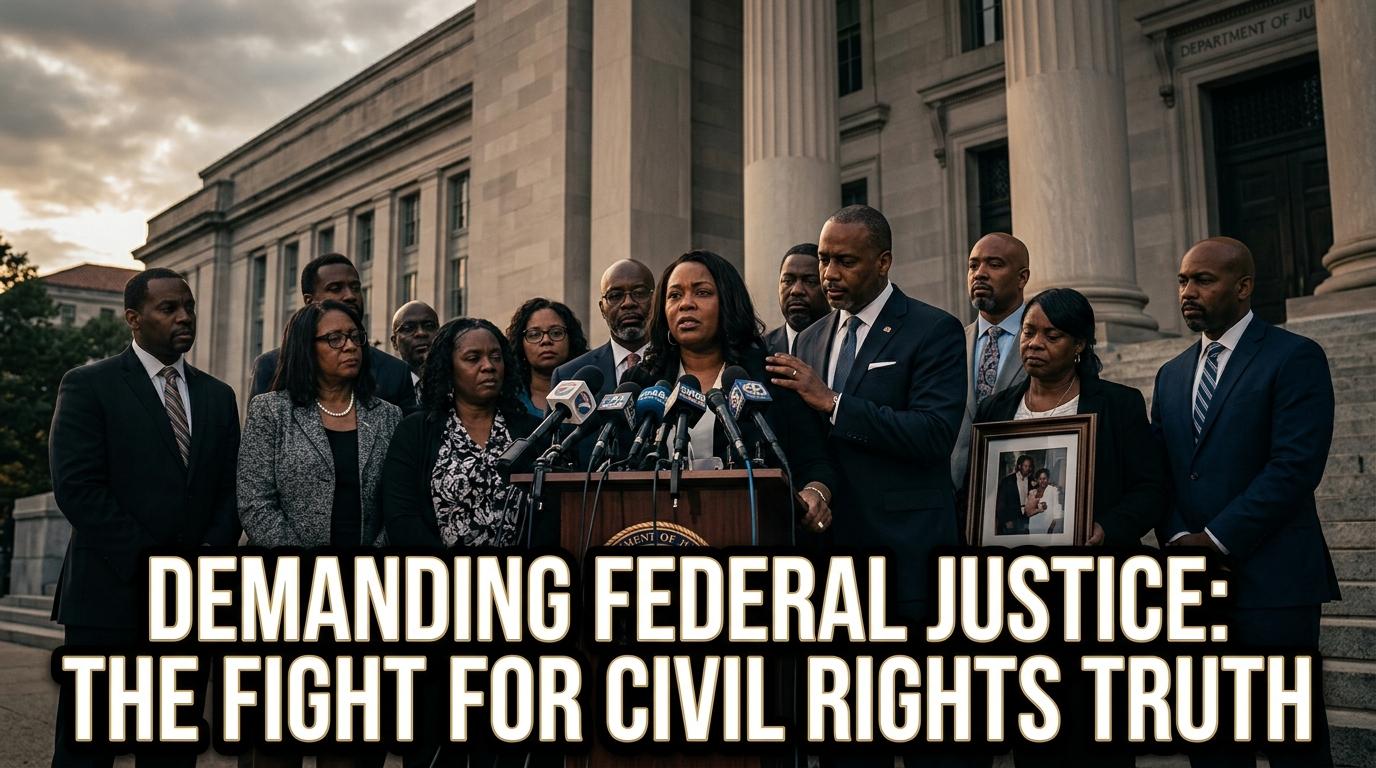
National leaders refused to remain silent about the case. In August 2026, members of the Congressional Black Caucus gathered in Atlanta during the National Association of Black Journalists convention. Civil rights attorney Ben Crump and the Reverend Al Sharpton joined the federal lawmakers. Together, they demanded immediate intervention from the United States Department of Justice (bencrump.com, wsbtv.com).
Representative Lucy McBath of Georgia led the public appeal. The lawmakers sent a formal request to United States Attorney General Todd Blanche and Federal Bureau of Investigation Director Kash Patel. The caucus gave the Justice Department seven days to explain what federal investigative resources were assigned to the matter. The lawmakers asserted that local authorities could not handle the inquiry alone without outside review (wsbtv.com, house.gov).
Lucy McBath and the Mothers of the Movement
The involvement of Representative Lucy McBath brings deep personal meaning to the struggle. Her seventeen-year-old son Jordan Davis was shot and killed at a Jacksonville gas station in 2012. A white motorist opened fire during an argument over loud music. Following that horrific loss, McBath dedicated her life to ending racial violence and protecting youth (wsbtv.com, wsbtv.com).
She became a prominent voice within the Mothers of the Movement. This collective includes Black women who lost children to systemic violence. Throughout history, women organized grassroots movements to transform private grief into national policy. McBath recognized the agony of the Wells family. She spoke directly to the recurring trauma Black mothers experience across the country (house.gov, wikipedia.org).
The Long History of Federal Civil Rights Protection
Demands for federal intervention in Southern criminal investigations follow a long historical pattern. Following the Civil War, the post-Reconstruction era exposed serious structural flaws in local courts. County sheriffs and all-white juries routinely protected perpetrators of racial terror. In response, Congress passed the Reconstruction-era Enforcement Acts and the Ku Klux Klan Act (justice.gov, ojp.gov).
These historical laws established federal authority to intervene when states denied citizens equal protection. The Civil Rights Act of 1957 expanded these powers by establishing the Civil Rights Division of the Department of Justice. Federal intervention proved essential during the 1964 Neshoba County murders in Mississippi. Direct intervention remains a constitutional shield against local bias (justice.gov, fbi.gov).
The Secrecy of Southern Grand Juries
The decision by the Jackson County District Attorney to send the case to a grand jury generated significant concern. The grand jury system was originally created to prevent groundless criminal charges. However, in sensitive racial cases, grand jury secrecy often shields local investigators from necessary public scrutiny (theguardian.com, magnoliatribune.com).
Grand jury proceedings take place behind closed doors without an independent judge presiding. Prosecutors decide what testimony and physical evidence the jurors examine. A formal indictment is known as a true bill, while a decision declining charges is called a no-bill. When proceedings remain secret, grieving families are frequently left without answers regarding why charges were denied (magnoliatribune.com, mpbonline.org).
Dual Sovereignty and Independent Inquiries
A local grand jury review does not stop federal investigators from stepping forward. Under the constitutional principle of dual sovereignty, federal and state governments act as separate legal entities. Consequently, the ongoing debate over state and national power shapes how modern civil rights laws operate (justice.gov, justice.gov).
A refusal to indict at the county level does not trigger the Double Jeopardy Clause for federal prosecutors. The Justice Department possesses the authority to conduct an independent review under federal criminal statutes. Federal prosecutors can examine whether individuals committed hate crimes or conspired to violate constitutional protections. This dual structure guarantees that federal officials can hold bad actors accountable (justice.gov, justice.gov).
Contradictions in Forensics and Medical Evidence
The scientific findings surrounding the death of Nolan Wells remain sharply disputed. The Mississippi State Medical Examiner conducted an autopsy but sealed the complete file pending grand jury action. Disquieted by official silence, the Wells family hired independent pathologist Dr. Roger Mitchell to examine the body (bencrump.com, mississippifreepress.org).
Dr. Mitchell ruled the cause and manner of death undetermined. He stated that non-accidental trauma and contributing factors could not be ruled out. Simultaneously, serious disagreements arose over digital forensic protocols. Family attorneys discovered missing digital messages on the personal phone of Wells. Independent cybersecurity analysis is necessary to preserve crucial electronic records (bencrump.com, bencrump.com).
Horn Island and Federal Jurisdiction
The geographic location of Horn Island adds an important legal dimension to this case. The island is an uninhabited wilderness reserve located in the Gulf of Mexico. It forms an integral part of the Gulf Islands National Seashore. The National Park Service manages the territory under federal authority (mississippifreepress.org, opb.org).
Federal law enforcement rangers and the United States Coast Guard share administrative responsibility for the surrounding waters. A National Park Service ranger helped locate the body of Wells on the beach. Because the death occurred on federally regulated land, the Department of Justice has clear justification to direct the inquiry (theguardian.com, opb.org).
The Emmett Till Legacy and Historical Precedent
Mississippi holds a painful place in the history of the Black liberation struggle. The 1955 lynching of Emmett Till exposed the devastating human cost of unchecked racial violence. Decades later, Congress passed the Emmett Till Unsolved Civil Rights Crime Act. This federal law created dedicated cold-case units inside the Department of Justice (justice.gov, pbs.org).
The reauthorized Till Act allows federal agents to investigate unresolved, racially suspicious deaths from across past decades. These historical precedents confirm why the Congressional Black Caucus refuses to yield. Federal authority exists specifically to guarantee that suspicious deaths of Black citizens in the South receive honest investigations (house.gov, fbi.gov).
Systemic Accountability Moving Forward
The push for federal intervention in the Nolan Wells case represents an urgent demand for basic dignity. An eighteen-year-old college student traveled to a holiday gathering and never returned home alive. His family deserves comprehensive forensic clarity, transparent records, and equal justice under the law (bencrump.com, wsbtv.com).
Representative Lucy McBath and the Congressional Black Caucus continue to press federal authorities for decisive action. The outcome of this investigation will test the resilience of federal civil rights enforcement. As community members await the next legal steps, national oversight remains essential to ensure that every question receives a complete answer (wsbtv.com, blavity.com).
About the Author
Darius Spearman is a professor of Black Studies at San Diego City College, where he has been teaching for over 20 years. He is the founder of African Elements, a media platform dedicated to providing educational resources on the history and culture of the African diaspora. Through his work, Spearman aims to empower and educate by bringing historical context to contemporary issues affecting the Black community.
