


VSU Shooting Updates: The History Behind Campus Safety
By Darius Spearman (africanelements)
Support African Elements at patreon.com/africanelements and hear recent news in a single playlist. Additionally, you can gain early access to ad-free video content.
Midnight Gunfire Shatters Move-In Weekend
The academic year at Virginia State University began with celebration and high energy. Over one thousand incoming freshmen gathered on Friday evening for the annual Trojan pinning ceremony (hbcugameday.com). Former professional football star Cam Newton addressed the excited crowd of young scholars (hbcugameday.com). A sense of hope and pride filled the air across the historic campus grounds.
That joyful atmosphere changed drastically in the early morning hours of Saturday, August 15 (cbsnews.com). Gunshots erupted around 1:28 a.m. along the 3300 block of Boisseau Street (youtube.com). The gunfire occurred right near the Quad Annexes student residence halls (youtube.com). Five individuals suffered gunshot wounds during the sudden burst of violence (theguardian.com). Emergency medical teams rushed one critically injured victim and four others to local trauma centers (washingtonpost.com, theguardian.com).
University officials quickly placed the entire 230-acre campus on an immediate lockdown (youtube.com, vsu.edu). Chesterfield County Police and university officers converged on the scene to secure the area (youtube.com). Investigators determined that four of the five victims were not enrolled students (washingtonpost.com). The violent encounter stemmed from an on-ground dispute rather than a drive-by shooting attack (youtube.com, washingtonpost.com).
Fourteen Hours Inside Seward Hall
Following the initial response, campus authorities lifted the lockdown after nearly seven hours (youtube.com, cbsnews.com). Law enforcement believed an immediate active shooter threat was no longer roaming the open yards (youtube.com). However, the primary suspect remained unaccounted for throughout the morning hours (youtube.com, washingtonpost.com). Students and parents remained on edge across the community.
Around 4:00 p.m. on Saturday, officers received critical investigative tips (youtube.com). Police conducted a focused search inside Seward Hall, a student residence hall (youtube.com, washingtonpost.com). Officers discovered nineteen-year-old Camron Harris hiding inside a dormitory closet (youtube.com, washingtonpost.com). Authorities took the Henrico resident into custody without further physical resistance (youtube.com, washingtonpost.com).
Court records show that Harris was charged with eight serious felonies (youtube.com, washingtonpost.com). The charges include four counts of malicious wounding and four firearm counts (youtube.com). Investigators stated that Harris had no formal connection to the university (washingtonpost.com). Law enforcement continues investigating how an unauthorized non-student accessed the residential facility during move-in chaos (washingtonpost.com).
A Legacy Born in Post-Civil War Struggle
To understand the campus environment today, one must examine its deep historical roots. The institution was chartered on March 6, 1882, as the Virginia Normal and Collegiate Institute (wikipedia.org). Delegate Alfred W. Harris, an African American state legislator, wrote and sponsored the foundational bill (wikipedia.org). The university became the first fully state-supported four-year public HBCU in the nation (wikipedia.org).
The school opened its doors during a difficult period in American history. Black Americans faced severe legal exclusion across the South after the Civil War. The institution started with 126 students and seven faculty members on thirty-three acres (wikipedia.org). Dedicated educators worked tirelessly to train Black teachers for segregated public school classrooms (wikipedia.org).
The campus transformed steadily across the twentieth century. It gained land-grant status in 1920 and became Virginia State College in 1946 (wikipedia.org). The Virginia General Assembly elevated the school to university status in 1979 (wikipedia.org). Today, the campus encompasses over 230 acres and serves approximately 5,700 enrolled scholars (vsu.edu, wikipedia.org).
Land-Grant Status and Unequal State Support
The development of public Black colleges was shaped by federal legislation. In 1890, Congress passed the Second Morrill Land-Grant Act (britannica.com, tcf.org). The federal law required southern states to provide equitable funding for Black land-grant institutions (tcf.org). However, state governments consistently ignored this federal mandate for several generations (tcf.org, ed.gov).
The systemic underfunding impacted institutional resources across the country. In 2023, federal education officials addressed letters to governors in sixteen states (ed.gov). The investigation revealed that Black land-grant universities lost over twelve billion dollars in state support (ed.gov). These funding inequities severely affected the physical growth and education of Black students (ed.gov).
Federal data revealed that Virginia State University was shortchanged by more than 277 million dollars (ed.gov). This massive gap accumulated over a thirty-year evaluation period relative to Virginia Tech (ed.gov). Decades of budget deficits forced institutions to postpone vital infrastructure upgrades (ed.gov). These deferred projects often included physical perimeter controls, lighting, and electronic access systems.
Town-Gown Geography and Open Thoroughfares
Modern campus safety challenges connect directly to institutional geography. Virginia State University sits within the unincorporated community of Ettrick in Chesterfield County (wikipedia.org). Public streets like Boisseau Street run directly through the residential core of the campus (youtube.com, wikipedia.org). This open physical layout creates significant boundary control challenges for campus security teams.
Because Ettrick is unincorporated, policing responsibilities require extensive local cooperation (youtube.com, washingtonpost.com). The university police department employs twenty-five sworn officers (vsu.edu). Sworn campus personnel receive support from forty civilian safety staff members (vsu.edu). However, major emergencies require close coordination with the Chesterfield County Police Department (youtube.com).
This geographic reality highlights the traditional town-gown relationship. The university community remains intertwined with surrounding neighborhoods. Regional crime patterns occasionally spill across unfenced perimeter roads. Interagency cooperation becomes essential during unexpected crises.
Federal Interagency Coordination and Gun Laws
The recent shooting quickly prompted an expanded law enforcement task force (youtube.com, cbsnews.com). Chesterfield County detectives are leading the primary state criminal prosecution (youtube.com, washingtonpost.com). Meanwhile, federal partners joined the inquiry to assist with advanced ballistics analysis (youtube.com, cbsnews.com). Investigators are utilizing the National Integrated Ballistic Information Network to trace recovered firearms.
The Bureau of Alcohol, Tobacco, Firearms and Explosives provided rapid technical support (cbsnews.com). Agents from the FBI Richmond Division joined the multi-agency investigative team (youtube.com). Authorities are investigating whether multiple individuals discharged weapons during the initial confrontation (washingtonpost.com). Federal and local investigators are also examining how the weapons were obtained.
These investigative efforts operate within complex state-level policies regarding firearms (courthousenews.com, armedcampuses.org). Virginia law explicitly prohibits guns inside public university buildings (billtrack50.com). State court decisions, however, recognize distinct jurisdictional nuances on open public streets (courthousenews.com). These overlapping jurisdictions require constant communication among local and state officers.
Enhanced Security Protocols as Classes Resume
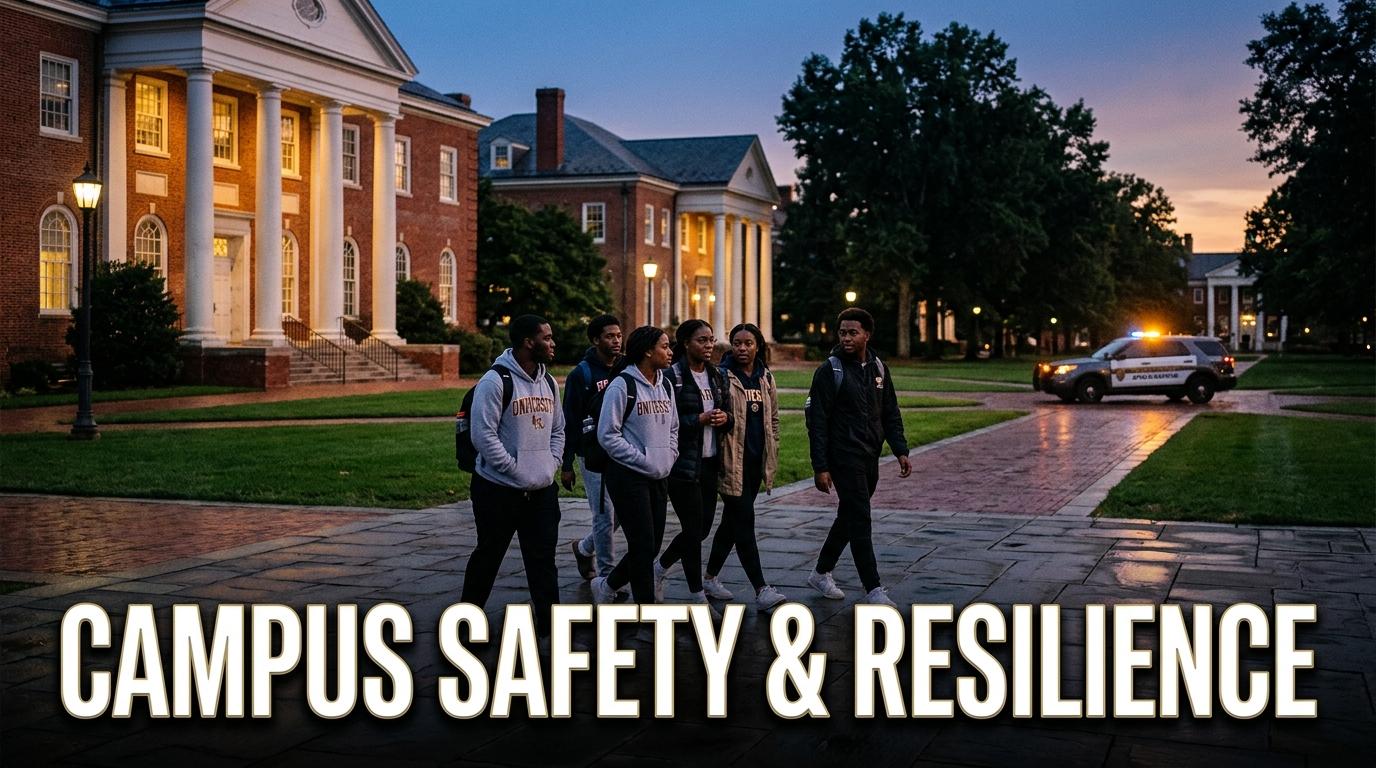
As the fall semester opened, university leaders instituted immediate physical safety adjustments (vsu.edu, vsu.edu). Campus police established strict access checkpoints at residence hall entry points. Security teams increased physical surveillance along residential corridors. Only verified residents and registered staff can access dormitory complexes.
Chesterfield County officers joined campus police to maintain visible joint vehicle patrols (youtube.com, vsu.edu). University administrators also ordered a comprehensive technical review of lock-down alert procedures. Officials want to ensure that non-students cannot enter secure buildings during emergencies. Physical security measures will remain enhanced throughout the semester.
University leadership prioritized emotional wellness alongside physical protection (vsu.edu). The VSU University Counseling Center extended its operating hours for students and staff (vsu.edu). Dedicated crisis counselors are offering trauma support sessions across residence halls. Student leaders are organizing forums to discuss community healing and collective vigilance.
Balancing Open Access with Campus Safety
The events at Virginia State University reflect nationwide higher education safety discussions (sandyhookpromise.org). College campuses must remain welcoming environments dedicated to academic inquiry. At the same time, institutions must protect students from external neighborhood violence. Finding this balance requires continuous operational refinement.
For more than 140 years, Virginia State University has educated resilient leaders (wikipedia.org). The institution has persevered through segregation, legal disenfranchisement, and severe resource disparities (wikipedia.org, tcf.org). The community continues to demonstrate strength while navigating modern campus security hurdles.
As the legal case proceeds in Chesterfield County, administrators remain focused on institutional excellence (youtube.com, vsu.edu). Enhanced safety procedures and multi-agency cooperation will help protect students. Virginia State University continues its historic mission of uplifting scholars and serving the wider community (wikipedia.org).
About the Author
Darius Spearman is a professor of Black Studies at San Diego City College, where he has been teaching for over 20 years. He is the founder of African Elements, a media platform dedicated to providing educational resources on the history and culture of the African diaspora. Through his work, Spearman aims to empower and educate by bringing historical context to contemporary issues affecting the Black community.
