


Why the Raleigh Hanging Death Sparks Demands for Truth
By Darius Spearman (africanelements)
Support African Elements at patreon.com/africanelements and hear recent news in a single playlist. Additionally, you can gain early access to ad-free video content.
A Shocking Discovery in Downtown Raleigh
On a warm Saturday afternoon, vibrant music and cultural pride filled downtown Raleigh during the annual CaribMask Caribbean Festival. Thousands of people gathered to celebrate Caribbean and African diaspora traditions near Nash Square. The celebration stopped abruptly when emergency responders rushed to an adjacent lot on South McDowell Street. Behind nearby commercial buildings, first responders located an unresponsive thirty-two-year-old Black man hanging from a tree (binnews.com, axios.com).
Despite emergency resuscitation efforts at the scene, medical personnel pronounced the young man dead. News of the incident spread rapidly through social media channels as festival attendees shared disturbing video clips and photos. Eyewitnesses reported seeing the man walking alone and asking festivalgoers for water shortly before his discovery. The grim visual of a Black man hanging in a public space immediately ignited communal grief, fear, and widespread shock (binnews.com, balleralert.com).
City Officials Declare Suicide Without Delay
On Monday morning, Raleigh Police Chief Rico Boyce and Mayor Janet Cowell held a press conference at the Emergency Communications Center. City leadership sought to calm public distress and address rumors circulating across social media platforms. Chief Boyce announced that preliminary evidence indicated the death was a suicide without foul play. He stated that municipal traffic cameras and private surveillance footage showed the man was alone throughout the event (youtube.com, youtube.com).
Mayor Cowell expressed condolences to the grieving family and asked the public to avoid circulating unverified theories online. Officials confirmed that the North Carolina Office of the Chief Medical Examiner took custody of the case for toxicology and autopsy reviews (axios.com). However, the press conference did little to quiet community unrest. Many residents felt that city officials reached conclusions too quickly, sparking demands for external civil rights reviews (axios.com, hoodline.com).
Demographic Suicide Data: Mortality Mechanisms Among Black Males
Public health data reveals that public outdoor hanging is statistically rare among Black men, fueling community skepticism of rapid outdoor suicide determinations.
Source: Centers for Disease Control and Prevention (CDC) National Vital Statistics System & NC Violent Death Reporting System.
Why Community Distrust Runs So Deep
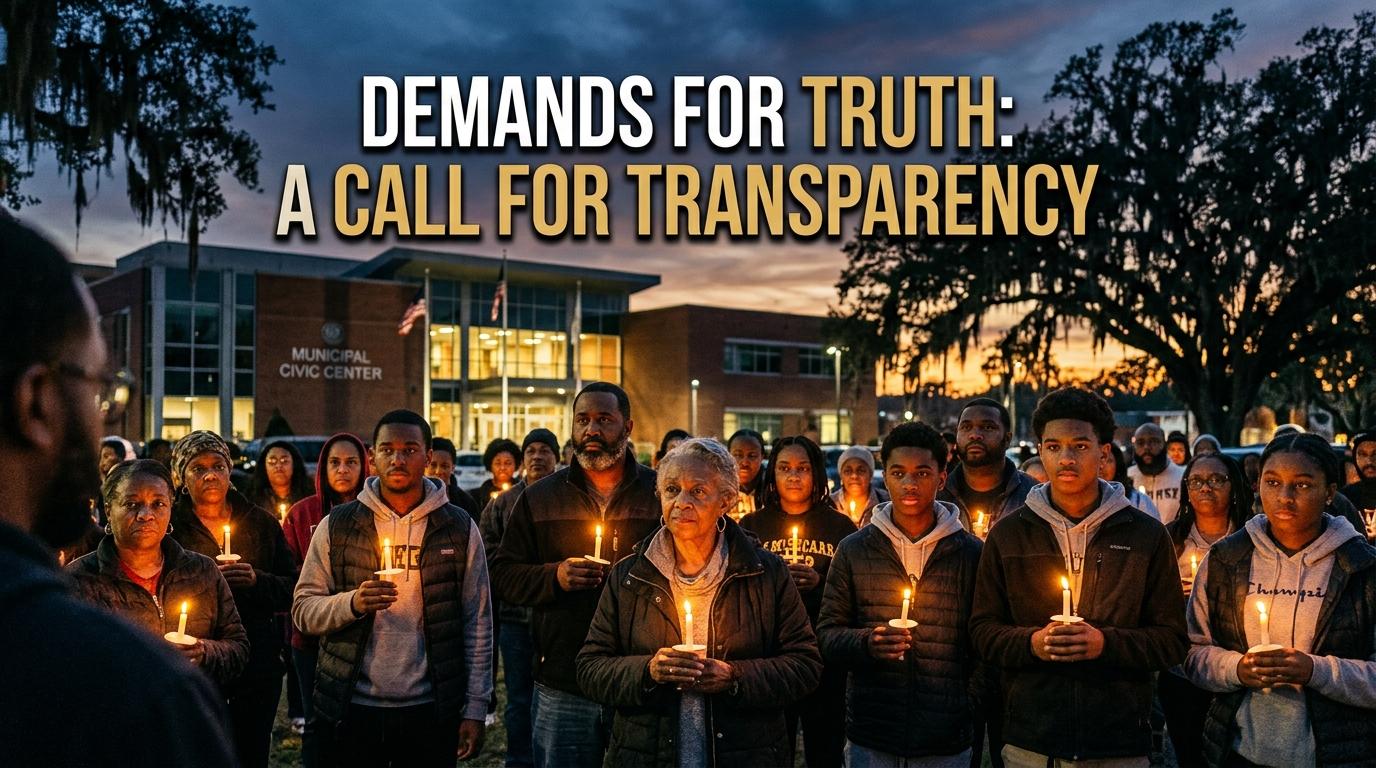
Community organizers and civil rights advocates quickly raised questions about the speed of the official investigation. Announcing a final determination within forty-eight hours left many residents feeling that authorities conducted an incomplete review. Activists noted that the department did not make the surveillance video public to verify that no coercion occurred (axios.com, axios.com).
Under North Carolina law, video footage held by law enforcement is not considered a public record. Releasing such footage requires a formal petition and a court order signed by a Superior Court judge (carolinapublicpress.org). Consequently, the public received verbal assurances rather than direct visual confirmation. This lack of access intensified calls for the North Carolina State Bureau of Investigation to assume jurisdiction and conduct an external review (reddit.com, reddit.com).
The Shadow of Racial Terror in North Carolina
The intense community reaction cannot be understood without examining the historical memory of white supremacist violence in the South. For Black Americans, the image of a Black man hanging from a tree is an enduring symbol of racial terror. Lynching served as an organized weapon to enforce social subjugation and preserve white supremacy after the Civil War (eji.org, eji.org).
Following emancipation, Black communities built economic and civic power while navigating intense racial hostility. White supremacists systematically undermined these advances through paramilitary violence and anti-Black politics across the state (oup.com, wikipedia.org). In 1898, armed white mobs carried out the Wilmington Coup d’État, overthrowing the legitimately elected biracial local government. They murdered dozens of Black residents, destroyed the local Black newspaper, and banished Black civic leaders (wikipedia.org). This historical trauma remains deeply embedded in North Carolina collective memory.
Documented Racial Terror in the American South (EJI Records)
Historical documentation demonstrates why public hangings evoke generational trauma rather than routine assumptions of self-harm.
(1877–1950)
(1865–1876)
(Montgomery Memorial)
Source: Equal Justice Initiative (EJI), Lynching in America: Confronting the Legacy of Racial Terror.
The Chilling History of “Parties Unknown”
Historical research compiled by the Equal Justice Initiative documents more than four thousand racial terror lynchings between 1877 and 1950 (eji.org). Thousands of additional murders occurred during the Reconstruction era as white mobs resisted Black citizenship (eji.org). Emancipated people faced violent retribution while resisting involuntary servitude after emancipation (eji.org, eji.org). Southern coroners frequently concealed mob violence by issuing formal verdicts attributing deaths to “parties unknown” (eji.org).
This boilerplate legal finding foreclosed criminal investigations and protected white perpetrators from accountability. In many instances, local law enforcement officers witnessed or actively participated in the killings. County inquest juries used the phrase to declare a homicide without naming known participants (eji.org, eji.org). Because southern legal systems repeatedly shielded racial violence behind administrative findings, modern communities approach rapid suicide determinations with historical skepticism.
Modern Precedents: From Lennon Lacy to Cedric Tayuhe
Modern cases across North Carolina have reinforced community skepticism regarding hanging investigations. In August 2014, seventeen-year-old Lennon Lacy was discovered hanging from a swing set in Bladenboro, North Carolina. Local authorities quickly ruled the death a suicide, but his family and the state NAACP demanded an independent federal investigation (themarshallproject.org, latimes.com). The subsequent federal inquiry uncovered severe investigative shortcomings, including uncollected evidence and mismatched footwear on the victim (themarshallproject.org).
Tensions surfaced again in early June 2026 with the death of thirty-six-year-old Cedric Tayuhe in Cabarrus County, North Carolina. Tayuhe, a Congolese immigrant and human rights activist, was found hanging from a tree in Harris Depot Park (hoodline.com, hoodline.com). The Cabarrus County Sheriff’s Office concluded the scene was consistent with suicide without foul play. However, county officials did not disclose the death to the public for two months (hoodline.com). That administrative silence deepened distrust across the region and amplified alarm when the Raleigh incident occurred just weeks later (reddit.com, hoodline.com).
Timeline of Disputed Hanging Deaths in North Carolina
The Push for Independent Civil Rights Oversight
Public outcry in Raleigh reflects structural friction between municipal law enforcement agencies and the communities they police. Municipal police departments operate under city administrative leadership and handle initial scene preservation. Conversely, the North Carolina State Bureau of Investigation provides independent investigative capabilities across the state (mptweb.com, mountainx.com). Community groups argue that local agencies face inherent institutional pressure to manage public perception and close controversial cases quickly (reddit.com, reddit.com).
Activists and local faith leaders continue to urge the North Carolina State Bureau of Investigation and federal authorities to review all physical evidence. Civil rights attorneys argue that independent oversight is essential to eliminate doubts surrounding video interpretation and forensic collection. Similar tensions developed throughout the mass incarceration era as communities demanded external checks on municipal policing (peopledemandingaction.org). Establishing public confidence requires total procedural transparency from every agency involved.
Moving Toward Transparency and True Healing
Bridging the divide between official findings and community trauma requires institutional empathy from city leadership. Law enforcement officials must recognize that a public hanging is not perceived as an ordinary death investigation. For Black residents, historical memory connects public hangings directly to generations of unpunished terror (eji.org, eji.org).
A complete resolution requires the state medical examiner to finish all forensic reviews with full public clarity (axios.com). City leaders must work collaboratively with independent advocates, community representatives, and the family to ensure every question receives a thorough answer. Only by confronting the enduring history behind the headlines can Raleigh begin to foster genuine accountability and healing.
About the Author
Darius Spearman is a professor of Black Studies at San Diego City College, where he has been teaching for over 20 years. He is the founder of African Elements, a media platform dedicated to providing educational resources on the history and culture of the African diaspora. Through his work, Spearman aims to empower and educate by bringing historical context to contemporary issues affecting the Black community.
