



Why Kenya Nurses Strike: The Broken Promises Behind the Crisis
By Darius Spearman (africanelements)
Support African Elements at patreon.com/africanelements and hear recent news in a single playlist. Additionally, you can gain early access to ad-free video content.
A Crisis in the Wards
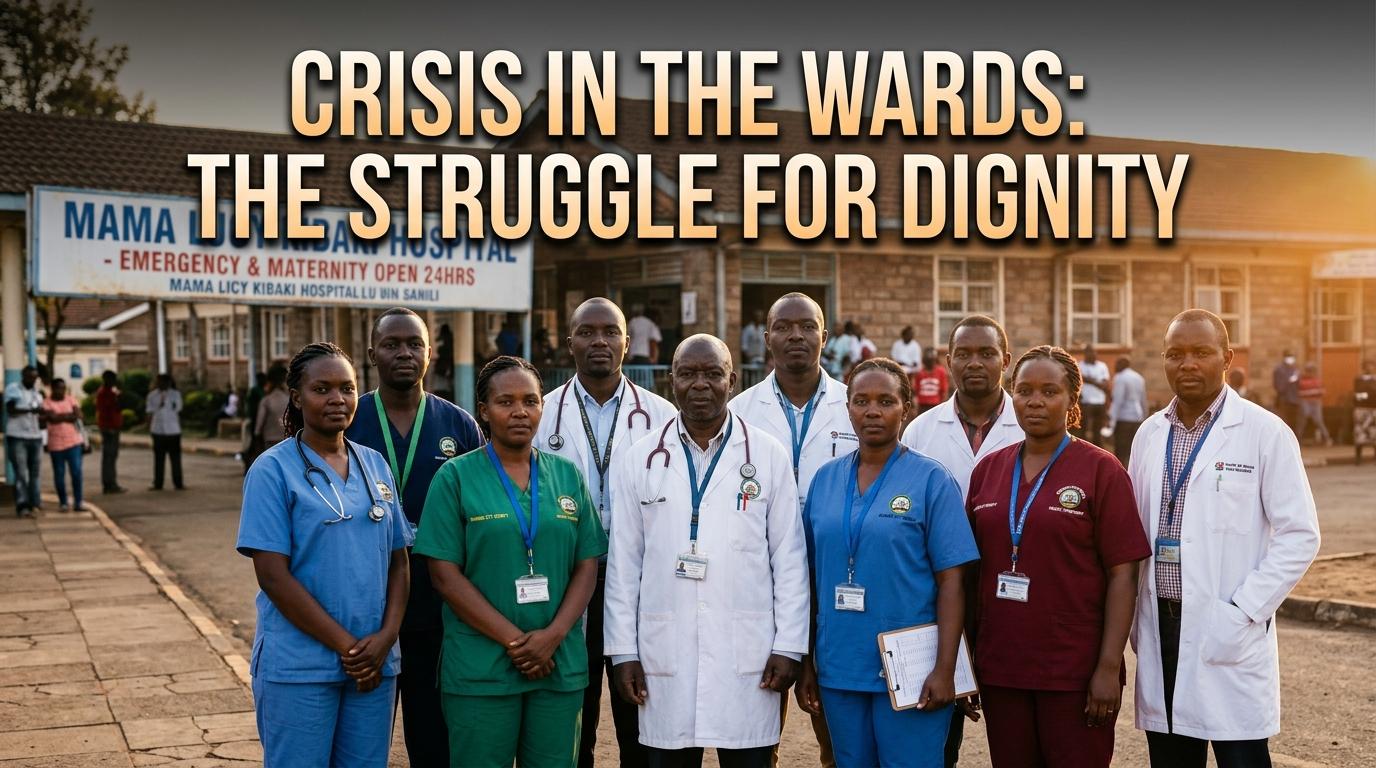
Hospital gates across Kenya have closed once again as healthcare providers walk off the job. Nurses and medical staff say that enough is enough. Patients find empty clinics and shuttered consultation rooms across public facilities. Families must search for expensive private alternatives or return home without care (standardmedia.co.ke, the-star.co.ke).
Headlines often present these events as sudden emergencies created by stubborn workers. The real story reaches much deeper into the historical struggle of African labor. Much like how Black workers fought for economic justice across the diaspora, Kenyan health workers face systemic neglect. The current walkout is another chapter in a long fight for dignity, fair pay, and safe working conditions (allafrica.com, standardmedia.co.ke).
The Roots of Devolution
The turning point for the health system arrived in 2010. The promulgation of the new Kenyan Constitution aimed to reshape public services. Article 43 explicitly guaranteed the right to the highest attainable standard of health for every citizen. To bring services closer to the people, the constitution established a devolved government structure (scielo.org.za, researchgate.net).
Healthcare operations shifted in 2013 from the central government to 47 newly formed counties. The national government maintained oversight of national referral hospitals and broad policy. Meanwhile, county public service boards took control of local clinics, sub-county hospitals, and regional referral centers. This sudden decentralization created severe administrative friction across the nation (africauncensored.online, researchgate.net).
The transition happened without sufficient institutional preparation. Health workers suddenly found themselves managed by local politicians rather than a unified national ministry. When systems undergo rapid transformation without adequate protections, workers often pay the highest price. Readers can examine power-sharing between national and state governments to understand how structural decentralization complicates labor management (scielo.org.za, africauncensored.online).
Fragmented Payrolls and Broken Trust
Devolution fragmented human resources into 47 separate management boards. Medical personnel immediately faced delayed paychecks, arbitrary salary differences, and frozen promotions. A nurse working in one county could earn a different rate than a colleague in an adjacent region. Pension contributions were withheld, and health workers lost access to standard promotional tracks (africauncensored.online, allafrica.com).
The Kenya National Union of Nurses, known as KNUN, was formed in 2013 to protect these professionals. Led by figures like General Secretary Seth Panyako, the union challenged county governments in court and through industrial action. KNUN stepped in to demand that counties respect labor standards and honor pay scales (insiderbits.co.ke, the-star.co.ke).
Instead of finding stable partnerships, the union encountered persistent bureaucratic resistance. County governments argued over who carried financial responsibility for allowances. The Council of Governors and the national Salaries and Remuneration Commission issued conflicting guidelines. As local officials blamed national agencies, healthcare workers saw their pay delayed for months at a time (peopledaily.digital, the-star.co.ke).
The 2017 Crisis and Unfulfilled Deals
The friction reached a historic peak between 2016 and 2017. Kenyan doctors walked off the job for 100 days, while nurses struck for an unprecedented 150 days. It was the longest healthcare strike in the history of the country. Over 183,000 patients were turned away from regional hospitals during this dispute (wikipedia.org, scielo.org.za).
The prolonged shutdown devastated basic medical access across the nation. In public facilities, infant immunization rates dropped by 57 percent during the nurses’ strike. The crisis finally forced government leaders to negotiate formal terms (scielo.org.za).
Officials signed a landmark Return-to-Work Agreement alongside new Collective Bargaining Agreements in late 2017. These contracts promised improved call allowances, higher risk pay, and clearer career advancement guidelines. However, full implementation of these agreements never materialized in most counties. That failure planted the seeds for the labor disruptions witnessed today (allafrica.com, standardmedia.co.ke).
Article 43 establishes health as a human right, laying the groundwork for decentralized governance.
Management transfers to 47 counties; nurses form KNUN to defend collective bargaining rights.
A 150-day nurses’ strike and 100-day doctors’ strike culminate in signed Return-to-Work Agreements.
Disputes over temporary UHC contracts and stalled CBA renewals spark nationwide walkouts.
The Universal Health Coverage Dilemma
The push for Universal Health Coverage introduced another layer of worker dissatisfaction. When the national government piloted the program, it hired thousands of nurses and medical professionals on temporary contracts. These fixed three-year agreements offered reduced pay and few employment protections compared to permanent civil service staff (eastleighvoice.co.ke, sifafm.co.ke).
Authorities promised that contract workers would transition to permanent positions once programs expanded. However, county governments resisted absorbing the staff into their budgets. County officials cited strict legal spending caps, noting that staff payrolls could not exceed local limits (eastleighvoice.co.ke, kippra.or.ke).
This dynamic left thousands of frontline nurses in economic limbo. These workers performed identical clinical duties alongside permanent staff while receiving lower pay and no pensions. Labor unrest is a predictable outcome when institutions deny equal pay for equal work. Similar struggles appear across history, as detailed in reports on worker movements against structural exploitation (eastleighvoice.co.ke, eastleighvoice.co.ke).
The Hidden Reality of Clinical Officers
Public attention often centers on doctors and nurses, but Clinical Officers serve as the quiet pillar of the system. This cadre originated during the colonial era in 1928 to address acute shortages of medical doctors. Today, the Clinical Officers Council regulates these mid-level clinicians under national legislation (clinicalofficerscouncil.org, wikidoc.org).
Clinical Officers carry out primary diagnoses, prescribe medications, and perform essential surgical procedures. They manage rural dispensaries and sub-county hospitals where physicians are rarely stationed. They outnumber medical doctors in the public sector and handle the vast majority of patient consultations (aku.edu, clinicalofficerscouncil.org).
Like their nursing colleagues, Clinical Officers frequently walk out over poor working environments. They manage primary health centers lacking running water, electricity, and essential diagnostic equipment. When basic medical supplies run out, clinical officers and nurses face the anger of desperate families at the bedside (allafrica.com, clinicalofficerscouncil.org).
Chronic Deficits and Inadequate Budgets
Working conditions in Kenyan public facilities highlight a persistent funding deficit. In 2001, African Union member states signed the Abuja Declaration, pledging to allocate at least 15 percent of their annual budgets to health. Kenya has rarely met this benchmark, with spending hovering between 7 and 11 percent (frontiersin.org, who.int).
This financial shortage translates directly into severe staffing deficits on hospital wards. The World Health Organization recommends a minimum of 25 nurses and midwives per 10,000 citizens. In Kenya, density figures frequently fall well below that threshold in rural districts (nih.gov, who.int).
In busy public wards, a single nurse is routinely forced to care for 30 to 40 acute patients. Safe international standards suggest a ratio of one nurse for every four to six patients. Understaffed wards create exhaustion for healthcare workers and jeopardize patient safety (sit.edu, the-star.co.ke).
The Battle for a Health Service Commission
To end the cycle of recurring strikes, healthcare unions demand structural institutional reform. Their primary proposal calls for a national Health Service Commission. This independent constitutional body would operate similarly to the Teachers Service Commission (standardmedia.co.ke, parliament.go.ke).
The proposed commission would centralize human resource management across all 47 counties. It would standardize salary structures, manage equitable staff deployment, and oversee professional promotions. Furthermore, centralizing human resources would protect healthcare staff from localized political victimization (standardmedia.co.ke, umb.edu).
However, significant political hurdles stand in the way. Creating a constitutional commission requires amending the Constitution of Kenya under Article 255. County governors oppose the proposal, calling it a rollback of devolution and county authority. Consequently, the standoff remains unresolved while workers and patients navigate the fallout (wikipedia.org, mzalendo.com).
Dignity for Frontline Healers
The recurring strikes across Kenya are not isolated labor disputes. They reflect structural problems born from a rushed devolution process and unfulfilled financial commitments. Healthcare staff continue to struggle under severe staffing shortages and uneven county management (scielo.org.za, africauncensored.online).
Resolving this crisis requires real structural reform rather than temporary court orders. Kenya must fund its health system properly, ring-fence medical budgets, and protect its workforce. Until public institutions value the professionals inside hospital wards, the declaration that enough is enough will continue to echo across the country (allafrica.com, standardmedia.co.ke).
About the Author
Darius Spearman is a professor of Black Studies at San Diego City College, where he has been teaching for over 20 years. He is the founder of African Elements, a media platform dedicated to providing educational resources on the history and culture of the African diaspora. Through his work, Spearman aims to empower and educate by bringing historical context to contemporary issues affecting the Black community.
