

HBCU Community Solar: The Fight for Energy Sovereignty
By Darius Spearman (africanelements)
Support African Elements at patreon.com/africanelements and hear recent news in a single playlist. Additionally, you can gain early access to ad-free video content.
A Historic Breakthrough in Clean Energy
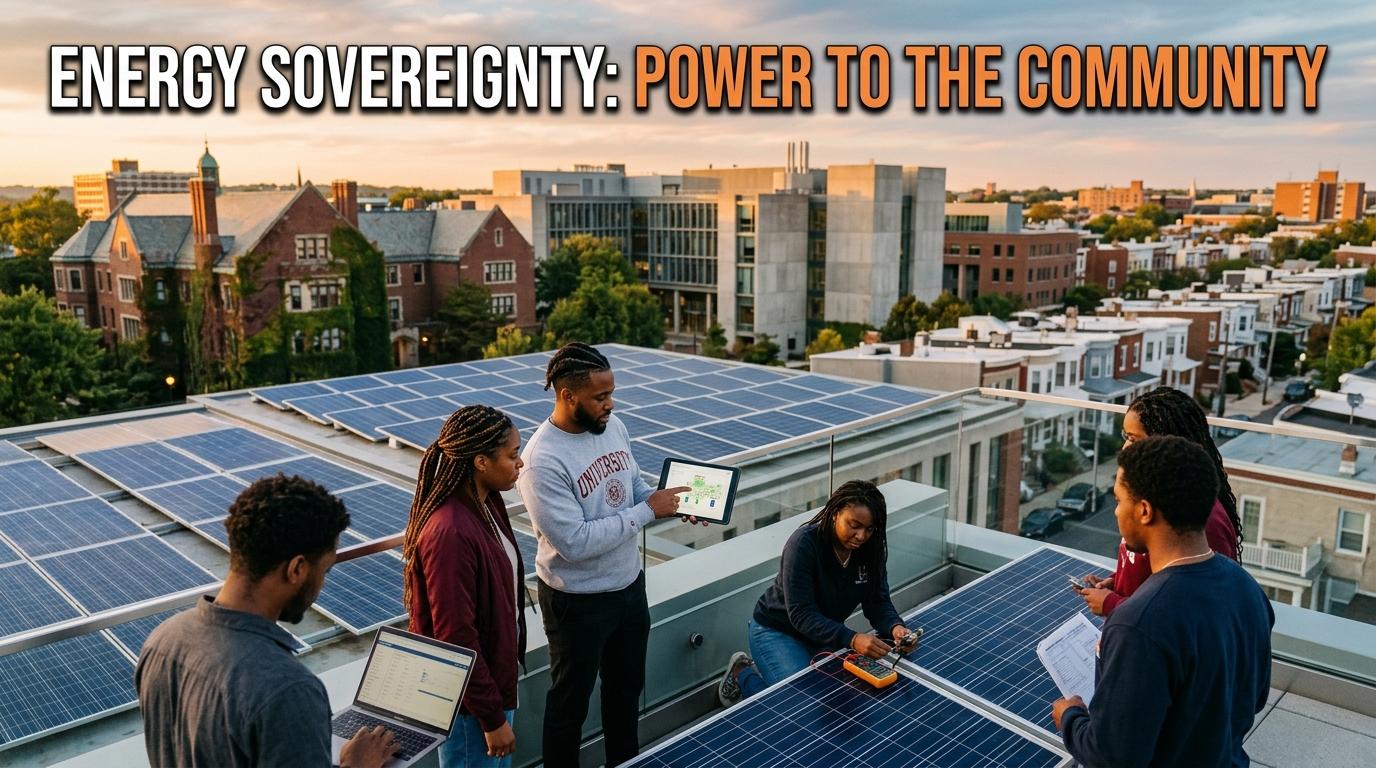
A coalition of Historically Black Colleges and Universities secured a historic five hundred million dollar federal infrastructure grant to build community-owned solar microgrids (grants.gov, iratracker.org). These clean power networks will serve low-income, predominantly Black neighborhoods that have faced decades of industrial pollution (bullardcenter.org, epa.gov). The historic investment delivers decentralized power, localized battery storage, and direct economic relief directly to vulnerable urban areas (epa.gov, hbcugreenfund.org).
This major funding milestone represents more than a modern engineering victory. The initiative marks a dramatic shift in environmental policy (epa.gov). For generations, Black communities were forced to fight defensive battles against toxic waste dumps, chemical plants, and dirty power stations (drrobertbullard.com, drrobertbullard.com). Today, HBCUs are leading the transition toward local ownership of clean power generation (bullardcenter.org, morgan.edu).
The Roots of the Environmental Justice Movement
The modern struggle against environmental racism began in the rural town of Afton in Warren County, North Carolina (wikipedia.org, nih.gov). In 1982, state officials chose this predominantly Black farming community as the dumping ground for sixty thousand tons of soil contaminated with toxic polychlorinated biphenyls, or PCBs (wikipedia.org, binghamton.edu). PCBs are synthetic industrial chemicals known to cause cancer, skin disorders, and long-term organ damage (nih.gov).
Local residents refused to accept the toxic landfill in their backyards. Civil rights organizers, faith leaders, and youth marched together and laid their bodies down on dirt roads to block the dump trucks (wikipedia.org, vermontlaw.edu). Civil rights leader Reverend Dr. Benjamin Chavis coined the term environmental racism during these protests (wikipedia.org, fordham.edu). The courageous resistance fused the tactics of the civil rights movement with environmental advocacy (upenn.edu, vermontlaw.edu). This moment sparked a national awakening across the country (wikipedia.org, drrobertbullard.com).
Dr. Robert Bullard and the Birth of HBCU Research
While grassroots activists held the line in North Carolina, Black scholars were documenting systemic bias in the courts (drrobertbullard.com, houstonlawreview.org). In 1979, sociologist Dr. Robert D. Bullard conducted a pioneering study for the federal lawsuit Bean v. Southwestern Waste Management Corp. in Houston, Texas (drrobertbullard.com, houstonlawreview.org). The legal team challenged the placement of a landfill near a Black public school (jrank.org, houstonlawreview.org).
Dr. Bullard discovered startling statistical disparities. From the 1920s through the late 1970s, one hundred percent of city-owned garbage incinerators and over eighty percent of municipal landfills were placed inside predominantly Black neighborhoods (drrobertbullard.com, houstonlawreview.org). Black residents made up only twenty-five percent of Houston’s population during that period (drrobertbullard.com, houstonlawreview.org). Although the federal judge denied an injunction, the lawsuit established that racial bias dictated the placement of environmental hazards (jrank.org, houstonlawreview.org). Dr. Bullard continued his research at Clark Atlanta University and Texas Southern University, earning the title of the Father of Environmental Justice (drrobertbullard.com, drrobertbullard.com).
Historical Siting Disparity vs Modern Solar Deficit
Empirical data demonstrating systemic environmental placement and the clean energy divide.
Sources: Bullard Research Archives (drrobertbullard.com, houstonlawreview.org) & Nature Sustainability (tufts.edu)
The Communiversity Model in Cancer Alley
In Louisiana, another HBCU pioneer changed how researchers partner with frontline communities. Dr. Beverly Wright founded the Deep South Center for Environmental Justice at Xavier University of Louisiana (dscej.org, dscej.org). The center later expanded its operations in partnership with Dillard University (dscej.org, dscej.org). Dr. Wright focused on the eighty-five mile industrial corridor along the Mississippi River known as Cancer Alley (dscej.org, dscej.org).
Cancer Alley contains over one hundred and fifty petrochemical plants and refineries (dscej.org). Many of these industrial facilities sit on former antebellum plantation lands next to historic Black settlements (dscej.org). Dr. Wright developed the Communiversity Model to address this crisis (dscej.org, dscej.org). This model breaks away from traditional, extractive academic research (dscej.org). Instead, university scholars and neighborhood residents work as equal partners (dscej.org). They gather air sampling data, monitor toxic emissions, and present legal testimony together (dscej.org, dscej.org).
The Ongoing Legacy of Redlining and Energy Inequity
The environmental burdens facing Black communities are directly connected to federal housing policies from the 1930s (therevelator.org, jhu.edu). The Home Owners’ Loan Corporation created colored maps that marked minority neighborhoods in red ink (therevelator.org). This discriminatory practice, known as redlining, blocked mortgage capital and municipal investments (therevelator.org, jhu.edu). It institutionalized anti-Black politics within urban planning across the United States.
Redlined neighborhoods were deprived of basic infrastructure updates for decades (jhu.edu). Today, these areas have older electrical distribution systems and overhead power lines that collapse during severe storms (therevelator.org). Formerly redlined neighborhoods also have fewer trees and more pavement (therevelator.org, jhu.edu). As a result, they suffer from extreme urban heat island effects, recording temperatures up to twelve degrees higher in the summer (jhu.edu). These compounding factors force Black families to spend a heavy portion of their income on cooling costs (aceee.org, therevelator.org).
Disparities in Energy Burdens and Climate Exposure
Sources: ACEEE Energy Burden Study (aceee.org) & NBEJN Reports (straughanenvironmental.com)
Energy Sovereignty Versus Traditional Clean Energy
The new microgrid initiative moves beyond clean energy access by demanding complete energy sovereignty (bullardcenter.org, hbcugreenfund.org). Clean energy access simply allows consumers to buy renewable electricity from private utility companies. In contrast, energy sovereignty gives residents democratic control and legal ownership over local power generation (bullardcenter.org). The ongoing struggle reflects how Black workers fought for self-determination throughout history.
Energy sovereignty treats power as a public good rather than a corporate commodity (hbcugreenfund.org). For decades, corporate utilities extracted profits from low-income neighborhoods while offering unreliable service (aceee.org, therevelator.org). When severe weather strikes, traditional centralized grids often fail working-class neighborhoods first (jhu.edu). By producing and managing their own power, communities protect themselves from extended blackouts and volatile utility rate hikes (grist.org, cebn.org).
Inside the Coalition and Federal Framework
The coalition secured this historic infrastructure funding under the federal Inflation Reduction Act and the Bipartisan Infrastructure Law (grants.gov, iratracker.org). These programs operate under the Justice40 Initiative, a federal mandate established by Executive Order 14008 (epa.gov, epa.gov). The directive requires that forty percent of overall benefits from federal climate investments flow directly into disadvantaged communities (epa.gov, epa.gov).
Major HBCU research centers anchor the initiative across multiple regions (bullardcenter.org, morgan.edu). Texas Southern University, Dillard University, Xavier University of Louisiana, and Clark Atlanta University lead local design efforts (dscej.org, bullardcenter.org, hbcugreenfund.org). Morgan State University also serves as a critical technical assistance hub (morgan.edu). This federal partnership highlights how the system of federalism can be leveraged to direct national resources straight to frontline neighborhoods.
Three-Phase Community Microgrid Deployment Plan
Source: HBCU Environmental Justice Demonstration Protocols (grants.gov, epa.gov)
Community Land Trusts and Cooperative Wealth
A central challenge in clean energy projects is preventing displacement and corporate capture (hbcugreenfund.org). The HBCU initiative uses Community Land Trusts and cooperative corporate models to ensure local residents retain full ownership (bullardcenter.org, hbcugreenfund.org). By combining federal grants with direct-pay clean energy tax credits, the coalition eliminates upfront installation costs for low-income families (iratracker.org, cebn.org).
Households participate in virtual net metering programs that reduce monthly electricity bills by twenty to forty percent (aceee.org, cebn.org). Surplus revenue generated from clean electricity sales remains within the neighborhood trust (hbcugreenfund.org). Furthermore, HBCU engineering and computer science departments provide workforce training programs (morgan.edu, hbcugreenfund.org). Students and local residents earn professional certifications in microgrid maintenance, battery management, and solar installation (morgan.edu, cebn.org).
Transforming Campuses into Regional Resilience Hubs
Climate disasters in the South have increased dramatically over the past decade (bullardcenter.org, grist.org). Because more than eighty percent of all HBCUs are located in the Southeast and Gulf Coast regions, these campuses frequently stand on the frontlines of severe storms (bullardcenter.org). During hurricanes, grid failures can leave entire cities in the dark for weeks at a time (jhu.edu, grist.org).
The solar microgrid initiative transforms HBCU campuses into emergency resilience hubs (bullardcenter.org, morgan.edu). The microgrids can isolate or island themselves from the larger electrical grid during regional blackouts (grist.org, cebn.org). This independent capability keeps medical clinics, community kitchens, emergency communication centers, and essential classrooms fully powered (morgan.edu, hbcugreenfund.org). The campuses serve as safe shelters for surrounding neighborhoods when extreme weather strikes (bullardcenter.org, jhu.edu).
The Path Forward for Environmental Justice
The five hundred million dollar federal investment marks the beginning of a transformative era in energy policy (grants.gov, bullardcenter.org). It validates four decades of tireless community organizing and HBCU academic research (drrobertbullard.com, dscej.org). HBCUs have proven that institutions dedicated to educating Black scholars can lead national infrastructure modernization (bullardcenter.org, morgan.edu).
The journey from the dirt roads of Warren County to community solar microgrids proves the power of persistent activism (wikipedia.org, vermontlaw.edu). The clean energy transition must repair historical harms rather than repeat them (drrobertbullard.com). By putting renewable generation and ownership directly into the hands of Black communities, this initiative lights a clear path toward true energy sovereignty (bullardcenter.org, hbcugreenfund.org).
About the Author
Darius Spearman is a professor of Black Studies at San Diego City College, where he has been teaching for over 20 years. He is the founder of African Elements, a media platform dedicated to providing educational resources on the history and culture of the African diaspora. Through his work, Spearman aims to empower and educate by bringing historical context to contemporary issues affecting the Black community.

Trackbacks/Pingbacks