

Elevate Africa 2026: Accra Unites Diaspora for Economic Power
By Darius Spearman (africanelements)
Support African Elements at patreon.com/africanelements and hear recent news in a single playlist. Additionally, you can gain early access to ad-free video content.
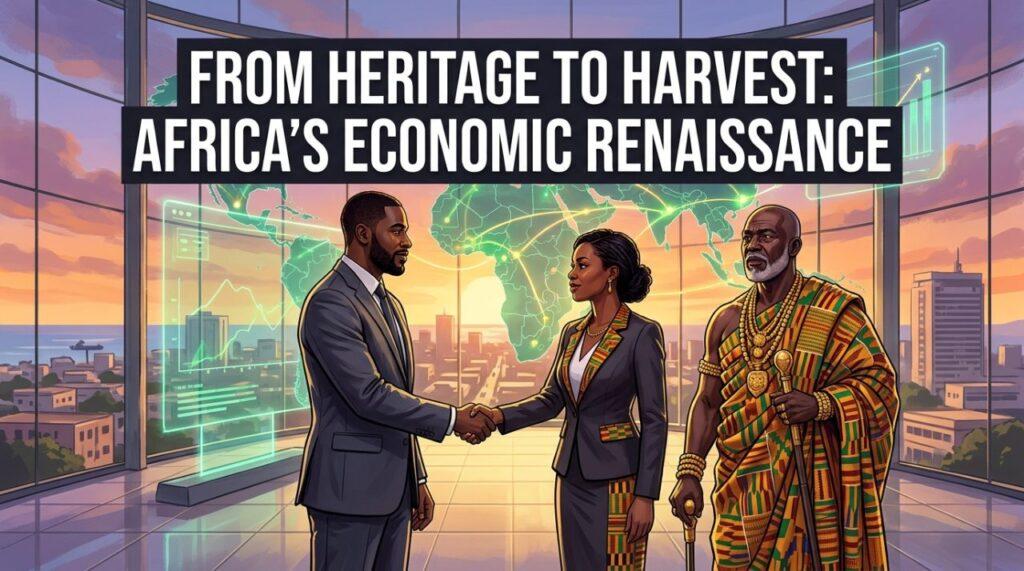
Dignitaries, traditional monarchs, and African American diaspora delegates gathered in Accra, Ghana, for the opening of the Elevate Africa 2026 convening (channelstv.com, ghanaweb.com). Under the theme of defining continental self-determination, the assembly sought to transform historical diaspora solidarity into operational economic power (weelevateafrica.org, thebftonline.com). For generations, gatherings between continental leaders and the global diaspora focused on cultural reunion (blackexecutivebrief.com, inkstickmedia.com). The Accra diaspora summit established an urgent shift toward institutional trade, industrial investment, and digital infrastructure (apanews.net, thebftonline.com).
The convening brought together sovereign traditional rulers, state officials, technocrats, and international investors (channelstv.com, publiceyenews.com). Discussions moved beyond symbolic solidarity to address the structural obstacles that limit intra-continental commerce and diaspora enterprise (thebftonline.com, asaaseradio.com). Leaders examined how modern trade agreements can connect African American capital with African industrialization (blackexecutivebrief.com, howwemadeitinafrica.com). Through legal reforms and cross-border payment platforms, the conference positioned the worldwide diaspora as an indispensable partner in Africa’s economic transformation (apanews.net, ghanaweb.com).
Kwame Nkrumah Pan-African Legacy and the Roots of Accra
Accra holds deep historical significance as the geographic heart of modern Pan-African statecraft (ghanaweb.com, tourismreporter.com). When Ghana achieved independence in 1957, Prime Minister Kwame Nkrumah declared that the nation’s freedom remained incomplete without the total liberation of the African continent (ghanaweb.com). Long before European colonization altered sovereign borders, African societies maintained dynamic regional trade systems. Nkrumah recognized that colonial borders fragmented these ancestral economic networks. He transformed Accra into an operational haven for global African liberation theorists and civil rights pioneers (ghanaweb.com, inkstickmedia.com).
RECOMMENDED READING

During the late 1950s and 1960s, African American intellectuals found sanctuary in Ghana (inkstickmedia.com). W.E.B. Du Bois relocated to Accra at Nkrumah’s invitation to lead the compilation of the Encyclopedia Africana, spending his final years in the capital (ghanaweb.com, inkstickmedia.com). Activists such as Malcolm X, Maya Angelou, and Dr. Martin Luther King Jr. journeyed to Ghana to forge institutional alliances between the American civil rights movement and African anti-colonial struggles (inkstickmedia.com). Nkrumah also embraced the economic vision of Marcus Garvey, placing the Black Star on Ghana’s national flag as a tribute to Garvey’s maritime trading enterprise (ghanaweb.com).
The Kwame Nkrumah Pan-African legacy established the political blueprint that modern continental leaders continue to build upon (ghanaweb.com, inkstickmedia.com). Nkrumah argued that individual African states were too small to resist foreign economic exploitation alone (inkstickmedia.com). His warning proved prophetic as post-independence economies struggled against extractive trade terms and continental debt burdens imposed by international financial institutions. The Elevate Africa 2026 convening revived Nkrumah’s initial vision, updating political Pan-Africanism into a framework for shared commercial sovereignty (weelevateafrica.org, thebftonline.com).
African Union Sixth Region: Redefining Global African Governance
The institutional relationship between continental governance and the diaspora changed fundamentally in 2003 (africandiasporanetwork.org). The African Union amended its Constitutive Act through Article 3(q), formally designating the global African diaspora as the African Union Sixth Region (africandiasporanetwork.org). This landmark amendment recognized people of African descent living outside the continent as an integral component of African development (inkstickmedia.com, africandiasporanetwork.org). The designation acknowledged that centuries of forced transatlantic dispersal had not severed ancestral obligations (inkstickmedia.com).
Despite this formal recognition, the Sixth Region status provides consultative and advisory mechanisms rather than direct sovereign authority (africandiasporanetwork.org). The primary institutional channel for diaspora participation is the Economic, Social, and Cultural Council, which reserves 20 of its 150 assembly seats for diaspora civil society representatives (africandiasporanetwork.org). The African Union also created the Citizens and Diaspora Organizations Directorate to coordinate transnational development initiatives (africandiasporanetwork.org). Descendants of the diaspora do not hold legislative voting power within the Pan-African Parliament, the Executive Council, or the Assembly of Heads of State (africandiasporanetwork.org).
The institutional limits of the Sixth Region designation have sparked serious debate among modern Pan-African policy experts (blackexecutivebrief.com, africandiasporanetwork.org). Diaspora leaders at Elevate Africa 2026 advocated for deeper integration that moves past symbolic advisory roles (weelevateafrica.org, apanews.net). Many argue that sustained investment requires formal representation within continental policy mechanisms (blackexecutivebrief.com). Expanding these governing channels would ensure that African American and Caribbean professionals help shape continental trade, educational systems, and regional regulatory frameworks (thebftonline.com, africandiasporanetwork.org).
Beyond the Return Ghana: Moving from Heritage to Sovereign Capital
In 2019, Ghana observed the Year of Return, marking the 400th anniversary of the arrival of enslaved Africans in colonial Virginia (tourismreporter.com, time.com). The campaign drew more than 1.1 million international visitors and generated an estimated $1.9 billion in economic activity (tourismreporter.com). The phenomenon catalyzed the annual December in Ghana festival season, establishing Accra as a global cultural destination (tourismreporter.com). However, government planners recognized that temporary cultural tourism could not resolve deep-seated economic challenges (ghanaweb.com, tourismreporter.com).
The Beyond the Return Ghana initiative emerged to channel cultural affinity into permanent institutional capital (ghanaweb.com, tourismreporter.com). Running from 2020 through 2030, the ten-year strategy focuses on land acquisition, real estate development, manufacturing investment, and technology transfer (ghanaweb.com, tourismreporter.com). The program encourages diaspora professionals to establish local commercial enterprises and bank accounts rather than visiting solely for leisure (ghanaweb.com, blackexecutivebrief.com). By 2025, tourism sector contributions to Ghana’s national economy surpassed $4 billion annually, demonstrating the commercial power of structural diaspora engagement (tourismreporter.com).
Intra-Regional Trade Share Comparison
Ghana Diaspora Citizenship and Restorative Justice
Legal identity represents the foundation of permanent diaspora integration (ghanaweb.com, ghanacitizenship.com). At the Elevate Africa convening, Ghana Diaspora Affairs Director Gladstone Selorm Kofi Okyere Darko announced expanded citizenship pathways for African descendants (ghanaweb.com). The policy grants naturalization under Section 10 of Ghana’s Citizenship Act through executive presidential decrees (ghanaweb.com, ghanacitizenship.com). This legal framework recognizes that the descendants of enslaved Africans were stripped of their ancestral nationality through historical violence (ghanacitizenship.com, inkstickmedia.com).
These legal mechanisms raise critical questions regarding restorative access (ghanacitizenship.com, inkstickmedia.com). Unlike commercial investor programs that mandate massive financial deposits, Ghana’s pathway does not impose formal investment thresholds (ghanacitizenship.com). However, applicants must demonstrate continuous local residency, high-level professional skills, or measurable community contributions (ghanaweb.com, ghanacitizenship.com). Similar identity-based statutes in Sierra Leone require certified DNA matches, while Benin passed historic 2024 legislation recognizing nationality for all descendants of transatlantic enslavement (ghanacitizenship.com). In practice, extensive legal fees, travel costs, and bureaucratic backlogs still restrict access largely to middle-class and affluent applicants (ghanacitizenship.com).
Conferring legal citizenship provides security for diaspora families seeking to establish permanent roots (ghanaweb.com, ghanacitizenship.com). Similar to the broken promises of post-Civil War Reconstruction, which denied formerly enslaved people economic security in the United States, diaspora communities have long sought guaranteed legal standing and property rights. Dual citizenship allows returnees to purchase land, open commercial accounts, and launch enterprises without foreign restrictions (ghanaweb.com, ghanacitizenship.com). At the same time, African governments gain direct access to global professional networks, technical skills, and foreign exchange reserves (apanews.net, ghanaweb.com).
Africa Financial Inflows: Diaspora vs Aid
Pan-African Economic Integration: From Garvey to AfCFTA
Modern commercial integration builds directly upon early twentieth-century diaspora economic movements (ghanaweb.com, blackexecutivebrief.com). In 1919, Marcus Garvey launched the Black Star Line through the Universal Negro Improvement Association (ghanaweb.com). Garvey sought to establish commercial shipping lanes linking Black businesses across North America, the Caribbean, and West Africa (ghanaweb.com). Hostile colonial authorities, federal surveillance, undercapitalization, and sabotaged equipment ultimately bankrupted the shipping venture (ghanaweb.com). Modern planners have systematically studied those historical pitfalls (thebftonline.com, worldbank.org).
Rather than relying on isolated private companies, Pan-African economic integration operates through multilateral treaties backed by 54 sovereign African states (worldbank.org, worldbank.org). Headquartered in Accra, the African Continental Free Trade Area unites 1.3 billion people within a single $3.4 trillion economic bloc (ghanaweb.com, worldbank.org). The World Bank projects that full treaty implementation could lift 30 to 40 million people out of extreme poverty and raise regional income by $450 billion by 2035 (worldbank.org, worldbank.org). Intra-continental trade accounts for only 18 percent of total African commerce, leaving vast space for internal market expansion (worldbank.org).
New financial infrastructure addresses the transaction barriers that historically derailed Pan-African trade (thebftonline.com, worldbank.org). Leaders at Elevate Africa highlighted the $5.17 billion Digital Trade Corridor and the Pan-African Payment and Settlement System (thebftonline.com, worldbank.org). These digital mechanisms permit cross-border payments in local currencies, eliminating foreign exchange losses and Western correspondent banking fees (thebftonline.com, worldbank.org). This infrastructure allows diaspora companies to trade digital services, textiles, and intellectual property securely across the continent without assuming maritime shipping liabilities (apanews.net, thebftonline.com).
Africa Projected Share of Global Youth
Olu of Warri Traditional Leadership and the 21st Century Monarchy
The institutional evolution of African traditional governance featured prominently in Accra (channelstv.com, publiceyenews.com). Historically, colonial authorities undermined traditional monarchies through divide-and-rule tactics and indirect governance frameworks (publiceyenews.com). After independence, national administrations often pushed ancestral rulers to the margins of economic planning (channelstv.com, publiceyenews.com). The Olu of Warri traditional leadership represents a clear institutional departure from that historical marginalization (channelstv.com, apanews.net).
His Royal Majesty Ogiame Atuwatse III, the 21st Olu of Warri, and Her Majesty Olori Atuwatse III co-founded Elevate Africa to bridge ancestral authority and corporate statecraft (channelstv.com, publiceyenews.com). As younger monarchs, they leverage cultural legitimacy to negotiate industrial partnerships and international venture capital investments (channelstv.com, asaaseradio.com). In her keynote address in Accra, Queen Consort Olori Atuwatse III declared that the time has come for Africa to author its own future using indigenous solutions (thebftonline.com). Traditional leadership now serves as an active catalyst for technological training and cross-border trade (publiceyenews.com, asaaseradio.com).
The convening showcased concrete programs designed to mobilize Africa’s demographic dividend (weelevateafrica.org, apanews.net). With a continental median age of 18.8 years, Africa is the youngest region on Earth (worldbank.org). By 2030, young Africans will constitute 42 percent of the world’s youth population (worldbank.org). Initiatives such as the Elevate Africa Fellowship train ethical mid-career public servants, while the Threads of Africa program links indigenous textile artisans with global fashion supply chains (weelevateafrica.org, weelevateafrica.org). These projects demonstrate that decolonizing education and commercial institutions requires African youth to control local manufacturing and retain creative intellectual property (weelevateafrica.org, nerdzfactory.org).
About the Author
Darius Spearman is a professor of Black Studies at San Diego City College, where he has been teaching for over 20 years. He is the founder of African Elements, a media platform dedicated to providing educational resources on the history and culture of the African diaspora. Through his work, Spearman aims to empower and educate by bringing historical context to contemporary issues affecting the Black community.
