

Sudan Ethiopia Conflict: Drone Strikes Trigger UN Complaints
By Darius Spearman (africanelements)
Support African Elements at patreon.com/africanelements and hear recent news in a single playlist. Additionally, you can gain early access to ad-free video content.
The geopolitical crisis across northeast Africa intensified as the Sudanese Ministry of Foreign Affairs formally lodged dual complaints with the United Nations Security Council and the African Union Peace and Security Council (mofasudan.website, aa.com.tr). Sudanese officials presented military dossiers alleging that foreign adversaries launched 187 one-way attack drones from Ethiopian territory, killing or wounding 484 civilians and disabling critical electrical grids (dabangasudan.org, mofasudan.website). These high-level filings marked a major escalation in cross-border tensions, converting an internal power struggle into an international standoff (aljazeera.com, addisstandard.com).
While appealing to international bodies, the Sudanese Armed Forces leadership clamped down on civil liberties inside the country (cpj.org, moatinoon.com). The Committee to Protect Journalists issued an urgent alert condemning Sudanese military authorities for amending Article 51 of the national penal code, making online and independent reporting a capital crime (cpj.org). This severe censorship campaign takes place as humanitarian monitors confirm catastrophic starvation conditions in North Darfur, creating a dangerous information blackout as famine spreads across the region (cpj.org, ipcinfo.org).
For observers examining the African diaspora and post-colonial governance, these modern headlines reflect deep historical structural problems. Today’s confrontation is shaped by centuries of European cartography, authoritarian legislation inherited from military dictatorships, and longstanding patterns of resource exploitation that continue to impact civilian populations. Understanding this multi-front crisis requires looking directly at the historical forces that produced it.
Colonial Treaties and the Al-Fashaga Border Dispute
The boundary tensions between Khartoum and Addis Ababa are rooted in colonial territory divisions. In May 1902, Great Britain, representing Anglo-Egyptian Sudan, and Emperor Menelik II of Ethiopia negotiated a treaty defining the international boundary (wikipedia.org, wikipedia.org). In 1903, British surveyor Major Charles Gwynn completed an official boundary demarcation, placing the fertile agricultural pocket known as Al-Fashaga inside Sudanese territory (wikipedia.org, researchgate.net). However, imperial administrators failed to complete physical demarcation pillars on the ground, leaving open disputes for generations to come (wikipedia.org, researchgate.net).
For more than a century, Al-Fashaga remained a disputed territory. Its 600,000 acres of fertile farmland created constant friction between Sudanese administrators and Ethiopian Amhara farmers who crossed the river valleys to settle and cultivate crops (wikipedia.org, cfr.org). In 2008, Ethiopian Prime Minister Meles Zenawi and Sudanese President Omar al-Bashir agreed to an informal compromise (wikipedia.org, cfr.org). Under this system of “soft borders,” Sudanese nominal sovereignty was recognized, but Ethiopian farmers retained continuous cultivation rights, temporarily reducing local disputes (wikipedia.org, cfr.org).
That compromise collapsed in November 2020 (wikipedia.org, cfr.org). When the Ethiopian federal government launched military operations in the northern Tigray region, the Sudanese Armed Forces advanced and reclaimed military control over the Al-Fashaga triangle (wikipedia.org, cfr.org). Addis Ababa viewed the operation as a hostile breach of existing understandings, while Khartoum argued it was reclaiming sovereign territory (wikipedia.org, crisisgroup.org). The dispute became intertwined with diplomatic arguments over the Grand Ethiopian Renaissance Dam along the Blue Nile, pushing Sudan into closer defense coordination with Egypt and establishing a tense frontier prone to cross-border skirmishes (chathamhouse.org, cfr.org).
Alleged Cross-Border Drone Warfare Toll
Reported cross-border impacts submitted to UN Security Council
Sudan Drone Strikes and the Regional Battle Space
The legal petitions submitted to the United Nations and the African Union highlight an escalating aerial conflict (mofasudan.website). Sudanese defense officials stated that the 187 one-way attack drones deployed against their sovereign territory originated from bases within Ethiopia (dabangasudan.org, mofasudan.website). The complaint specifically names the Assosa military airstrip in the Benishangul-Gumuz region and the Bahir Dar airbase in the Amhara region as primary staging points (dabangasudan.org, mofasudan.website). Authorities presented flight tracking data, satellite imagery, and weapon wreckage as physical evidence of cross-border operations (mofasudan.website, dabangasudan.org).
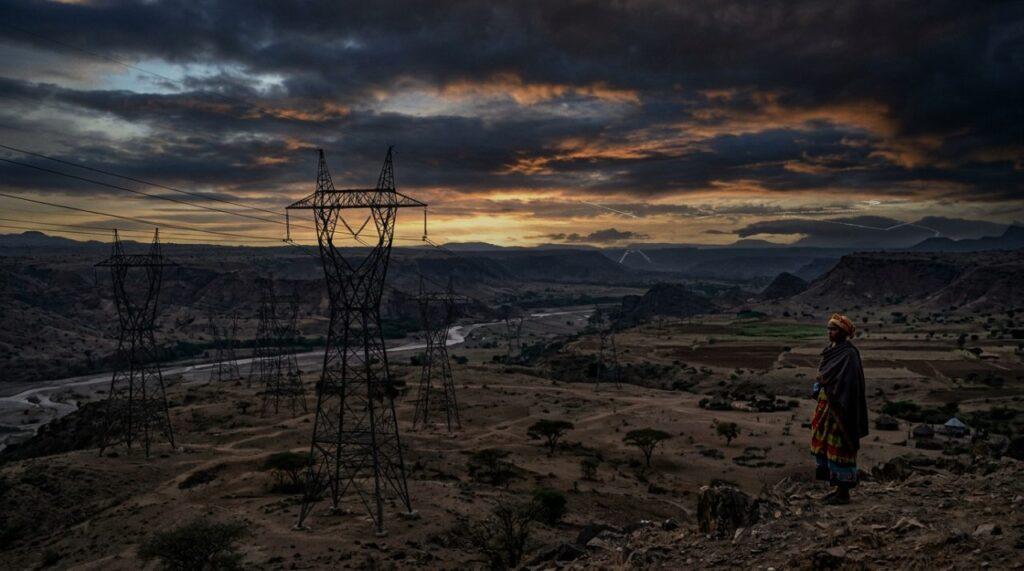
These strikes have exacted a severe toll on local populations and public utilities. Government records report that 484 non-combatants were killed or wounded during cross-border operations, alongside 176 Sudanese soldiers killed and 200 injured (dabangasudan.org, mofasudan.website). In one notable incident, a strike in Blue Nile State hit a camp for displaced families in Wad el-Mahi, killing 30 people, including 26 women and four children (mofasudan.website). Recent strikes targeted civilian power generation, knocking out critical electrical substations in Kassala, Red Sea State, River Nile, and Northern State, leaving millions without municipal power or running water (dabangasudan.org, mofasudan.website).
The Ethiopian government denied enabling attacks against its neighbor, stating that its facilities operate strictly for sovereign defense (addisstandard.com). In response, Addis Ababa accused the Sudanese military of providing shelter and tactical supply lines to fighters belonging to the Tigray People’s Liberation Front across their shared frontier (addisstandard.com). These tit-for-tat accusations reflect a broader pattern across the Horn of Africa, where border communities routinely become caught up in regional conflicts (chathamhouse.org, crisisgroup.org).
Origins of the SAF and RSF Proxy War
The fighting along the border cannot be separated from the civil war between General Abdel Fattah al-Burhan’s Sudanese Armed Forces and Mohamed Hamdan Dagalo’s Rapid Support Forces (crisisgroup.org, cfr.org). The Rapid Support Forces originated directly from the Janjaweed militias, organized by the Sudanese state in 2003 to execute counterinsurgency campaigns in Darfur (cfr.org, genocidewatch.com). In 2013, the central government formalized these militias into an official paramilitary force under Dagalo’s personal authority (cfr.org, genocidewatch.com). This structure gave the paramilitary group independent bases and its own financing outside regular military channels (chathamhouse.org, cfr.org).
The current confrontation traces back to the failure of power sharing arrangements between the military and civilian political coalitions (crisisgroup.org, cfr.org). After jointly ousting Prime Minister Abdalla Hamdok in the October 2021 military coup, General Burhan and Dagalo split over security sector integration under the December 2022 Framework Agreement (crisisgroup.org, cfr.org). Negotiations broke down over two key issues:
- Integration Timelines: The regular army insisted the paramilitary force integrate fully within two years, while paramilitary leadership demanded a ten-year transition (crisisgroup.org, cfr.org).
- Command Hierarchy: Military leadership demanded subordination to the army commander, whereas paramilitary commanders sought direct reporting lines to a civilian authority to preserve operational independence (crisisgroup.org, cfr.org).
- Preemptive Mobilization: Disagreements peaked in April 2023 when paramilitary columns deployed around the strategic Merowe military airbase without military authorization, triggering combat on April 15 (crisisgroup.org, cfr.org).
International patrons fueled this internal divide. The Rapid Support Forces secure weapons, medical logistics, and fuel along supply corridors passing through eastern Chad and western Ethiopia (newarab.com, chathamhouse.org). United Nations investigators and geopolitical analysts confirmed that the United Arab Emirates provides financial and logistical assistance to the paramilitary network (newarab.com, chathamhouse.org). The Gulf nation works to safeguard mineral investments, secure shipping rights along the Red Sea coast, and counter Islamist influence within the regular army’s officer corps (chathamhouse.org, orfonline.org). Meanwhile, the regular military relies on equipment from international partners, turning Sudan’s sovereign territory into a battleground for outside powers (aljazeera.com, chathamhouse.org).
Humanitarian and Press Toll Since April 2023
Verified statistics documenting displacement and press violations
Authoritarian Penal Codes and the Sudan Article 51 Media Crackdown
While contesting cross-border incursions in international forums, the ruling military administration moved aggressively to silence independent reporting (cpj.org, moatinoon.com). The transitional military government amended Article 51 of the 1991 Criminal Act (cpj.org, moatinoon.com). The revision expanded the charge of “waging war against the state” to include publishing on digital platforms, independent news portals, and social media channels (cpj.org, moatinoon.com). Under Sudanese law, convictions under Article 51 carry life imprisonment or the death penalty (cpj.org, moatinoon.com).
This statutory crackdown builds on legal practices established under the thirty-year military dictatorship of Omar al-Bashir (moatinoon.com, cfr.org). Following the 1989 military coup, Bashir’s government enacted the 1991 penal code to restrict political opposition, independent civil society, and critical journalists (moatinoon.com, cfr.org). The National Intelligence and Security Service routinely cited Article 51 to seize print runs, shutter critical newspapers, and detain investigative reporters documenting human rights violations in Darfur and the Nuba Mountains (moatinoon.com, amnesty.org).
Although peaceful mass protests overturned Bashir’s rule during the 2018-2019 Sudanese revolution, military officials maintained and expanded these legal powers (cpj.org, moatinoon.com). Much like how centralized state authority can be deployed to suppress disenfranchised communities, Khartoum’s military council has used broad legal authority to stifle political dissent. The Sudanese Journalists Syndicate documented 673 documented press violations since April 2023, including 34 journalists killed and 116 arbitrary arrests (moatinoon.com, dabangasudan.org). By establishing the National Mechanism for Combating Cybercrime, the state criminalized frontline accounts of troop movements, corruption, and civilian starvation (cpj.org, moatinoon.com).
Weaponized Starvation and the El Fasher Famine Crisis
The suppression of journalism directly affects reporting on the worsening humanitarian emergency in North Darfur (cpj.org, ipcinfo.org). For over two decades, successive administrations used food supplies as a counterinsurgency weapon in the western provinces (cfr.org, worldpeacefoundation.org). In 2003, government forces and allied militias burned rural villages, destroyed irrigation systems, and poisoned village wells to weaken rebel support (cfr.org, worldpeacefoundation.org). Those historical displacement campaigns pushed rural populations into urban gathering sites that are now cut off from basic humanitarian access (cfr.org, ipcinfo.org).
Today, that historical pattern manifests in the siege of El Fasher, the last regional capital in Darfur resisting paramilitary capture (ipcinfo.org, genocidewatch.com). When paramilitary forces surrounded the city, hundreds of thousands of civilians fled to the Zamzam displacement camp, swelling its population beyond half a million people (ipcinfo.org, unicef.org). In mid-2024, the Integrated Food Security Phase Classification Famine Review Committee formally declared that conditions in Zamzam reached Phase 5, the technical classification for active famine (ipcinfo.org, ipcinfo.org).
An area-level declaration of IPC Phase 5 requires three distinct indicators to occur simultaneously:
- Household Deprivation: At least 20 percent of households face an extreme lack of food, with widespread starvation and destitution (ipcinfo.org, ipcinfo.org).
- Acute Malnutrition: The prevalence of Global Acute Malnutrition among young children exceeds 30 percent (ipcinfo.org, ipcinfo.org).
- Mortality Thresholds: The crude death rate exceeds two deaths per 10,000 individuals daily, or under-five mortality exceeds four deaths per 10,000 daily directly caused by starvation (ipcinfo.org, ipcinfo.org).
The revised Article 51 directly impacts this famine crisis (cpj.org, ipcinfo.org). By threatening reporters with execution for publishing frontline conditions, military authorities attempt to conceal the scale of human suffering (cpj.org, moatinoon.com). Much as <a href="https://www.africanelements.org/news/how-post-civil-war-reconstruction-failed-african-americans-2/ post-conflict reconstruction often faltered due to unaddressed structural violence, the denial of basic food access in Darfur reflects long-standing institutional neglect that continues to endanger civilian lives (ipcinfo.org, worldpeacefoundation.org).
Food Insecurity Distribution in Sudan
Share of national population across emergency food assistance tiers
Al-Fashaga Border Dispute: Regional Geopolitics and Historical Precedents
The diplomatic complaints filed with the United Nations and the African Union demonstrate that Sudan’s civil war has expanded into a dangerous regional confrontation (mofasudan.website). By highlighting Ethiopian launching corridors and targeting foreign patron networks, the Sudanese military is shifting the narrative from domestic battlefield setbacks to international sovereignty violations (dabangasudan.org, mofasudan.website). As regional borders become active military corridors, the conflict threatens stability across the Horn of Africa and the Red Sea basin (aljazeera.com, chathamhouse.org).
At the same time, the domestic crackdown under Article 51 illustrates the regime’s determination to control information (cpj.org, moatinoon.com). Unable to defeat opposing forces or feed besieged populations, military authorities have revived legal mechanisms from previous authoritarian eras to criminalize independent journalism (cpj.org, moatinoon.com). Much like educational reformers working on colonial influences within African institutional structures, modern civic movements continue working to dismantle these inherited authoritarian frameworks.
| Conflict Dimension | Historical Roots | Modern Escalation |
|---|---|---|
| Border Friction | 1902 Anglo-Ethiopian Treaty; Gwynn Line demarcation disputes | Cross-border drone claims and military deployments across Al-Fashaga |
| Media Censorship | 1991 Criminal Act under Omar al-Bashir; NISS suppression | Article 51 expansion penalizing online news reporting with capital punishment |
| Darfur Famine | 2003 Janjaweed scorched-earth campaigns and rural displacement | Encirclement of El Fasher and confirmed IPC Phase 5 starvation in Zamzam |
| External Proxies | Colonial boundary rivalries; Red Sea trade corridors | Emirati financial backing of RSF; regional drone staging facilities |
Until international diplomatic efforts address both external interference and domestic state violence, the cycle of conflict is likely to continue (chathamhouse.org, crisisgroup.org). The survival of millions of civilians in Darfur, Khartoum, and the eastern border regions depends not only on silencing weapons and grounding attack drones, but also on overturning the legal frameworks that criminalize reporting on these realities (cpj.org, ipcinfo.org).
Sudan Drone Strikes: Frequently Asked Questions
What is IPC Phase 5 Famine and what technical thresholds define it?
IPC Phase 5 represents the most severe classification of acute food insecurity under the Integrated Food Security Phase Classification system (ipcinfo.org, ipcinfo.org). To declare an area-level famine, three thresholds must be breached: at least 20 percent of households must face extreme food shortages; the prevalence of Global Acute Malnutrition among children must exceed 30 percent; and the crude death rate must exceed two deaths per 10,000 individuals per day due to starvation or related diseases (ipcinfo.org, ipcinfo.org). The framework distinguishes between household-level catastrophe and area-level famine to provide an objective measurement of humanitarian collapse (ipcinfo.org, ipcinfo.org).
What caused the fracture between the SAF and RSF in April 2023?
The alliance between General Abdel Fattah al-Burhan of the regular military and Mohamed Hamdan Dagalo of the paramilitary Rapid Support Forces fractured during negotiations over the December 2022 Framework Agreement (crisisgroup.org, cfr.org). The factions reached an impasse regarding the timeline and command structure for integrating the paramilitary force into the regular military (crisisgroup.org, cfr.org). The army insisted on a two-year integration window, while paramilitary leaders demanded a ten-year timeline and direct reporting to a civilian head of state (crisisgroup.org, cfr.org). Mutual suspicion led to troop deployments around Merowe airbase, triggering active warfare on April 15, 2023 (crisisgroup.org, cfr.org).
Why does the United Arab Emirates support the Rapid Support Forces?
The United Arab Emirates provides financial and material backing to the Rapid Support Forces to protect commercial assets, particularly Sudan’s gold extraction and export trade (chathamhouse.org, orfonline.org). Paramilitary leaders control major artisanal and industrial gold mines, with much of the bullion shipped through commercial refineries in Dubai to fund military operations (chathamhouse.org, orfonline.org). Additionally, the Gulf nation seeks maritime infrastructure access along Sudan’s Red Sea coast, including planned commercial port concessions, while working to counter Islamist elements aligned with the regular army’s leadership (chathamhouse.org, orfonline.org).
About the Author
Darius Spearman is a professor of Black Studies at San Diego City College, where he has been teaching for over 20 years. He is the founder of African Elements, a media platform dedicated to providing educational resources on the history and culture of the African diaspora. Through his work, Spearman aims to empower and educate by bringing historical context to contemporary issues affecting the Black community.
