

Oromia Humanitarian Crisis: Inside Ethiopia’s Aid Emergency
By Darius Spearman (africanelements)
Support African Elements at patreon.com/africanelements and hear recent news in a single playlist. Additionally, you can gain early access to ad-free video content.
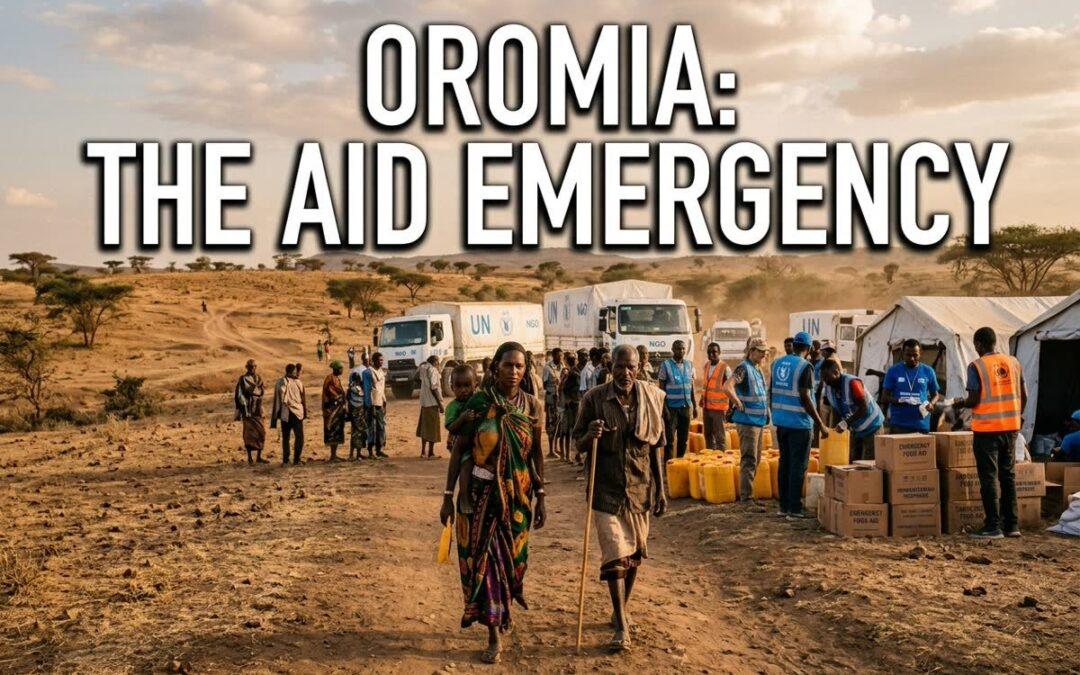
A compounding disaster is sweeping across southern and western Ethiopia. Families who survived years of devastating regional drought now find themselves fleeing artillery exchanges, burned villages, and armed ambushes. In mid-November, the International Committee of the Red Cross issued an alarming field report cautioning that escalating violence, severed supply routes, and mass displacement across Oromia Regional State have brought civilian communities to a breaking point (icrc.org, icrc.org). The deepening Oromia Humanitarian Crisis reflects how environmental shocks and modern state fragility collide across the Horn of Africa (theguardian.com).
International donors have scrambled to address the immediate fallout. The European Union recently allocated €550,000 in emergency assistance, channeling those resources through the Kenya Red Cross Moyale operation and the United Nations High Commissioner for Refugees (agenceurope.eu, eastleighvoice.co.ke). This Ethiopia Moyale emergency aid seeks to shelter more than 50,000 individuals who fled across the international border into northern Kenya (agenceurope.eu). However, humanitarian administrators emphasize that financial relief cannot resolve the underlying structural tensions driving this flight (icrc.org). To understand the roots of this unfolding tragedy, one must look past current events and examine the long historical trajectory of territorial administration, ethnic politics, and state formation in modern Ethiopia.
Red Cross Ethiopia Assessment Warns of Regional Strain
The recent Red Cross Ethiopia Assessment documents an alarming breakdown of basic social infrastructure throughout rural Oromia. Relief workers describe widespread access barriers in remote woredas, where persistent insecurity prevents surgical shipments, food convoys, and clean water tankers from reaching trapped civilian enclaves (icrc.org, icrc.org). Roads connecting major regional trading hubs to peripheral farming and pastoral zones have been severed by roadblocks, armed skirmishes, and systemic fuel shortages (icrc.org). Consequently, medical personnel in areas such as Bubul, Begi, and Kondole have been forced to operate without steady electricity, essential medicines, or functioning communications systems (icrc.org).
The human toll of this isolation continues to grow. Health centers have been looted or abandoned, leaving pregnant women and malnourished children without professional care (icrc.org, borkena.com). Displaced pastoralists gathering in informal settlements face severe water shortages, raising fears of waterborne cholera outbreaks (icrc.org). Combined with the ongoing Horn of Africa food crisis, this security vacuum threatens to pull hundreds of thousands of vulnerable pastoralists into acute famine conditions (theguardian.com, aljazeera.com).
Regional Humanitarian Impact Metrics
Ethiopia Ethnic Federalism Roots and the Imperial Legacy
To understand why local boundary disputes spark intense armed conflict today, one must examine the formation of the modern Ethiopian empire. The Oromo people constitute the country’s largest ethnic group, comprising roughly 35 to 40 percent of the total population (wikipedia.org). Despite their demographic size, Oromo communities were forcibly integrated into the Ethiopian state during the late 19th-century military campaigns led by Emperor Menelik II (wikipedia.org, wikipedia.org). Imperial expansion southward resulted in widespread peasant dispossession, the establishment of the predatory *neftegna* land-tenure system, and the state-sanctioned suppression of Afaan Oromoo alongside traditional egalitarian institutions like the *Gadaa* governance structure (wikipedia.org, wikipedia.org).
This enduring marginalization fueled rural unrest throughout the 20th century. Grassroots opposition culminated in the 1960s Bale Revolt, which laid the ideological foundation for the establishment of the Oromo Liberation Front in 1973 (wikipedia.org). Following the fall of the military Derg regime in 1991, the incoming Ethiopian People’s Revolutionary Democratic Front attempted to manage national diversity by ratifying a 1995 constitution centered on multinational federalism (peacenews.com, scholasticahq.com). Much like historical debates over the sharing of power between national and state governments, Ethiopia sought to divide sovereign authority across ethnolinguistic lines (peacenews.com). However, drawing fixed administrative borders across historically fluid pastoral landscapes institutionalized brand-new territorial rivalries (scholasticahq.com).
Moyale Border Conflict and the Contested Pastoral Frontier
The Moyale Border Conflict represents the clearest structural defect of this rigid cartography. In southern Ethiopia, the Borana Oromo and Garre Somali pastoralists historically negotiated shared access to grazing plains and deep communal water wells (*tulaa*) through customary elder councils (scholasticahq.com). The 1995 regionalization process converted these porous commons into rigid territorial boundaries, turning seasonal migration into zero-sum legal contests over land ownership, tax revenues, and parliamentary representation (scholasticahq.com). To resolve growing friction, the federal government conducted a referendum across 463 contested kebeles in October 2004 along the 1,400-kilometer regional frontier (addisstandard.com, scholasticahq.com).
2004 Border Referendum Kebele Allocations
While the federal government allocated approximately 80 percent of the disputed kebeles to Oromia, Somali clan leaders rejected the outcome, alleging electoral fraud (addisstandard.com, scholasticahq.com). The vital border post of Moyale was intentionally omitted from a permanent settlement, bifurcating the municipal administration into two hostile, competing jurisdictions (addisstandard.com). This long-simmering Somali Oromia border dispute ignited again on October 18, when Somali regional officials raised their regional banner over a contested office in Moyale (addisstandard.com, addisstandard.com). The fatal shooting of a 13-year-old Oromo schoolgirl, Diqqoo Jaataan Aagaa, quickly escalated into heavy artillery fire between regional security forces and communal militias, engulfing adjacent woredas like Wachile, Arero, and Gumi Eldallo (addisstandard.com, addisstandard.com).
The administrative structure of Ethiopia makes these grassroots disputes lethal. A woreda operates as an intermediate district responsible for social services and municipal oversight, while a kebele functions as a localized neighborhood ward comprising a few hundred households. Because kebele councils control primary land allocation and residential registration, shifts in kebele jurisdiction threaten residents with loss of property and civic disenfranchisement. Consequently, minor administrative provocations quickly draw in regional security detachments, triggering mass displacement across district borders (addisstandard.com).
Oromo Liberation Army Insurgency and Broken Political Pacts
The security crisis in southern Ethiopia cannot be separated from the Oromo Liberation Army Insurgency waging war in western and central zones. In 2018, massive Oromo youth demonstrations (*Qeerroo*) compelled the ruling coalition to appoint Abiy Ahmed as Prime Minister (wikipedia.org, scholasticahq.com). Abiy initiated sweeping reforms, unbanning opposition factions and welcoming exiled OLF leaders back to Addis Ababa (wikipedia.org). Yet, this democratic opening quickly collapsed. The Abiy Ahmed Oromia conflict escalated when the prime minister dissolved the governing ethnic coalition to create the unitary Prosperity Party under his centralist *Medemer* philosophy (wikipedia.org).
Oromo ethno-nationalists regarded this centralization as a dismantling of constitutional self-determination. When a 2018 disarmament pact disintegrated, the OLF armed wing splintered to establish the autonomous Oromo Liberation Army (uu.se, uu.se). Following the 2020 murder of popular musician Hachalu Hundessa, state authorities detained prominent Oromo political opposition leaders, foreclosing avenues for electoral competition (wikipedia.org). Just as historical civil movements were altered by shifts in political strategy and government repression, Oromo youth turned increasingly toward armed militancy (wikipedia.org, uu.se).
The proliferation of armed forces has devastated rural communities. Observers must distinguish between formal state security forces and non-state volunteer militias. While regional *Liyu Police* operated as statutory, heavily armed sub-national forces under the direct control of regional executives, militias such as *Fano* represent decentralized, ethnic-Amhara vigilante groups without formal statutory charters (acleddata.com, acleddata.com). Federal attempts to dissolve the *Liyu Police* in 2023 caused large quantities of weapons to leak into informal militias (acleddata.com). Today, cross-regional operations, counterinsurgency sweeps, and militia raids have devastated civilian zones. In late October, armed groups mounted a sustained six-hour assault on Shirka Woreda, killing at least 48 civilians and injuring dozens more (addisstandard.com). Similar raids in West Wellega resulted in the destruction of Guduru Primary Hospital, depriving thousands of emergency medical services (borkena.com).
Borana Drought and Displacement Collide With War
The military escalation coincided with the most devastating environmental shock in modern East African history. Between late 2020 and 2023, the Horn of Africa endured five consecutive failed rainy seasons, creating catastrophic pasture deficits across southern Ethiopia (theguardian.com, aljazeera.com). Pastoralists throughout Borana lost millions of cattle, goats, and camels, eliminating the accumulated wealth and nutrition that sustains their semi-nomadic economy (theguardian.com). Although seasonal rains returned intermittently in late 2023, herd replenishment requires years of uninterrupted stability. Instead, renewed border fighting wiped out early agricultural recovery (addisstandard.com).
Horn of Africa Shock Factors: Borana Zone
The Borana Drought and Displacement dynamic has completely altered the regional demography. When armed groups torched markets and grain reserves in early November, communities that were relying on emergency rations had no alternative but cross-border flight (addisstandard.com, agenceurope.eu). Over 60,000 Ethiopian refugees poured across the frontier into Marsabit County, Kenya, seeking shelter in municipal schools and crowded churches (agenceurope.eu, eastleighvoice.co.ke). Much like historical crises in the African diaspora where systemic inequality exacerbated human loss—as documented in the historical struggles for reparations and historical accountability—the structural neglect of pastoral frontiers intensifies this humanitarian catastrophe (theguardian.com).
The sudden influx has severely strained host communities across northern Kenya. County authorities in Marsabit report that local clinics lack the antibiotics, oral rehydration salts, and therapeutic paste required to treat incoming families (eastleighvoice.co.ke). Cross-border livestock trade, which provides the economic lifeline for both northern Kenya and southern Ethiopia, has ground to a complete halt due to armed checkpoints along regional highways (icrc.org). Without active livestock markets, displaced families cannot sell surviving animals to purchase staple grains, deepening childhood malnutrition across informal displacement camps (icrc.org, eastleighvoice.co.ke).
Red Cross Ethiopia Assessment: Structural Solutions Beyond Emergency Subsidies
The €550,000 emergency intervention funded by European donors offers vital, life-saving aid for displaced families in Marsabit County (agenceurope.eu, eastleighvoice.co.ke). However, distributing plastic sheeting, water filtration tablets, and emergency rations addresses symptoms rather than systemic causes. The persistent violence across Oromia and the Somali borderlands demonstrates the limits of international emergency funding when structural political grievances remain untouched. Emergency relief cannot substitute for genuine demilitarization, institutional accountability, and inclusive democratic dialogue (icrc.org).
Ending this recurrent humanitarian emergency requires resolving the fundamental structural drivers that produce it. The federal government must address the unresolved cartographic ambiguities left by the 2004 referendum, particularly within divided commercial hubs like Moyale (addisstandard.com). Furthermore, regional leaders must move past unilateral territorial expansion and recognize shared pastoral resource rights that sustained these communities for centuries prior to ethnic demarcations (scholasticahq.com). Finally, durable peace demands a credible, mediated political negotiation between federal authorities and the Oromo Liberation Army, ensuring that millions of displaced civilians can safely rebuild their lives on ancestral lands (icrc.org, wikipedia.org).
About the Author
Darius Spearman is a professor of Black Studies at San Diego City College, where he has been teaching for over 20 years. He is the founder of African Elements, a media platform dedicated to providing educational resources on the history and culture of the African diaspora. Through his work, Spearman aims to empower and educate by bringing historical context to contemporary issues affecting the Black community.
