

DRC Ebola Outbreak: Why the Deadly Bundibugyo Virus Is Surging
By Darius Spearman (africanelements)
Support African Elements at patreon.com/africanelements and hear recent news in a single playlist. Additionally, you can gain early access to ad-free video content.
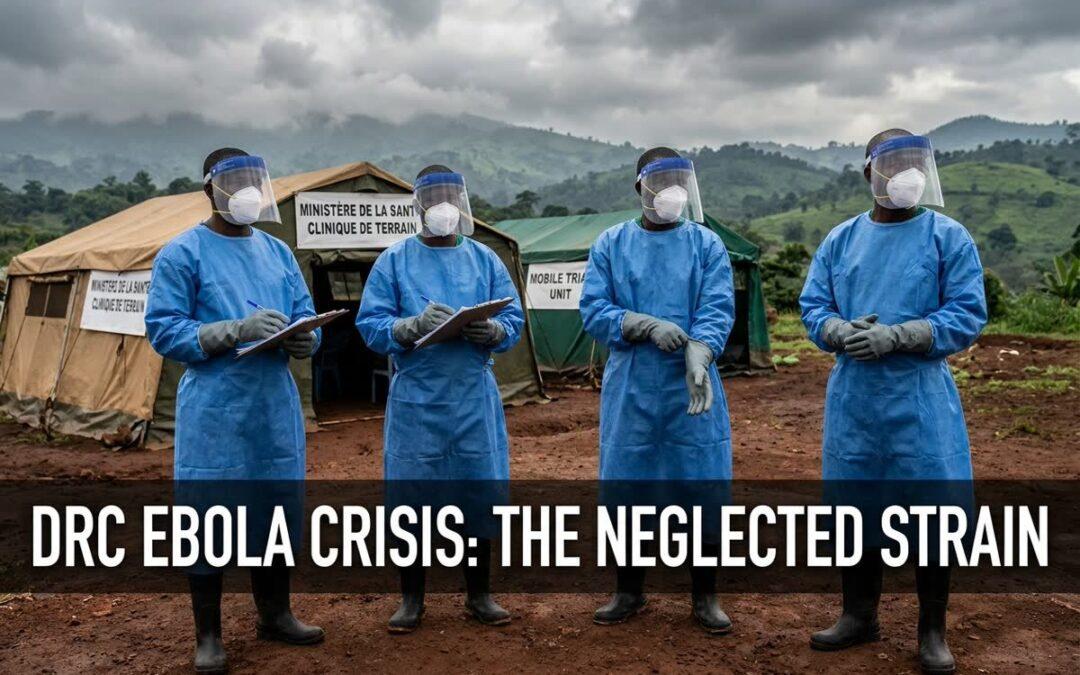
On November 9, public health agencies confirmed a grim milestone in global epidemiology. The 17th recorded DRC Ebola outbreak reached 10,741 confirmed cases and 5,230 deaths within the Democratic Republic of the Congo (contagionlive.com, contagionlive.com). The epidemic is propelled by the Bundibugyo virus, a filovirus species that was historically considered rare and less lethal than its counterparts (cdc.gov, wikipedia.org). The contagion has expanded across provincial borders and established secondary transmission chains in Kenya and Nigeria (contagionlive.com). This marks the current Ebola outbreak in DRC as the second-largest filovirus event in world history, surpassed only by the 2014 West African epidemic (statista.com).
Headlines describe rapid caseload surges and armed attacks on isolation centers. Yet, the crisis in central Africa cannot be understood through medical data alone. The trajectory of this outbreak is tied to fifty years of regional history, colonial resource extraction, scientific funding choices, and armed conflict in eastern Congo. The Bundibugyo virus symptoms—severe fever, muscular agony, persistent vomiting, and dangerous internal bleeding—are devastating communities that have experienced decades of conflict (cdc.gov, reliefweb.int). Understanding the current crisis requires looking directly at the historical forces that left central Africa vulnerable to this neglected pathogen.

African History Series • Volume II • Anti-Colonial Resistance & Sovereignty
Africa Reclaimed: Overcoming the Legacies of the Colonial Machine
By Professor A. Darius Spearman • 353 Pages • ISBN: 979-8-9924836-4-2
Colonialism in Africa was never passively endured—and its extractive machinery did not simply vanish when independence flags were raised. Professor A. Darius Spearman traces the unbroken arc of African political power from 19th-century indigenous statecraft and mid-20th-century liberation wars to contemporary battles against neo-colonial debt and resource imperialism.
DRC Ebola Outbreak History: From Yambuku to the Present Day
The story of filovirus identification began in late August 1976 in the northern village of Yambuku, located in what was then Zaire (cdc.gov, historianspeaks.org). Mabalo Lokela, a 44-year-old school headmaster, returned from an expedition near the Central African Republic with a sudden fever (historianspeaks.org). Within days, Lokela suffered fatal systemic hemorrhaging. The mission hospital in Yambuku quickly became the center of a lethal illness that claimed hundreds of residents, nurses, and Belgian nuns (historianspeaks.org, cdcmuseum.org).
Congolese physician Dr. Jean-Jacques Muyembe-Tamfum arrived in the remote community to investigate the unexplained deaths (itg.be, cdcmuseum.org). Working without modern personal protective equipment, Muyembe collected blood samples with bare hands and survived through rigorous handwashing (cdcmuseum.org). He placed those samples in a blue thermos and sent them to the Institute of Tropical Medicine in Antwerp, Belgium (itg.be, cdcmuseum.org). Scientists Peter Piot and Guido van der Groen isolated the virus alongside international partners (itg.be). To shield Yambuku from enduring social stigma, the scientific team named the pathogen after the Ebola River (historianspeaks.org, itg.be). That first outbreak ended after 318 cases and 280 deaths through rigorous community quarantine (cdc.gov, statista.com).
The 1976 event revealed profound inequities in public health infrastructure across the African continent. Decades of Belgian colonial rule had deliberately focused medical resources on labor productivity in rubber and copper concessions rather than public welfare (historianspeaks.org). When the colonial administrative apparatus collapsed, rural areas were left without basic clinical tools or surveillance systems. The pattern of rural isolation and state neglect created conditions where zoonotic spillovers could spread through under-resourced hospitals without detection (cdc.gov, historianspeaks.org). Today, modern epidemics follow those same historical fissures of systemic state neglect.
Historical Outbreaks by Case Count
Confirmed Cases Across Major Filovirus Epidemics
The Bundibugyo Ebola Strain and Its Forgotten History
For more than three decades after the Yambuku discovery, the global medical community believed that severe Ebola epidemics were driven solely by the Zaire and Sudan species (cdc.gov, wikipedia.org). That consensus changed in late 2007. In the forested Bundibugyo District of western Uganda, health centers reported unusual hemorrhagic fever cases among local populations (cdc.gov, wikipedia.org). Genetic sequencing by the CDC and international partners identified a distinct filovirus species: the Bundibugyo virus (cdc.gov, wikipedia.org). The 2007 outbreak resulted in 131 reported cases and 42 deaths, establishing an estimated case fatality rate of 32 percent (cdc.gov, cdc.gov).
Five years later, in 2012, the Bundibugyo Ebola strain emerged across the border in Isiro, located in the Haut-Uélé Province of the northeastern DRC (wikipedia.org, wikipedia.org). That outbreak caused 59 cases and 34 deaths, resulting in a significantly higher fatality rate near 50 percent (wikipedia.org, wikipedia.org). Epidemiological analyses concluded that the Isiro outbreak was an independent spillover from a wild animal reservoir rather than an ongoing chain from Uganda (wikipedia.org). Because both early outbreaks produced fewer than 150 recorded infections, international health literature categorized Bundibugyo as a mild strain compared to the Zaire species, which historically caused fatality rates up to 90 percent (cdc.gov, statista.com).
That scientific assumption proved dangerous. The current DRC Ebola outbreak news demonstrates that Bundibugyo was never inherently self-limiting. Instead, previous outbreaks were contained simply because they occurred in sparsely populated rural communities (cdc.gov, wikipedia.org). In 2026, the virus spilled into commercial transit hubs, densely populated mining towns, and areas experiencing military conflict (contagionlive.com, reliefweb.int). Operating in these crowded environments without effective countermeasures, the Bundibugyo strain has maintained a case fatality rate of 48.8 percent across more than 10,000 confirmed cases (contagionlive.com).
The Gap in Ebola Vaccine Development and Biomedical Neglect
The primary reason the 17th outbreak expanded so rapidly is the complete absence of approved countermeasures for the Bundibugyo virus (beaconbio.org, nih.gov). Following the catastrophic 2014 West African epidemic, international health bodies celebrated major breakthroughs in Ebola vaccine development (gavi.org). Scientists produced Ervebo (rVSV-ZEBOV), an effective vaccine that prevents infection by training human antibodies against the surface glycoprotein of the virus (gavi.org, nih.gov). Clinical teams also developed monoclonal antibody therapies, including Inmazeb and Ebanga, which lowered mortality during the 2018 Kivu outbreak (nih.gov, nih.gov).
Those tools, however, were engineered exclusively for the Zaire strain (beaconbio.org, nih.gov). Filovirus species diverge in their glycoprotein structure, meaning antibodies that neutralize Zaire ebolavirus fail to bind to the Bundibugyo strain (beaconbio.org, nih.gov). Between 2007 and 2026, private pharmaceutical developers allocated almost no capital to commercial Bundibugyo research (beaconbio.org). Because the strain had infected fewer than 200 people prior to 2026, pharmaceutical corporations saw no viable commercial return on investment for expensive clinical trials. Western biosecurity agencies directed their research budgets toward counteracting the Zaire strain, leaving other filoviruses neglected (beaconbio.org, nih.gov).
Without approved vaccines or monoclonal antibodies, medical teams in 2026 have relied on basic supportive fluid therapy, experimental drug candidates, and the World Health Organization MEURI framework (beaconbio.org, who.int). The MEURI protocol—Monitored Emergency Use of Unregistered and Investigational Interventions—sets ethical ground rules for using experimental drugs during lethal crises when approved options do not exist (who.int, who.int). Under MEURI, unproven countermeasures require preclinical safety data, independent review from national ethics committees, and informed consent translated into local languages (who.int, who.int). Responders must systematically document patient outcomes, ensuring that vulnerable communities are not subjected to unmonitored experimentation (who.int, who.int).
Case Fatality Rate Comparison
Lethality Percentages Across Key Filovirus Events
Armed Conflict and Attacks on Healthcare Workers in Eastern DRC
Public health interventions do not operate in a social vacuum. The provinces of Ituri and North Kivu have endured violent instability since the First and Second Congo Wars of the late 1990s (reliefweb.int). More than 120 armed groups operate across this mineral-rich borderland, including the Allied Democratic Forces (ADF), CODECO, and M23 (reliefweb.int, insecurityinsight.org). Populations have faced ongoing forced displacement, militia raids, and an influx of foreign commercial operations tied to extractive mineral economies. Within this context of chronic insecurity, attacks on healthcare workers have escalated throughout the epidemic (reliefweb.int, insecurityinsight.org).
Community suspicion toward external medical interventions has deep historical origins. Colonial administrations in central Africa enforced public health measures through armed force, using military cordons and forced encampments to control sleeping sickness and smallpox (historianspeaks.org). Decades later, during the 10th Ebola outbreak between 2018 and 2020, international health agencies arrived alongside heavily armed Congolese security forces and United Nations peacekeepers (un.org, insecurityinsight.org). Local communities that had been denied clean water, surgical care, and protection from militia massacres witnessed millions of dollars funneled exclusively into containment infrastructure (unicefusa.org, reliefweb.int). This sudden disparity gave rise to local resistance against what residents called the “Ebola business” (insecurityinsight.org).
In 2026, this dynamic has driven frequent violent clashes. Frontline burial teams face hostility when attempting to secure deceased patients (reliefweb.int, insecurityinsight.org). Funerary rituals in northeastern DRC emphasize physical contact with the deceased as an expression of dignity and cultural resilience (reliefweb.int). Standard containment mandates Safe and Dignified Burials, requiring teams in white biosecurity suits to seal bodies in plastic bags (reliefweb.int). Because armed groups frequently attack triage clinics, contact tracing has fallen apart. Regional tracking rates have fallen to 82.6 percent, and drop to 46 percent in Tshopo and 78.8 percent in North Kivu (contagionlive.com, reliefweb.int). These figures fall far below the 95 percent threshold required to stop filovirus chains (reliefweb.int).
Contact Tracing Success Rates
Follow-up Performance vs. WHO Benchmark in Active Zones
Ebola Regional Spread Across Commercial Corridors
Early filovirus outbreaks ended quickly because they struck remote rural settlements surrounded by rainforest (cdc.gov, historianspeaks.org). In contrast, the 17th outbreak ignited in artisanal gold mining zones around Mongbwalu and Bunia in Ituri Province (contagionlive.com). These mining camps are directly tied to regional trade routes (contagionlive.com). Thousands of migrant laborers move between mining pits and urban centers, enduring difficult labor conditions that parallel historical patterns of economic exploitation. When infected workers leave these unregulated camps, Ebola regional spread follows major highways and flight corridors (contagionlive.com, contagionlive.com).
By late summer 2026, transmission lines extended across international borders (contagionlive.com). Uganda documented 20 confirmed cases and 2 deaths along its western frontier before containment measures brought local transmission to a halt in August (contagionlive.com, contagionlive.com). Cross-border movement continued eastward. In early October, an infected traveler from the DRC traveled across Uganda and arrived in Nairobi, Kenya, dying inside an isolation ward on October 6 (contagionlive.com). Secondary transmission within the clinical setting infected family members and hospital workers, resulting in nine confirmed cases and two deaths (contagionlive.com). Two weeks later, Nigeria confirmed an imported infection in a traveler who passed through Uganda, placing 62 close contacts under surveillance while the patient was evacuated to Switzerland (contagionlive.com, europa.eu).
The movement from Congolese mining camps to East and West African transit centers demonstrates a permanent shift in disease geography. High population mobility, combined with slow clinical diagnosis, allows localized outbreaks to escalate into multinational emergencies. The North Kivu Ebola crisis has expanded across 67 health zones in eight separate Congolese provinces (contagionlive.com). This wide spread demonstrates that filoviruses can no longer be managed as isolated rural emergencies (contagionlive.com, reliefweb.int).
Lessons from the Ebola Outbreak Timeline: A Call for Global Equity
Examining the complete Ebola outbreak timeline reveals that the international community repeatedly makes the same mistake. When an epidemic strikes, foreign resources flood into the affected country to build isolation camps and halt cross-border spread (unicefusa.org, reliefweb.int). As soon as transmission declines, funding dissipates, leaving domestic health centers without basic running water, sterile needles, or reliable pathology laboratories (historianspeaks.org, reliefweb.int). This boom-and-bust approach to global biosecurity protects international borders while leaving central African communities vulnerable to recurring crises (beaconbio.org, unicefusa.org).
Containing the 17th outbreak requires moving beyond species-specific countermeasures (beaconbio.org). Decades of prioritizing the Zaire strain left public health workers disarmed when Bundibugyo re-emerged (beaconbio.org, nih.gov). The global biomedical research apparatus must invest in broad-spectrum therapeutics and pan-filovirus vaccines that protect against all known species (beaconbio.org, nih.gov). Medical advancements must be paired with genuine local partnerships, replacing militarized containment escorts with community-led health committees that respect local funeral traditions (reliefweb.int, insecurityinsight.org).
The milestone of 10,741 cases and 5,230 deaths is a direct consequence of historical disinvestment and structural inequality (contagionlive.com, contagionlive.com). For fifty years, the Congolese people have provided the biological samples and clinical trials that allowed the world to understand filoviruses (itg.be, nih.gov). Yet, when the Bundibugyo virus began spreading through mining camps and rural villages, those same communities were left without vaccines or targeted drugs (beaconbio.org). Ending this epidemic—and preventing the next one—requires confronting the historical inequities that separate the regions that discover medical treatments from the regions that need them most.
About the Author
Darius Spearman is a professor of Black Studies at San Diego City College, where he has been teaching for over 20 years. He is the founder of African Elements, a media platform dedicated to providing educational resources on the history and culture of the African diaspora. Through his work, Spearman aims to empower and educate by bringing historical context to contemporary issues affecting the Black community.
