

Ethiopia Oromia Violence: Roots of Deadly Arsi Church Attacks
By Darius Spearman (africanelements)
Support African Elements at patreon.com/africanelements and hear recent news in a single playlist. Additionally, you can gain early access to ad-free video content.
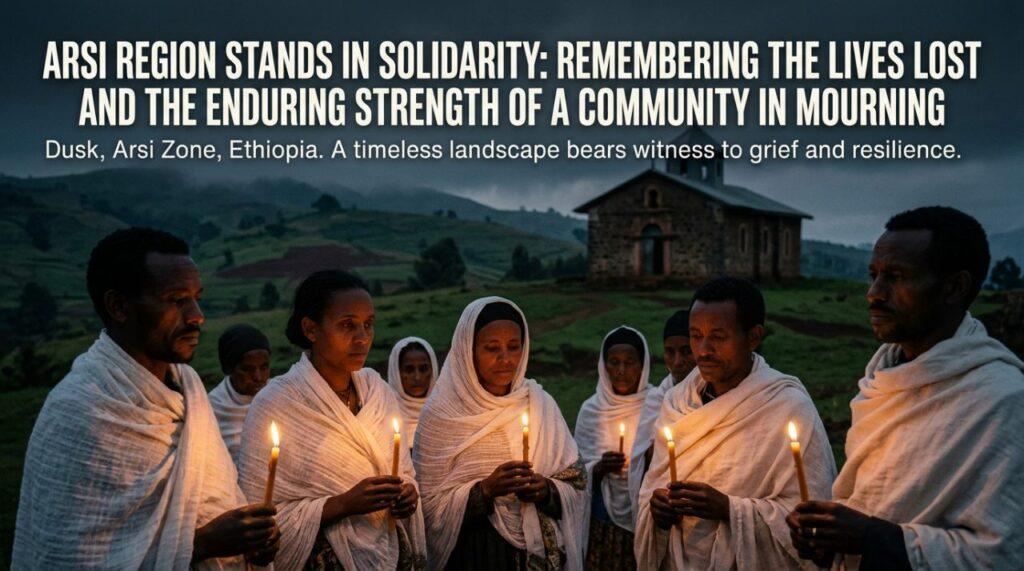
In late October, coordinated night assaults struck rural farming settlements in the Arsi Zone of Ethiopia’s Oromia region, leaving scores dead and communities shattered (apanews.net, addisstandard.com). Religious leaders confirmed that armed assailants killed more than 60 Ethiopian Orthodox Christians across two separate districts (apanews.net, thereporterethiopia.com). Assailants set more than 20 family homes ablaze, targeted women and children, and ambushed residents who attempted to flee into surrounding fields (addisstandard.com, addisstandard.com). This horrific event marks another bloody chapter in the ongoing cycle of Ethiopia Oromia violence (crisisgroup.org, acleddata.com).
The killings provoked national grief and swift condemnation from the Holy Synod of the Ethiopian Orthodox Tewahedo Church (addisstandard.com, oikoumene.org). Patriarch Abune Mathias ordered worldwide memorial prayers while imploring the federal government to protect vulnerable rural communities (addisstandard.com, thereporterethiopia.com). The violence in Arsi exposes deep historical divides that trace back to 19th-century imperial conquests and the controversial adoption of ethnic federalism in 1995 (claremont.edu, accord.org.za). Contemporary struggles over land, political dominance, and resource distribution continue to weaponize ethnic and religious identities across East Africa (crisisgroup.org, ethiopia-insight.com).
The Deadliest Wave: Arsi Zone Church Attacks
The Arsi zone church attacks unfolded in two calculated strikes targeting rural agricultural areas (addisstandard.com). Ethiopia’s administrative hierarchy organizes rural space through intermediate districts called woredas, which oversee local governance, policing, and taxation (scribd.com). These woredas divide further into kebeles, which represent the grassroots village councils responsible for local land administration and civil registration (scribd.com). The first strike occurred on October 20 in Angada Kebele, situated within Merti woreda (addisstandard.com). Armed men entered the Gora Silingo village area under cover of darkness, killing 14 unarmed civilians and injuring several others (addisstandard.com, addisstandard.com).
Four nights later, on October 24, a larger coordinated assault swept through Shirka woreda (addisstandard.com). Assailants surrounded residential homesteads across Tereta, Chole, and Birbo kebeles around 10:00 PM (addisstandard.com, addisstandard.com). The attackers blocked escape pathways, fired into family dwellings, and set at least 20 homes on fire with incendiary materials (addisstandard.com). Local survivors reported that 46 residents died in Shirka, raising the cumulative death toll across both woredas to at least 60 individuals (apanews.net, addisstandard.com). Regional security forces stationed in nearby administrative towns did not deploy in time to halt the destruction (addisstandard.com, borkena.com).
Local authorities and church leaders documented that the vast majority of victims were peasant farmers and their dependents (addisstandard.com). The systematic nature of the Arsi zone church attacks indicates advanced coordination and logistical planning (addisstandard.com). Attackers systematically destroyed grain stores, stole cattle, and burned domestic structures to prevent displaced families from returning to their ancestral plots (borkena.com, addisstandard.com). This devastating loss of life highlights the severe vulnerability of isolated agricultural hamlets located along the shifting margins of regional state boundaries (crisisgroup.org, acleddata.com).
Targeting Identity: Ethiopian Orthodox Tewahedo Church Killings
The victims of the Arsi massacres were overwhelmingly ethnic Amhara agriculturalists who practiced the Orthodox Christian faith (addisstandard.com, borkena.com). In rural Oromia, ethnic and religious affiliations often overlap in complex ways (claremont.edu, ethiopia-insight.com). Although millions of Oromo people adhere to Orthodox Christianity, Islam, or Protestantism, armed extremist factions frequently portray the Orthodox Church as an external cultural institution linked to historic northern imperial rule (claremont.edu, gsu.edu). Consequently, Ethiopian Orthodox Tewahedo Church killings frequently function as deliberate campaigns of communal terror against minority communities (ethiopia-insight.com, borkena.com).
Tensions surrounding the Church intensified significantly in February 2023 when a group of dissident clergymen attempted to form an autonomous Oromia Synod (acleddata.com, thereporterethiopia.com). The breakaway faction argued that the centralized hierarchy in Addis Ababa marginalized the Oromo language and culture in religious rituals (thereporterethiopia.com). The dispute sparked violent protests and church occupations across several administrative zones (acleddata.com). Although church leaders negotiated a formal institutional reconciliation weeks later, the schism heightened sectarian grievances across rural parishes (acleddata.com, acleddata.com). Monitoring groups observed a substantial increase in violent acts directed at Orthodox shrines, priests, and congregants immediately following that ecclesiastical crisis (acleddata.com, opendoorsuk.org).
These sectarian dynamics reflect broader patterns seen throughout world history, where marginalized groups clash over conflicting ideologies during times of severe state transition. When central governance structures weaken, local armed factions often exploit religious differences to justify physical displacement and land confiscation (crisisgroup.org, ethiopia-insight.com). Human rights monitors caution that mischaracterizing these assaults purely as theological disputes obscures the underlying political goals of ethnic territorial cleansing (ethiopia-insight.com, borkena.com). In rural Arsi, faith operates as an unmistakable public marker that identifies vulnerable agrarian minorities for physical removal (borkena.com, addisstandard.com).
October Arsi Massacres: Casualties by Woreda
Imperial Legacies: Ethiopian Ethnic Federalism History
To understand the roots of communal massacres in Oromia, one must examine the 19th-century expansion under Emperor Menelik II (claremont.edu, gsu.edu). Between 1882 and 1886, imperial armies pushed south from the central highlands into the Arsi region (claremont.edu). The local Arsi Oromo fought fiercely against incorporation, resulting in protracted military campaigns and heavy loss of life (claremont.edu, gsu.edu). Following military conquest, the imperial state established the neftegna-gebbar system across southern territories (claremont.edu). Under this agrarian structure, armed northern soldiers settled on confiscated lands, reducing indigenous farmers into tenant laborers who paid tribute to imperial overlords (claremont.edu, gsu.edu).
RECOMMENDED READING

Because the northern ruling elite practiced Orthodox Christianity and spoke Amharic, state conquest became closely linked with religious expansion in popular memory (claremont.edu, ethiopia-insight.com). Although the 1974 revolution overthrew Emperor Haile Selassie and nationalized rural land, the underlying cultural grievances survived under the military regime that followed (gsu.edu, scribd.com). When a coalition of rebel forces seized power in 1991, they sought to dismantle centralized dominance by redrawing administrative boundaries along ethnolinguistic lines (accord.org.za). This framework became law through the 1995 Ethiopian Constitution, formalizing what historians categorize as ethnic federalism (scribd.com, accord.org.za).
The 1995 constitutional model granted cultural recognition and regional autonomy to long-suppressed ethnic groups, including the Oromo (scribd.com, accord.org.za). However, it also introduced a dangerous structural paradox regarding internal minority rights (accord.org.za). Non-titular populations residing inside regional states, such as Amhara farming families in rural Oromia, found themselves legally vulnerable and without political leverage (accord.org.za, ethiopia-insight.com). Modern ethno-nationalist factions frequently label these historic agrarian communities as outside interlopers rather than equal citizens with protected rights (ethiopia-insight.com, borkena.com). Consequently, Ethiopian ethnic federalism history institutionalized ethnic rivalry into regional governance structures, converting local farmlands into flashpoints for armed competition (accord.org.za, acleddata.com).
Guerrilla Warfare: Oromo Liberation Army Insurgency
The contemporary security vacuum in Oromia is directly tied to the growing Oromo Liberation Army insurgency (crisisgroup.org, acleddata.com). Oromo ethno-nationalism emerged in the 1960s through civil groups such as the Macha-Tulama Self-Help Association (gsu.edu). In 1973, political intellectuals founded the Oromo Liberation Front (OLF) to pursue national self-determination (gsu.edu, scribd.com). When Prime Minister Abiy Ahmed assumed office in 2018, the federal government legalized previously banned opposition groups and invited their exiled leadership back into the country (crisisgroup.org, eurasiareview.com). However, the political transition fragmented rapidly when the armed military branch of the OLF rejected disarmament agreements (crisisgroup.org).
Operating under the command of Kumsa Diriba, known as Jaal Marroo, the OLA broke away from civilian leadership to mount an active guerrilla war against federal and regional security structures (crisisgroup.org, eurasiareview.com). The federal administration designates the movement as OLF-Shane and classifies it as a domestic terrorist organization (addisstandard.com, addisstandard.com). As the OLA expanded its operational presence across western Wollega and southern Arsi, civilian massacres escalated dramatically (crisisgroup.org, acleddata.com). Insurgents attacked rural infrastructure, kidnapped local officials for ransom, and targeted non-Oromo agrarian settlements (acleddata.com, acleddata.com).
While OLA spokespersons regularly deny responsibility for communal atrocities, survivor testimonies and human rights investigations connect rebel units to repeated rural massacres (addisstandard.com, acleddata.com, borkena.com). Rebel leaders argue that rogue militias, state agents, or allied regional forces stage violent incidents to discredit their political struggle for political representation (crisisgroup.org, addisstandard.com). Yet the human toll across rural districts continues to mount without interruption (apanews.net, acleddata.com). The recurring bloodshed exposes how civilians frequently bear the violent burden of armed political insurgencies that claim to fight in their defense (crisisgroup.org, acleddata.com).
Reported Fatalities: Arsi Attacks (2023)
Militias and Counter-Mobilization: Amhara Fano Militia Conflict
The instability in Oromia does not exist in isolation; it intersects directly with the escalating Amhara Fano militia conflict (acleddata.com, acleddata.com). Fano began as a loose collection of youth protest groups during the widespread anti-government demonstrations between 2014 and 2018 (acleddata.com). During the devastating northern Tigray war from 2020 to 2022, Fano volunteer units fought alongside the Ethiopian National Defense Force (ENDF) against the Tigray People’s Liberation Front (acleddata.com, acleddata.com). This alliance helped the federal government secure contested agricultural districts like Welkait and Raya in northern Ethiopia (acleddata.com).
The political relationship between Addis Ababa and Amhara nationalist factions collapsed in April 2023 (acleddata.com). Prime Minister Abiy Ahmed announced plans to dissolve all regional special paramilitary forces and absorb them into the national military or federal police (acleddata.com, acleddata.com). Amhara leaders viewed this decision as a targeted betrayal that would leave Amhara communities defenseless against cross-border incursions by the OLA (acleddata.com). Refusing federal orders to disarm, large factions of the Amhara regional forces abandoned their posts and joined Fano fighters in rural hideouts, initiating an armed rebellion against federal troops (acleddata.com, acleddata.com).
This escalating confrontation has intensified tit-for-tat retaliatory violence along regional borderlands (acleddata.com, acleddata.com). Fano militias carried out revenge raids against Oromo civilian settlements in border areas, prompting counter-strikes by OLA fighters or local Oromo armed groups against Amhara populations living within Oromia (acleddata.com, acleddata.com). Armed conflicts between rival ethnic groups demonstrate the severe dangers that emerge when local actors bypass official judicial channels to employ coercive state power and informal violence. As a result, innocent agricultural laborers in Arsi find themselves targeted by armed militants seeking revenge for battles fought hundreds of miles away (addisstandard.com, borkena.com).
Multi-Front Strain: Abiy Ahmed Security Crisis
The recurring massacres in Shirka and Merti underline the broader Abiy Ahmed security crisis across Ethiopia (crisisgroup.org, acleddata.com). The federal military faces intense operational strain as it attempts to manage concurrent security emergencies across multiple regions (acleddata.com, acleddata.com). While large army divisions remain deployed in the northern Amhara region to suppress Fano insurgent operations, the armed forces must also secure the fragile post-war peace in Tigray (acleddata.com, acleddata.com). This logistical dispersion leaves rural woredas in central and southern Oromia severely under-policed during nighttime hours (crisisgroup.org, acleddata.com).
Diplomatic efforts to resolve the insurgency through peaceful negotiation have produced disappointing results (crisisgroup.org, devdiscourse.com). In 2023, high-level delegations representing the federal government and the OLA met in Tanzania for direct peace discussions mediated by regional diplomats (crisisgroup.org, devdiscourse.com). However, two consecutive rounds of talks ended without an agreed ceasefire or political settlement (crisisgroup.org, devdiscourse.com). Both sides traded blame regarding security guarantees, administrative power-sharing arrangements, and rebel integration protocols (crisisgroup.org). With formal dialogue stalled, military commanders returned to scorched-earth offensives that consistently fail to protect local civilian populations (crisisgroup.org, acleddata.com).
The humanitarian consequences of this protracted instability are devastating (iom.int, unhcr.org). Displacement tracking data compiled by international humanitarian agencies reveals that Ethiopia now hosts over 3.3 million internally displaced persons (iom.int, iom.int). Armed conflict and communal violence account for 69 percent of this displaced population (iom.int). In the Oromia region alone, active hostilities and communal raids have forced more than 749,500 people from their homes (unhcr.org). Millions of displaced families endure severe poverty in informal temporary camps, suffering from profound economic exploitation and food insecurity without reliable federal assistance (iom.int, unhcr.org).
Ethiopia IDP Population: Primary Causes
Overcoming this national cycle of violence requires direct administrative action and judicial accountability (crisisgroup.org, ethiopia-insight.com). Each major communal massacre in Oromia brings predictable public denials from political leaders, yet independent forensic investigations rarely follow (addisstandard.com, addisstandard.com). This prevailing culture of impunity encourages armed factions to use violence without fear of legal consequences (ethiopia-insight.com, borkena.com). Stopping the bloodshed requires the federal government to establish credible protection forces in vulnerable woredas, hold perpetrators of mass atrocities accountable in public courts, and foster national discussions on land rights and regional belonging (addisstandard.com, crisisgroup.org). Until Ethiopia addresses these foundational structural flaws, agrarian communities will continue to suffer the deadly consequences of unresolved historical conflicts (accord.org.za, ethiopia-insight.com).
About the Author
Darius Spearman is a professor of Black Studies at San Diego City College, where he has been teaching for over 20 years. He is the founder of African Elements, a media platform dedicated to providing educational resources on the history and culture of the African diaspora. Through his work, Spearman aims to empower and educate by bringing historical context to contemporary issues affecting the Black community.
