


ICE License Plate Tracking: How Agents Bypass DHS Privacy Rules
By Darius Spearman (africanelements)
Support African Elements at patreon.com/africanelements and hear recent news in a single playlist. Additionally, you can gain early access to ad-free video content.
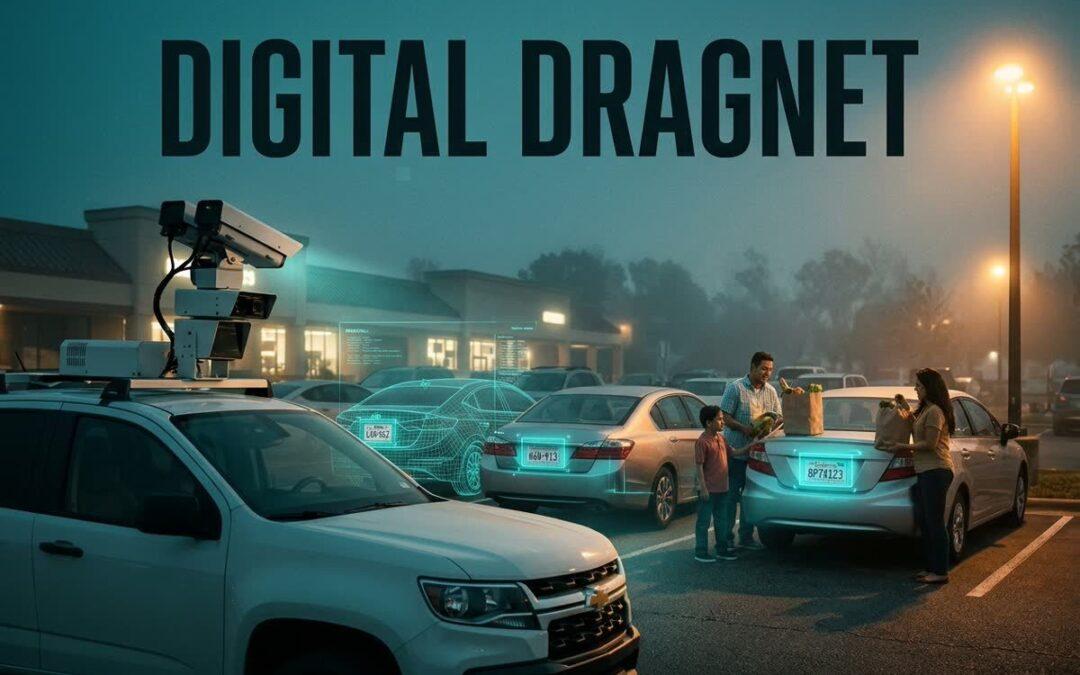
Federal immigration officers are conducting indiscriminate scans of vehicular traffic on American streets, bypassing established internal safeguards. Investigative reporting published in late November revealed that Immigration and Customs Enforcement agents routinely scan license plates in shopping center parking lots, residential driveways, and highway corridors without warrants or reasonable suspicion (washingtoninformer.com, austinchronicle.com). These operations continue even though official Department of Homeland Security policies explicitly prohibit random surveillance sweeps (dhs.gov).
The practice represents a major escalation in mass vehicular surveillance. Rather than limiting searches to known criminal suspects, field officers with Enforcement and Removal Operations utilize digital dragnets to locate undocumented residents (immigration-analytics.com, austinchronicle.com). Undercover agents monitor public and private parking lots, running every visible vehicle through commercial databases (austinchronicle.com). This automated tracking has turned minor civil infractions into violent roadside confrontations, resulting in severe injuries and deaths (washingtoninformer.com, austinchronicle.com).
The controversy arrives as the federal government prepares to extend multi-million-dollar surveillance agreements with private data corporations (biometricupdate.com). These commercial databases assemble billions of location records from municipal police cameras, repo trucks, and roadside scanners (americandragnet.org). While federal officials describe these systems as standard investigative tools, civil liberties advocates point out that unregulated digital tracking mirrors historical methods of racialized social control (aclu.org, aclu.org).
The Historical Pipeline from Slave Passes to Automated License Plate Readers
The technological architecture of automated license plate readers does not exist in a historical vacuum. State-sanctioned surveillance of human mobility in North America began during chattel slavery. Colonial statutes and antebellum slave codes required enslaved African people to carry written passes signed by enslavers whenever they traveled away from plantations (americancommunitymedia.org). Armed white citizen patrols, known as slave patrols, stopped Black travelers on public roads to inspect these travel papers and execute immediate corporal punishment (americancommunitymedia.org).
Following the Civil War, southern legislatures preserved this surveillance structure through the Black Codes and post-emancipation legal restrictions that criminalized unemployment and free movement. Vagrancy laws allowed police officers to stop, question, and detain Black citizens who could not prove permanent employment, feeding thousands of individuals into the exploitative convict leasing system. Controlling the physical movement of marginalized populations has consistently functioned as a core mechanism for maintaining racial and economic hierarchies.
During the twentieth century, municipal police departments modernized these mobility controls through specialized plainclothes street squads. Units such as the New York City Police Department Street Crime Unit used unmarked cars and aggressive roadside stops to target Black and Latino motorists without clear evidence of wrongdoing. Automated license plate readers modernize this lineage by replacing physical checkpoint stops with continuous, algorithmic sweeps that monitor public roadways (americandragnet.org).
Federal Spending on Plate Surveillance Contracts
The Fall of Standards: How Agents Violate DHS Privacy Rules
The federal government recognized the constitutional hazards of automated vehicle tracking more than a decade ago. In 2014, the Department of Homeland Security canceled plans to build a nationwide plate-tracking database after civil rights organizations objected to its broad scope (thinkprogress.org). To resolve ongoing legal challenges, the department published binding Privacy Impact Assessments, known as PIA-039, establishing clear operational boundaries for field personnel (dhs.gov, immpolicytracking.org).
Under these official rules, agents may run queries only when investigating a specific, documented suspect linked to an active case file (dhs.gov). The regulations forbid random lookups, fishing expeditions, and geographic sweeping (dhs.gov, immpolicytracking.org). Furthermore, the policies restrict broad historical searches to Homeland Security Investigations for major felony cases, strictly barring civil deportation agents from using bulk location tracking (dhs.gov). In practice, however, field offices have treated these rules as mere suggestions (austinchronicle.com).
Sworn testimony in federal court recently exposed how widely field offices ignore these restrictions. During legal proceedings in Austin, Texas, a Department of Homeland Security Special Agent confirmed under oath that immigration officers routinely scan plates without individual suspicion (austinchronicle.com).
“They do random checks on vehicles at random places… They’re out there everywhere running license plates.”
— Special Agent Rick Bazan, DHS, Source: (austinchronicle.com)
The agent testified that random plate scans represent an ordinary everyday occurrence for deportation officers (austinchronicle.com). Former civil rights officials inside the Department of Homeland Security acknowledge that supervisory oversight remains virtually nonexistent (austinchronicle.com). Disciplinary actions for privacy violations are practically unheard of, creating an environment where officers operate outside stated federal boundaries without consequence (austinchronicle.com).
The Corporate Pipeline Behind Commercial Surveillance Dragnets
The expansion of ICE license plate tracking relies directly on commercial data vendors rather than government-owned cameras. Following the 2014 cancellation of its in-house database, the agency turned to private vendors to purchase vehicle location records (thinkprogress.org, americandragnet.org). In 2017, the federal government contracted with Vigilant Solutions, a subsidiary of Motorola Solutions, to acquire real-time access to billions of vehicle scans gathered across the country (crooksandliars.com, americandragnet.org).
These commercial surveillance dragnets assemble location feeds from private tow trucks, repossession drivers, and automated camera networks (americandragnet.org). Private firms map urban transit corridors by capturing time-stamped images of vehicles parked outside medical clinics, union halls, grocery stores, and places of worship (aclu.org, americandragnet.org). In November 2026, immigration officials moved to secure a $1.2 million sole-source bridge contract with Thomson Reuters Special Services to maintain continuous access to this private data pipeline (biometricupdate.com).
National Surveillance Footprint and Camera Reach
This commercial agreement extends an earlier multiyear contract worth up to $25.2 million (biometricupdate.com). Federal officials concealed details of the new agreement by designating its performance statement as sensitive law enforcement information (biometricupdate.com). By purchasing vehicular tracking data from commercial vendors, federal agencies circumvent constitutional safeguards that limit direct government record collection (aclu.org, senate.gov).
Field officers also combine plate databases with advanced predictive analytics software (biometricupdate.com). The agency pairs vehicle scanners with mobile platforms like ELITE, developed by Palantir Technologies, allowing officers to photograph license plates using smartphones (biometricupdate.com, americandragnet.org). The mobile platform cross-references DMV records, biometric profiles, and immigration histories, generating neighborhood heat maps that guide roving patrols through immigrant neighborhoods (biometricupdate.com, americandragnet.org).
Local Police Backdoors and Flock Safety Camera Networks
Federal immigration authorities do not rely solely on formal federal contracts to conduct mass tracking. When public backlash prevents federal procurement, agencies use informal relationships with local municipal police departments (house.gov). This intergovernmental sharing illustrates the complex dynamics of federalism, where local police networks function as an unregulated backdoor for federal immigration enforcement.
This dynamic appears clearly in the operation of Flock Safety camera networks. The company operates vehicle scanning cameras in more than 6,000 communities across 49 states (pcmag.com). Although immigration authorities maintain no direct enterprise contract with Flock, local police officers routinely run database queries on behalf of federal agents (house.gov, pcmag.com). Congressional investigations documented over 4,000 searches performed through this informal pipeline (house.gov).
These backdoor pipelines undermine state and municipal sanctuary laws designed to protect immigrant residents (calmatters.org). In California, state statute prohibits local law enforcement agencies from transferring license plate records to out-of-state or federal entities (calmatters.org). Nevertheless, investigative audits found that dozens of California police departments regularly violated this law by sharing camera access with federal authorities (calmatters.org, eff.org).
Surveillance data sharing mirrors historical programs run by federal intelligence agencies. During the Civil Rights movement, the Federal Bureau of Investigation operated COINTELPRO, coordinating with municipal “red squads” to conduct unauthorized surveillance operations against civil rights leaders and political organizations. Modern surveillance networks mirror this framework, allowing federal agents to bypass local democratic controls through shared digital databases.
From Whren to Jump-Out Squads: The Rise of Pretextual Traffic Stops
Indiscriminate license plate scanning directly accelerates aggressive street policing. When camera systems identify registered vehicle owners who have outstanding deportation orders, officers often execute sudden roadside intercepts (austinchronicle.com). Because administrative immigration warrants are signed by agency supervisors rather than independent judicial judges, immigration agents lack constitutional authority to halt moving traffic without an observable infraction (austinchronicle.com, thecurrentga.org).
To circumvent this legal obstacle, officers rely heavily on pretextual traffic stops. This policing method expanded following the 1996 Supreme Court ruling in Whren v. United States. The court ruled that an officer’s subjective investigatory motives do not violate the Fourth Amendment as long as a technical motor vehicle infraction exists. Plainclothes units utilized this ruling to justify stopping minority drivers for minor infractions, accelerating the expansion of mass incarceration across urban centers.
Automated plate readers institutionalize this dynamic by identifying minor civil or registration issues at scale. This automated surveillance has produced dangerous street confrontations. The recent investigation linked automated plate scanning directly to three armed encounters involving immigration agents, including two fatal shootings in Houston, Texas, and Maine (austinchronicle.com).
Documented Enforcement Outcomes and Inquiries
A September 2026 encounter in Austin, Texas, illustrates the physical dangers of these intercepts (austinchronicle.com). Immigration officers conducted random scans in a shopping center and identified a vehicle belonging to Wilber Rafael Garcés Pérez, a Venezuelan food delivery driver facing an administrative deportation order (austinchronicle.com). Unmarked agents initiated an abrupt stop outside a restaurant (austinchronicle.com). When the driver attempted to leave, an agent without a uniform or body camera fired into the moving vehicle, striking Garcés Pérez in the back and causing severe spinal injuries (austinchronicle.com).
The Constitutional Crisis of Fourth Amendment Vehicle Tracking
The continuous aggregation of license plate data raises fundamental constitutional questions regarding Fourth Amendment vehicle tracking. In earlier eras, the Supreme Court held that motorists maintain a reduced expectation of privacy on public thoroughfares. However, modern jurisprudence has begun to reckon with the sheer volume of continuous digital monitoring (aclu.org, aclu.org).
In the landmark cases United States v. Jones in 2012 and Carpenter v. United States in 2018, the Supreme Court articulated the mosaic theory of digital privacy. The justices noted that while an isolated observation on a public highway does not constitute a search, recording an individual’s travel history over extended periods reveals intimate personal patterns (aclu.org). Long-term location data exposes medical appointments, religious observance, familial associations, and political assembly (aclu.org, aclu.org).
The geographic placement of surveillance cameras compounds these constitutional concerns. Spatial audits confirm that automated cameras are concentrated heavily in lower-income communities and minority neighborhoods (acluohio.org, thecurrentga.org). This spatial concentration creates digital redlining, subjecting minority residents and Black immigrants to intense location tracking (acluohio.org, aclu.org). For Black immigrants, who experience elevated rates of detention and deportation, automated camera hits frequently lead directly to expedited removal proceedings (aclu.org).
As federal agencies expand commercial data purchases, the divide between published privacy rules and field enforcement continues to widen (austinchronicle.com, dhs.gov). Without judicial warrants, public transparency, and strict accountability for supervisory misconduct, automated camera networks will continue to operate as an unchecked national dragnet (austinchronicle.com, senate.gov). The systematic surveillance of American streets transforms routine travel into an automated pipeline for roadside detention and state violence.
About the Author
Darius Spearman is a professor of Black Studies at San Diego City College, where he has been teaching for over 20 years. He is the founder of African Elements, a media platform dedicated to providing educational resources on the history and culture of the African diaspora. Through his work, Spearman aims to empower and educate by bringing historical context to contemporary issues affecting the Black community.
