

Kenya Shakahola Cult Massacre Verdict: Why 190 Children Died
By Darius Spearman (africanelements)
Support African Elements at patreon.com/africanelements and hear recent news in a single playlist. Additionally, you can gain early access to ad-free video content.
A Landmark Murder Conviction in Mombasa
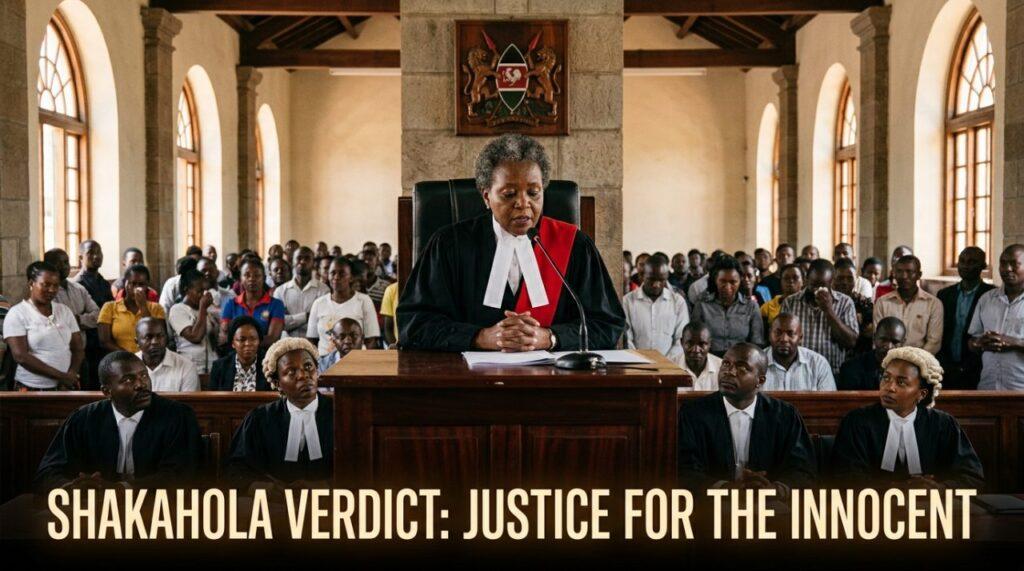
A Kenyan courtroom delivered a historic decision on October 19, 2026. High Court Justice Diana Kavedza-Mochache found cult leader Paul Nthenge Mackenzie guilty of murder (aa.com.tr, theguardian.com). The court also convicted 28 of his close associates for their roles in the tragedy (aa.com.tr). The marathon eight-hour legal ruling brought a measure of accountability to the coastal city of Mombasa (aa.com.tr, aljazeera.com). The judgment concluded that the defendants orchestrated the deaths of 191 people inside the isolated Shakahola forest (aa.com.tr, theguardian.com).
The vast majority of the dead were vulnerable minors. Out of the 191 murder counts, 190 involved children below the age of sixteen (aa.com.tr, theguardian.com). The defense argued that followers engaged in voluntary religious fasting protected by constitutional rights (aljazeera.com, theguardian.com). Justice Mochache rejected that claim directly from the bench (aa.com.tr, theguardian.com). The court ruled that children could not provide legal consent to starve themselves to death (theguardian.com). Sentencing was set for November 2026 under Section 203 of the Kenyan Penal Code (aa.com.tr, theguardian.com). The legal outcome brings somber reflection to Black communities worldwide that study the struggle for accountability after catastrophic human losses.
Shakahola Trial Murder Breakdown
The Forest Hierarchy and Systematic Starvation
The crimes occurred inside an isolated 800-acre section of Chakama Ranch in Kilifi County (wikipedia.org, wikipedia.org). Mackenzie transformed the dense woodland into a closed religious commune (wikipedia.org, wikipedia.org). He divided the wilderness into smaller villages bearing biblical names like Judea, Bethlehem, and Nazareth (wikipedia.org, wikipedia.org). Mackenzie lived at the Judea compound, which functioned as the administrative headquarters (wikipedia.org). From that central point, he coordinated daily activities and directed internal security teams (wikipedia.org).
The compound operated under a rigid chain of command (wikipedia.org, wikipedia.org). Mackenzie relied on disciplined enforcers who patrolled forest borders and prevented escapes (wikipedia.org, wikipedia.org). In late 2022, leadership introduced a fatal fasting order to hasten spiritual salvation before the apocalypse (wikipedia.org, wikipedia.org). Children died first under strict family supervision (wikipedia.org, wikipedia.org). Young unmarried people fasted next, followed by mothers, and then adult men (wikipedia.org, wikipedia.org). Mackenzie and his armed enforcers planned to starve last after the commune was gone (wikipedia.org, wikipedia.org).
Historical Roots: Rise of Good News International
Understanding this modern horror requires examining the history behind the movement. Long before the forest graves, Paul Mackenzie was a simple taxi driver in Nairobi during the 1990s (wikipedia.org, wikipedia.org). He moved eastward to the coastal town of Malindi around 2003 (wikipedia.org, wikipedia.org). There, he established the Good News International Church as a modest grassroots ministry (wikipedia.org, wikipedia.org). Mackenzie claimed direct communication with God and preached dramatic end-times theology (wikipedia.org, wikipedia.org). He warned that secular society was corrupted by demonic forces (aljazeera.com, wikipedia.org).
Mackenzie built a dedicated following through aggressive media outreach. He launched Times TV and broadcast sermons across Kenya and East Africa (wikipedia.org, wikipedia.org). YouTube channels expanded his influence into rural communities (wikipedia.org, wikipedia.org). He preached against access to formal schooling, labeling schools as spiritual traps (aljazeera.com, wikipedia.org). He ordered followers to pull children out of classrooms and avoid modern medical facilities (aljazeera.com, wikipedia.org). State authorities arrested Mackenzie in 2017 and 2019 following child deaths, but local courts released him on modest cash bail each time (aljazeera.com, wikipedia.org). Under growing police scrutiny in 2019, he officially closed his town church and moved his flock into the wilderness (aljazeera.com, wikipedia.org).
The Mark of the Beast: Digital Identity Resentment
The Shakahola movement gained momentum by exploiting widespread public distrust of state initiatives. In 2019, the Kenyan government launched the National Integrated Identity Management System, known as Huduma Namba (wikipedia.org, wikipedia.org). The initiative required citizens to provide fingerprints, facial photographs, and personal information to obtain public services. Civic groups challenged the initiative in court over privacy rights and surveillance concerns. Apocalyptic preachers like Mackenzie weaponized these public anxieties to radicalize their congregations (wikipedia.org, wikipedia.org).
Mackenzie preached that the national biometric program was the biblical “Mark of the Beast” (wikipedia.org, wikipedia.org). He referenced the Book of Revelation, warning that state databases signaled the rule of the Antichrist (wikipedia.org, wikipedia.org). Followers were ordered to boycott the 2019 national census and reject all government programs (wikipedia.org, wikipedia.org). Devotees gathered in ritual bonfires to burn their national identity cards, birth certificates, and university diplomas (wikipedia.org, wikipedia.org). By destroying their civil documentation, followers severed ties with modern Kenyan society (wikipedia.org, wikipedia.org). These tensions highlight how deep suspicions over state surveillance mechanisms can push marginalized groups into dangerous isolation.
The Shakahola Human Toll
Colonial Frameworks: The Societies Act Legacy
The tragedy exposed long-standing legal weaknesses inherited from British colonial administration. Religious groups in Kenya register under the Societies Act (Cap 108), a statute drafted in the 1950s. The law was originally intended for social clubs and sports groups. Consequently, the statute provides no oversight mechanisms to check dangerous theological doctrines or isolationist communes. The Registrar of Societies handles basic annual filings but holds no mandate to audit internal group practices.
Efforts to reform this framework repeatedly stalled in parliament. The Attorney General introduced proposed Religious Societies Rules in 2015 to require theological training and background checks. Influential religious organizations and political leaders immediately resisted the proposals. Charismatic churches represent massive voting blocs across Kenya. Politicians regularly seek endorsements from influential pulpits during competitive elections. That political alliance created deep official reluctance to investigate fringe ministries, enabling bad actors to operate unhindered.
Contested Ground: The Chakama Ranch Land Crisis
Land tenure instability on Kenya’s coast provided the physical space for Mackenzie’s commune. The Shakahola settlement sat inside Chakama Ranch, an expansive 100,000-acre parcel created in 1984 under Title 17503. For decades, the property remained entangled in legal disputes between absentee corporate owners, pastoralist groups, and local squatters. Large sections of the ranch remained unmanaged and unpatrolled, creating an administrative vacuum across the arid interior.
Mackenzie took advantage of these unresolved territorial claims. He never purchased the 800 acres from the registered corporate titleholders. Instead, he negotiated informal access through traditional clan arrangements known locally as kajama. Ranch directors reported illegal trespassing to local police in August 2021, but authorities failed to act. Mackenzie established checkpoints, constructed settlements, and exercised total control over the territory. Communal disputes and ignored property rights have historically produced patterns of communal tragedy when institutions overlook rural peripheries.
Forensic Realities: Dismantling the Fasting Myth
Investigative teams entered the forest in April 2023 following community tip-offs (cbsnews.com, wikipedia.org). Search teams discovered dozens of shallow mass graves scattered across the scrubland (cbsnews.com, wikipedia.org). Kenya Chief Government Pathologist Dr. Johansen Oduor conducted extensive post-mortems on the recovered remains (theguardian.com, cbsnews.com). The medical examinations confirmed that starvation caused the majority of deaths (theguardian.com, cbsnews.com). However, the forensic results also revealed systematic violence that contradicted defense arguments of peaceful religious devotion (theguardian.com, cbsnews.com).
The autopsies documented brutal trauma among the deceased children (theguardian.com, cbsnews.com). Several child victims showed neck fractures and throat ligature marks consistent with manual strangulation (theguardian.com, cbsnews.com). Other bodies displayed evidence of suffocation, indicating that caregivers clamped victims’ mouths shut (theguardian.com, cbsnews.com). Blunt cranial impacts pointed to executions carried out against those who broke fasts or attempted escape (theguardian.com, cbsnews.com). These medical findings proved decisive in the courtroom. Justice Mochache cited this physical evidence to dismiss the claim of voluntary religious fasting (aa.com.tr, theguardian.com).
Documented Autopsy Pathology Patterns
Justice, Faith, and State Complicity
The October 2026 conviction provides significant accountability, yet the legal battle remains incomplete. Director of Public Prosecutions Renson Ingonga separated the charges into distinct trials to manage evidentiary requirements (wikipedia.org). Beyond this murder conviction, Mackenzie faces terrorism charges under the Prevention of Terrorism Act (wikipedia.org). Other proceedings address manslaughter for hundreds of degraded remains, alongside charges under the Children Act (wikipedia.org). Defense attorneys have announced plans to appeal the verdict (aa.com.tr, theguardian.com).
The Shakahola massacre will influence Kenyan society for decades to come. It exposes how charismatic authority, unmonitored land, and state inaction can intersect with tragic results. Kenya now faces difficult questions regarding religious liberty and child protection. The High Court established a firm boundary: freedom of worship cannot shield deliberate cruelty and murder (theguardian.com). As surviving families mourn, the verdict affirms that the loss of 190 children was not a voluntary spiritual journey, but a calculated crime disguised as divine prophecy (aa.com.tr, theguardian.com).
About the Author
Darius Spearman is a professor of Black Studies at San Diego City College, where he has been teaching for over 20 years. He is the founder of African Elements, a media platform dedicated to providing educational resources on the history and culture of the African diaspora. Through his work, Spearman aims to empower and educate by bringing historical context to contemporary issues affecting the Black community.
