

Niger Soldiers Killed: Inside the Deadly Tillaberi Attack
By Darius Spearman (africanelements)
Support African Elements at patreon.com/africanelements and hear recent news in a single playlist. Additionally, you can gain early access to ad-free video content.
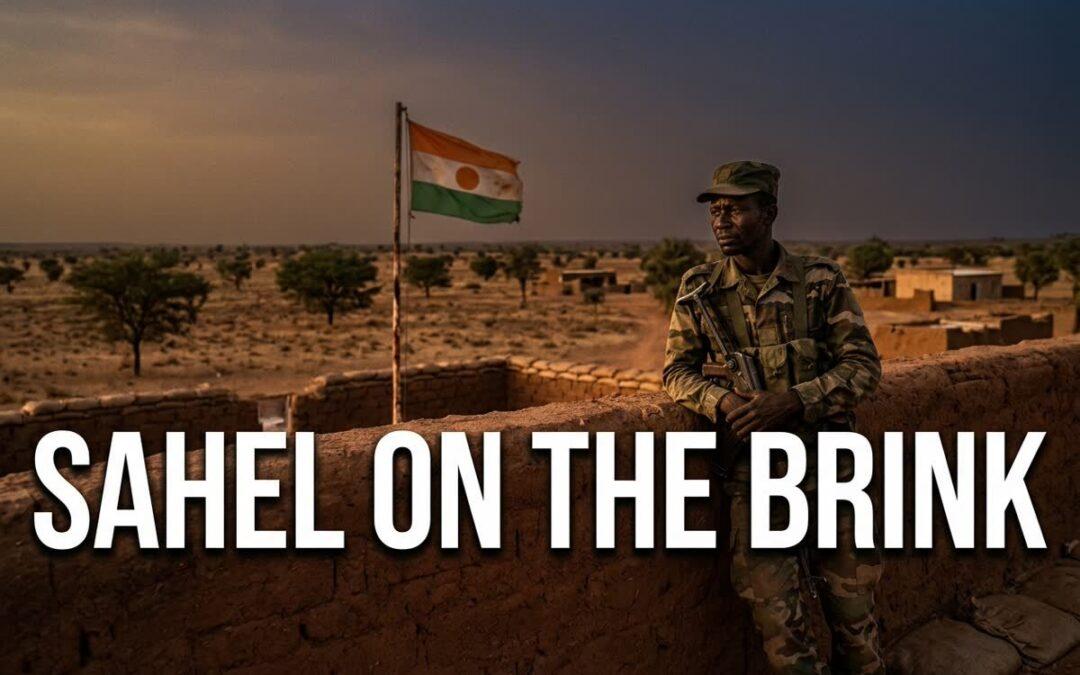
On state television in late November, defense officials confirmed a grim toll from western Niger: at least 13 Nigerien soldiers were killed and 20 others suffered wounds during an assault on an outpost in Sanam, situated in the Tillaberi region (aljazeera.com, dailynewsegypt.com). Assailants arrived on high-speed motorbikes and mounted trucks, overrunning the National Guard position before retreating into the surrounding bush (washingtonpost.com, whbl.com). The deadly encounter occurred merely forty-eight hours after another strike in the southeastern Diffa region claimed eleven troops, leaving the armed forces stretched across two distant frontiers (aljazeera.com, africanews.com).
While global headlines present the loss of these Nigerien troops as an isolated tactical ambush, the tragedy reflects structural fractures that have plagued the Sahel for decades. Understanding why Niger soldiers killed in action continue to mount requires examining the historical collapse of central governments, the exploitation of local grievances, and the sudden shift in foreign alliances (acleddata.com). The headlines capture the immediate bloodshed, but history reveals the underlying conditions that produced it.
The Sanam Tillaberi Attack and the Breaking News
The Sanam Tillaberi attack unfolded at a heavily fortified compound belonging to the Nigerien National Guard (aljazeera.com, washingtonpost.com). The soldiers stationed at this garrison formed a vital component of Operation Almahaou Niger, a dedicated security mission intended to stabilize northern and central Tillaberi (wikipedia.org). Armed assailants converged upon the compound in overwhelming numbers, employing rocket-propelled grenades, automatic rifles, and coordinated flanking maneuvers (dailynewsegypt.com, jpost.com). Following the initial breach, military authorities dispatched medical evacuation flights to transport the twenty wounded guardsmen to regional medical facilities in Niamey, where several remained in critical condition (aljazeera.com, whbl.com).
The Islamic State Sahel Province soon claimed credit for the operation through its official propaganda networks (ict.org.il). This incident marked the continuation of sustained Tillaberi region violence directed against state authority (acleddata.com). Barely two weeks earlier, on November 12, suspected militants ambushed a convoy of civilian commercial travelers near Tera, slaughtering thirty-seven people on their way to a market (aljazeera.com). The recurring strikes in Sanam demonstrate that state security presence remains fragile throughout the contested borderland corridors.
Fatalities in Major Western Niger Outpost Assaults
The tactical methods observed during this strike match established insurgent doctrines in the Liptako Gourma tri-border area (wikipedia.org). Militants rely on rapid mobility, moving in large columns through unprotected desert paths to overwhelm static defense positions before national air assets can intervene (acleddata.com). The town of Sanam experienced a remarkably similar strike in December 2019, when an ambush killed sixteen national guardsmen and gendarmes (wikipedia.org). The recurrence of attacks in the exact same geographic corridor proves that underlying operational vulnerabilities have remained unresolved across successive regimes.

African History Series • Volume II • Anti-Colonial Resistance & Sovereignty
Africa Reclaimed: Overcoming the Legacies of the Colonial Machine
By Professor A. Darius Spearman • 353 Pages • ISBN: 979-8-9924836-4-2
Colonialism in Africa was never passively endured—and its extractive machinery did not simply vanish when independence flags were raised. Professor A. Darius Spearman traces the unbroken arc of African political power from 19th-century indigenous statecraft and mid-20th-century liberation wars to contemporary battles against neo-colonial debt and resource imperialism.
Historical Roots: The Libyan Collapse and the Niger Mali Border Conflict
The contemporary crisis along the frontier cannot be understood without examining the 2011 overthrow of Libyan leader Muammar Gaddafi (wikipedia.org). For decades, Gaddafi employed thousands of ethnic Tuareg fighters from Mali and Niger within his specialized military brigades. When the Libyan state collapsed under foreign intervention and domestic rebellion, heavy armories stood unguarded. Well-armed combatants returned to the central Sahel with sophisticated arsenals, including vehicle-mounted anti-aircraft systems and machine guns (wikipedia.org, cfr.org).
By early 2012, returned fighters launched a secessionist rebellion across northern Mali under the flag of the National Movement for the Liberation of Azawad (wikipedia.org). However, ideological Islamist factions—such as Al-Qaeda in the Islamic Maghreb and the Movement for Oneness and Jihad in West Africa—quickly outmaneuvered the secular independence fighters (wikipedia.org). These armed factions seized regional commercial hubs, including Gao and Timbuktu. A 2013 French military deployment dislodged these organizations from the major urban centers, pushing mobile insurgent cells into rural peripheries (wikipedia.org).
“The disintegration of centralized authority in Libya triggered an uncontrolled redistribution of military-grade weapons across vulnerable Sahelian borders, fundamentally altering the tactical capacity of non-state combatants.”
Source: (wikipedia.org, cfr.org)
This displacement directly fueled the ongoing Niger Mali border conflict (acleddata.com). Dispersed militants migrated into the tri-border expanse, establishing logistical lines across poorly guarded frontiers. As state administrators withdrew from exposed peripheral regions, armed insurgents established operational sanctuaries within dry forests and scrubland corridors (globalr2p.org). These safe havens enabled them to stage cross-border raids against rural administrative centers with near-total impunity.
The political vacuum in rural territories challenged historical concepts of national sovereignty. In studies of African American political history, debates over central authority often examine federalism and state authority to determine which level of governance can best protect community welfare. In the Sahel, however, both federal institutions and local prefectures frequently failed to maintain order. This administrative failure left remote rural districts exposed to external predation and armed encroachment.
Sahel Pastoralist Conflicts and the Rise of Insurgent Groups
Insurgent expansion does not occur simply through ideological persuasion. It depends upon deep-seated local disputes over basic resources. Decades of climate-driven desertification, changing rainfall patterns, and agricultural expansion have steadily degraded seasonal migration routes throughout West Africa (globalr2p.org). As nomadic Fulani pastoralists pushed their herds southward in search of reliable forage, they encountered sedentary agrarian populations, including Zarma, Hausa, and Songhai farmers (wikipedia.org). These encounters ignited intense competition over vital water points and grazing rights.
These tensions rapidly escalated into widespread Sahel pastoralist conflicts (acleddata.com). Nomadic communities frequently faced institutional disenfranchisement, arbitrary cattle taxation, and corruption from state forestry services (globalr2p.org). In many borderland districts, national security forces collaborated with agrarian ethnic self-defense groups, subjecting nomadic herders to collective punishment, arbitrary detentions, and extrajudicial reprisals (acleddata.com, globalr2p.org). This structural bias convinced many herders that central governments were hostile institutions designed to enforce agrarian dominance.
- Shrinking pasture lands caused by climate change force pastoralists into cultivated farming zones.
- Agrarian-dominated state forestry agencies enforce punitive fines and grazing restrictions.
- Local self-defense militias conduct retaliatory strikes against nomadic settlements without judicial oversight.
- Militant organizations step into the governance void, offering protection and weaponry to rural herders.
Militant commanders recognized an opening within this cycle of communal friction. Insurgent factions offered marginalized herders protection from livestock raiders, abolished state pasture taxes, and enforced rough judicial rulings against corrupt local authorities (globalr2p.org). The struggle of vulnerable groups against structural exploitation resembles the broader historic campaigns for economic justice that defined early Black labor movements. In the Sahel, however, this search for protection drove isolated populations into tactical alliances with extremist armed factions.
Rise of the Islamic State Greater Sahara in Liptako Gourma
The formation of the Islamic State Greater Sahara, known formally as ISGS, transformed the security architecture of the region (wikipedia.org). In 2015, Adnan Abu Walid al-Sahraoui, a veteran commander of the Movement for Oneness and Jihad in West Africa, broke with established commanders and pledged allegiance to the central Islamic State leadership (wikipedia.org, ict.org.il). The organization established its operational core across the rugged Liptako Gourma tri-border frontier, where Mali, Burkina Faso, and Niger converge (wikipedia.org).
The militant faction drew worldwide attention in October 2017 during the deadly Tongo Tongo ambush in Tillaberi (wikipedia.org). In that encounter, fighters overwhelmed a joint patrol, killing four American Special Forces personnel and five Nigerien soldiers (wikipedia.org, ict.org.il). The group demonstrated a capacity to coordinate swarming assaults against fortified positions, culminating in the late 2019 assault on Inates that killed 71 soldiers and the early 2020 raid at Chinagodrar that claimed 89 lives (wikipedia.org). These catastrophic losses prompted international partners to pour billions of dollars into multilateral military programs across the central Sahel.
Annual Political Violence Fatalities in Niger
Despite heavy military spending, the security environment deteriorated further. In 2017, Al-Qaeda factions formed a rival umbrella network named Jama’at Nusrat al-Islam wal-Muslimin, commonly known as JNIM (wikipedia.org). JNIM and ISGS frequently engaged in violent territorial disputes, catching innocent civilians between opposing fronts (acleddata.com, acleddata.com). The Armed Conflict Location and Event Data Project documented that Tillaberi accounted for roughly 1,300 deaths out of Niger’s 1,939 total fatalities from political violence in 2025, cementing its status as the most dangerous region in the nation (acleddata.com, acleddata.com).
A Two-Front War: The Boko Haram Diffa Attacks in the Southeast
The strategic burden on the armed forces becomes clear when viewing the nation as a divided theater. While soldiers battled ISGS along the western frontier, the military remained engaged in combat more than 1,000 kilometers away in the southeast (aljazeera.com, africanews.com). Two days before the Sanam attack, eleven Nigerien soldiers died during an ambush in Baraoua, situated in the Diffa region near Lake Chad (aljazeera.com, africanews.com). Authorities attributed that raid to Boko Haram militants operating along the Nigerian frontier (aljazeera.com).
Niger has confronted persistent Boko Haram Diffa attacks since early 2015 (africanews.com). The regional conflict splintered when the Islamic State West Africa Province broke away from Boko Haram’s historical core faction, creating another competitive insurgent landscape along the Lake Chad basin (cfr.org). This geographical split forces the general staff in Niamey to divide critical logistical assets, armored columns, and specialized personnel across vast desert expanses (acleddata.com).
| Strategic Dimension | Western Front (Tillaberi) | Eastern Front (Diffa) |
|---|---|---|
| Neighboring Borders | Mali and Burkina Faso | Nigeria and Chad |
| Primary Insurgent Groups | ISGS (ISSP) and JNIM | Boko Haram and ISWAP |
| November Casualties | 13 soldiers killed, 20 wounded | 11 soldiers killed |
| Dominant Terrain | Liptako Gourma scrubland | Lake Chad basin wetlands |
The simultaneous losses in Sanam and Baraoua demonstrate that insurgent organizations maintain the initiative on both fronts (aljazeera.com, africanews.com). When Niger concentrates troops in the west to repel Islamic State assaults, armed cells exploit reduced staffing levels in the Lake Chad basin to conduct ambushes. This tactical dilemma drains national revenue, undermines troop morale, and prevents the state from providing essential social services to its population.
The 2023 Coup and the Deepening Niger Military Junta Crisis
Mounting battlefield casualties directly fueled political instability in the capital. On July 26, 2023, General Abdourahamane Tchiani led a military coup d’etat that ousted democratically elected President Mohamed Bazoum (wikipedia.org, wikipedia.org). The military officers formed the National Council for the Safeguard of the Homeland, known as the CNSP, justifying their intervention by pointing to the deteriorating security environment in Tillaberi and Diffa (wikipedia.org, cfr.org). Popular demonstrations supported the coup, fueled by long-standing resentment against French economic and military policy across the region (cfr.org).
Resentment against France stemmed from decades of extraction under the colonial system known as “Francafrique” (cfr.org). French state corporation Orano had mined vast deposits of Nigerien uranium for decades to power European nuclear facilities, while local populations lived in extreme poverty with unreliable access to electricity (cfr.org). Public frustration grew as thousands of French soldiers from Operation Barkhane failed to halt extremist violence in rural areas (wikipedia.org, cfr.org). To many citizens, the ongoing presence of Western military personnel represented paternalistic control rather than genuine protection.
“The assertion of national sovereignty required an explicit break from paternalistic defense accords that failed to safeguard Nigerien lives across a decade of intervention.”
Source: (wikipedia.org, cfr.org)
Following the coup, the Economic Community of West African States, known as ECOWAS, responded aggressively (wikipedia.org, globalr2p.org). Founded in 1975 to foster economic cooperation, the regional bloc imposed severe financial sanctions, froze Niger’s assets at the regional central bank, and closed international trade borders (wikipedia.org). Nigeria disconnected more than 70 percent of Niger’s electricity supply, driving up inflation and causing acute shortages of vital medicine (wikipedia.org, globalr2p.org). Furthermore, ECOWAS threatened direct military intervention by activating a regional standby force to reinstall the deposed president (wikipedia.org, wikipedia.org).
Foreign Troop Deployments Expelled from Niger
Viewing ECOWAS threats as foreign-directed interference, Niger united with neighboring military juntas in Mali and Burkina Faso (wikipedia.org, wikipedia.org). In September 2023, the three nations signed the Liptako-Gourma Charter, establishing the Alliance of Sahel States, or AES (wikipedia.org). In January 2024, the alliance announced its formal, immediate exit from ECOWAS, ending nearly fifty years of regional institutional integration (wikipedia.org, wikipedia.org). The junta subsequently expelled 1,500 French troops and ordered the withdrawal of more than 1,000 American military personnel, abandoning the $110 million drone installation at Air Base 201 in Agadez (wikipedia.org, cfr.org).
The pursuit of complete autonomy echoes historic diaspora movements centered on self-determination and political independence. However, severing Western security accords introduced severe operational liabilities. The loss of American surveillance drones and French air cover removed vital real-time intelligence over desert expanses (wikipedia.org, cfr.org). To fill this gap, the junta invited Russian military trainers and personnel from the Africa Corps (adf-magazine.com, wikipedia.org). This shift was a significant strategic political realignment, but Moscow’s limited footprint could not immediately replace the comprehensive surveillance infrastructure of the departing Western forces.
This deficit has created a growing Niger military junta crisis (adf-magazine.com). In late August 2026, severe battlefield losses, supply shortages, and unpaid combat allowances culminated in an armed mutiny in Niamey by disgruntled soldiers (adf-magazine.com). Loyal security factions crushed the uprising with operational support from Russian forces, but the event exposed profound friction within the military hierarchy (adf-magazine.com). The assault on the Sanam outpost shows that despite political realignments and sovereign declarations, ordinary soldiers continue to bear the cost of an expanding regional war.
About the Author
Darius Spearman is a professor of Black Studies at San Diego City College, where he has been teaching for over 20 years. He is the founder of African Elements, a media platform dedicated to providing educational resources on the history and culture of the African diaspora. Through his work, Spearman aims to empower and educate by bringing historical context to contemporary issues affecting the Black community.
