


African Tech Labor Union: How Workers Are Fighting Back
By Darius Spearman (africanelements)
Support African Elements at patreon.com/africanelements and hear recent news in a single playlist. Additionally, you can gain early access to ad-free video content.
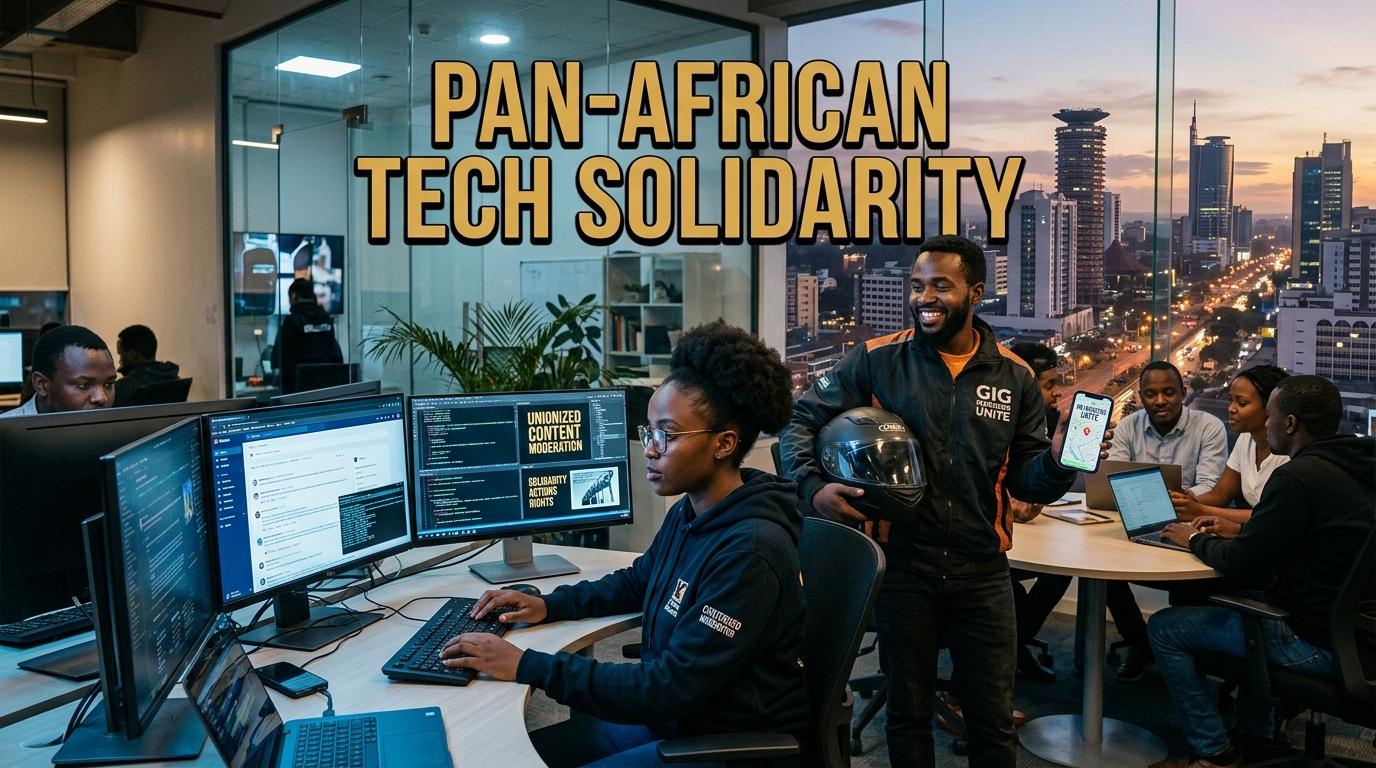
A historic shift is transforming the global technology sector. Across Nairobi, Lagos, and Johannesburg, digital laborers have organized a unified front against exploitation. Content moderators, artificial intelligence data annotators, and app-based gig drivers recently established a pan-African labor union (theguardian.com, uniglobalunion.org). This coalition challenges the practices of multinational technology giants.
For decades, major tech corporations outsourced dangerous and low-paid tasks to the African continent. Corporate executives marketed these initiatives as ethical job creation. In reality, workers faced severe psychological trauma, low wages, and algorithmic control. This movement connects invisible digital workers with visible street couriers to reclaim worker dignity (business-humanrights.org, diplomaticourier.com).
The Roots of Digital Outsourcing in Africa
During the 2010s, Silicon Valley faced immense pressure to clean up toxic social media feeds. Regulators demanded swift removal of hate speech, graphic violence, and child exploitation. Rather than hiring domestic staff with comprehensive benefits, tech platforms outsourced these tasks overseas (time.com, theguardian.com). They targeted emerging markets in Sub-Saharan Africa.
Nairobi, Lagos, and Cape Town became central hubs for Business Process Outsourcing contractors. Companies like Sama, Majorel, and Teleperformance recruited educated, multilingual African youth (conflictoflaws.net, theguardian.com). Corporate marketing departments called this strategy impact sourcing. They claimed digital data entry would lift thousands out of poverty. Instead, workers found themselves subjected to digital sweatshops that prioritized corporate margins over basic human safety (time.com, foxglove.org.uk).
Whistleblowers and the Human Toll of AI
The illusion of ethical outsourcing collapsed through brave internal resistance. In 2019, Daniel Motaung, a South African content moderator working for Sama in Nairobi, organized his peers (time.com, theguardian.com). Workers reviewed hundreds of horrific videos daily. They received meager wages of less than two dollars per hour (time.com). Sama fired Motaung immediately after he led collective demands for mental health care and livable wages (foxglove.org.uk, theguardian.com).
Motaung filed a landmark lawsuit in Kenya against Meta and Sama in 2022 (conflictoflaws.net, foxglove.org.uk). The legal action exposed severe neglect, union busting, and mental distress. In 2023, independent reports revealed that Sama employees labeled toxic snippets to train OpenAI models for ChatGPT (time.com). Workers experienced clinical depression and post-traumatic stress disorder while earning minimal pay (time.com, time.com). These revelations proved that modern artificial intelligence relies heavily on cheap human labor.
Behind the Wheels: Platform Drivers Join the Resistance
At the same time, urban transportation across Africa underwent algorithmic restructuring. Multinational ride-hailing and delivery apps expanded rapidly throughout Nigeria, South Africa, and Kenya (fair.work, fair.work). Platforms classified drivers as independent contractors. This classification denied drivers minimum wage protections, sick leave, and vehicle subsidies (auatwon.org, fair.work).
Drivers faced unilateral commission hikes of up to twenty-five percent alongside soaring fuel costs (auatwon.org, guardian.ng). In response, Nigerian transport workers formed the Amalgamated Union of App-Based Transporters of Nigeria (auatwon.org, auatwon.org). In 2023, the Nigerian government officially registered the organization as a platform trade union (auatwon.org, manifieldsolicitors.com). This victory inspired transport workers across the continent to coordinate industrial actions together.
Grassroots organizers recognized strong commonalities between content moderators and ride-hailing drivers. Both groups suffered under automated management systems that degraded human dignity. This shared realization built the foundation for broader African worker resistance across sectors (auatwon.org, uniglobalunion.org).
Algorithmic Management and Digital Colonialism
Modern platform workers are governed by automated systems rather than human managers. Opaque algorithms track worker speed, route efficiency, and screen activity down to the second (privacyinternational.org, fair.work). For content moderators, missing strict handling metrics by seconds leads to disciplinary action or termination (time.com, foxglove.org.uk). For gig drivers, algorithmic deactivations instantly wipe out household livelihoods without an appeal process (privacyinternational.org, auatwon.org).
Labor researchers describe this dynamic as digital colonialism (medium.com, diplomaticourier.com). Silicon Valley maintains high-margin software design and proprietary algorithms in wealthy nations (medium.com). Meanwhile, companies extract raw data annotation and traumatic moderation labor from the Global South (time.com, diplomaticourier.com). Furthermore, foreign platforms frequently fail to understand regional languages and local political nuance (business-humanrights.org, diplomaticourier.com).
This dynamic reinforces historic patterns of resource extraction. Addressing these systemic harms requires decolonizing institutions and restructuring technological governance across the Global South (medium.com, parispeaceforum.org).
Historic Court Battles Shatter Big Tech Immunity
Multinational tech companies long operated abroad without establishing formal local legal entities. When confronted with labor violations, corporate attorneys argued that domestic courts lacked jurisdiction over foreign parent firms (conflictoflaws.net, conflictoflaws.net). This legal shield protected Silicon Valley from direct accountability for years.
Kenyan courts fundamentally shattered that corporate defense. In landmark rulings, the Nairobi Employment and Labour Relations Court decided that foreign tech parents like Meta can be sued locally for labor violations (conflictoflaws.net, conflictoflaws.net). The court affirmed that foreign corporations cannot hide behind third-party outsourcing agencies to escape legal duties (conflictoflaws.net). This jurisdictional victory provided workers across the continent with vital legal standing.
Daniel Motaung leads first major push to organize Facebook moderators against exploitative conditions.
Kenyan labor courts challenge Meta corporate immunity over third-party outsourcing abuses.
AUATWON wins formal registration in Nigeria; Nairobi moderators establish the Content Moderators Union.
Content moderators, AI labelers, and gig drivers unite across borders into a single collective front.
Building a Pan-African Labor Federation
The formation of the pan-African labor union represents years of strategic cross-border organizing. In May 2023, over one hundred and fifty content moderators gathered in Nairobi to establish the African Content Moderators Union (theguardian.com, uniglobalunion.org). They demanded parity in healthcare benefits with their Western counterparts (theguardian.com). Shortly after, transport workers launched campaigns to expand driver union models across twenty African nations (auatwon.org, oatuuousa.org).
Today, these separate initiatives have merged into a single transnational federation (uniglobalunion.org, diplomaticourier.com). The alliance coordinates legal battles, synchronizes industrial actions, and shares bargaining tactics across borders (oatuuousa.org, uniglobalunion.org). By creating a united front, the union prevents global tech platforms from shifting operations between countries to evade fair labor standards (uniglobalunion.org).
Parallels to Global Black Freedom Struggles
The fight for digital labor rights in Africa shares deep roots with historic struggles across the African diaspora. Historically, Black workers fought for economic justice against predatory industrial systems. From the Memphis sanitation workers strike to railway unionizing, Black laborers organized against systemic wage disparities.
Modern digital labor structures reflect those same historic hierarchies. Black workers in the Global South clean traumatic media from feeds and drive city streets without job stability. Meanwhile, global executives accumulate immense wealth from automated operations. The current demand for fair pay honors a long tradition of Pan-African solidarity and working-class resistance.
The Road Ahead for Global Labor Solidarity
The rise of the pan-African tech union provides a crucial model for workers worldwide. As artificial intelligence automates traditional jobs, tech conglomerates rely heavily on uncredited data labor. African organizers are demonstrating how to build collective power across fragmented digital industries (uniglobalunion.org, diplomaticourier.com).
The path forward will bring intense opposition. Tech conglomerates continue to appeal court rulings and restructure vendor contracts to reduce liability (conflictoflaws.net, conflictoflaws.net). Nevertheless, the solidarity among African digital workers remains steadfast. By organizing across national boundaries, these workers are reshaping the future of global tech labor.
About the Author
Darius Spearman is a professor of Black Studies at San Diego City College, where he has been teaching for over 20 years. He is the founder of African Elements, a media platform dedicated to providing educational resources on the history and culture of the African diaspora. Through his work, Spearman aims to empower and educate by bringing historical context to contemporary issues affecting the Black community.
