
Listen & Share
ICE Protests: Black Community’s Fight for Justice
By Darius Spearman (africanelements)
Support African Elements at patreon.com/africanelements and hear recent news in a single playlist. Additionally, you can gain early access to ad-free video content.
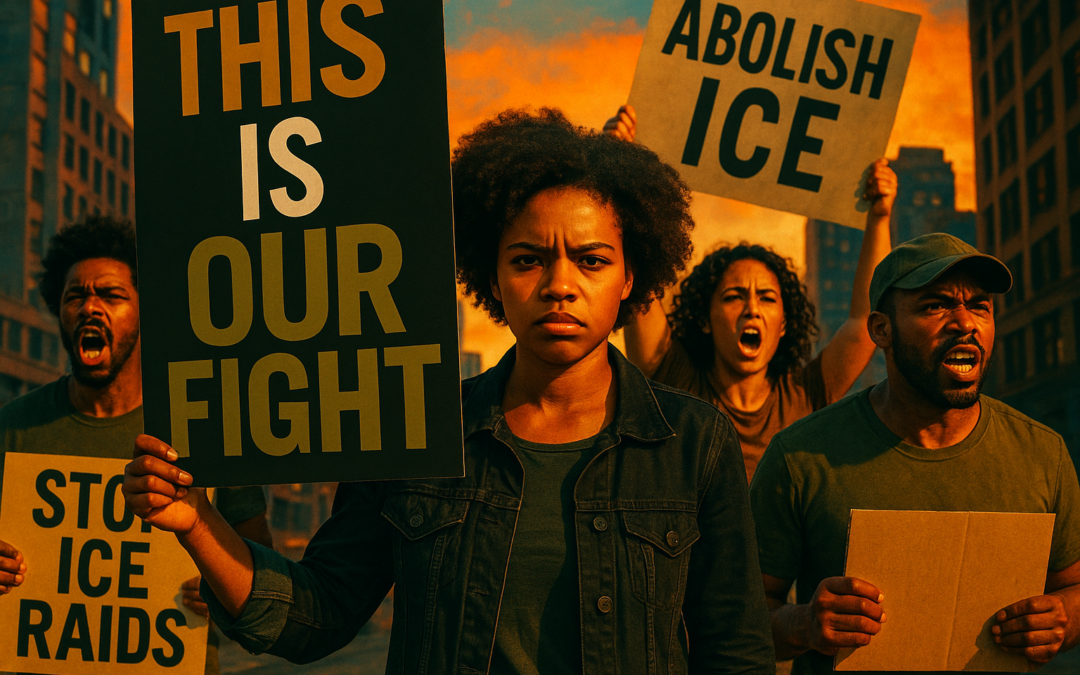
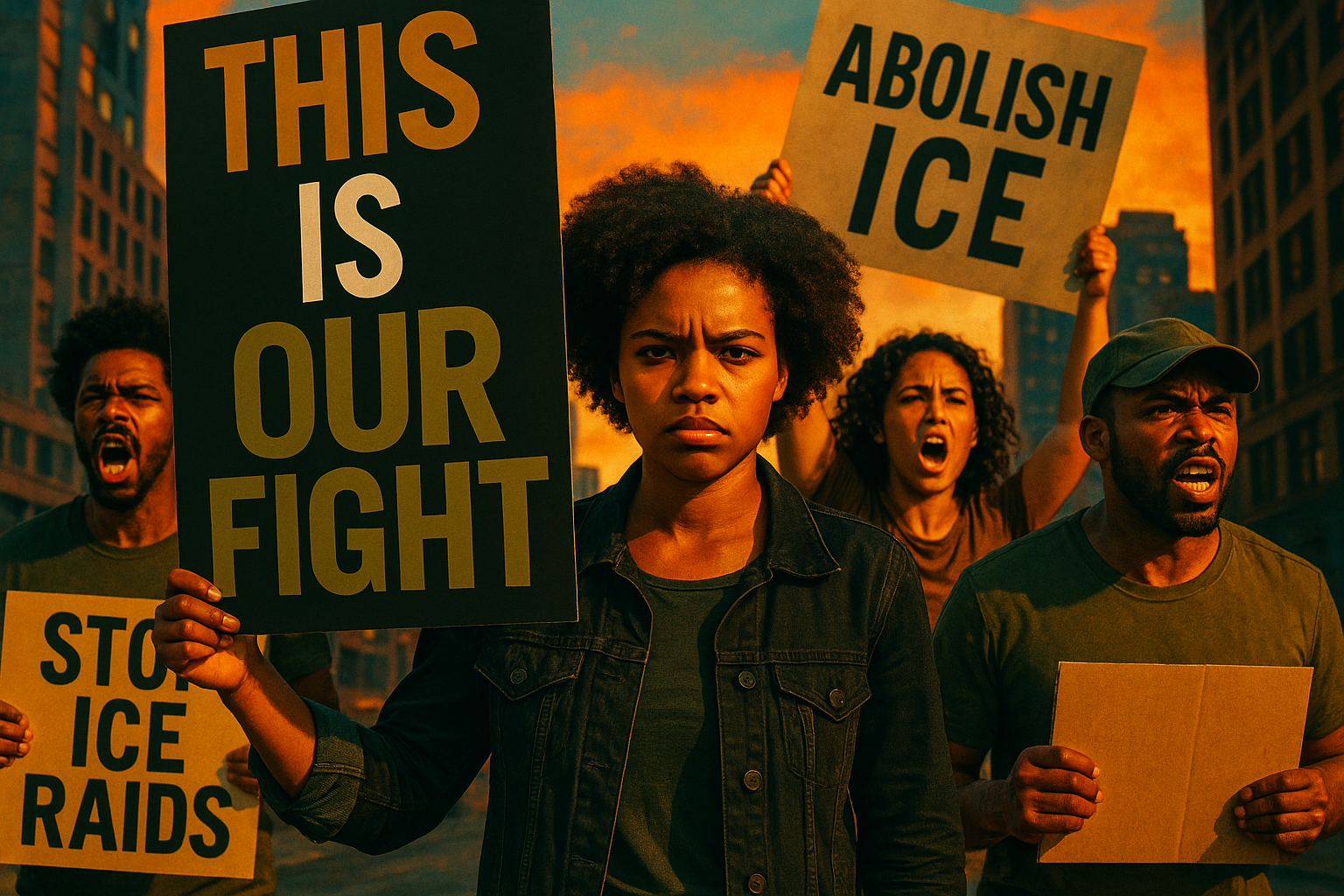
Recent protests against Immigration and Customs Enforcement, known as ICE, have spread across the United States. They remind us that the struggle for justice is interwoven. From Los Angeles to New York City, people are standing up to practices that target immigrant communities. This movement is not disconnected from the ongoing fight for Black liberation; indeed, it is deeply connected to it.
The shared threads of racial profiling, systemic injustice, and disproportionate targeting make these protests relevant to Black people across the diaspora. Many understand that an injury to one community of color is an injury to all. The voices rising in protest echo long-held calls for human dignity and fair treatment for all.
Understanding ICE’s Reach: Immigration Raids and Resistance
U.S. Immigration and Customs Enforcement (ICE) is a federal agency under the U.S. Department of Homeland Security. Their mission includes protecting the United States from transnational crime and illegal immigration (U.S. Immigration and Customs Enforcement – Wikipedia). ICE enforces over 400 federal statutes, primarily focusing on immigration enforcement and customs violations (ICE – Who We Are). The agency’s Enforcement and Removal Operations (ERO) handles the apprehension, detention, and removal of undocumented immigrants.
Recently, ICE raids have sparked widespread community unrest. In Los Angeles, these raids led to arrests and large protests (LA Times on ICE Protests in Los Angeles). Demonstrations also occurred in other cities, such as Houston and San Antonio (Texas Tribune on ICE Protests in Texas). People gathered by the hundreds to protest increased immigration enforcement in workplaces and courthouses. These actions highlight the deep impact of ICE operations on families and communities.
The Scope of ICE Protests
National Movement, Shared Struggles: Connecting Black and Immigrant Fights
The ICE protests are not isolated incidents; they are part of a broader national movement spreading to numerous U.S. cities. For example, demonstrations extended to New York City, leading to arrests outside Trump Tower (Axios on Nationwide ICE Protests). This widespread participation indicates deep public concern about immigration enforcement policies. Furthermore, the protests include support for union leaders targeted by ICE, such as David Huerta, which underscores the connection to labor rights (Axios on Nationwide ICE Protests). Union leaders like David Huerta advocate for immigrant protections and workers’ rights, often bridging these struggles with larger social justice movements.
The relevance of these protests to the Black community stems from shared struggles against systemic injustice. An op-ed suggests that ICE protests are part of broader social justice movements affecting communities of color, including Black communities, who face similar issues of racial profiling and systemic injustice. Unions in California, known for their integral role in immigrant rights movements, also possess strong ties to civil rights struggles (LA Times on ICE Protests in Los Angeles). These connections became even more evident since the George Floyd protests of 2020. The George Floyd protests highlighted racial justice concerns and sparked discussions about systemic racism and police brutality across the nation (George Floyd Protests – Wikipedia). The shared experiences with racial profiling and calls for police reform resonate strongly with both Black and immigrant communities.
Understanding Racial Profiling
Racial Profiling: A Shared Concern

Racial profiling is when law enforcement targets individuals for suspicion based on their race, ethnicity, or national origin. This occurs rather than on actual individual behavior. Both immigrant and Black communities have historically faced this prejudicial practice. Racial profiling can lead to unwarranted stops, searches, and arrests. It is a critical issue in discussions about policing and civil rights within the U.S. (American Civil Liberties Union (ACLU)).
Source: Definition of Racial Profiling based on common legal and civil rights contexts, reinforced by the ACLU.
Controversial Deployments: Policing Dissent and Civil Liberties
The use of the National Guard in ICE protests has drawn significant controversy. The National Guard is a military force typically activated for state-level emergencies, such as natural disasters. Their deployment for domestic protests is rare and often signals a situation where local law enforcement may feel overwhelmed. This type of deployment often raises serious questions about civil liberties and human rights (Amnesty International on ICE Raids).
Amnesty International has openly criticized the deployment of National Guard troops to Los Angeles. They expressed concerns about the safety of protesters and deemed the use of military personnel for crowd control inappropriate (Amnesty International on ICE Raids). This situation brings to mind other controversial deployments, such as the clearing of Lafayette Park in 2020. Such actions highlight a troubling pattern of using overwhelming force against peaceful assembly. From our perspective in the Black community, this echoes historical moments when state power was used to suppress our rights to protest and demand change.
ICE’s Operational Focus
A Call for Change: Reforming Immigration and Redefining Justice
These protests are not simply about stopping raids; they highlight broader calls for comprehensive immigration reform. Human rights organizations and activists are advocating for a more humane and respectful immigration system (Amnesty International on ICE Raids). They argue that current practices are harmful to communities and tear families apart. The frequency of ICE raids can change based on shifts in immigration policies and enforcement priorities. Recent increases have been linked to intensified enforcement efforts aimed at addressing undocumented immigration and transnational crime; but these policies also generate significant public outcry.
The protests against ICE are also part of a larger national conversation about racial justice and immigration policies. These policies affect all communities of color, creating overlapping challenges. For Black communities, participating in these demonstrations is a clear act of solidarity. It also affirms the belief that true justice cannot exist while any group is targeted and brutalized by state power. Our collective liberation is tied together in the struggle for dignity and human rights for everyone, regardless of their origin.
ABOUT THE AUTHOR
Darius Spearman has been a professor of Black Studies at San Diego City College since 2007. He is the author of several books, including Between The Color Lines: A History of African Americans on the California Frontier Through 1890. You can visit Darius online at africanelements.org.
