

Listen & Share
Darfur’s Agony: Battling Sexual Violence
By Darius Spearman (africanelements)
Support African Elements at patreon.com/africanelements and hear recent news in a single playlist. Additionally, you can gain early access to ad-free video content.
A Shadow of Risk in Darfur
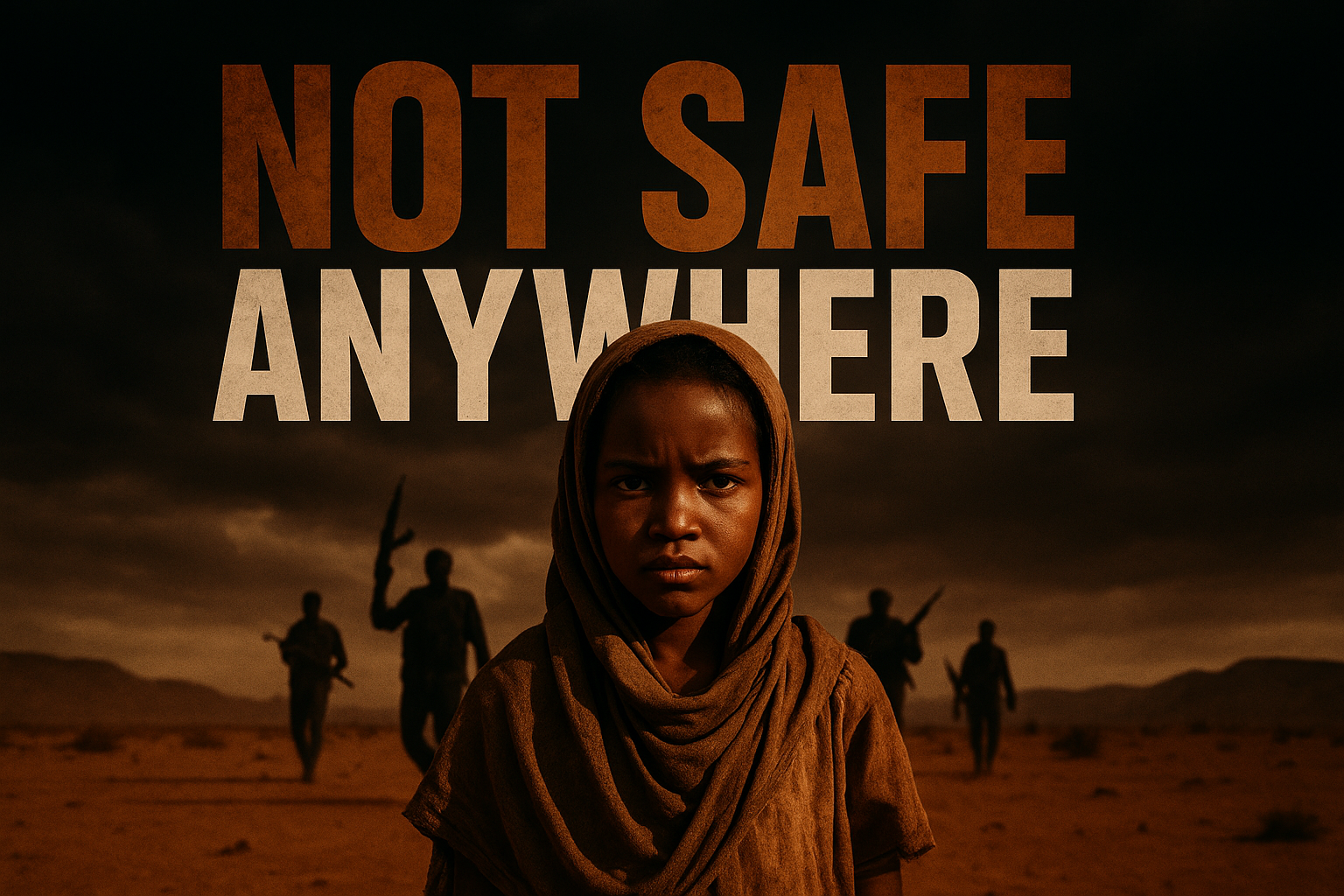
In Darfur, Sudan, our sisters and daughters endure a terror that no human being should ever face. The ongoing war has made sexual violence a constant, brutal reality for women and girls. They are attacked within their own homes, as they flee violence for safety, when gathering essential firewood, while tending to fields, and even during the search for food, clearly showing that no place offers refuge or protection (MSF; Arab News). Many of these horrific assaults involve several perpetrators, exposing the deeply brutal nature of this violence (MSF; Arab News).
The phrase “near-constant risk” describes the ever-present danger of sexual violence in conflict areas like Darfur. This means that individuals are routinely exposed to a high likelihood of assault during their daily lives, impacting women, children, and displaced persons across wide areas (Global Conflict Tracker). Our global community must understand that sexual violence is a pervasive and systematic issue in this region, with devastating costs to the African people caught in its crosshairs. Organizations like Médecins Sans Frontières (MSF) are on the ground in Darfur and eastern Chad, providing essential medical and psychological care to survivors, a critical intervention that requires immediate and massive scaling up (MSF UK; MSF).
Crimes Against Humanity
The sexual violence in Darfur is far more than an incidental tragedy; it constitutes war crimes, torture, and potentially crimes against humanity. MSF and humanitarian leaders insist that sexual violence is not an unavoidable part of war, but rather a deliberate war crime and a form of torture (MSF; ReliefWeb). This requires accountability from all warring parties. Amnesty International has reported that the Rapid Support Forces (RSF) have committed extensive sexual violence during Sudan’s civil war to humiliate and control communities, acts that amount to war crimes and possible crimes against humanity (USCRI).
The RSF, a powerful paramilitary group in Sudan, originated from the Janjaweed militias, which were notorious for brutal attacks, mass displacement, sexual violence, and kidnappings during the earlier Darfur conflict (Global Conflict Tracker). Formalized in 2013 under former president Omar al-Bashir with Mohamed Hamdan Dagalo (Hemedti) as its leader, the RSF has been accused of war crimes and crimes against humanity, including mass killings, mass rapes, pillage, and ethnic cleansing against specific ethnic groups in Darfur (Wikipedia; Global Conflict Tracker). These acts involve widespread or systematic attacks directed against civilian populations. This stands apart from other war crimes because of their massive scale and clear intent to terrorize civilians through actions like murder, rape, and ethnic cleansing (Global Conflict Tracker). The war environment, with competing militias, weakened governance, and ongoing instability, allows such unchecked violence against civilians (Global Conflict Tracker). The perpetrators use such violence as a tactic to terrorize and control civilian populations, often publicly, in a bid to instill fear and destroy community cohesion (Wikipedia; Washington Institute).
The Silent Epidemic of Underreporting
The true scale of sexual violence in Darfur is far greater than what we know. Many survivors hesitate to seek help because of deep fear of retaliation from armed groups, overwhelming social stigma, and the painful possibility of rejection by their own families and communities (USCRI). Patriarchal norms in Darfur create a painful stigma for survivors, discouraging them from reporting assaults (USA for UNHCR). The lack of anonymity in small, close-knit communities further increases survivors’ fears of reprisal and social exclusion (USA for UNHCR). Additionally, Sudan’s fragile health and humanitarian systems severely limit the availability of adequate care for survivors, which makes it nearly impossible to fully measure the extent of this crisis (MSF UK; MSF).
Only a fraction of actual incidents are recorded due to pervasive stigma, fear, and weak reporting systems (USA for UNHCR). For example, UNICEF and other protection agencies recorded only 221 cases of child rape in Sudan since early 2024, including infants as young as one year old (USCRI). This number is likely a tiny snapshot of truly widespread suffering. The historical context in Darfur consistently shows patterns of underreporting influenced by strict social norms (USA for UNHCR). Weak justice systems and poor access to legal options make survivors and witnesses distrust authorities (USA for UNHCR). This failure to report means that many survivors do not receive the essential support they need and that perpetrators often escape accountability (USA for UNHCR).
Disturbing Trends and Statistics
The statistical data paints a chilling picture of the escalating sexual and gender-based violence (SGBV) across Sudan, including Darfur. The number of people at risk of SGBV in Sudan has more than tripled in under two years, presently affecting 12.1 million individuals (USCRI). Our collective heart aches at the thought of children and infants, even those as young as one year old, becoming targets of sexual violence. This indicates an extreme form of brutality, designed to terrorize communities and potentially destroy family lineage, inflict lasting trauma, or assert ethnic domination (Wikipedia; Global Conflict Tracker).
Sudan’s Rising Risk of Sexual Violence
Sudan’s Rising Risk of Sexual Violence
People now at risk of sexual and gender-based violence (SGBV) in Sudan This number has more than tripled in under two years.
This visualization shows the dramatic increase in the number of people facing a risk of sexual and gender-based violence in Sudan. Data from USCRI.
The conflict escalation in April 2023, sparked by failed negotiations to integrate the RSF into the Sudanese Armed Forces (SAF), unleashed open fighting that rapidly spread across Sudan (USA for UNHCR). This conflict rapidly spread into new zones, intensifying human rights abuses, including sexual violence against civilians (USA for UNHCR). Since the conflict intensified in April 2023, tens of thousands of lives have been lost, and over 13 million people have been displaced across Sudan (Arab News). Displacement creates severe vulnerability to sexual violence, forcing populations into overcrowded, insecure camps or informal settlements (USA for UNHCR).
Identified Child Rape Cases in Sudan (Early 2024)
Identified Child Rape Cases in Sudan (Early 2024)
This graphic highlights the deeply alarming number of child rape cases documented in Sudan, underscoring that this is merely a fraction of the actual situation. Data from USCRI.
The fractured family and community protection networks leave women, children, and infants exposed to exploitation (USA for UNHCR). Limited access to basic services, poor lighting, and weak security in displacement sites increase these risks, making displaced persons easy targets for armed groups or opportunistic criminals (USA for UNHCR). Survivors of sexual violence, especially young children, suffer severe physical injuries, profound psychological trauma, and social stigmatization (USA for UNHCR). These devastating impacts on community cohesion will linger for generations, demanding urgent attention and care.
Over 13 Million Displaced in Sudan
Over 13 Million Displaced in Sudan
13,000,000+This visualization highlights the immense scale of displacement in Sudan since April 2023 and its direct correlation to heightened vulnerability to sexual violence. Data from Arab News.
Demands for Urgent Action
Humanitarian organizations are urgently appealing for concrete actions to protect civilians and expand critical support services for survivors. MSF demands an immediate scaling up of medical and psychological assistance for survivors (MSF). They provide a range of vital services for survivors of sexual violence, including emergency contraception, post-exposure prophylaxis (PEP) for HIV prevention, treatment of injuries, and trauma counseling (USA for UNHCR). Additionally, MSF offers mental health support and sometimes legal aid (USA for UNHCR). However, persistent insecurity, severe shortages of medical supplies, and limited access to conflict zones hinder the ability of MSF and other agencies to deliver these critical services on the necessary scale (MSF UK; USA for UNHCR).
Protection agencies, such as UNICEF and MSF, play essential roles in responding to SGBV. They provide medical care, psychological counseling, emergency shelter, and legal aid for survivors (USA for UNHCR). These organizations also work tirelessly to document abuses and support prevention efforts. Their tireless work continues despite immense challenges in reaching affected populations (USA for UNHCR). Experts emphasize that addressing the violence means confronting its deeply rooted causes and restoring protection mechanisms amidst the ongoing war and displacement crisis. These root causes include political power struggles, ethnic tensions, and fierce competition over resources like land and water (Wikipedia; Global Conflict Tracker). The global community must bolster its response, recognizing that Darfur’s unique ethnic and displacement dynamics demand specially tailored interventions within the broader Sudanese conflict framework (Wikipedia).
The Road to Accountability
Holding perpetrators of sexual violence accountable in Darfur remains a significant challenge due to weak justice institutions and ongoing instability. While the International Criminal Court (ICC) has issued indictments against some RSF leaders for war crimes and crimes against humanity, many perpetrators continue to escape punishment (Wikipedia). Practical prosecution and justice for a multitude of survivors remain scarce. These limitations are intensified by a lack of evidence, profound insecurity, political interference, and minimal domestic capacity to enforce laws against offenders (USA for UNHCR).
Humanitarian actors implore all conflict parties to hold fighters accountable and implement concrete steps to prevent sexual violence against civilians (ReliefWeb). The political dynamics, including the considerable power wielded by the RSF, further complicate efforts to hold perpetrators accountable within Sudan (Washington Institute). While international bodies like the UN and various non-governmental organizations are aware of Sudan’s civil war and its devastating impact on sexual violence, their responses have been constrained by the conflict’s immense complexity, pervasive insecurity, and shifting political landscapes (Global Conflict Tracker). It is imperative that the world does not turn its back on the pleas for justice and healing for the people of Darfur.
ABOUT THE AUTHOR
Darius Spearman has been a professor of Black Studies at San Diego City College since 2007. He is the author of several books, including Between The Color Lines: A History of African Americans on the California Frontier Through 1890. You can visit Darius online at africanelements.org.
