
Listen to this article
Download AudioDOJ Investigates Chicago Mayor on Hiring Practices
By Darius Spearman (africanelements)
Support African Elements at patreon.com/africanelements and hear recent news in a single playlist. Additionally, you can gain early access to ad-free video content.
DOJ Investigates Mayor Johnson’s Hiring
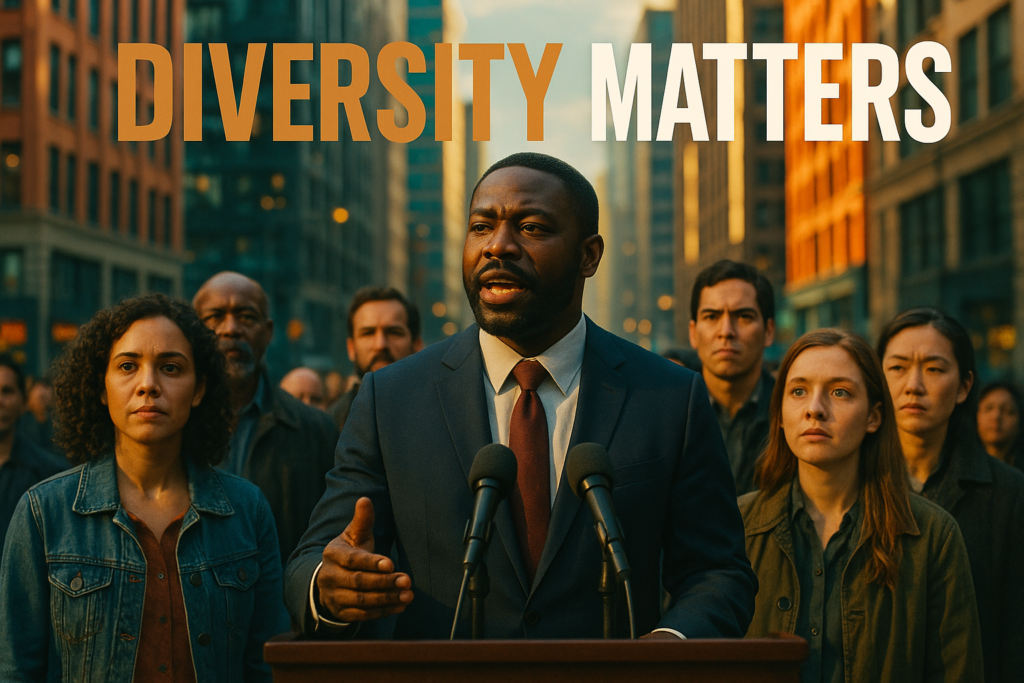
The U.S. Department of Justice (DOJ), operating under the Trump administration, has initiated a civil rights investigation into Chicago Mayor Brandon Johnson’s hiring practices (NBC Chicago). This action was prompted by public comments from Mayor Johnson where he highlighted the racial makeup of his administration. Specifically, the investigation began after the Mayor, during a panel at the Apostolic Church of God in Chicago’s Woodlawn neighborhood, openly spoke about the significant number of Black individuals he appointed to key city government positions (NBC Chicago).
Assistant Attorney General Harmeet K. Dhillon of the DOJ’s Civil Rights Division formally informed Mayor Johnson of this probe through a letter. The letter stated that the DOJ had “reasonable cause” to believe that Mayor Johnson made hiring decisions primarily based on race (NBC Chicago). This could potentially violate Title VII of the Civil Rights Act of 1964, a federal law that makes it illegal for employers to discriminate in employment based on a person’s race, color, religion, sex, or national origin (EEOC). It is important to know that Title VII prohibits not only clear acts of discrimination but also practices that appear neutral yet still lead to a discriminatory effect (Ohio Labor Law).
Chicago’s Diverse Administration
Mayor Johnson has strongly defended his administration’s diverse composition. He argues that it accurately reflects Chicago’s overall demographics (NBC Chicago). The Mayor stated that African Americans make up about 34% of his administration, while whites comprise 30%, Hispanics 24%, and Asians 8% (NBC Chicago). For context, African Americans make up roughly 30% of Chicago’s total population, so this level of representation is slightly above proportional (Chicago Booth Review). This is a significant increase compared to previous administrations, which reportedly had Black representation as low as 25% or even less (Chicago Booth Review).
Furthermore, Mayor Johnson asserted that his administration is the most diverse in Chicago’s entire history (NBC Chicago). This focus on inclusivity aims to move beyond earlier administrations that had a much higher percentage of white employees. For example, he pointed out that two administrations ago, 70% to 75% of city employees were white (HR Dive). The mayor’s comments also included a direct challenge to the DOJ, urging them to investigate the Trump administration’s own hiring practices for discrimination (NBC Chicago). He sharply contrasted his diverse city leadership with the Trump administration, saying it “reflects the country club” (ABC7 Chicago). The “country club” metaphor implies exclusivity and a lack of diversity, suggesting a preference for a homogenous group, often white males from similar backgrounds, thereby keeping out minority groups and preserving existing privilege.
Chicago Mayoral Administration Racial Composition
The “War on Wokeness” and Civil Rights
The DOJ’s investigation into Chicago’s hiring practices happens within a larger political discussion tied to the Trump administration’s publicly stated “war on wokeness” (NBC Chicago). Since taking office, former President Trump has aimed to challenge diversity, equity, and inclusion (DEI) programs across different sectors. This includes not only federal hiring but also school admissions and corporate environments (Block Club Chicago). Therefore, the investigation into Mayor Johnson’s hiring practices fits this broader political agenda, which seeks to limit what is seen as race-based preferences in government employment.
The Civil Rights Division of the U.S. Department of Justice plays a crucial role in enforcing federal laws that protect against discrimination based on race, color, sex, disability, religion, familial status, and national origin. It investigates claims of illegal discrimination in areas like employment, education, housing, voting, and public spaces. In cases like city hiring practices, this division assesses whether there has been a violation of laws such as Title VII of the Civil Rights Act, making it the proper body to look into claims of race-based discriminatory hiring. However, the political motivations behind certain investigations, especially during a period when the administration actively spoke against “wokeness,” remain a subject of discussion.
Key Areas Prohibited by Title VII of the Civil Rights Act
Affirmative Action Versus Discrimination
The distinction between affirmative action and illegal discrimination in hiring is crucial. Affirmative action involves taking deliberate steps to increase diversity and inclusion for groups that have historically been underrepresented (Investopedia). These initiatives often include setting goals for hiring individuals from specific racial groups and are generally considered lawful. This is true as long as they are designed to fix past discrimination and promote equal opportunity, without unfairly harming other individuals.
On the other hand, discrimination in hiring means unlawfully excluding or disadvantaging candidates because of their race or other protected characteristics (Ohio Labor Law). The key difference lies in the purpose and outcome: affirmative action aims to correct historical imbalances and create equality, while discrimination unfairly treats people. Title VII allows for affirmative action that is carefully designed to promote diversity, but it strictly forbids discriminatory hiring practices that violate equal opportunity laws.
The DOJ letter specifically mentioned Mayor Johnson’s comments where he named six high-ranking positions now occupied by Black officials as key evidence for their investigation (HR Dive). These positions included deputy mayors for business and economic neighborhood development, planning and development, and infrastructure, along with the chief operations officer, budget director, and senior advisor (HR Dive). These are influential roles that shape city governance, determine policy priorities, manage public communications, and oversee financial decisions. The racial makeup of these positions shows the depth of diversity in critical leadership roles, extending beyond less impactful appointments. The DOJ stated it has not reached any conclusions yet, and its investigation focuses on potential violations of Title VII related to race-based hiring (DOJ Official Letter).
DOJ Investigation: Key Steps and Implications
DOJ gathers evidence to determine if there is “reasonable cause” to believe discrimination occurred. This threshold justifies further action.
If reasonable cause is found, the DOJ may attempt to resolve the issue through negotiations, seeking a settlement or agreement. If unsuccessful, they may file a lawsuit to enforce civil rights laws.
Violations of Title VII can lead to court orders demanding changes in policy, monetary damages for affected individuals, and requirements to monitor future hiring practices. Severe cases may result in penalties or loss of federal funding.
The Impact on Black Communities
From the perspective of the African American and African Diaspora communities, the importance of diverse hiring in government cannot be overstated. Ensuring representation, equity, and fair access to opportunities for African Americans within public service and leadership is critical. It fosters trust in government institutions, especially when those institutions are perceived as being historically exclusive. Furthermore, increased Black representation in city leadership can directly influence policies that better address the specific needs and challenges faced by Black communities. This is an essential step towards reducing systemic disparities.
Moreover, having Black professionals in key roles, such as deputy mayors and budget directors, can improve the responsiveness of public services and contribute to economic empowerment within Black communities in Chicago. For many, Mayor Johnson’s efforts represent a tangible step towards a more inclusive and equitable city. However, his public remarks about racial composition, while intended to highlight diversity, have brought intense scrutiny. Public officials frequently discuss diversity accomplishments, but emphasizing exact racial percentages can often lead to debates over hiring fairness or accusations of race-based preference. In this instance, the Mayor’s statements have ignited both political discussion and a formal DOJ investigation, showing the high sensitivity around discussing racial hiring metrics in public life.
Looking Ahead for Chicago’s City Hall
This investigation highlights the ongoing tension between efforts to create diverse government workplaces and federal oversight regarding claims of racial discrimination in hiring practices. It unfolds against the larger political backdrop of the “war on wokeness” and its opposition to diversity initiatives. The DOJ, in its role, must apply the legal standard of “reasonable cause,” meaning it needs sufficient evidence to suggest discrimination likely occurred to continue its investigation. This is a procedural step that triggers a substantive inquiry and potential legal remedies, but it does not yet confirm guilt.
As the investigation proceeds, the DOJ will typically review employer records, personnel data, and self-reported race information. They will also conduct statistical analyses to assess racial composition and hiring patterns. This rigorous process helps to ensure fairness and accuracy, aiming to identify patterns of discrimination or disparate impact based on race. The outcome of this investigation will not only affect Mayor Johnson’s administration but will also add to the nationwide discussion about racial equity, reverse discrimination, and the legal limits of affirmative action in public employment. The balance between achieving diversity goals and upholding equal opportunity laws remains a complex and critically important challenge for cities across the nation.
ABOUT THE AUTHOR
Darius Spearman is a professor of Black Studies at San Diego City College, where he has been teaching since 2007. He is the author of several books, including Between The Color Lines: A History of African Americans on the California Frontier Through 1890. You can visit Darius online at africanelements.org.
