


Why Is the United States Slashing South African HIV Funding?
By Darius Spearman (africanelements)
Support African Elements at patreon.com/africanelements and hear recent news in a single playlist. Additionally, you can gain early access to ad-free video content.
The Historical Lifeline of PEPFAR
Historically, international health aid has served as a powerful tool for global stability. In 2003, United States President George W. Bush introduced the President’s Emergency Plan for AIDS Relief (PEPFAR) (archives.gov). At that time, sub-Saharan Africa faced a devastating humanitarian crisis. Only fifty thousand people across the region had access to life-saving antiretroviral drugs (theglobalfight.org).
Consequently, PEPFAR rapidly transformed this bleak reality. The program turned a terminal diagnosis into a manageable chronic condition (smu.edu). President Bush famously termed this remarkable recovery the “Lazarus Effect” (theglobalfight.org). Over more than two decades, the initiative saved more than twenty-five million lives in fifty-five partner nations (whitehouse.gov). It supported clinics, trained healthcare workers, and established laboratories (whitehouse.gov). This program represented one of the most successful public health interventions in human history (one.org).
PEPFAR Annual Funding for South Africa
Source: ThinkGlobalHealth (thinkglobalhealth.org)
South Africa at the Center of the Epidemic
South Africa remains the global epicenter of the HIV pandemic. Currently, more than eight million South Africans live with the virus (unaids.org). This massive figure represents approximately twenty percent of the global HIV-positive population (unaids.org). It places a heavy burden on the national public health infrastructure.
To combat this crisis, the South African government funds ninety percent of its own medicine procurement (thinkglobalhealth.org). However, PEPFAR has historically provided a crucial financial lifeline (usembassy.gov). The program contributed approximately seventeen percent of the overall national HIV budget (thinkglobalhealth.org). This funding equated to more than four hundred million dollars annually (cgdev.org). The money funded healthcare worker salaries, community organizations, and specialized clinics (thinkglobalhealth.org). Consequently, the sudden withdrawal of these funds threatens the entire healthcare infrastructure (brookings.edu).
Systemic Inequality and Post-Apartheid Redress
To understand modern South African politics, one must examine the legacy of apartheid. Apartheid was a state-enforced system of racial segregation from 1948 to 1994 (wikipedia.org). This system legally privileged the white minority over the Black majority (wikipedia.org). It systematically locked Black citizens out of business ownership, corporate leadership, and political power (emerald.com). Furthermore, the 1913 Natives Land Act reserved nearly ninety percent of agricultural land for the white minority (wikipedia.org).
Following the transition to democracy, the African National Congress (ANC) implemented corrective policies (the-star.co.ke). These policies included Black Economic Empowerment (BEE) (honeycomb-bee.co.za). The struggle of workers in South Africa remains deeply tied to these economic redistribution debates. In late 2024, the government passed the Expropriation Act to allow land seizure under strict circumstances (wikipedia.org). Although no private properties have been seized, conservative groups claim the policy targets white landowners (dailymaverick.co.za).
The Rhetoric of “Kill the Boer”
Racial tensions have been amplified by historical struggle songs. *Dubul’ ibhunu*, or “Kill the Boer,” originated in township protests in the 1980s (wikipedia.org). The song targeted the oppressive apartheid state (aljazeera.com). In 1993, Peter Mokaba popularized the chant following the assassination of Chris Hani (wikipedia.org). Today, critics argue the song incites violence against white farmers (thecommonsense.co.za).
In contrast, supporters maintain the song is a historical artifact representing the apartheid regime rather than individual white people (aljazeera.com). The South African Equality Court ruled in 2022 that the song does not constitute hate speech (aljazeera.com). However, Julius Malema, leader of the Economic Freedom Fighters, regularly performs the chant at political rallies (reddit.com). High-profile figures in the United States, including Elon Musk, shared clips of these events online (reddit.com). They accused South African leaders of promoting “white genocide” (youtube.com). This online discourse caught the attention of conservative lawmakers in Washington (csis.org).
The Timeline of Political Funding Cuts
Following the political shift in Washington in early 2025, the new administration altered foreign assistance guidelines (commondreams.org). The administration implemented the “America First” framework (commondreams.org). This framework transitioned global health partnerships into political bargaining chips (thinkglobalhealth.org).
In January 2025, the administration froze USAID grants and PEPFAR funding to South Africa (commondreams.org). Soon after, President Trump signed Executive Order 14204 (immpolicytracking.org). This order accused Pretoria of discriminating against its white minority (immpolicytracking.org). To prevent an immediate health disaster, a temporary bridge plan of one hundred fifteen million dollars was established (thinkglobalhealth.org). This bridging plan sustained operations until early 2026 (thinkglobalhealth.org). Finally, on June 18, 2026, the State Department confirmed a phased drawdown of PEPFAR programming (semafor.com). The administration plans to withdraw all funding by early 2027, citing a lack of policy progress by South Africa (semafor.com).
Geopolitics and the International Court of Justice
The funding cuts are also deeply tied to global geopolitical rivalries. In late 2023, South Africa filed a case against Israel at the International Court of Justice (apnews.com). The petition accused Israel of violating the Genocide Convention in Gaza (dailymaverick.co.za). This legal action drew sharp, bipartisan criticism from the United States Congress (house.gov).
Historically, South Africa’s foreign policy is guided by solidarity with oppressed populations (dirco.gov.za). The anti-apartheid movement frequently drew parallels between domestic segregation and Israeli policies (dailymaverick.co.za). However, Washington viewed the legal case as a hostile action (csis.org). Consequently, the administration demanded that South Africa withdraw the ICJ case (csis.org). They also demanded that Pretoria distance itself from United States adversaries like Iran (csis.org). South Africa refused to compromise its sovereignty (dirco.gov.za). As a result, the PEPFAR health partnership was phased out (semafor.com).
“Mission South Africa” and the Afrikaner Refugee Program
While reducing public health aid, the United States expanded humanitarian assistance for the white minority. Executive Order 14204 directed agencies to prioritize resettlement for white South Africans (immpolicytracking.org). To implement this, the administration launched “Mission South Africa” (thedailybeast.com). Standard processing backlogs were bypassed to establish fast-tracked systems in Pretoria and Johannesburg (thedailybeast.com).
In May 2026, the State Department requested that Congress raise the annual refugee cap (immpolicytracking.org). They sought to increase the limit to seventeen thousand five hundred slots (immpolicytracking.org). The plan specifically allocated ten thousand additional slots to white Afrikaners (immpolicytracking.org). This specialized program carries an estimated cost of one hundred million dollars (thedailybeast.com). Refugee advocacy organizations have filed lawsuits protesting the decision (thedailybeast.com). They argue that the policy selectively prioritizes white applicants while blocking endangered refugees from other global conflicts (thedailybeast.com).
Projected Health Toll in South Africa (2025–2028)
New HIV Infections
Up to 296K
Additional CasesAIDS-Related Deaths
Up to 65K
Additional FatalitiesSource: Brookings Institution (brookings.edu)
The Devastating Human Toll of Withdrawing Aid
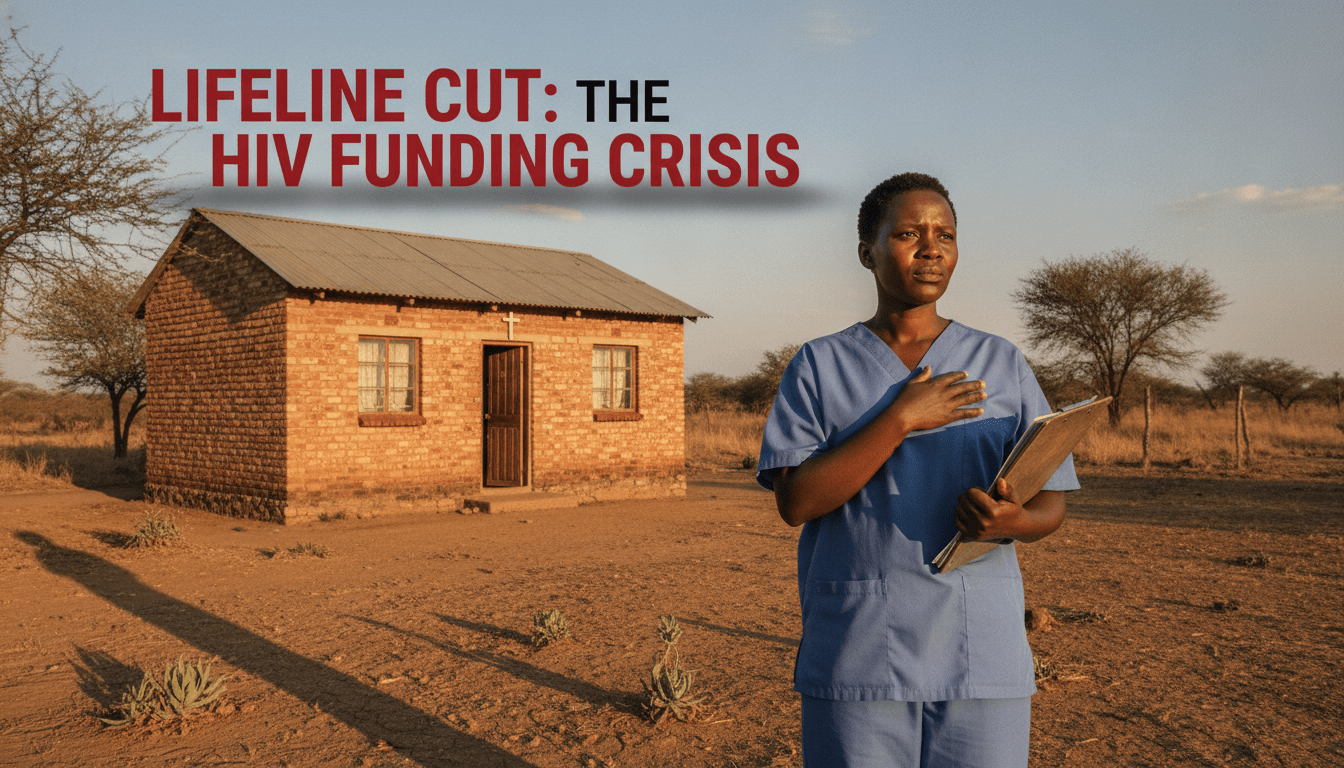
The reduction of PEPFAR funding has already damaged the South African medical system. The initial funding freezes in 2025 resulted in more than eight thousand health worker layoffs (groundup.org.za). In addition, twelve specialized clinics closed permanently (thinkglobalhealth.org). Rural areas have experienced the most severe disruptions (groundup.org.za). For example, the Aurum Institute had to reduce its staff in the Limpopo province from four hundred workers to seventeen (groundup.org.za).
This reduction has decimated local HIV testing and tuberculosis treatment programs (eatg.org). Many community organizations provided critical healthcare for marginalized groups (thinkglobalhealth.org). The closure of these clinics increases the risk of viral transmission (brookings.edu). Historically, marginalized populations have relied on external aid to bypass systemic barriers. The resilience of these communities mirrors the historic African American resilience seen in the face of systemic neglect. Without replacement funding, the loss of clinical support will undo decades of progress (brookings.edu).
Bipartisan Opposition and the Civil Rights Response
Progressive lawmakers and civil rights groups in the United States have condemned the funding cuts. The Congressional Black Caucus (CBC) has historically supported PEPFAR since its inception (wusa9.com). Key members, including Representative Barbara Lee, were foundational to the creation of the program in 2003 (house.gov).
Bipartisan coalitions have urged the administration to reject budget cuts targeting global health initiatives (wusa9.com). They argue that tying life-saving medical aid to unrelated geopolitical issues is highly destructive (premiumtimesng.com). Furthermore, civil rights advocates warn that these actions will cause catastrophic healthcare disruptions in Black communities abroad (commondreams.org). They compare these political maneuvers to historical tragedies, such as how post-civil war reconstruction failed to secure long-term protections for vulnerable populations in the United States. Progressive leaders argue that global health programs must remain insulated from domestic culture wars (commondreams.org).
Understanding the History of Apartheid
Apartheid was a state-enforced system of racial segregation and economic oppression in South Africa from 1948 to 1994, designed to legally privilege the white minority over the Black majority (wikipedia.org). This system systematically locked the Black majority out of business ownership, skilled work, and corporate leadership (emerald.com).
Furthermore, it legally institutionalized racial classification and strict geographic segregation, forcibly displacing millions (wikipedia.org). Apartheid-era laws stripped Black, Coloured, and Indian populations of basic political, social, and economic rights (wikipedia.org). Consequently, it concentrated the country’s wealth, land, and resources in the hands of the white minority, leaving a legacy of deep systemic inequality (wikipedia.org).
The History and Identity of the Afrikaners
Afrikaners, historically referred to as Boers, are a South African ethnic group of European, primarily Dutch, descent whose ancestors settled in southern Africa starting in the seventeenth century (wikipedia.org). Their heritage dates back to the establishment of Cape of Good Hope trading posts by the Dutch East India Company in 1652 (wikipedia.org).
Historically called “Boers,” which is the Dutch word for farmers, they established a distinct language called Afrikaans and a separate cultural identity (wikipedia.org). They fought colonial conflicts with the British and local African populations to establish independent republics (wikipedia.org). The Afrikaner-dominated National Party officially established the state-enforced system of apartheid in 1948 to ensure white minority rule (wikipedia.org).
Demystifying the “White Genocide” Narrative
The “White Genocide” narrative is a conspiracy theory alleging that white South Africans, particularly commercial farmers, are being targeted for systematic extermination and state-backed persecution (thecommonsense.co.za). International human rights organizations, independent research bodies, and journalists have thoroughly debunked the claims as white nationalist conspiracy theories (issafrica.org).
Statistical analyses confirm that white South Africans are statistically less at risk of violent crime than other racial groups in the country (businesstech.co.za). Independent inquiries have repeatedly found that the vast majority of violent attacks on commercial farms are motivated by robbery rather than racial hatred (dailymaverick.co.za). Furthermore, demographic data shows that Black farmworkers and farm dwellers represent a significant portion of the victims of rural farm attacks (dailymaverick.co.za).
South Africa Murder Statistics (2023–2024)
Farm Murders (49 Homicides)
Out of 27,621 total country-wide murdersOther Murders (27,572 Homicides)
Primarily occurring in urban areasSource: BusinessTech & South African Police Service (businesstech.co.za)
How Black Economic Empowerment Operates
Black Economic Empowerment (BEE), later expanded into Broad-Based Black Economic Empowerment (B-BBEE), is a legislative affirmative action framework enacted to redress the economic exclusions and inequalities of the apartheid era (honeycomb-bee.co.za). It uses a corporate scorecard system that measures businesses on five pillars: ownership, management control, skills development, enterprise and supplier development, and socio-economic development (sanews.gov.za).
Compliance is incentivized by giving preferential treatment to highly rated B-BBEE businesses in government procurement tenders and licensing processes (honeycomb-bee.co.za). The policy encourages corporations to sell equity shares to Black South Africans, hire Black professionals into management, and buy from Black-owned suppliers (sanews.gov.za). Opponents label the program as discriminatory, leading to recent South African proposals to shift compliance mechanisms toward a “Transformation Fund” (hsf.org.za).
The Political Role of the African National Congress
The African National Congress (ANC) is the historic liberation movement and political party that has governed South Africa since the country’s first democratic, non-racial election in 1994 (the-star.co.ke). It was famously led by anti-apartheid icons, most notably Nelson Mandela, who became South Africa’s first democratically elected president (wikipedia.org).
Originally founded in 1912, the ANC spearheaded the domestic and international struggle to dismantle the apartheid regime (tbr.ie). It transitioned from a banned liberation movement to the country’s dominant political party after the end of white minority rule (the-star.co.ke). Under its governance, the party has prioritized policies to reverse apartheid-era inequalities, though it has faced ongoing criticism over economic growth and public sector management (the-star.co.ke).
The Reality of Farm Murder Statistics
Official statistics show that farm murders constitute a very small fraction of South Africa’s overall violent crime, which is driven primarily by poverty, high crime rates, and robbery rather than racial animus (issafrica.org). In the 2023–2024 financial year, forty-nine murders occurred on farms nationwide compared to twenty-seven thousand six hundred twenty-one total murders across South Africa (businesstech.co.za).
Farm murders represent approximately zero point two percent of all homicides in the country, showing they do not occur at a disproportionate rate compared to urban areas (businesstech.co.za). Official South African Police Service statistics show that rural violence affects all farm residents; during a 2025 quarter, half of the victims killed on farms were employees and dwellers, not white landowners (dailymaverick.co.za). Two major independent inquiries concluded there is no evidence of an orchestrated campaign targeting white farmers, with the vast majority of farm attacks being criminally motivated by robbery (issafrica.org).
About the Author
Darius Spearman is a professor of Black Studies at San Diego City College, where he has been teaching for over 20 years. He is the founder of African Elements, a media platform dedicated to providing educational resources on the history and culture of the African diaspora. Through his work, Spearman aims to empower and educate by bringing historical context to contemporary issues affecting the Black community.
