
Listen & Share
DOJ Ends Police Reform Consent Decrees: Community Fights Back
By Darius Spearman (africanelements)
Support African Elements at patreon.com/africanelements and hear recent news in a single playlist. Additionally, you can gain early access to ad-free video content.
The U.S. Department of Justice recently announced a significant shift in its approach to police reform. On May 21, 2025, the DOJ stated it would dismiss ongoing lawsuits and end consent decrees in both Louisville, Kentucky, and Minneapolis, Minnesota (U.S. Department of Justice, Courthouse News, The Alpena News). This decision effectively ends federally mandated police reforms in these key cities. For Black communities, who have long advocated for accountability and justice, this development raises profound concerns about the future of police oversight and safety.
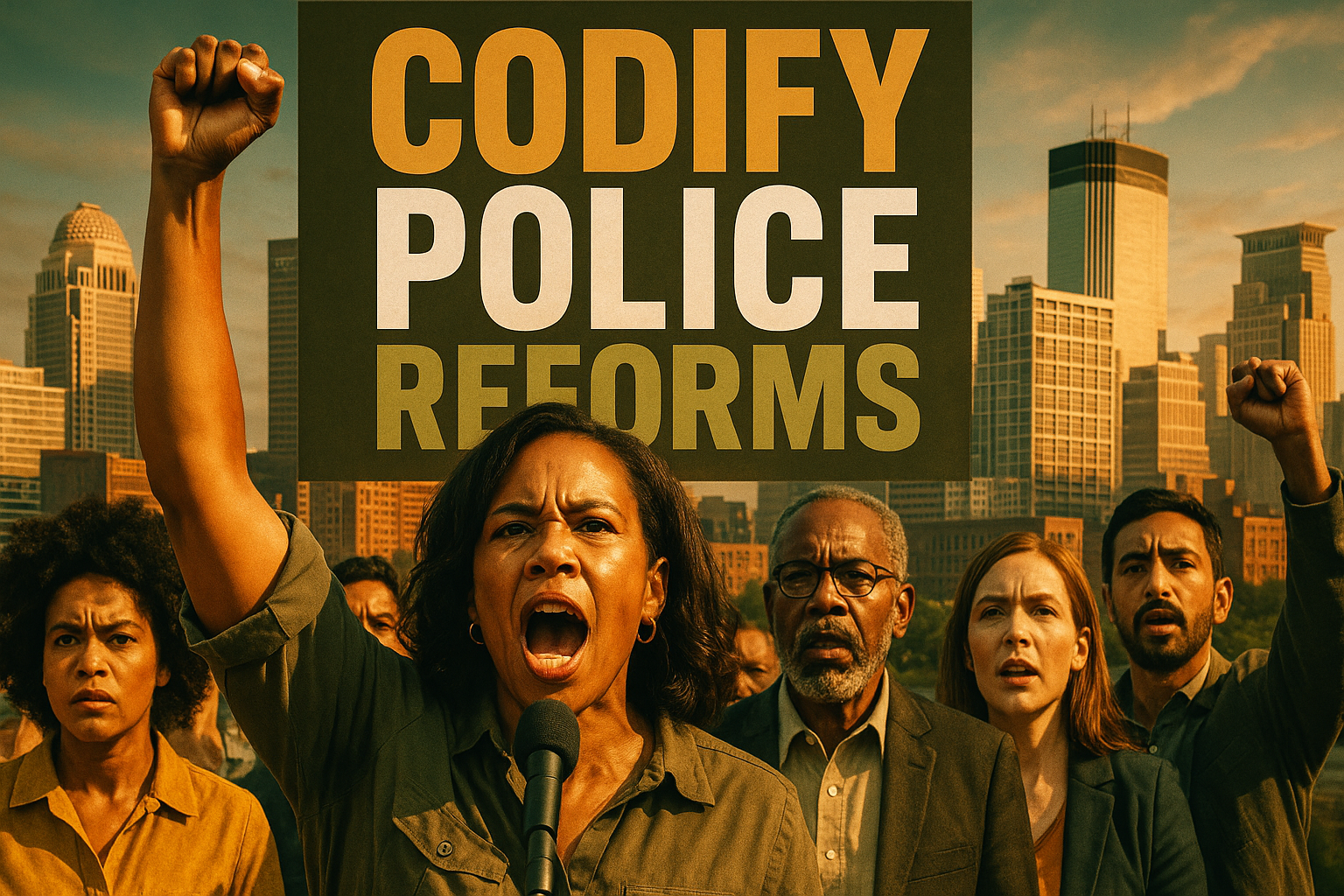
This action by the Department of Justice signals a potential retreat from federal involvement in local police departments. Many community leaders and residents in Louisville and Minneapolis immediately voiced deep apprehension regarding this change. They are pressing for a critical next step: formally codifying the consent decree reforms into law (NewsOne). This push aims to ensure that the vital changes achieved under federal oversight become permanent and enforceable, continuing to protect the rights and lives of all citizens, especially those most vulnerable to police misconduct.
DOJ Retreats on Police Reform
The United States Department of Justice made a consequential announcement on May 21, 2025. It declared the dismissal of lawsuits and cessation of consent decrees previously in place with Louisville and Minneapolis (U.S. Department of Justice). This decision puts an immediate halt to federally mandated police reforms in these cities. While city leadership in both areas has verbally pledged to continue the reforms, community leaders are demanding more. They seek to formally establish these reforms as law, ensuring enduring change and true accountability for police officers (NewsOne).
The original Minneapolis consent decree, for instance, stemmed from a federal investigation conducted between 2020 and 2022. This investigation uncovered that the Minneapolis Police Department routinely engaged in abusive and discriminatory behavior, particularly against Black people and individuals with disabilities (NewsOne). Such findings underscore the vital necessity of these reforms. Minneapolis Mayor Jacob Frey and Police Chief Brian O’Hara have stated that the city will continue to honor the initial federal agreement, even with the DOJ’s withdrawal (Police1). Community advocates, however, often feel that verbal pledges are insufficient without the backing of enforceable statutes.
Key Decision: DOJ Dismisses Reforms
Louisville’s Local Response to Oversight Changes
The dismissal of federal oversight deeply affects cities like Louisville, where police accountability has been a pressing issue for years. Louisville Mayor Craig Greenberg quickly released a revised “Community Commitment: Louisville’s Consent Decree” (The Alpena News). This new document is notably shorter, about 30 pages less than the original DOJ agreement. Significantly, it removes any language referring to federal court oversight and monitoring, which were cornerstones of the previous arrangement.
This removal of federal involvement was confirmed by LMPD Deputy Chief Emily McKinley. She explicitly stated, “We eliminated language that would associate with the federal court or whatever the monitor had to do as far as reporting to the court… so that process has been cut out” (The Alpena News). The Louisville Urban League President, Lyndon Pryor, while acknowledging the disappointment of the DOJ’s withdrawal, suggested this could be an opportunity for increased local control (The Alpena News). Nevertheless, he strongly cautioned against weakening oversight or reducing transparency. Community leaders echo this sentiment, expressing concerns that these changes could diminish accountability in police operations, especially regarding crucial training and protocol updates.
Louisville’s Revised Reform Plan
Community Urgency: Codifying Police Reform
In both Louisville and Minneapolis, community leaders immediately grasped the gravity of the DOJ’s decision. Their immediate demand centers on codifying police reforms into law (NewsOne). For them, consent decrees, while powerful, are temporary federal orders. Codifying these reforms means embedding them permanently into local ordinances and state statutes. This ensures that the progress achieved does not simply vanish when federal oversight concludes.
Minneapolis City Council members have specifically asked for the reforms from the federal consent decree to be woven into an existing, court-enforceable settlement agreement with the Minnesota Department of Human Rights (NewsOne). They rightly argue that the DOJ consent decree included stronger protections for their community. Furthermore, the memory of the George Floyd killing continues to fuel concerns about police accountability in Minneapolis (NewsOne). This tragic event crystallized the urgent need for systemic change. Codifying reforms into law makes them legally binding policies, moving them beyond temporary measures and securing long-term compliance and accountability within law enforcement agencies.
Assessing Consent Decrees: Value and Challenges
Consent decrees are comprehensive, legally binding court orders that mandate institutions to reform their practices (Chicago Police Department). In the realm of police reform, these decrees specify detailed requirements and deadlines for action. They often trigger changes in use-of-force policies, community policing strategies, and internal accountability mechanisms (Chicago Police Department). An independent monitor, approved by a federal judge, typically tracks compliance and reports progress directly to the court (Chicago Police Department). This structured oversight aims to ensure departments adhere to constitutional policing standards.
Justice Department officials arguing for reduced federal oversight suggest that local control would prove more effective (Police1). They cite the high costs associated with monitoring systems and allege abuses within the consent decree framework (Police1). However, Kristen Clarke, who served as the Civil Rights Division chief under the Biden administration, sharply criticized the DOJ’s dismissal (Police1). She stated that this decision disregarded well-documented systemic civil rights violations, which were revealed through extensive data, body camera footage, and even officer testimony (Police1). Some officials consider federal oversight both burdensome and expensive, while others view it as an indispensable tool for guaranteeing lasting reforms and preventing any regression in police accountability (Police1). This ongoing debate highlights the complex challenges inherent in ensuring law enforcement agencies truly serve all members of the community equitably.
Perspectives on Federal Oversight
Understanding Police Consent Decrees
A consent decree represents a powerful legal instrument employed in police reform. It is a court-ordered, legally binding agreement that compels law enforcement agencies to make significant structural and behavioral changes (Chicago Police Department). These decrees are not merely suggestions; they are comprehensive documents outlining specific requirements and strict deadlines for implementation. The reforms target areas such as use-of-force policies, community engagement strategies, and mechanisms for internal accountability (Chicago Police Department). The overarching goal is to ensure police departments operate in adherence to constitutional standards and protect the civil rights of all individuals they serve.
The Department of Justice Civil Rights Division plays a pivotal role in initiating and enforcing these decrees. Acting under the authority granted by the Violent Crime Control and Law Enforcement Act of 1994 (Sheppard Mullin), the DOJ investigates allegations of systemic misconduct within law enforcement agencies. Subsequently, it engages with local authorities to negotiate and implement the necessary reforms detailed in these consent decrees (Baltimore Police Department). Independent monitors, approved by a federal judge, are usually appointed to oversee the department’s adherence to the agreement (Chicago Police Department). These monitors regularly report on progress directly to the court. Failure to comply with the terms of a consent decree can lead to severe consequences, including contempt of court proceedings or, in extreme cases, the takeover of the department’s operations by another authority (Vera Institute).
Key Term: Consent Decree
The Push for Permanent Reform
The imperative to codify reforms into law stems from a desire for permanence and enhanced enforceability. This process transforms changes mandated by consent decrees into enduring legal policies, ensuring their continuation even after federal oversight concludes. It provides a robust legal framework that sustains long-term compliance and accountability within law enforcement agencies.
Organizations like the Louisville Urban League, which advocates for social justice, play a vital and influential role in these local discussions on policing. These community-driven groups often spearhead initiatives aimed at true reform. The discussions happening in Louisville and Minneapolis about transferring federal decrees into state-led agreements, such as the one with the Minnesota Department of Human Rights, highlight an understanding that localized solutions, under robust legal frameworks, can offer greater flexibility and better address specific community needs. The tragic high-profile incidents that have affected Black communities, from Minneapolis to Louisville, have unequivocally shown that true police accountability must be unwavering, legally robust, and ultimately driven by the persistent demands of its own citizens.
ABOUT THE AUTHOR
Darius Spearman has been a professor of Black Studies at San Diego City College since 2007. He is the author of several books, including Between The Color Lines: A History of African Americans on the California Frontier Through 1890. You can visit Darius online at africanelements.org.
