


Kenya Uganda Oil Deal: A Blueprint for Regional Power
By Darius Spearman (africanelements)
Support African Elements at patreon.com/africanelements and hear recent news in a single playlist. Additionally, you can gain early access to ad-free video content.
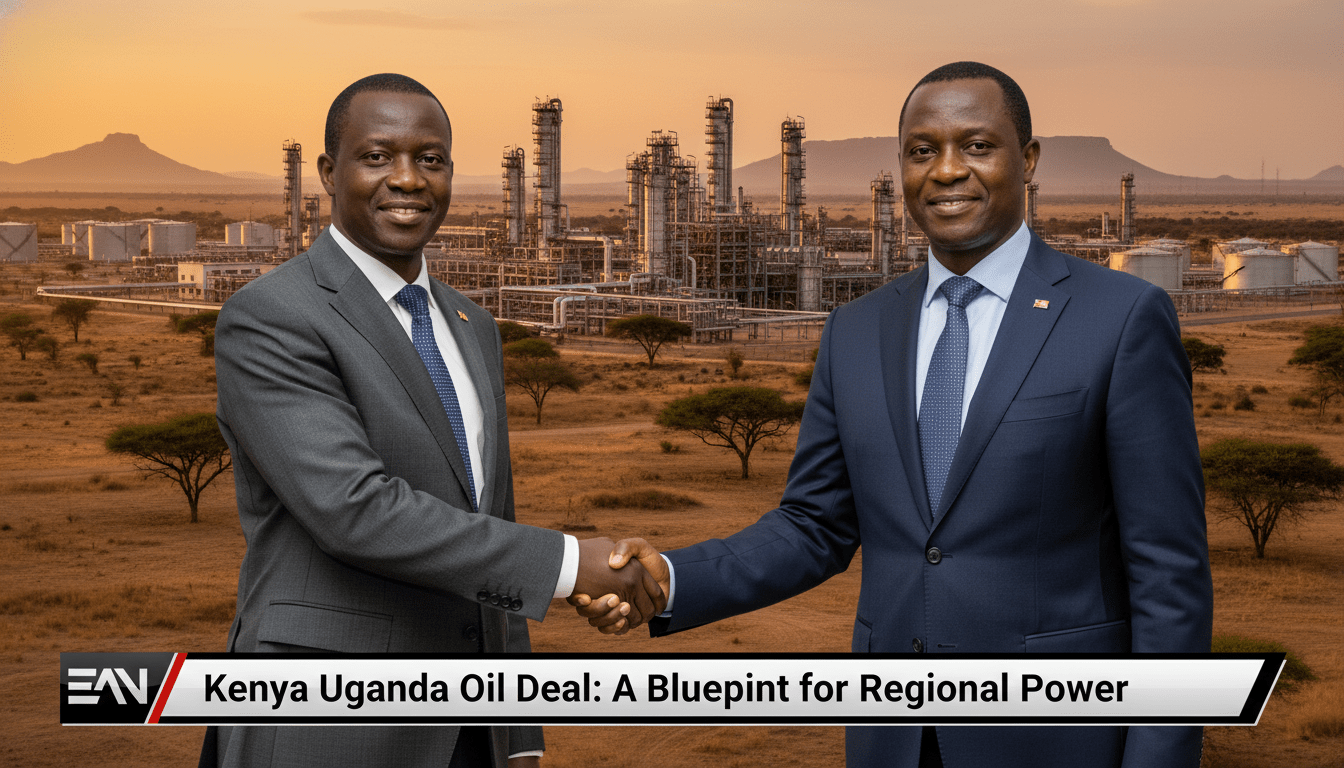
President William Ruto recently made a monumental announcement regarding East African energy. Kenya will invest directly in the new oil refinery in Uganda. This move effectively ends a fierce energy rivalry in East Africa. The decision represents a massive shift toward regional energy independence. The strategic partnership aims to build true economic sovereignty for the continent.
For many years, constant oil disputes threatened regional economic stability. The bitter oil wars caused massive political friction between neighboring nations. Now, East African leaders are choosing strategic collaboration over petty competition. Observers must examine the complex history behind the headlines today. This context reveals a long struggle for Pan-African economic empowerment. The East African Community currently stands at a critical juncture for growth.
The Discovery of Black Gold in Uganda
In 2006, Uganda discovered massive commercial oil reserves. The rich oil deposits sit deep in the Lake Albert Basin. This ecological area is widely known as the Albertine Graben (wikipedia.org). Experts estimate the total reserves hold 6.5 billion barrels of oil. Approximately 1.4 billion barrels remain fully recoverable for market use (oilchange.org). This incredible discovery promised immense wealth for the landlocked African nation.
However, political leaders immediately faced a major logistical challenge. They needed a reliable way to transport crude oil to global markets. Initial plans involved building a massive joint pipeline with Kenya. This ambitious project was called the LAPSSET corridor (allafrica.com). The plan aimed to transport crude oil to the Kenyan coast. Planners thought this would cement Kenya as the regional energy hub. This period marked a dramatic turn in the history of Africa. Nations desperately sought wealth to develop modern industrial infrastructure.
Uganda Oil Reserves (Billion Barrels)
Total Estimated Reserves (6.5B)
Commercially Recoverable (1.4B)
The 2016 Pipeline Divorce Explained
The initial pipeline dream did not last very long. In 2016, Uganda abruptly ended the pipeline agreement with Kenya (eastleighvoice.co.ke). Ugandan officials decided to route their valuable oil through Tanzania instead. They chose a southern path leading directly to the port of Tanga. Uganda cited severe security concerns regarding the proposed Kenyan route. The planned pipeline passed far too close to the Somali border (observer.ug). Furthermore, protracted land compensation issues in Kenya threatened massive project delays.
The massive LAPSSET project faced intense criticism from human rights groups. The construction displaced indigenous pastoralists without acquiring adequate community consent. Indigenous groups like the Borana and Turkana lost essential ancestral lands (devdiscourse.com). The compensation process in Lamu County proved incredibly complicated for everyone. The government historically categorized many local residents as mere squatters. Water diversion in Isiolo Town further marginalized local pastoralist livelihoods. This pipeline divorce dealt a massive blow to Kenyan economic ambitions.
The Spark of the 2023 Oil Import War
Relations between the two countries eventually reached a dangerous breaking point. In early 2023, Kenya signed exclusive deals with Gulf oil majors (eastleighvoice.co.ke). This arrangement aimed to stabilize the fluctuating Kenyan Shilling. The agreement involved Saudi Aramco and the Abu Dhabi National Oil Company. The Emirates National Oil Company also participated in supplying refined products (kenyanwallstreet.com). Kenya procured petroleum on a special 180-day financial credit system.
However, Uganda imports ninety percent of its fuel through Kenyan pipelines. Ugandan leaders claimed this new deal inflated fuel prices significantly. They argued that middlemen fees increased fuel costs by fifty-nine percent (eastleighvoice.co.ke). The International Monetary Fund warned leaders about the severe financial dangers. They stated the scheme could worsen the national debt situation tremendously. This scenario perfectly mirrors Africa’s rising debt crisis today. Financing costs from international guarantors added significant fees to pump prices. Taxpayers ultimately carried the heavy burden of these expensive arrangements.
The Legal Battle for Energy Sovereignty
Uganda decided to take aggressive action against the inflated fuel prices. The nation empowered the Uganda National Oil Company to take charge. They wanted to import fuel directly using the established Kenyan pipelines (peopledaily.digital). However, the Kenyan energy regulator quickly denied the required operating license. They cited strict technical requirements that the Ugandan company did not meet. In response, Uganda sued Kenya in the East African Court of Justice. This historic legal battle occurred in December 2023 (businessinsider.com).
The court case highlighted a much deeper struggle for resource control. African nations are actively shedding colonial influences by claiming full infrastructure ownership. The lawsuit represented a firm demand for fair access to transportation. Fortunately, robust diplomacy prevailed in the middle of 2024. Kenya finally agreed to grant the necessary pipeline license to Uganda. This breakthrough led to a massive financial investment from the Ugandan government. The country officially acquired a significant stake in the Kenya Pipeline Company.
Kenya Pipeline Company (KPC) Stake Distribution
Kenya Reciprocates in the 2026 Breakthrough
Uganda purchased a 20.15 percent stake in the vital pipeline company. The strategic investment cost approximately 250 million dollars (businessinsider.com). This massive purchase set the stage for a historic reciprocal agreement. On April 23, 2026, President Ruto made his landmark public announcement. He spoke passionately at the Africa We Build Summit in Nairobi (africafc.org). Ruto declared that Kenya would invest heavily in the planned Hoima refinery.
The Hoima facility expects to process 60,000 barrels of oil daily. The total refinery project cost reaches an estimated four billion dollars (medicug.com). This matching investment effectively merged the energy interests of both nations. Ruto framed the historic move as a firm rejection of petty jealousy. He advocated for a strong focus on regional infrastructure ownership instead. Africa spends nearly 90 billion dollars annually importing refined petroleum. This happens despite the continent producing ten million barrels of crude daily (businessday.ng). The new partnership actively discourages any future trade wars in East Africa.
The Dangote Factor and African Independence
The Kenya and Uganda partnership connects to a larger continental movement. Nigerian billionaire Aliko Dangote plays a major role in this shift (businessinsider.com). He announced ambitious plans to lead a regional refinery in Tanga. This creates a powerful tripartite energy axis between the three nations. The massive Dangote Refinery in Nigeria already changed the economic landscape. The facility can process an incredible 650,000 barrels of crude daily.
It made Nigeria a net exporter of petrol for the very first time. Dangote frames these large investments as a war on foreign dependency (businessday.ng). He argues that Africans must commit their own funds to local development. This philosophy challenges the long historical era of relying on outside middlemen. In the past, African nations exported raw materials at incredibly low prices. They then bought back finished goods at a massive financial premium. Working-class citizens have long fought for economic justice against these exploitative economic systems. True industrial independence requires African capital funding African land projects entirely.
Regional Refinery Capacity (Barrels Per Day)
Environmental Concerns in the Albertine Graben
The rapid push for energy independence comes with serious environmental costs. The Albertine Graben remains a highly sensitive and vital ecological region. It contains some of the most diverse natural ecosystems in Africa (wikipedia.org). The region includes the famous Murchison Falls National Park. This park hosts 144 mammal species and 556 different bird species. Oil extraction creates a delicate balance between industrialization and crucial conservation.
Local communities in the Graben face numerous severe daily challenges. Residents report serious human rights abuses linked directly to oil projects. Security forces have allegedly destroyed fishing boats and intimidated local citizens (ejatlas.org). Environmental justice advocates consistently highlight major problems with toxic waste disposal. Oil waste dumping occurs with apparent disregard for local community health. An estimated 600,000 people will migrate to the area for work. This massive influx threatens to increase deforestation in protected forest reserves (oilchange.org). Global climate goals often clash with these rapid industrial development plans.
Displacement and the Fight for Fair Compensation
The new oil projects have led to significant social disruption locally. Development caused the displacement of over seven thousand people in Hoima (namati.org). Many rural residents report that land compensation remains severely undervalued today. The official payments often fail to match the originally agreed-upon rates. In February 2026, families faced forced evictions by armed government soldiers. Security forces reportedly occupied the land of many displaced local individuals (observer.ug).
The Petroleum Authority of Uganda claims to use silent drilling rigs. They also utilize green earth bunds to minimize the environmental impact (businesstimesug.com). However, environmental critics argue these technical measures miss the larger picture. They do not address the broader social injustice of massive community displacement. Communities surrounding the Kingfisher and EACOP projects demand better legal protection. Exploiting natural resources while marginalizing the indigenous population repeats deep historical harms. The region must find a way to balance massive profit with basic human rights.
What This Means for East African Citizens
Citizens wonder if these massive investments will lower daily fuel prices. Regional ownership of refineries intends to reduce overall consumer energy costs. Refineries rely on a crack spread to determine their profit margins. This spread measures the difference between raw crude and refined products (corporatefinanceinstitute.com). Producing refined fuel domestically aims to keep these massive profits inside Africa.
However, current financial data suggests a complex reality for the working class. Financing fees and debt servicing obligations currently keep pump prices very high. Despite the 2023 agreements, fuel costs remained elevated across Kenya (kenyanwallstreet.com). High global freight rates continue to dictate the price of refined products. Advocacy groups emphasize the critical need for transparent wealth distribution policies. Without transparency, oil revenues risk total capture by the political elite. The Africa We Build Summit aims to unlock domestic capital solutions effectively. East Africa now stands at a highly critical historical economic crossroads. The choices made today will undoubtedly shape the financial future for generations.
About the Author
Darius Spearman is a professor of Black Studies at San Diego City College, where he has been teaching for over 20 years. He is the founder of African Elements, a media platform dedicated to providing educational resources on the history and culture of the African diaspora. Through his work, Spearman aims to empower and educate by bringing historical context to contemporary issues affecting the Black community.
