
Mississippi’s DEI Ban Faces Legal Challenge
By Darius Spearman (africanelements)
Support African Elements at patreon.com/africanelements and hear recent news in a single playlist. Additionally, you can gain early access to ad-free video content.
Mississippi’s Anti-DEI Law Under Fire
A federal lawsuit has been filed against Mississippi’s new anti-Diversity, Equity, and Inclusion (DEI) law, House Bill 1193. This legal challenge argues that the law violates fundamental rights protected by the First and 14th Amendments. The lawsuit was brought by a group of organizations, including the American Civil Liberties Union (ACLU), against the governing boards of Mississippi’s public schools and institutions (Mississippi Free Press).
The plaintiffs in this case argue that the law’s unclear language restricts the speech of educators and students, infringing upon their First and Fourteenth Amendment rights (Mississippi Today). They are seeking a temporary restraining order to prevent the law from being enforced. This request highlights serious concerns about the law’s potential impact on education across the state (Mississippi Today). The ACLU’s lawyers have asked Federal Judge Henry Wingate to halt the enforcement of the ban on state boards overseeing K-12 schools and public universities (NewsOne).
The state’s Assistant Attorney General, Rex Shannon, representing the targeted state boards, argued against granting the temporary restraining order. He stated that doing so would infringe upon the state’s sovereignty (NewsOne). Judge Wingate pressed Shannon to explain the specific harms the state would face if the order were granted. However, Shannon indicated he did not have enough time before the case to provide those details (NewsOne). Judge Wingate is expected to decide on the restraining order soon.
Understanding House Bill 1193
House Bill 1193, signed into law on April 14, prohibits public schools, state-accredited nonpublic schools, and state-supported institutions of higher learning from creating, teaching, or promoting DEI programs. This law is scheduled to take effect on July 1 (Mississippi Free Press). The bill also bans the requirement of diversity statements or training in hiring, admission, and employment processes at educational institutions (Mississippi Free Press).
The law explicitly prohibits the use of diversity statements and training in hiring, admissions, and employment practices at state institutions of higher learning (Mississippi Legislature). It includes a provision allowing individuals to file complaints regarding violations. This process involves an investigation and potential resolution by the educational institutions themselves (Mississippi First). Should a school receive two violations, the state could withhold funds until the issues are corrected (NewsOne).
The law’s design allows individuals to sue only after going through an internal campus review process and a 25-day period for schools to fix the alleged violation (NewsOne). Republican Representative Joey Hood, one of the House negotiators, explained this as a compromise. The House initially sought broader access to lawsuits, while the Senate preferred a more limited process (NewsOne). Ultimately, the House maintained the right to sue, but agreed to an administrative process for schools to investigate and potentially resolve issues before legal action (NewsOne). Republican Senator Nicole Boyd, a lead author of the bill, stated that the purpose is to cure violations, not to create litigation (NewsOne).
Defining Diversity, Equity, and Inclusion
Diversity, Equity, and Inclusion (DEI) initiatives in education encompass programs and policies designed to create a more diverse student body and faculty, ensure fair opportunities for all, and foster an inclusive school environment. Many people who view DEI as something to “demonize” do not fully understand the wide range of services these offices provide, according to Paulette Granberry Russell, president of the National Association of Diversity Officers in Higher Education (The Columbus Dispatch).
For example, the Women’s Center at the University of Cincinnati offers training on salary negotiation, programs addressing eating disorders and body image, support for survivors of sexual violence, and access to emergency contraception (The Columbus Dispatch). These initiatives aim to address historical disadvantages and create spaces where people from all backgrounds feel welcome and have equal chances to succeed. Even fields like dermatology advocate for DEI in education and training. This helps healthcare providers avoid misdiagnosing and mistreating diverse patients (Northern Kentucky Tribune).
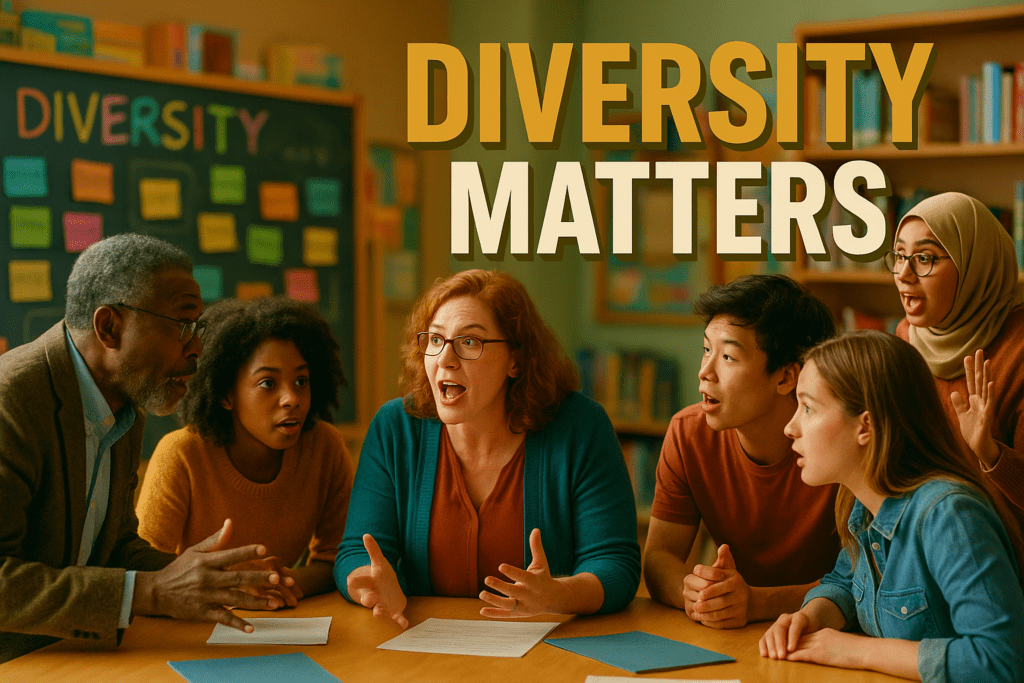
What is Diversity, Equity, and Inclusion (DEI)?
Diversity, Equity, and Inclusion (DEI) initiatives aim to create educational environments that reflect the rich variety of human experiences (diversity), ensure fair access and opportunities for all individuals (equity), and foster a sense of belonging where everyone feels valued and respected (inclusion).
This visualization explains the core concepts of Diversity, Equity, and Inclusion. Source: The Columbus Dispatch, Northern Kentucky Tribune
Constitutional Rights at Stake
The lawsuit against Mississippi’s DEI ban claims the law is “unconstitutionally vague.” This legal argument touches upon crucial protections under the First and Fourteenth Amendments. The First Amendment protects freedom of speech, which includes academic discussion and expression related to diversity. If DEI bans restrict these conversations, they could violate this fundamental right.
The Fourteenth Amendment’s Equal Protection Clause ensures that states cannot deny any person equal protection under the law. If DEI bans are seen as creating unequal opportunities or treatment based on identity, they could be challenged under this clause. The vagueness of the law itself is a significant legal concern. Laws must be clear enough for people to understand what is prohibited. A group of higher education associations previously sued President Donald Trump, arguing that his efforts to eliminate DEI initiatives through executive orders were “unconstitutionally vague” (The Columbus Dispatch).
The lawsuit claims the law’s language is vague and contradictory. While specific examples from House Bill 1193 are not detailed, similar legislation in other states shows that the ambiguity lies in how broadly terms like “diversity, equity, and inclusion” are defined. It also leaves unclear what specific actions or discussions are prohibited. This vagueness can cause uncertainty for educators and students, potentially leading them to self-censor or dismantle programs out of fear of punishment, even if those programs are not explicitly banned (Northern Kentucky Tribune).
Impact on Curriculum and Education
Opponents of the law argue that it is “ridiculous” and will significantly change education in Mississippi (Mississippi Today). One critic stated, “It’s one of the most ridiculous things to come out of the Legislature in a long time, and that’s saying something,” adding, “It’s really going to alter education as we know it in Mississippi” (Mississippi Today). The lawsuit alleges that traditional literary works and discussions on historical and social issues could be banned. This is because much of American and global history involves “divisive concepts” (NewsOne).
For example, if a teacher states, “Slavery was bad,” or “Mississippi has a shameful history of lynching,” and a child’s parents disagree, the law’s vagueness could allow them to file a lawsuit claiming a violation of the DEI ban (NewsOne). This raises the question of whether schools will stop teaching about historical horrors simply because they might offend some people (NewsOne). A bill in Texas, for instance, would ban classroom instruction and student clubs based on gender identity and sexual orientation (The Texas Tribune).
In Kentucky, offices and departments have already begun to dismantle courses, programming, and content due to fear of retribution from proposed legislation (Northern Kentucky Tribune). This suggests that discussions on historical and social issues, particularly those related to identity, may be limited. The implementation of these restrictions would likely involve schools reviewing and potentially changing their existing curricula and extracurricular activities to avoid perceived violations.
Concerns About Educational Impact
Arguments For and Against the Ban
Opponents of anti-DEI legislation express concerns about significant negative impacts on education and society. They argue that such bans threaten program accreditation in various fields, including healthcare. In these fields, DEI in training is crucial for avoiding misdiagnosis and mistreatment of diverse patients (Northern Kentucky Tribune). Without DEI in such training, the citizens of Mississippi could be at risk (Northern Kentucky Tribune).
Critics also highlight that these laws can lead to the dismantling of valuable programs and content out of fear. They also state that these laws are “unconstitutionally vague” (The Columbus Dispatch). Furthermore, the elimination of DEI offices can remove services that support student well-being, such as those addressing mental health, sexual violence, and financial literacy (The Columbus Dispatch).
On the other hand, some proponents of anti-DEI legislation argue that it leads to increased efficiency. They argue that DEI programs have not proven to be efficient or productive uses of funds (Mississippi Today). Supporters of similar legislation in Texas have argued that DEI policies in schools are ineffective and wasteful (The Texas Tribune). Proponents of Kentucky’s HB4 frame DEI initiatives as “discriminatory,” asserting that they only benefit certain groups and can lead to the hiring and recruitment of under-qualified individuals and students (Northern Kentucky Tribune).
The underlying philosophy for some proponents is to restore “colorblind equality” in public institutions. Model legislation proposed by the Manhattan Institute, a conservative public policy organization, advocates to “abolish DEI bureaucracies and restore colorblind equality in public universities” (Education Week). While specific data supporting claims of inefficiency or wastefulness is not always presented, these arguments form the core of their rationale for banning DEI.
Arguments from Proponents of Anti-DEI Laws
- DEI policies are ineffective and wasteful uses of funds.
- DEI initiatives are discriminatory, benefiting only certain groups.
- DEI practices can lead to the hiring and recruitment of under-qualified individuals.
- The goal is to restore “colorblind equality” in public institutions.
A Broader National Trend
Mississippi’s DEI ban is part of a larger national trend. States such as Texas and West Virginia have passed similar laws banning DEI in K-12 and postsecondary education (NewsOne). Ohio Senate Bill 1, also known as the “Enact Advance Ohio Higher Education Act,” aims to prohibit the use of diversity, equity, and inclusion in higher education (WTOL).
Many colleges have already begun phasing out their DEI initiatives. This is a result of a “Dear Colleague” letter sent by the Department of Education. This letter threatened to withhold federal funding from schools believed to have DEI initiatives and programs (NewsOne). State Senator Brandon Creighton, who authored the 2023 DEI ban in Texas, warned higher education leaders in March 2025 that non-compliance could result in the loss of millions in state funding (The Texas Tribune).
The language in bills targeting universities and K-12 schools often comes from model legislation proposed by the Manhattan Institute. This conservative public policy organization advocates to “abolish DEI bureaucracies and restore colorblind equality in public universities” (Education Week). The broader public and educator community’s response to these laws extends beyond lawsuits. It includes deep concern about the future of inclusive education.
Mississippi’s Dark History and the Path Forward
Democratic Representative Bryant Clark, whose father, Robert Clark, was the first Black Mississippian elected to the state Legislature since the 1800s, argued that Mississippi’s DEI ban was unnecessary. He found it particularly offensive given the state’s dark history in its treatment of Black people (NewsOne). Clark stated during the debate, “We are better than this, and all of you know that we don’t need this with Mississippi’s history.” He added, “We should be the ones that say, ‘listen, we may be from Mississippi, we may have a dark past, but you know what, we’re going to be the first to stand up this time and say there is nothing wrong with DEI’” (NewsOne).
The lawsuit against House Bill 1193 represents a critical moment for education and civil rights in Mississippi. The outcome of this legal challenge could set a precedent for other states considering or implementing similar anti-DEI legislation. The fight for diversity, equity, and inclusion remains a vital component in ensuring that all students, regardless of their background, have the opportunity to learn, grow, and thrive in an environment that respects their full humanity.
Possible Legal Outcomes of the Lawsuit
ABOUT THE AUTHOR
Darius Spearman has been a professor of Black Studies at San Diego City College since 2007. He is the author of several books, including Between The Color Lines: A History of African Americans on the California Frontier Through 1890. You can visit Darius online at africanelements.org.
