
Listen to this article
Download AudioOklahoma Schools: Teaching 2020 Election Lies
By Darius Spearman (africanelements)
Support African Elements at patreon.com/africanelements and hear recent news in a single playlist. Additionally, you can gain early access to ad-free video content.
Oklahoma’s New Curriculum: Election Lies in Class
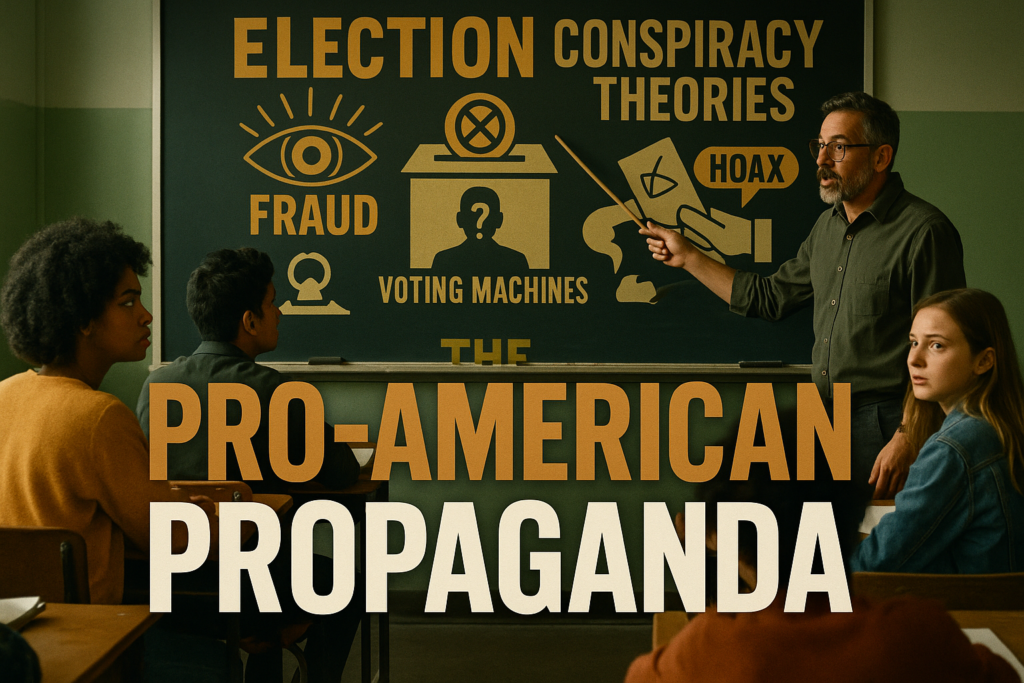
There’s a new rule in Oklahoma schools stirring up a lot of talk. State officials have decided that schools must now teach about conspiracy theories related to the 2020 U.S. presidential election. These are claims that have been widely shown to be false. Nevertheless, this new curriculum mandate means students will learn to “identify discrepancies in 2020 elections results” (New Oklahoma School Curriculum Requires Students to Learn The “Big Lie”). This includes looking at graphs, supposed security risks with mail-in ballots, and times when ballot counting was paused.
The decision came from State Superintendent Ryan Walters, who is known as a supporter of former President Donald Trump. Interestingly, this change was pushed through after the time for public comments had closed. This quick move has made many people concerned about the process. For our community, which has fought long and hard for truth and fair representation in education, such changes raise serious questions about what our children are learning, especially regarding something as vital as our democratic process. Therefore, it is crucial we understand what this means.
Key Focus Areas of Oklahoma’s New Election Curriculum
Identifying Alleged Discrepancies in 2020 Election Results
Examining Mail-In Balloting Security Risks
Analyzing Ballot-Counting Halts
Understanding “The Big Lie” in Education
The term “Big Lie” refers to the false claim that the 2020 U.S. presidential election was stolen from Donald Trump (Protect Democracy). This idea was spread widely, even though many audits and court cases found no evidence to support it. Now, Oklahoma schools are being told to teach students about these debunked theories. Specifically, the curriculum wants students to look for “discrepancies” in the 2020 election results. They will also study supposed risks with mail-in ballots and why ballot counting might have paused (New Oklahoma School Curriculum Requires Students to Learn The “Big Lie”).
For those of us in the African American community, this approach is deeply troubling. We have a long history of fighting against misinformation campaigns designed to confuse and divide. Teaching these election conspiracy theories as if they are legitimate topics for debate can confuse students. Furthermore, it risks validating ideas that have been used to try and undermine the votes and voices of many, including Black voters. Education should be about truth and critical thinking, not about promoting disproven narratives.
Voices of Concern: Impact on Student Learning
Many education experts are worried about this new curriculum. They argue that teaching these conspiracy theories as part of social studies actually harms students’ ability to think critically. Instead of learning to analyze facts, students might be exposed to a one-sided political agenda (Oklahoma wants to teach kids Trump’s false version of the 2020 election). This is a serious concern for all students, but especially for Black students. Our community has often seen how biased information can be used to distort our history and our role in America.
Even the Fordham Institute, which is known as a conservative education think tank, has spoken out. They stated that pushing debunked conspiracy theories is not acceptable. They also believe it would harm Oklahoma’s standards for teaching civics (Oklahoma includes 2020 election denial in social studies standards). When education becomes a tool for a political viewpoint, it stops serving the students. Consequently, it can create a generation that is less equipped to understand complex issues and participate meaningfully in democracy.
Criticisms of Oklahoma’s Election Conspiracy Curriculum
Undermines Critical Thinking Skills
Promotes a Politically Biased Agenda
Negatively Impacts Civics Education Quality
The Political Game: Curriculum and Power
Some critics see this curriculum change as part of a larger political strategy. State Superintendent Ryan Walters, who pushed for this, supports former President Trump. The way these new standards were introduced also raises red flags. They were added after the public had a chance to comment, and requests to delay the decision were turned down (New Oklahoma School Curriculum Requires Students to Learn The “Big Lie”). This rushed process makes it seem like there wasn’t a genuine interest in hearing different views.
Democratic leaders in Oklahoma have strongly opposed the new curriculum. They call it an “extremist political agenda” being forced into public schools (Oklahoma wants to teach kids Trump’s false version of the 2020 election). For communities like ours, which have often been marginalized by political power plays, this is a familiar and worrying pattern. When education is shaped by political agendas, rather than by a commitment to truth and fairness, it’s our children who pay the price. Indeed, the integrity of their education is at stake.
What’s Next? The Fight for Truth in Oklahoma Schools
This new curriculum isn’t final yet. The updated standards will now go to the Oklahoma Legislature, which is led by Republicans. Lawmakers there could still change them before they are officially put in place (Oklahoma includes 2020 election denial in social studies standards). This step offers a chance for more debate and possibly for common sense to prevail. It is a critical moment for parents, educators, and community members to make their voices heard.
Supporters of the curriculum argue that it helps students learn to question mainstream stories and think for themselves (New Oklahoma curriculum requires students to learn 2020 election fraud conspiracies). However, there’s a big difference between critical thinking and promoting baseless theories. For the Black community, ensuring our children learn the truth about our history and our democracy is paramount. After all, we fought too hard for voting rights and fair representation to see education used to spread confusion about these very issues.
Path of Oklahoma’s Controversial Curriculum Mandate
Walters Introduces
Bypasses Full Public Comment
Board of Ed. Passes
Moves to Legislature
Echoes of the Past: Voting Rights and Election Education
The specific claims Oklahoma students will study, like mail-in ballot “security risks” and “ballot-counting halts,” are central to the “Big Lie” (New Oklahoma School Curriculum Requires Students to Learn The “Big Lie”). These very claims have been thoroughly investigated and found to be without merit by courts and election officials (Protect Democracy). For instance, pauses in ballot counting are often normal procedures, not signs of wrongdoing. Concerns about mail-in voting fraud have also been widely debunked.
This focus on disproven fraud narratives is particularly concerning for the African American community. For decades, false claims of voter fraud have been used to justify laws that make it harder for Black people and other marginalized groups to vote (From Voter-Fraud Myths to Bogus Election Audits). Teaching these debunked theories in schools could, unfortunately, legitimize the very ideas that have historically fueled voter suppression. Accurate education about how elections work, and the long fight for voting rights, is essential for an informed and engaged citizenry. Our children deserve an education that empowers them with facts, not one that sows distrust in democratic processes based on falsehoods.
ABOUT THE AUTHOR
Darius Spearman is a professor of Black Studies at San Diego City College, where he has been teaching since 2007. He is the author of several books, including Between The Color Lines: A History of African Americans on the California Frontier Through 1890. You can visit Darius online at africanelements.org.
