
Listen to this article
Download AudioRacist Misinformation Disrupts Community Unity During Los Angeles Wildfires
By Darius Spearman (africanelements)
Support African Elements at patreon.com/africanelements and hear recent news in a single playlist. Additionally, you can gain early access to ad-free video content.
| KEY TAKEAWAYS |
|---|
| A MAGA-inspired influencer falsely accused Black men of looting a home. |
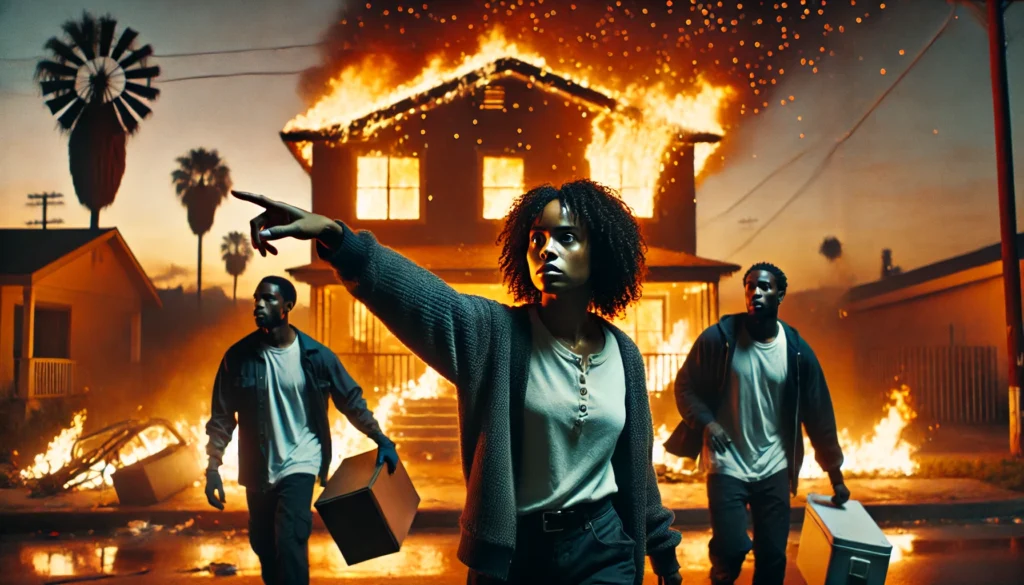
| The Black men were helping a homeowner save belongings from flames. |
| Social media amplified the false claims without verification. |
| At least 20 individuals were arrested for actual looting during the fires. |
| Officials debunked false accusations and demanded accountability. |
| The incident highlights systemic racism and misinformation during disasters. |
Racist Misinformation Fuels False Accusations During Los Angeles Wildfires
As wildfires spread across Los Angeles, they have caused widespread destruction and fear. Adding to this chaos, there is a rise in racist misinformation, which is increasing tension when the community needs to unite most.
In an alarming example of racism, a right-wing influencer called The Chingon Conservative wrongly accused Black men of looting. This false accusation quickly spread on social media, amplified by others who shared it without checking facts.
People saw a video on Instagram showing Black men moving items from a home near the fire. The Chingon Conservative claimed they were criminals instead of recognizing their brave efforts to help rescue belongings.
Homeowner Disproves False Stories
The homeowner quickly spoke out to correct the story. In an interview with KTLA News, she clarified that the men were her friends helping her save valuable items from the fire. Her statement showed the false claims and dangers of racial profiling.
The false claims received widespread criticism online. Many demanded accountability and emphasized the need for thinking critically about online information. This incident reminded everyone of social media’s power to spread both harm and truth.
Officials Respond to Misinformation
In the chaos, officials faced real looting cases and spreading misinformation. Reports state that 20 people were arrested for looting. However, the Black men helping the homeowner were cleared by both her and reporters on the scene.
Los Angeles Mayor Karen Bass addressed misinformation, noting false claims about water supplies. She emphasized the need for accurate information in crises. Similarly, County Supervisor Kathryn Barger condemned both looting and spread false claims, stressing the need for truthful communication.
Understanding the Influence of ‘MAGA’ on Misinformation
The term “MAGA” stands for “Make America Great Again,” a slogan popularized during Donald Trump’s 2016 presidential campaign. This movement believes that the United States has lost its perceived former status.
MAGA supporters advocate for policies that prioritize a narrow vision of America. They often push for reduced immigration and the enforcement of what supporters consider to be traditional values. However, the movement is also known for extreme partisanship and controversial rhetoric. Along with its attacks on the immigrant and LGBT+ communities, many of its supporters have been tied to white supremacist organizations.
Unfortunately, this combative approach often contributes to the spread of misinformation. During disasters, some influencers have shared false narratives that align with their beliefs, further dividing communities. (Source: MDPI)
The Impact of False Accusations on Individuals and Communities
False accusations can harm individuals and entire communities. People who are wrongly accused may face public shame and humiliation. (Source: Families Rising)
They might lose support from friends and neighbors. In some cases, false claims can lead to job loss and social isolation. (Source: Families Rising)
Communities suffer as well. Misinformation creates mistrust among residents, making it harder for people to work together during crises. Therefore, combating false narratives is essential for community cohesion.
Law Enforcement’s Role in Addressing Looting and Misinformation
During natural disasters, law enforcement agencies face the challenge of preventing looting while also managing misinformation. They increase patrols in affected areas to protect property and ensure safety. (Source: Spatz Law Firm)
Officers also work to provide accurate information to the public. By sharing verified updates, they help counteract false claims that can cause panic or distrust. (Source: Spatz Law Firm)
Collaboration with other emergency services and media outlets is vital. Together, they strive to keep communities informed and united during difficult times.
Promoting Critical Thinking and Fact-Checking on Social Media
In the age of social media, critical thinking and fact-checking are more important than ever. Critical thinking means analyzing information carefully before accepting it as true.
Fact-checking involves verifying information with reliable sources. By doing so, individuals can help stop the spread of misinformation online.
Understanding Racial Profiling

Racial Profiling: Discriminatory practice where individuals are targeted based on race, ethnicity, or religion rather than behavior. It leads to unjust treatment and undermines trust in law enforcement. Recognizing and rejecting this practice is essential for fair and equal justice. (Source: ACLU)
By embracing critical thinking and verifying facts, everyone can play a part in creating a more informed and united society. Together, we can resist misinformation and build stronger communities.
Patterns of Misinformation During Disasters
This is not an isolated issue. Misinformation and racial profiling are common during disasters. As wildfires damage communities, some take advantage of misinformation, worsening racial tensions.
The rapid spread of accusations against Black men shows racial bias with misinformation during crises. It emphasizes the importance of awareness and accurate information sharing, especially when emotions run high.
Fighting Racism in Disaster Response
These false claims and backlash reveal systemic racism in disaster responses and media narratives. This event reminds us to challenge racial prejudice and stereotypes, crucial during crises when unity and empathy are needed most.
Understanding how racial bias affects views during disasters is vital. We should examine how media and online stories can spread harmful images and marginalize people of color.
The Role of Social Media
Social media helped spread these false claims initially, but it also helped correct them and support those wrongly accused. This shows that social media can mislead and inform, highlighting its dual role.
To combat racist stories, we must use social media to spread accurate information in crises. This involves fact-checking, supporting diverse voices, and challenging harmful stereotypes.
Commitment to Truth and Justice
The false accusations against Black men during the wildfires remind us that racial bias and misinformation continue to be challenges. We need to stay alert and think critically, committing to truth, especially when people are most at risk.
As we deal with the impact of the Los Angeles fires, we must unite and reject racism and misinformation. Correcting false stories and supporting marginalized voices is key to building a fair society after such events.
FAQ
Q: What sparked the false accusations during the Los Angeles wildfires?
A: A MAGA-inspired influencer falsely accused Black men of looting a burning home, framing their actions as criminal instead of recognizing their efforts to help rescue belongings.
Q: How did the homeowner respond to the accusations?
A: The homeowner confirmed that the men were not looters but her loved ones helping to save her belongings, debunking the false narrative.
Q: What has been the social media response to these accusations?
A: Social media users condemned the false accusations and called for accountability, highlighting the importance of fact-checking and responsible information sharing.
Q: What actions have officials taken regarding misinformation?
A: Los Angeles Mayor Karen Bass and County Supervisor Kathryn Barger addressed the spread of misinformation, emphasizing the need for accurate information during emergencies.
Q: What does this incident reveal about systemic racism in disaster response?
A: It highlights ongoing issues of racial bias and misinformation that can exacerbate tensions in crisis situations, underscoring the need for awareness and critical thinking.
Q: How can social media help combat racist misinformation?
A: Social media can serve as a tool for spreading truth and accountability by promoting accurate information and diverse voices while actively challenging harmful stereotypes.
ABOUT THE AUTHOR
Darius Spearman is a professor of Black Studies at San Diego City College, where he has been teaching since 2007. He is the author of several books, including Between The Color Lines: A History of African Americans on the California Frontier Through 1890. You can visit Darius online at africanelements.org.
