


/
RSS Feed
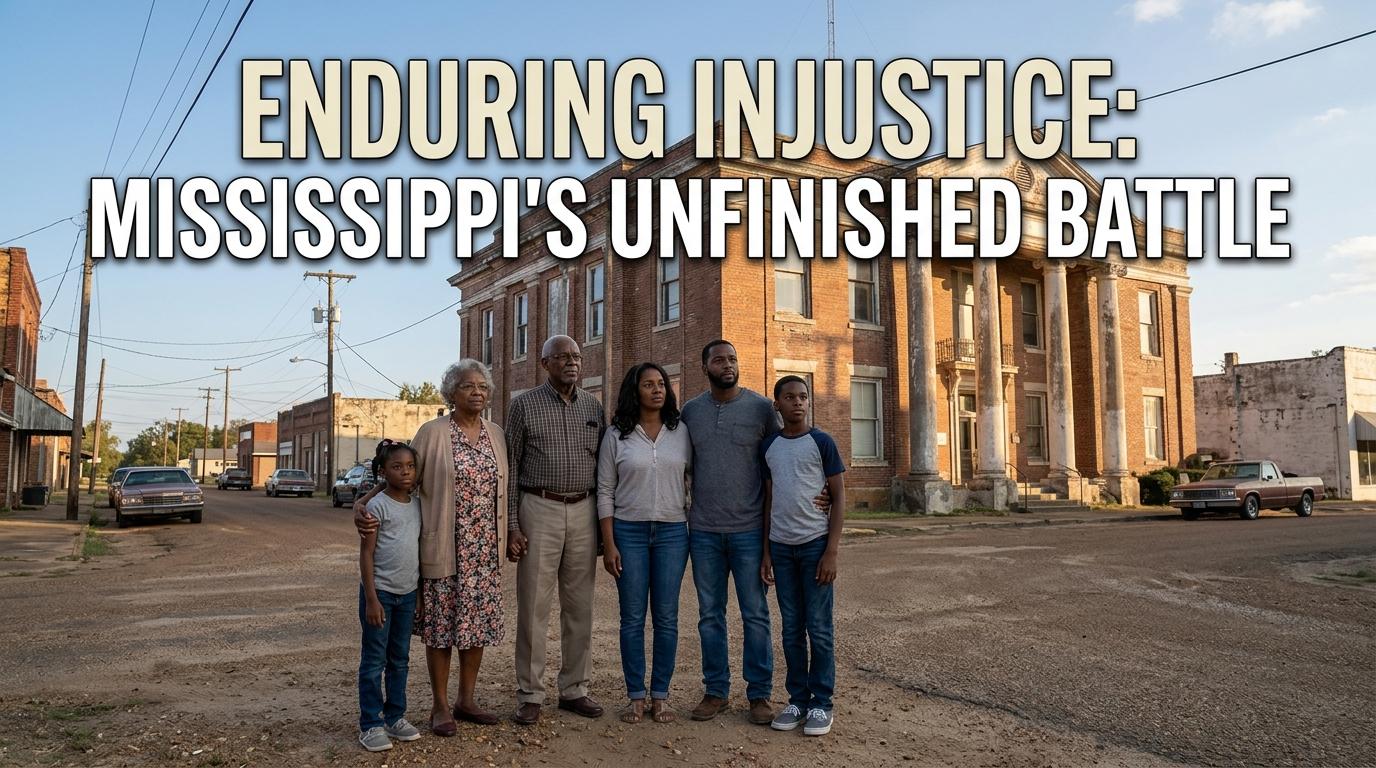
Mississippi Policing Scandals Uncovered: A Deep Dive into Enduring Injustice
By Darius Spearman (africanelements)
The recent exposure of racist and slur-laced text messages from Mississippi police chiefs has ignited widespread outrage and intensified calls for police accountability. These incidents, while shocking, are not isolated anomalies. Instead, they reverberate with a long and painful history of racial discrimination and systemic injustice within law enforcement in Mississippi. From the deeply entrenched practices of the Jim Crow era to contemporary struggles for equal treatment, the current headlines serve as a stark reminder of the enduring fight for civil rights and police reform in the state.Support African Elements at patreon.com/africanelements and hear recent news in a single playlist. Additionally, you can gain early access to ad-free video content.
Recent Exposures: Echoes of Systemic Bias
The past few years have seen multiple high-profile incidents exposing racial bias within Mississippi’s police ranks. These events have sparked public outcry and even federal intervention. In August 2023, an exposé published by Mississippi Today, Verite News, and The New York Times revealed disturbing information about Senatobia Police Chief Harold Vanderford (desotocountynews.com). The investigation showed Vanderford routinely used a racist slur in text messages, spanning from July 2022 to April 2023 (desotocountynews.com). He reportedly used the slur over a dozen times, even boasting about saying it loudly. Vanderford also wrote that he “almost beat a n—– and white woman’s a– a few minutes ago” (desotocountynews.com). This revelation followed other serious controversies within the Senatobia Police Department. These included the fatal shooting of a one-year-old boy by an officer and the arrest of a 10-year-old Black boy for urinating in public (desotocountynews.com). Despite community protests and calls for his resignation from activists like Patrick Lumumba, the city’s board initially stood by Vanderford. They stated finding him “sincere” after a meeting (desotocountynews.com). An earlier scandal rocked the town of Lexington when Police Chief Sam Dobbins was fired in July 2022 (vicksburgnews.com). This action came after a leaked 16-minute recording surfaced (vicksburgnews.com). In the recording, Dobbins was heard using racist and homophobic slurs (vicksburgnews.com, apnews.com). He also boasted about killing 13 people in the line of duty (vicksburgnews.com). Dobbins claimed he “shot that n—– 119 times” while the person was running away (vicksburgnews.com, apnews.com). The recording was made by former Lexington officer Robert Lee Hooker, a Black man who resigned due to a “toxic work environment” (vicksburgnews.com). Hooker provided the audio to the civil rights organization JULIAN (vicksburgnews.com). This incident prompted the U.S. Justice Department to launch an investigation into the Lexington Police Department (washingtonpost.com). This is a small force in a city with a majority-Black population (worldpopulationreview.com). The Justice Department’s probe, whose findings were released in September 2023, uncovered a pervasive pattern of abuse, discrimination, and unconstitutional policing (washingtonpost.com). These findings included disproportionate arrests of Black residents for minor offenses and excessive force (washingtonpost.com). Beyond these high-profile cases, other instances of police misconduct continue to surface. In March 2024, six former Rankin County sheriff’s deputies, who referred to themselves as the “Goon Squad,” were sentenced to lengthy prison terms (ranging from 10 to 40 years) (apnews.com). Their convictions were for the racist torture of two Black men in January 2023 (apnews.com). The officers admitted to torturing and assaulting the men, including sexual assault, after barging into their home without a warrant (apnews.com). Furthermore, allegations of racist text messages have also been attributed to Lee County Sheriff Jim H. Johnson (apnews.com). Johnson is a member of the Board of Law Enforcement Officer Standards and Training (apnews.com).A Shadow of the Past: Mississippi’s Legacy of Racial Control
The recent incidents are deeply rooted in Mississippi’s long and often violent history of racial oppression and resistance to civil rights. For decades following the Civil War, Mississippi remained a bastion of white supremacy (uh.edu). Race relations were predicated on the enduring legacies of slavery and Jim Crow laws (uh.edu). During this period, law enforcement played a central role in maintaining this segregated society. Officials actively used violence and intimidation against Black citizens to suppress their rights and maintain racial hierarchy (uh.edu). This systemic oppression included widespread terror and extrajudicial killings. Mississippi had the highest rate of lynchings in the nation, with 539 recorded between the end of Reconstruction and the early 1960s (eji.org). The state’s reliance on private torture and murder of African Americans was a key method of preserving racial hierarchy until the mid-20th century (eji.org). Even after the landmark *Brown v. Mississippi* Supreme Court ruling in the 1930s, which declared confessions extracted by physical violence unconstitutional, police torture and false confessions continued to be an issue (pbs.org). During the Civil Rights Movement, Mississippi became known as the “most dangerous and violent place to fight for racial justice” (mississippiencyclopedia.org). Law enforcement officials actively targeted civil rights activists with arrests, imprisonment, and brutal physical assaults (mississippiencyclopedia.org). A notable example includes the brutal beating of Fannie Lou Hamer by police in Winona in 1963 (time.com). Another horrific event was the murders of James Chaney, Andrew Goodman, and Michael Schwerner in Neshoba County in 1964. This crime was orchestrated by local members of the Ku Klux Klan and facilitated by local law enforcement (mississippiencyclopedia.org). The Mississippi Highway Safety Patrol, established in 1938, was recognized by Black freedom movements as a “force for white supremacy” (ms.gov). There were numerous reports of beatings and whippings of Black drivers on state roads (muw.edu). Mississippi officials consistently resisted federal directives on racial integration (slu.edu). The state’s efforts to maintain white authoritarianism have been described as resembling “apartheid South Africa” (slu.edu). While the 1871 Ku Klux Klan Act provided a mechanism for federal lawsuits against police for constitutional violations (wikipedia.org). This act was designed to deter misconduct by white supremacist groups and complicit law enforcement (wikipedia.org). However, its effectiveness in Mississippi was often challenged (wikipedia.org). The historical context reveals a deep-seated resistance to accountability.Data Speaks: Disparities in Modern Policing
Statistical data underscores the pervasive nature of racial disparities and misconduct within Mississippi’s law enforcement. The towns at the center of recent controversies, like Lexington, are predominantly Black (worldpopulationreview.com). In 2024, Lexington was home to approximately 1,350 residents, with 66.4% identified as Black or African American (worldpopulationreview.com). Holmes County, where Lexington is located, has an approximate 83% Black population (point2homes.com, datausa.io). This demographic reality significantly amplifies the impact of biased policing on these communities (worldpopulationreview.com). Mississippi ranks third nationally for the highest reported number of police misconduct incidents per 100,000 police officers (stroudlawyers.com). Statewide, 75% of all arrests between 2013 and 2023 were for low-level, non-violent offenses (sentencingproject.org). These “low-level, non-violent offenses” generally refer to minor criminal infractions that do not involve physical harm or the threat of violence (SOURCE-RESEARCH-NOTES). These can include traffic violations, public urination, loitering, or petty theft (SOURCE-RESEARCH-NOTES). Black individuals in Mississippi were 1.9 times more likely than white individuals to be arrested for such offenses during this period (mississippifreepress.org, sentencingproject.org). In Lexington, this disparity was even more stark, with Black people being almost 18 times more likely to be arrested by 2023 (mississippifreepress.org). From 2013-2023, a Black person in Mississippi was 1.3 times more likely to be killed by police than a white person (policescorecard.org). Nationally, Black Americans are 2.5 times as likely to be shot and killed by police officers as whites (SOURCE-RESEARCH-NOTES).Racial Disparity in Low-Level Arrests (MS 2013-2023)
Racial Disparity in Police Killings (US 2013-2023)
The Unfinished Battle for Accountability
The racist text messages exposed from Mississippi police chiefs are not isolated incidents. Instead, they are disturbing manifestations of deeply entrenched historical and systemic issues. These headlines underscore the critical and ongoing need for police accountability, comprehensive systemic reform, and a concerted effort to dismantle racial bias within law enforcement in Mississippi (washingtonpost.com). The painful history of racial oppression, coupled with current statistical disparities in policing, highlights the urgent demand for justice. The ongoing struggle for police accountability in Mississippi reflects a broader national conversation. It is a conversation about the role of law enforcement in diverse communities and the imperative to build trust. Efforts to strengthen community resilience and demand transparency continue to gain momentum. The journey toward true equity and justice requires persistent vigilance and a commitment to address the historical roots of racial bias in policing. For many, this ongoing fight for freedom echoes the struggles of past generations.About the Author
Darius Spearman is a professor of Black Studies at San Diego City College, where he has been teaching for over 20 years. He is the founder of African Elements, a media platform dedicated to providing educational resources on the history and culture of the African diaspora. Through his work, Spearman aims to empower and educate by bringing historical context to contemporary issues affecting the Black community.
