
Listen to this article
Download AudioSCOTUS Excessive Force Ruling Revives Barnes Case
By Darius Spearman (africanelements)
Support African Elements at patreon.com/africanelements and hear recent news in a single playlist. Additionally, you can gain early access to ad-free video content.
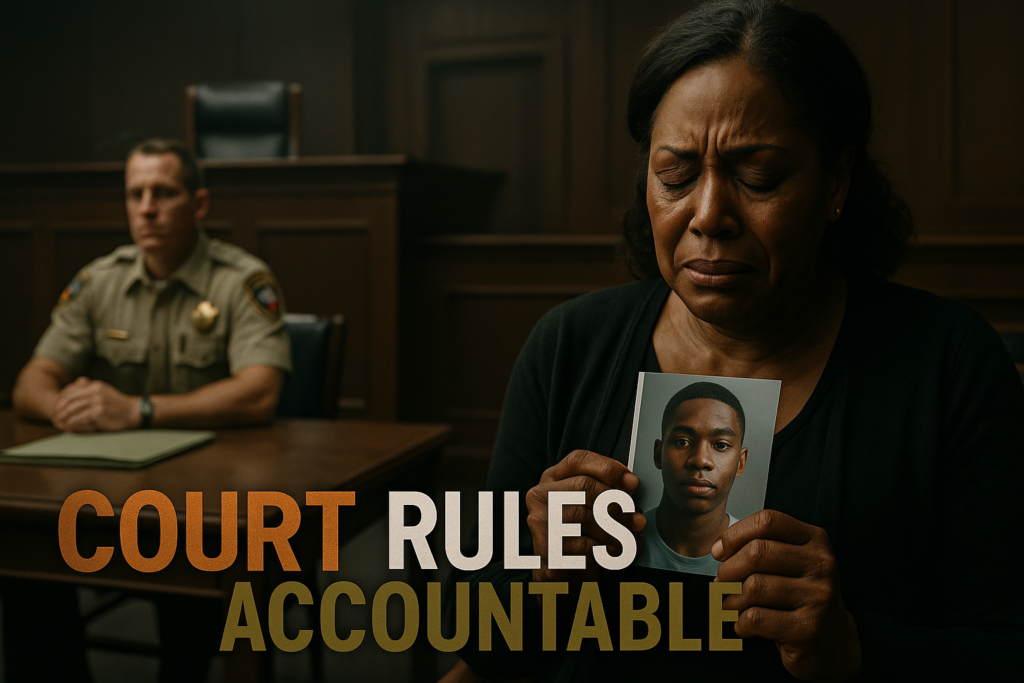
Our community often faces the harsh reality of police interactions. The U.S. Supreme Court recently made a significant move. They decided a lawsuit against a Texas police officer must go forward. This case involves the fatal shooting of Ashtian Barnes, a 24-year-old Black man. This ruling is a crucial step, especially for us. It demands a closer look at how police use force. Furthermore, it could change how such cases are handled in the future.
Supreme Court Mandates Justice in Excessive Force Case
The highest court in the land spoke with one voice. The U.S. Supreme Court unanimously ruled to revive the lawsuit against Texas officer Roberto Felix Jr., who fatally shot Ashtian Barnes during a traffic stop. This decision means the case, previously dismissed by lower courts, will now proceed. The court’s ruling powerfully emphasizes a critical point. All circumstances leading to a shooting must be considered. It’s not just about the final, split-second moment force is used. Indeed, this is a victory for a more complete view of justice. (‘Don’t… Move!’: Supreme Court Rules ‘Rogue’ Texas Cop Must Face Judgment for Excessive Force Lawsuit After Fatally Shooting Black Man In Car When He Wasn’t an Immediate Threat).
Lower courts had taken a narrower view. They focused intensely on the mere two seconds before Officer Felix fired his weapon. The Supreme Court rejected this limited approach. Instead, they adopted a broader analysis under the Fourth Amendment. This change means looking at the whole interaction. This includes the officer’s conduct leading up to the use of deadly force. Consequently, this comprehensive perspective is vital for understanding whether the force was truly justified. (Supreme Court unanimously expands scope for excessive force claims against police). The court’s opinion itself reinforces this. It stresses examining all relevant circumstances. (Supreme Court Opinion: 605 U. S. ____ (2025)).
Supreme Court’s Shift in Evaluating Excessive Force
REJECTED: Narrow Focus
Lower courts focused only on the immediate 2 seconds before the shooting.
ADOPTED: Broad Analysis
Supreme Court mandates considering all circumstances leading up to the use of force.
The Fatal Stop: Ashtian Barnes’ Tragic Story
Ashtian Barnes, a young Black man, lost his life over a minor issue. He was stopped for less than $10 in unpaid tolls. This everyday occurrence tragically escalated. Officer Felix positioned himself on the doorsill of Barnes’ car. This happened as Barnes tried to drive away after being told to leave. These actions by the officer are now under intense scrutiny due to the Supreme Court’s decision. Indeed, the community watches, hoping for accountability. (‘Don’t… Move!’: Supreme Court Rules ‘Rogue’ Texas Cop Must Face Judgment for Excessive Force Lawsuit After Fatally Shooting Black Man In Car When He Wasn’t an Immediate Threat).
Before this Supreme Court ruling, a Texas grand jury had cleared Officer Felix of criminal charges. However, many questioned his actions from the start. The term “rogue cop” even appeared in headlines discussing the case. The Supreme Court’s recent intervention underscores these doubts. They stressed looking at everything that happened before the fatal shots. This includes why Barnes was ordered out of his car. It also includes what led to any perceived resistance. These details are vital for a fair assessment. Therefore, the case continues, seeking answers and justice for Ashtian Barnes. (‘Don’t… Move!’: Supreme Court Rules ‘Rogue’ Texas Cop Must Face Judgment for Excessive Force Lawsuit After Fatally Shooting Black Man In Car When He Wasn’t an Immediate Threat; Supreme Court Opinion: 605 U. S. ____ (2025)).
Key Facts: Barnes v. Felix Excessive Force Lawsuit
Previous Outcome: A Texas grand jury cleared Officer Felix of criminal charges. Lower courts dismissed the civil lawsuit.
Supreme Court Ruling: Unanimously revived the lawsuit, allowing it to proceed based on a broader analysis of the events.
Your Rights: The Fourth Amendment and Police Conduct
The Fourth Amendment is a cornerstone of our rights. It protects people from unreasonable searches and seizures by law enforcement. This protection is absolutely critical in excessive force cases. This means that police cannot use force that isn’t objectively reasonable given the situation. If an officer uses unreasonable force, it can violate this constitutional right. Therefore, understanding this amendment is key for our community. (Does the Fourth Amendment Protect You From Excessive Force?).
This amendment ensures that when police seize someone, like during an arrest, it must be reasonable. This includes any force used during that seizure. (Office of State Courts Administrator Use of Force – Part I). “Excessive force” itself means any objectively unreasonable police force. This can range from slaps and punches to using a weapon without good cause. The main point is whether the force was necessary and matched the situation. (Does the Fourth Amendment Protect You Against Excessive Force?). Ultimately, deciding if force was excessive involves looking at what a reasonable officer would do in the same circumstances. (Objectively Reasonable Use of Force Under the Fourth Amendment).
A Fuller Picture: “Totality of Circumstances” in Use of Force
The Supreme Court’s decision in the Barnes case highlights a legal standard called “totality of the circumstances.” This standard demands a complete look at any situation involving police force. It’s not enough to focus on the moment force was used. Instead, courts must consider all relevant factors. This includes the officer’s actions leading up to the event. It also considers the suspect’s behavior and the environment. This comprehensive review helps determine if the officer’s actions were objectively reasonable. Thus, this approach allows for a more just evaluation. (Supreme Court unanimously expands scope for excessive force claims against police).
This “totality of the circumstances” is not new. However, its strong affirmation in this case is significant. It pushes back against attempts to narrow the focus in excessive force claims. For our community, this can mean a fairer hearing. It means the context of an encounter, often fraught with tension and rapid decisions, gets fully aired. The Supreme Court emphasized the importance of this comprehensive analysis. They noted it in their official opinion on the Barnes v. Felix case. Consequently, future cases may see a more thorough examination of police conduct from start to finish. (Supreme Court Opinion: 605 U. S. ____ (2025)).
Understanding “Totality of the Circumstances”
The “totality of the circumstances” is a legal standard. It means courts must look at all relevant facts when deciding if an officer’s use of force was reasonable. This is not just the moment of force.
It includes factors like:
This approach ensures a more complete and fair evaluation of police conduct.
Broader Horizons for Police Accountability Claims
This Supreme Court ruling is a big deal. It sets a precedent for how excessive force claims are judged. The decision is seen as a significant expansion. It broadens the scope for such claims against police officers. By insisting on the “totality of the circumstances,” the court makes it harder to ignore an officer’s earlier actions that might have escalated a situation unnecessarily. This could mean more cases like Ashtian Barnes’ will be heard. Instead of being quickly dismissed, they will receive a fuller review. (Supreme Court unanimously expands scope for excessive force claims against police).
The unanimous nature of this ruling sends a powerful message. It stresses how important a comprehensive analysis is in Fourth Amendment cases involving police force. (Supreme Court Opinion: 605 U. S. ____ (2025)). This ruling could influence future numbers. More cases might be brought forward. More might also be successfully pursued. For the Black community, which disproportionately experiences negative police interactions, this is a hopeful development. Nevertheless, the fight for consistent accountability continues. This ruling, however, provides a stronger tool for that fight.
Disturbing Patterns: Other Excessive Force Incidents
The tragedy of Ashtian Barnes does not stand alone. Other recent cases highlight ongoing concerns about police use of force, particularly against Black individuals. For example, in Washington state, a county agreed to a $3.5 million settlement. This was for a man shot by a deputy during a traffic stop for a broken taillight. The deputy reportedly punched the man before shooting him. Although the settlement doesn’t admit liability, and the officer remains on duty, the large sum speaks volumes. This case, like Barnes’, involved a traffic stop escalating tragically. (Washington state deputy punched Black man during traffic stop for a broken taillight then shot him in the head, county pays family $3.5M but keeps him on the force).
Another deeply concerning case comes from Georgia. A family there filed a lawsuit after a 5-year-old girl was shot during a police chase. Their lawsuit points to patterns of misconduct and reckless use of force within that county’s sheriff’s office. (Family of girl shot by deputy sues Douglas County, citing pattern of misconduct and reckless use of force). These incidents, alongside the Barnes case, paint a troubling picture. They underscore the urgent need for reforms. They also show why rulings like the Supreme Court’s decision to look at the “totality of circumstances” are vital. Therefore, each step toward greater scrutiny and accountability is a step toward justice for all our communities.
The Supreme Court’s decision to revive the lawsuit for Ashtian Barnes is more than a legal adjustment. It is a beacon of hope. It signals that the highest court recognizes the need for a thorough examination of excessive force claims. For families like the Barneses, and for our entire community, this means a greater chance that their stories will be fully heard. While the road to justice is long, this ruling provides a significant push forward. It reinforces that every moment matters, and every action leading to the use of force will be weighed. Ultimately, this should lead to greater accountability and, hopefully, fewer tragedies.
ABOUT THE AUTHOR
Darius Spearman has been a professor of Black Studies at San Diego City College since 2007. He is the author of several books, including Between The Color Lines: A History of African Americans on the California Frontier Through 1890. You can visit Darius online at africanelements.org.
