
Listen to this article
Download AudioPhoenix Police Retaliation Lawsuit Exposes Systemic Issues
By Darius Spearman (africanelements)
Support African Elements at patreon.com/africanelements and hear recent news in a single playlist. Additionally, you can gain early access to ad-free video content.
Black Man Arrested Asking Badge Numbers
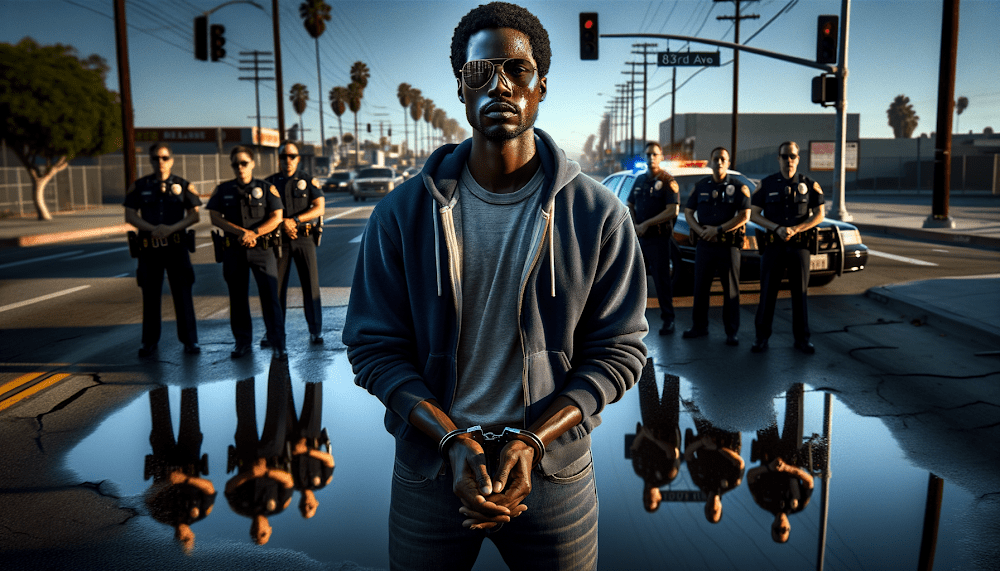
William Kitchen’s encounter with Phoenix police began as routine transit navigation. Officers detained him for crossing mid-block despite visible bus stop infrastructure. Bodycam footage later revealed officers mocking Kitchen’s request for badge numbers with derisive chuckles (Atlanta Black Star). This interaction escalated when Kitchen exercised his First Amendment right to question the stop’s legality.
The subsequent “obstructing thoroughfare” charge raises constitutional eyebrows. Legal experts note such ordinances often serve as pretextual tools for retaliatory arrests. Kitchen’s charges dissolved after legal intervention, but the pattern echoes nationwide issues of punitive policing responses to civilian oversight (ABC15).
Phoenix PD Lawsuit First Amendment Clash
Kitchen’s lawsuit alleges three constitutional breaches forming a trifecta of civil rights violations. The First Amendment claim centers on officers punishing protected speech through retaliatory arrest. Fourth Amendment arguments challenge the initial detention’s reasonableness, while Fourteenth Amendment claims spotlight discriminatory enforcement patterns (Atlanta Black Star).
Bodycam footage manipulation compounds these allegations. Police released intentionally blurred video despite public records laws mandating transparency. Ironically, the obscured sections reportedly contain exculpatory evidence showing Kitchen’s calm demeanor during the exchange (ABC15). Such tactics undermine police accountability measures designed to build community trust.
Source: U.S. Constitution Annotated
DOJ Report Phoenix Police Discrimination
The Justice Department’s 2024 findings reveal institutional rot within Phoenix PD. Officers disproportionately targeted Black and homeless populations using vague ordinances as pretexts. These enforcement patterns create what legal scholars call “constitutional deserts,” where civil rights exist only theoretically (Wikipedia).
Source: U.S. DOJ Civil Rights Division
Federal investigators documented 147 cases of officers using racial epithets in patrol logs. One incident involved an officer dubbing a homeless encampment “Little Africa” in official records. Such dehumanizing language frequently preceded violent encounters, according to the report’s timeline analysis (ABC15).
ABOUT THE AUTHOR
Darius Spearman is a professor of Black Studies at San Diego City College, where he has been teaching since 2007. He is the author of several books, including Between The Color Lines: A History of African Americans on the California Frontier Through 1890. You can visit Darius online at africanelements.org.
