

Listen to this article
Download AudioSouth Sudan: A Nation’s Fight for Health
By Darius Spearman (africanelements)
Support African Elements at patreon.com/africanelements and hear recent news in a single playlist. Additionally, you can gain early access to ad-free video content.
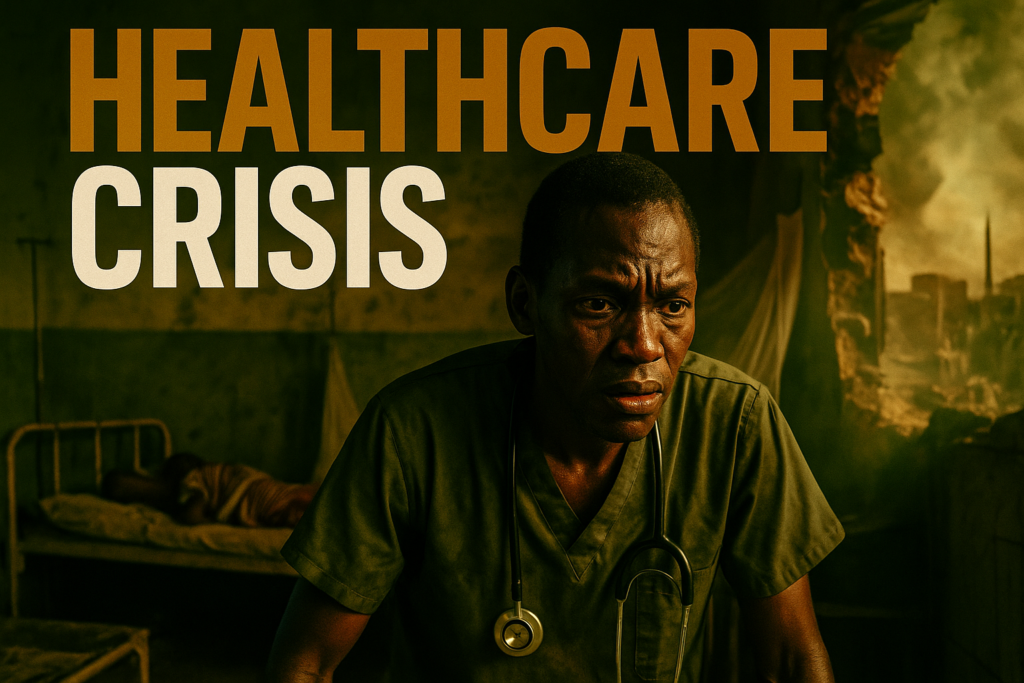
South Sudan, a nation born from struggle, continues to fight for its very survival, with its healthcare system teetering on the edge. The echoes of conflict, the relentless spread of disease, and deeply rooted infrastructure issues have woven a complex tapestry of crisis. For the people of South Sudan, particularly those within the diaspora and our extended Black family globally, this struggle represents a profound human challenge, highlighting the urgent need for sustained attention and action.
The impact of a struggling health system disproportionately affects the most vulnerable among us: women, children, and those displaced by violence. Understanding this crisis means looking beyond headlines and delving into the specifics of what daily life entails for millions facing unimaginable hardship, where basic medical care is a distant dream.
Healthcare Access: A Distant Hope
Only 57 percent of the South Sudanese population can reach a health facility within an hour (Humanitarian Needs and Response Plan South Sudan 2025). This stark statistic reveals a critical shortfall in basic access, which is a symptom of a larger, deeper problem. More than two-fifths of the population, specifically 44 percent, face significant barriers in accessing nearby health services, creating vast medical deserts across the nation (Humanitarian Needs and Response Plan South Sudan 2025).
The devastating conflict has severely damaged existing health infrastructure, rendering healthcare facilities unusable or inaccessible. This destruction is not just physical; it fragments communities and isolates people from life-saving care. Consequently, millions of lives are put at risk simply because they live too far, or because the roads are too dangerous, to reach a doctor or nurse.
Access to Healthcare Facilities in South Sudan
Only 57% of South Sudan’s population can reach a health facility within an hour, leaving a significant portion without timely access to care.
Healthcare Indicators: A Global Concern
South Sudan’s health indicators are among the worst globally (Health in South Sudan). This grim reality means that the nation struggles fiercely with basic health outcomes that many countries take for granted. For instance, maternal mortality rates are tragically high, indicating insufficient prenatal care and unsafe delivery conditions for mothers (The Millennium Development Goals).
Furthermore, child mortality rates remain far too high, reflecting widespread issues such as malnutrition, preventable diseases, and limited access to pediatric care (The Millennium Development Goals). Vaccination rates are also dangerously low, leaving children vulnerable to diseases like measles and polio, which are largely eradicated in other parts of the world (Millennium Development Goals – MDG Achievement Fund). These indicators are a painful reminder of the humanitarian imperative to address this crisis with urgency and compassion, seeing each statistic as a life lost or a life at risk.
Collapsed Systems: A Dire Shortage
The public health system in South Sudan is described as “nearly collapsed,” a term that barely captures the gravity of the situation (Health in South Sudan). This collapse means a severe lack of qualified health professionals, including doctors, nurses, and especially midwives, who are critical for maternal health (Health in South Sudan). The absence of these essential workers leads to inadequate medical care and prolonged periods of suffering for countless individuals.
Moreover, the impact of international aid cuts has exacerbated this crisis. Recent reductions in funding from organizations like USAID have significantly hampered the delivery of health services (Health in South Sudan). Such cuts translate directly into shortages of medical supplies, fewer essential vaccinations, and even layoffs of healthcare personnel, further weakening an already fragile system (The Millennium Development Goals). This economic strain leaves communities even more vulnerable, unable to access even the most basic care.
Consequences of International Aid Cuts on Healthcare
International aid cuts result in direct and severe impacts on healthcare services, exacerbating existing health crises in vulnerable nations.
Disease Outbreaks and Human Capital Deficits
South Sudan faces a relentless cycle of disease outbreaks, including malaria, cholera, and measles (Millennium Development Goals – MDG Achievement Fund). These diseases thrive in conditions of displacement, overcrowding, and poor sanitation, which are rampant across the country. Malaria, a persistent threat, burdens communities with debilitating illness, particularly in rural areas where medical attention is scarce. Cholera outbreaks are common due to contaminated water sources, a direct consequence of inadequate infrastructure and conflict-induced displacement (The Millennium Development Goals).
Measles, an easily preventable disease through vaccination, remains a serious concern, especially among children, underscore the low immunization coverage (Millennium Development Goals – MDG Achievement Fund). Beyond infectious diseases, South Sudan recorded the second-lowest level of expected human capital in 2016 (Health in South Sudan). This metric reflects severe challenges in both health and education, meaning the nation struggles to develop the knowledge, skills, and experience necessary for its people to thrive. Without healthy, educated citizens, the path to long-term development remains exceptionally difficult.
Persistent Disease Threats in South Sudan
- Malaria
- Cholera
- Measles
Key infectious diseases contribute significantly to South Sudan’s health crisis, exacerbated by poor living conditions and limited healthcare access.
International Response: Coordinated Efforts
The international community is responding to South Sudan’s urgent healthcare crisis through a coordinated effort involving governments, UN agencies, and non-governmental organizations (NGOs) (Millennium Development Goals – MDG Achievement Fund). A critical tool in this response is the Humanitarian Needs and Response Plan, which identifies humanitarian needs and outlines resources required to address them. These plans are continuously updated, adapting to the dynamic and often unpredictable situations on the ground (Millennium Development Goals – MDG Achievement Fund).
The objective is to ensure aid is delivered effectively, addressing immediate emergencies while also laying groundwork for long-term recovery. For instance, USAID, the United States Agency for International Development, plays a vital role in providing humanitarian assistance and development aid (The Millennium Development Goals). USAID supports healthcare systems, education initiatives, and economic development, particularly in nations facing extreme challenges or conflict. These efforts are crucial, as displaced populations in South Sudan often rely entirely on external aid for their survival and health needs.
Building Resilience: Local Initiatives and Government Role
Addressing the healthcare crisis in South Sudan requires a multifaceted approach that combines international support with robust local initiatives. While international organizations provide critical relief and infrastructure development, local healthcare workers and community-based programs are indispensable for reaching remote areas and maintaining continuous care (Millennium Development Goals – MDG Achievement Fund). These local efforts ensure that aid is culturally appropriate and can be sustained over time, building authentic resilience within communities.
The government of South Sudan, despite resource constraints and the ongoing conflict, plays an essential role in managing the healthcare system. The government works diligently to develop policies and coordinate with international partners, aiming to improve healthcare access and delivery nationwide (Millennium Development Goals – MDG Achievement Fund). Comparisons with Sudan highlight distinct challenges; South Sudan’s crisis is more deeply rooted in ongoing conflict and displacement, while Sudan’s health issues are often linked to broader economic and structural problems affecting healthcare services (Millennium Development Goals – MDG Achievement Fund). This distinction underscores the unique and complex nature of South Sudan’s healthcare crisis, demanding targeted and persistent solutions.
The timeline of South Sudan’s healthcare crisis extends back to its early years of independence, around 2011, and has been consistently worsened by conflict and instability (Millennium Development Goals – MDG Achievement Fund). This protracted crisis means that generations have grown up with severely limited access to medical care. Efforts to address this have been continuous, involving a variety of international and local initiatives aimed at improving healthcare access and strengthening the nation’s capacity to care for its people. The challenges are immense, yet the commitment to improving the health and well-being of South Sudan’s people remains a global priority and a testament to shared humanity.
About The Author
Darius Spearman has been a professor of Black Studies at San Diego City College since 2007. He is the author of several books, including Between The Color Lines: A History of African Americans on the California Frontier Through 1890. You can visit Darius online at africanelements.org.
