


The Dark Secrets Behind Uganda Military Crackdown on Dissent
By Darius Spearman (africanelements)
Support African Elements at patreon.com/africanelements and hear recent news in a single playlist. Additionally, you can gain early access to ad-free video content.
The news coming out of East Africa paints a deeply troubling picture. A major human rights alert has exposed a systematic campaign by the state military in Uganda (hrw.org). Soldiers are reportedly snatching human rights lawyers, veteran activists, journalists, and opposition politicians from the streets (reliefweb.int). These targets are blindfolded, held incommunicado, and detained without trial in secret locations (hrw.org). This wave of repression represents a severe setback for democratic expression on the African continent.
To understand these shocking headlines, one must look at the deep history of Uganda. This is not a sudden, random crisis. Instead, it is the result of decades of growing authoritarianism, military overreach, and family-based succession planning (hrw.org). The struggle of the Ugandan people echoes global fights for human rights. It mirrors the historical shift from civil rights to militarized state control seen in many Black communities worldwide.
Timeline of Uganda’s Path to Autocracy
Yoweri Museveni wins the Bush War and takes power, promising democratic reforms (wikipedia.org).
The constitution is amended to remove presidential term limits, ensuring Museveni can run indefinitely (wikipedia.org).
Parliament removes the presidential age limit of 75, paving the way for lifelong rule (wikipedia.org).
The UPDF Amendment Act is signed, bypassing the Supreme Court and legalizing civilian trials in military courts (observer.ug).
A major military crackdown targets lawyers, veteran activists, and the free press (hrw.org).
The Modern Reign of Terror
In June and July of 2026, the military-led campaign against opposition figures reached a boiling point (hrw.org). One of the most prominent victims was Erias Lukwago, a human rights lawyer and president of the newly formed opposition party, the People’s Front for Freedom (PFF) (independent.co.ug, observer.ug). On June 15, 2026, armed soldiers raided his home, arrested him, and held him incommunicado for two days (hrw.org). Lukwago was ultimately hit with treason-related charges (thekampalareport.com). At the time, he was preparing a lawsuit against the Chief of Defence Forces, General Muhoozi Kainerugaba (observer.ug). Muhoozi later posted a picture on social media showing Lukwago blindfolded, displaying a chilling disregard for the rule of law (observer.ug).
The crackdown did not stop with Lukwago. On June 28, 2026, military operatives detained Dr. Miria Matembe, a seventy-three-year-old veteran activist and former ethics minister (reliefweb.int). She had criticized Lukwago’s arrest in a YouTube interview (hrw.org). Consequently, the state charged her with “promoting sectarianism” (reliefweb.int). Furthermore, veteran journalist Timothy Kalyegira was abducted on June 26 by the Special Forces Command (SFC) (cpj.org). Operatives held him in a basement for four days before charging him under the Uganda Communications Act (cpj.org). These actions show that no voice is safe from state violence (hrw.org).
Silencing the Press and Transnational Reach
The state has also launched a full-scale war against independent media houses. On June 28, 2026, General Muhoozi Kainerugaba ordered a military siege of the Nation Media Group (NMG) Uganda (hrw.org). This forced East and Central Africa’s largest independent newsroom to halt its operations (observer.ug). The military closed down the Daily Monitor newspaper (hrw.org). Along with the newspaper, authorities shut down NTV Uganda, Spark TV, KFM, Dembe FM, and The East African regional newspaper (observer.ug, cpj.org). Muhoozi openly declared his disdain for media freedom on social media, writing that he does not believe in a free press (observer.ug).
Additionally, the regime has extended its reach across national borders to enforce silence. This transnational repression was on full display when former Kenyan Justice Minister Martha Karua tried to observe Lukwago’s trial (hrw.org, state.gov). On June 22, 2026, Ugandan authorities arrested and unlawfully deported her at Entebbe International Airport (hrw.org). Such cross-border operations are not new. In November 2024, opposition leader Kizza Besigye was abducted from Nairobi, Kenya, and illegally flown to Kampala to face military trials (youtube.com, rosalux.de). These illegal activities show how East African regimes collude to crush political dissent (crisisgroup.org).
The Human Toll of State Suppression
A look at the numbers behind the military regime’s campaign.
From Liberators to Modern Dictators
To comprehend this current nightmare, one must examine the origins of the ruling regime. President Yoweri Museveni seized power in January 1986 after a brutal five-year guerrilla bush war against the dictatorial Milton Obote regime (wikipedia.org, wikipedia.org). During his inauguration, Museveni famously stated that the main problem in Africa was leaders who overstayed their power (wikipedia.org). However, Museveni has now ruled Uganda for four decades (wikipedia.org). This makes him one of the longest-serving leaders on the globe (wikipedia.org).
Over the years, Museveni has systematically dismantled the democratic guardrails of the nation. In 2005, he engineered a constitutional amendment to remove presidential term limits (wikipedia.org). Later, in 2017, his government removed the presidential age limit of seventy-five (wikipedia.org, wikipedia.org). These changes allowed the aging president to stay in office indefinitely (wikipedia.org). This long consolidation of power raises deep questions about the value of voting and representation when a single ruler can manipulate the state charter to remain in power forever.
The Rise of a Family Dynasty
As President Museveni ages, the governance of Uganda has increasingly become a family enterprise (hrw.org). At the heart of this transition is his son, General Muhoozi Kainerugaba (independent.co.ug). Muhoozi was rapidly promoted through the ranks to lead the Special Forces Command (SFC) (newvision.co.ug). The SFC is an elite military unit originally created in May 1981 to protect Museveni during the bush war (newvision.co.ug). Today, it serves as a highly politicized inner core of the security architecture (hrw.org, newvision.co.ug).
Muhoozi now serves as the Chief of Defence Forces and leads the Patriotic League of Uganda (PLU) (independent.co.ug, independent.co.ug). The PLU is a powerful political pressure group launched in February 2024 to organize Muhoozi’s base for succession (independent.co.ug). Although the constitution strictly forbids active-duty soldiers from engaging in partisan politics, Muhoozi operates with absolute impunity (independent.co.ug). The military, which was once celebrated as a “people’s army” of liberation, has become a private family weapon (hrw.org). This dynastic progression illustrates how freedom defines black political power in complex and often painful ways across the global African landscape.
The Playbook of “Drones” and Torture
The violent tactics of abduction and secret detention did not appear overnight. They became standard practice during the highly contested 2021 presidential election (hrw.org). During that election cycle, the charismatic pop star Robert Kyagulanyi, widely known as Bobi Wine, challenged Museveni (hrw.org). The state reacted with extreme violence. In November 2020, security forces shot and killed at least fifty-four unarmed citizens during protests in Kampala (amnesty.org, amnestyusa.org).
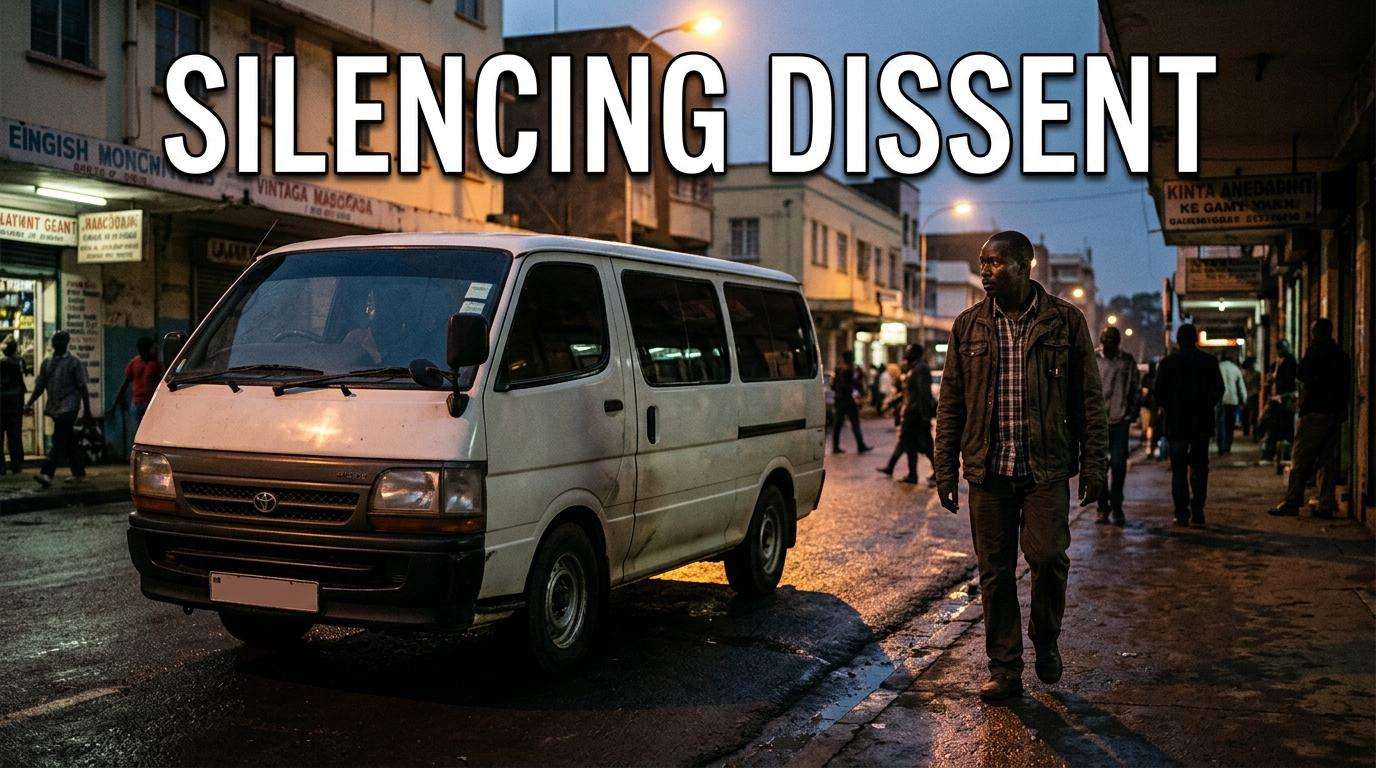
Furthermore, the state pioneered the use of unmarked Toyota HiAce minivans, which the locals call “Drones” (hrw.org). Armed men in civilian clothes used these vehicles to kidnap thousands of young opposition supporters (hrw.org). Victims were blindfolded and driven to unauthorized detention centers known as “safe houses” (hrw.org). In these secret facilities, detainees suffered terrible torture, including waterboarding, beatings, and bone dislocations (hrw.org). Although Museveni promised to prosecute abusive officers, no evidence of such trials exists, and the “drone” abductions continue (hrw.org, hrw.org).
Judicial Systems Compared
Comparing protections in civilian courts versus the military court martial system.
| Feature | Civilian Judiciary | General Court Martial |
|---|---|---|
| Judicial Independence | Protected by constitution | Subordinate to military command |
| Right to Bail | Standard legal process | Frequently denied / 180 days remand |
| Rules of Evidence | Strict civilian rules | Highly compromised / Militarized |
| Civilian Trials | Declared constitutional | Ruled unconstitutional but legalized anyway |
The Subversion of Civilian Justice
One of the most dangerous tools in the state toolkit is the militarization of justice. For decades, the Ugandan government has used military courts to try civilian dissidents (hrw.org, africanlawmatters.com). This practice strips defendants of their basic constitutional protections (africanlawmatters.com). However, a brief moment of hope occurred in January 2025 (africanlawmatters.com). The Supreme Court of Uganda issued a historic ruling declaring the military trial of civilians unconstitutional (africanlawmatters.com). The court ordered all civilian cases transferred to civilian courts (africanlawmatters.com).
Nevertheless, the Museveni administration quickly neutralized this legal defeat (observer.ug). In May 2025, the ruling party pushed through the controversial Uganda Peoples’ Defence Forces (Amendment) Bill (observer.ug, parliamentwatch.ug). Museveni signed this bill into law in June 2025 (observer.ug). The new law legalized military trials for civilians under “exceptional circumstances,” such as acting alongside military personnel (observer.ug, parliamentwatch.ug). Consequently, this legislative maneuver completely bypassed the Supreme Court ruling and restored the military’s power to judge its critics (observer.ug).
Division and Struggle in the Opposition
The Ugandan democratic movement faces massive challenges, not only from state violence but also from internal divisions. The two main opposition groups are Bobi Wine’s National Unity Platform (NUP) and Erias Lukwago’s People’s Front for Freedom (PFF) (independent.co.ug, hrw.org). The PFF was formed in mid-2025 following a major split within the Forum for Democratic Change (FDC) (independent.co.ug). Headquartered on Katonga Road in Kampala, the PFF positions itself as a policy-oriented, technocratic option (independent.co.ug). Conversely, the NUP relies on broad, populist mass mobilization (hrw.org).
Unfortunately, these two groups have struggled to unite (independent.co.ug). Efforts to build a cohesive coalition for the upcoming elections failed, resulting in only a loose cooperation agreement (independent.co.ug). This division has left the opposition vulnerable to targeted state attacks. For instance, Bobi Wine had to seek temporary exile in the United States after the January 2026 elections (hrw.org). Meanwhile, the military has continued to arrest high-profile leaders (hrw.org). On July 11, 2026, armed soldiers abducted Muhammad Muwanga Kivumbi, the NUP deputy president for Buganda, near a military roadblock (hrw.org). This occurred alongside the secret arrest of activist Andrew Nabimanya (hrw.org).
The Legal Trap of Treason and Sectarianism
To suppress political opponents, the Ugandan state heavily weaponizes severe criminal charges. The most dangerous of these is the charge of “treason-related offenses” (thekampalareport.com). In Uganda, treason is a capital offense that carries a maximum penalty of death (lawpointuganda.com). The state uses this charge to justify prolonged pre-trial detention and deny bail to dissidents (thekampalareport.com, lawpointuganda.com). Dissidents charged with treason are routinely held incommunicado in harsh, deteriorating conditions for at least one hundred and eighty days before bail is even considered (hrw.org, thekampalareport.com).
Similarly, the charge of “promoting sectarianism” is a weapon used to silence speech (reliefweb.int). Under Section 41 of the Penal Code Act, this offense carries a prison term of up to five years (lawpointuganda.com). It is a vague, colonial-era law originally written by the British empire to restrict local political organizing (lawpointuganda.com). Legal experts argue that this law is unconstitutionally vague and directly violates freedom of speech (nycbar.org). Yet, the regime continues to use it to arrest veteran critics like Dr. Miria Matembe when they expose state nepotism or regional inequalities (reliefweb.int, hrw.org).
A Continuing Struggle for Liberation
President Museveni continues to defend these brutal operations. He claims his military forces are simply maintaining law and order, and he contrasts his rule with the chaotic mass killings of past dictators (hrw.org, wikipedia.org). However, the evidence compiled by international observers shows a different truth. The use of military courts, illegal “drone” kidnappings, and media blackouts reveal an institutionalized machinery of state terror (hrw.org, hrw.org).
The history behind today’s headlines shows that Uganda’s liberation struggle is far from over. The movement that began in the bushes of Uganda as a fight against tyranny has transformed into a highly militarized family dynasty (hrw.org). As long as the military continues to hold lawyers, close newsrooms, and bypass civilian courts, the people of Uganda will remain in a battle for their most basic democratic freedoms (hrw.org, observer.ug).
About the Author
Darius Spearman is a professor of Black Studies at San Diego City College, where he has been teaching for over 20 years. He is the founder of African Elements, a media platform dedicated to providing educational resources on the history and culture of the African diaspora. Through his work, Spearman aims to empower and educate by bringing historical context to contemporary issues affecting the Black community.
