

The Hidden Fight for AI Sovereign Infrastructure in Africa
By Darius Spearman (africanelements)
Support African Elements at patreon.com/africanelements and hear recent news in a single playlist. Additionally, you can gain early access to ad-free video content.
A Warning at the Global Financial Meetings
The 2026 International Monetary Fund and World Bank Spring Meetings delivered a stark message to the world. Technology experts urgently warned African leaders against cutting artificial intelligence budgets. Global economic shocks continue to disrupt international markets. High fuel costs and rising food prices severely strain national budgets across the continent. Consequently, many governments consider reducing their technology investments to save money. However, leading experts argue this reduction would represent a massive generational mistake.
Artificial intelligence must function as essential sovereign infrastructure rather than a luxury. It serves as a critical tool for national survival and independent governance. Leaders stressed that algorithmic technology provides an essential transfer of power to developing nations. This technological framework allows nations to absorb severe global economic shocks. Through smarter digital planning, countries can protect their most vulnerable populations. Experts urged leaders to treat digital investments as fundamental necessities. Cutting these funds will inevitably worsen existing global inequalities (cgdev.org, ictworks.org).
Escaping the Digital Colonialism Trap
African nations currently face a highly sophisticated historical threat. Digital colonialism operates much like historical physical resource extraction. Foreign technology giants aggressively harvest local citizen data for massive global profits. They treat human information and online behavior as raw materials. Meanwhile, local populations receive almost zero economic benefit in return. Corporations build massive digital systems that continually export financial value to Western powers. This alarming dynamic mirrors a long legacy of echoing historical exploitation across the continent.
Millions of citizens unknowingly fuel massive foreign artificial intelligence models. They use seemingly free digital services that secretly harvest valuable metadata. These models subsequently generate incredible wealth for shareholders located thousands of miles away. African governments now realize they must quickly build their own independent systems. True digital sovereignty requires completely breaking this historical cycle of extraction. Nations must prevent their people from becoming mere data points for foreign corporations. Developing local technological frameworks allows countries to protect their digital wealth (montrealethics.ai, interface.media).
The Legacy of Leapfrogging
Historically, Africa has successfully bypassed older technological stages. This impressive developmental process is widely known as leapfrogging. In the early 2010s, mobile banking radically transformed the continent’s financial landscape. Services completely skipped traditional banking infrastructure, such as physical bank branches and copper lines. Citizens used extremely basic mobile phones to transfer money instantly and securely. Mobile money quickly reached millions of previously unbanked individuals within a few years. This movement demonstrated massive potential for rapid digital adoption on a grand scale.
Citizens eagerly embraced modern digital solutions to overcome traditional developmental barriers. A complex and often heartbreaking history frequently defines global labor and development narratives. Yet, African innovators continually find brilliant ways to push civilization forward. By 2013, local institutes began producing incredible mathematical talent. The Deep Learning Indaba launched in 2017 to severely strengthen local machine learning skills. It ensured Africans became active builders of technology, rather than passive consumers. This thriving community now spans over forty-seven countries globally (connectingafrica.com, umich.edu).
Projected AI Economic Impact in Africa (By 2035)
Ubuntu AI and Relational Ethics
Western artificial intelligence development prioritizes commercial scale and incredible speed. In sharp contrast, African developers look toward deeply traditional philosophies. The ancient concept of Ubuntu heavily influences local technological strategies and codes. Ubuntu emphasizes profound interconnectedness and community well-being over selfish individual gain. In 2024, the African Union officially launched the Continental Artificial Intelligence Strategy. This ambitious framework formally rejected imported Western ethical models.
Instead, the strategy fully embraced a relational model for machine learning. Western systems usually focus entirely on individual privacy rights and corporate ownership. Ubuntu-based technology emphasizes ultimate transparency and collective community security. Furthermore, this approach strongly favors sharing resources over ruthless market competition. Developers specifically design algorithms to support communal life and cultural harmony. The strategy actively moves away from strict capitalist wealth accumulation. Automated systems must seek group consensus to protect deeply marginalized groups. This philosophy ensures technology respects the collective dignity of all citizens (wathi.org, cambridge.org).
Building Local Data and Compute Infrastructure
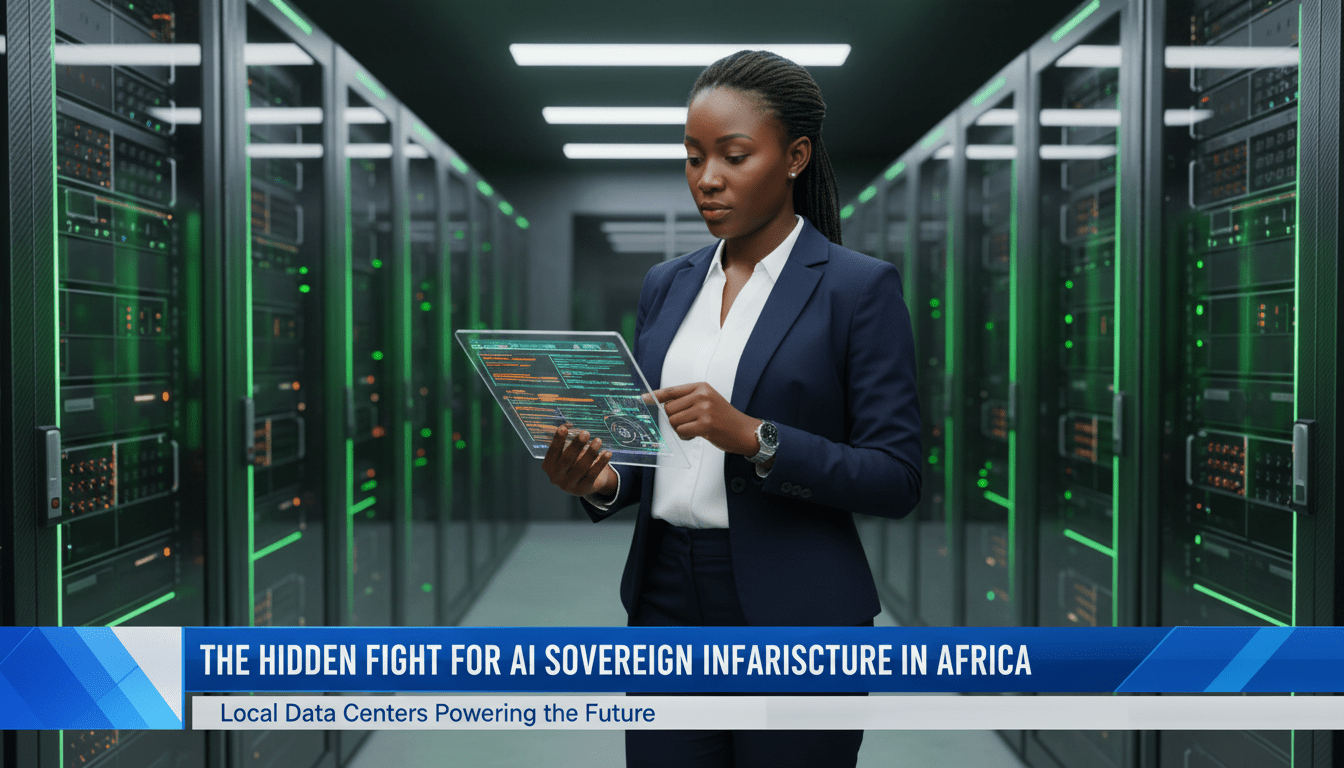
Sovereign infrastructure means physically controlling the necessary hardware and energy. African nations currently spend nearly fifty billion dollars annually on digital processing. They pay this massive amount to process data on foreign cloud servers. This severe reliance on outside resources presents a massive national vulnerability. True digital self-determination requires fully owning local data centers. Countries absolutely must control the physical hardware and energy sources powering these systems.
In late 2024, significant global partnerships began addressing this critical infrastructure gap. Kenya launched a one-billion-dollar geothermal data center project. This facility powers high-performance computing clusters using local, renewable energy. Infrastructure realism firmly dictates that computing power requires absolute energy sovereignty. An advanced data center remains useless without a highly stable local power grid. The intense push for local hosting strictly protects sensitive government information. It effectively shields citizens from foreign laws like the United States CLOUD Act. Local infrastructure prevents foreign powers from executing devastating digital shutdowns (idrc-crdi.ca, africa.com).
Healthcare and Food Security as Justice
Experts explicitly define local artificial intelligence as a fundamental matter of justice. Foreign agricultural prediction models often fail terribly when applied in Africa. They severely lack critical data regarding local soil variations and distinct weather patterns. Smallholder farmers absolutely cannot rely on predictive tools built in Silicon Valley. Sovereign systems utilize localized datasets to solve highly specific regional problems. Developers actively create accurate weather and pest-control models for local farmers.
This localized technology directly combats severe food insecurity across the entire continent. Similarly, true healthcare justice heavily requires advanced digital diagnostic tools. Rural regions constantly face a critical, life-threatening shortage of human doctors. Artificial intelligence provides essential diagnostic support directly to remote villages. During the 2023 disaster response in Morocco, localized digital tools saved numerous lives. Therefore, medical equity depends entirely on highly localized technology. These digital advancements provide life-saving services that traditional physical infrastructure simply cannot deliver (preventionweb.net, iafrica.com).
The Digital Infrastructure Gap
Internet Access Percentage
The Human Cost of Artificial Intelligence Labor
The shiny, progressive narrative of technology often hides a remarkably dark reality. Millions of African workers tirelessly train global artificial intelligence models. These essential data labelers frequently earn less than two dollars hourly. They perform tedious work in environments frequently described as digital sweatshops. This exploitation fuels a movement dedicated to shedding colonial influences regarding global labor practices. Workers constantly review toxic and graphic content to train digital algorithms.
Consequently, many employees suffer from severe post-traumatic stress disorder and insomnia. They receive almost no vital mental health support from foreign tech giants. To effectively combat this abuse, African labor unions are rapidly forming. The Data Labelers Association in Kenya forcefully demands fair and transparent contracts. They actively fight for a living wage and humane working conditions. True digital sovereignty absolutely must include strict, enforceable labor protections. Governments must enforce decent work mandates for any local infrastructure projects. Without fair labor practices, new technology merely repeats historical worker abuse (interface.media, theguardian.com).
The Threat of Sovereign Surveillance
While local infrastructure provides necessary independence, it heavily introduces internal risks. Sovereign technology grants massive, unprecedented power to local African governments. This immense power can easily be weaponized against vulnerable citizens. Civil rights groups strictly warn about the frightening rise of mass surveillance. Governments in several nations already use complex algorithms to monitor everyday citizens. They frequently track social media activity to ruthlessly suppress political opposition.
Often, leaders justify this intense monitoring under the guise of national security. Foreign digital mercenaries eagerly sell advanced spyware to various African states. Leaders use these intrusive tools for the transnational repression of journalists and activists. Algorithmic amplification of hate speech also presents a severe, life-threatening danger. Social platforms have fueled real-world ethnic violence during tragic regional conflicts. Experts strongly stress that digital sovereignty must include strict legal boundaries. Without incredibly strong civil rights protections, sovereign technology quickly becomes a weapon. Governments absolutely must protect ordinary citizens from unwarranted algorithmic monitoring (accord.org.za, theguardian.com).
Debt Traps and the World Bank Legacy
Building massive digital infrastructure requires an incredible amount of financial investment. This harsh reality forces governments into highly complex financial agreements. African nations currently spend roughly twenty percent of their revenue servicing debt. Borrowing massive funds for technology creates significant, fierce controversy among local experts. The International Monetary Fund carries a deeply troubled history in Africa. Past structural adjustment programs forced severe, crippling cuts to essential social services.
Therefore, many citizens view new infrastructure loans with extreme suspicion. Critics deeply fear these investments will create a devastating new tech-debt trap. They fiercely argue that Western economic prescriptions usually benefit massive foreign corporations. In the current geopolitical landscape, shaped by leaders like Donald Trump, global economic priorities frequently shift. Western powers often utilize international lending as a heavy diplomatic weapon. African nations must navigate these highly treacherous financial waters very carefully. They absolutely must build digital power without surrendering their ultimate economic freedom (cgdev.org, africanliberty.org).
Top AI Startup Hubs in Africa
Over 2,400 active startups across the continent
Connecting the Global Black Diaspora
The aggressive movement for sovereign technology heavily extends beyond the African continent. Global artificial intelligence models currently contain deep-seated, incredibly dangerous racial biases. These flawed algorithms frequently misidentify darker-skinned individuals with alarming regularity. This inherent bias causes severe harm in global law enforcement systems. Furthermore, major healthcare algorithms often severely underrepresent critical Black medical data. This systemic failure results in poorer health outcomes for Black patients worldwide.
Developing robust local models directly combats these dangerous, systemic global disparities. African developers intentionally train algorithms using highly diverse, culturally rich local datasets. Therefore, building culturally representative systems truly becomes a form of reparatory justice. This digital work beautifully unites the global Black diaspora through advanced technology. It directly addresses the modern challenges faced by Black people globally. Researchers actively adjust complex image processing to accurately capture nuanced African features. Reclaiming the digital narrative vigorously protects Black communities from continued algorithmic discrimination (thebreakthrough.org, gicj.org).
Reclaiming the Digital Destiny
Africanizing massive large language models represents a truly monumental cultural shift. It involves meticulously building systems that understand thousands of beautiful local dialects. Current English-centric models completely ignore vast, beautiful African cultural identities. Highly dedicated open-source language projects are rapidly changing this unfair reality. Groups like the Masakhane Research Foundation eagerly gather data directly from indigenous communities. They successfully build functional models for languages like Yorùbá, isiZulu, and Hausa.
These specialized digital tools provide crucial agricultural advice directly in indigenous languages. Consequently, highly remote rural populations with low literacy can access life-saving information. Sovereign artificial infrastructure is Africa loudly declaring its ultimate technological independence. It firmly grounds advanced technology in local languages and deeply local hardware. It undeniably proves the continent can innovate entirely on its own terms. The essential path to justice simply no longer relies on foreign aid. Ultimately, African nations are brilliantly mastering their own digital destiny (theaiinnovator.com, africainfact.com).
About the Author
Darius Spearman is a professor of Black Studies at San Diego City College, where he has been teaching for over 20 years. He is the founder of African Elements, a media platform dedicated to providing educational resources on the history and culture of the African diaspora. Through his work, Spearman aims to empower and educate by bringing historical context to contemporary issues affecting the Black community.
