

The Hidden Legacy Behind U.S. West African Deportation Flights
By Darius Spearman (africanelements)
Support African Elements at patreon.com/africanelements and hear recent news in a single playlist. Additionally, you can gain early access to ad-free video content.
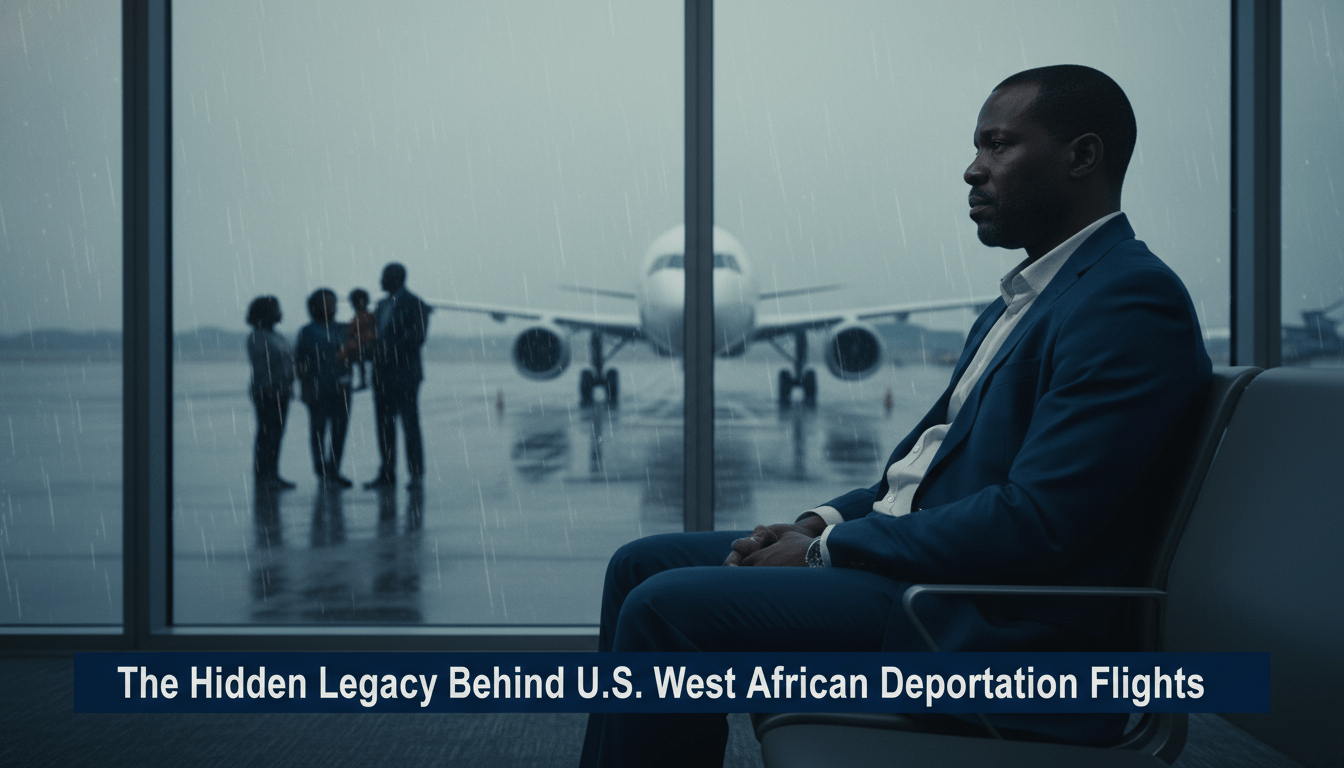
On May 20, 2026, a commercial flight landed smoothly in Freetown. The airplane arrived at the busy Lungi International Airport in Sierra Leone. It carried West African migrants recently expelled by the United States. This shocking event highlights a massive shift in strict immigration enforcement. The deep roots of this international crisis stretch back several decades. The complex story involves horrific civil wars and changing diplomatic policies. It also highlights the extreme human struggles of the modern African diaspora.
The United States once offered necessary humanitarian shelter to these displaced individuals. Today, the government spends millions to force them across the globe. This dramatic change heavily impacts thousands of families living in American cities. Understanding this issue requires looking far beyond the daily news headlines. The hidden history reveals a system prioritizing aggressive expulsions over basic human dignity. The policies force vulnerable people into incredibly dangerous and uncertain situations.
The Origins of the Diaspora
The presence of West Africans in America has deep historical roots. Many families fled extreme violence in the late twentieth century. A brutal civil war ravaged Sierra Leone from 1991 to 2002. The conflict displaced more than two million innocent people (wikipedia.org). The violence in West Africa was truly horrific and devastating. Supported by outside warlords, armed groups committed terrible mass atrocities. The violence included the tragic use of child soldiers in combat. Millions of innocent civilians faced displacement and extreme poverty. Thousands sought immediate safety across the vast Atlantic Ocean.
Between 1990 and 2000, the Sierra Leonean population in America swelled. The demographic jumped from roughly 4,600 to nearly 30,000 individuals (cis.org). American leaders created Temporary Protected Status during this specific international crisis. Liberians received this vital protective designation first in 1991. Sierra Leoneans gained their protected legal status later in 1997. The policy allowed vulnerable refugees to avoid dangerous conditions at home. It provided a necessary legal shield against sudden government deportation.
Successive presidential administrations continually renewed these necessary legal protections for residents. Presidents from both political parties recognized the ongoing regional dangers. Families settled into American life and contributed to local economies. They established vibrant neighborhoods in places like Philadelphia and Baltimore. These individuals bought homes, started businesses, and raised American children. Their survival highlights the untold history of modern Black migration. They created beautiful communities despite facing incredible international hardship.
Shifting Policies and Revoked Protections
The American approach to West African immigrants eventually hardened over time. The transition from humanitarian refuge to strict enforcement took several years. A significant turning point happened during the 2017 calendar year. The United States imposed strict visa sanctions on Sierra Leone. American officials used this strategy as a diplomatic pressure tactic (washingtonpost.com). Freetown had previously refused to accept its deported citizens back home. The sanctions signaled a new era of aggressive immigration enforcement. The United States demanded that African nations accept forced removals immediately.
By 2018, the situation grew dire for many long-term American residents. The federal government began terminating Temporary Protected Status designations entirely. Officials also ended Deferred Enforced Departure protections for various African nations. Lawmakers argued that temporary legal protections should never become permanent. They claimed orderly transition periods were necessary for final mandatory departures. This harsh policy change effectively stripped thousands of their legal shields.
People who had lived peacefully in America faced sudden extreme danger. These hardworking residents suddenly became prime targets for rapid deportation. Government officials completely ignored the deep community ties these individuals held. Families lived in constant fear of sudden workplace immigration raids. The removal of legal protections criminalized thousands of innocent people overnight. This shift represents a dark chapter in modern American immigration history.
The Rise of Third Country Agreements
The recent flight to Sierra Leone exposed a highly controversial strategy. The United States government now utilizes Third-Country National Agreements globally. These diplomatic deals allow America to deport individuals to unrelated nations. Migrants arrive in distant countries where they lack any familial ties. The May 2026 flight carried deportees from several different sovereign nations. Passengers on the airplane hailed from Nigeria, Ghana, Guinea, and Senegal (allafrica.com).
Under a new deal, Sierra Leone accepts specific regional citizens only. They agreed to take up to 300 West African citizens annually (sierraloaded.sl). The agreement relies heavily on massive and controversial financial government incentives. The United States gave Sierra Leone a $1.5 million monetary grant. This money supposedly covers necessary humanitarian housing and operational costs. However, critics argue this creates a dangerous global deportation shadow system. Foreign nations effectively rent out their land to hold American deportees.
Similar financial agreements exist with Rwanda, Eswatini, and Uganda currently (issafrica.org). The United States actively pays foreign governments to house unwanted migrants. This approach drastically alters international norms regarding global immigration practices. It turns desperate human beings into profitable commodities for foreign governments. The entire system operates without proper oversight or basic transparency. This shadow network endangers the lives of countless vulnerable individuals.
Cost of Third-Country Deportation Deals
The Scope of Interior Enforcement
Understanding the current crisis requires examining different types of law enforcement. Border enforcement typically targets those attempting to cross international boundary lines. Interior enforcement operates entirely differently and impacts established residential communities deeply. The current administration shifted its primary focus toward interior enforcement operations. Officers conduct sudden raids far away from any physical border crossing. This aggressive approach creates widespread terror within established immigrant neighborhoods nationwide.
Deportation efforts have intensified dramatically throughout the past two calendar years. By early 2026, immigration officials had conducted roughly 540,000 deportations total. This massive number represents enforcement actions taken since early 2025. Removals of African migrants are currently on pace to completely triple. This alarming increase compares to official enforcement averages from 2021 to 2024. The staggering numbers reflect a terrifying reality for diaspora populations.
Furthermore, data reveals a troubling trend regarding these highly targeted arrests. More than sixty percent of arrested African migrants lacked criminal records (cis.org). Officials are clearly prioritizing long-term residents and denied asylum seekers. This shift to universal enforcement treats peaceful residents as high priorities. People with American citizen children suddenly face the terrifying prospect of removal. This reality shapes how policies impact the political experience of marginalized minorities.
Criminal History of Arrested African Migrants (2025)
The Staggering Cost of Expulsion
Sending migrants across the globe remains an incredibly expensive logistical endeavor. The United States government pays massive diplomatic incentives to foreign nations. American taxpayers bear the heavy financial burden of these deportation flights. By early 2026, the government had spent an estimated forty million dollars. This enormous sum facilitated the removal of only 300 individual migrants. These individuals went to five different third-party nations around the world.
Consequently, the average cost exceeds $130,000 per single deported individual (senate.gov). Senate reports have strongly criticized these massive government financial expenditures. Lawmakers labeled the controversial spending as costly, wasteful, and poorly monitored. The financial data highlights the extreme lengths the federal government pursues. Millions of dollars evaporate to send peaceful residents to foreign countries. This massive spending directly removes resources from other necessary public programs.
In one extreme example, the government paid Rwanda $7.5 million directly. This massive payment secured the acceptance of only seven specific individuals (issafrica.org). The staggering financial cost suggests the policy serves mostly as a political deterrent. It operates less as a practical or efficient immigration enforcement tool. The government seemingly prioritizes the appearance of strict enforcement over fiscal responsibility. The entire program represents a catastrophic waste of public resources.
Legal Battles and Human Rights Defenses
This controversial deportation program faces intense legal and global humanitarian backlash. Many international advocates strongly warn against the illegal practice of refoulement. Refoulement involves returning vulnerable people to countries where they face persecution. International law strictly forbids this harmful practice under any circumstances whatsoever. Human rights groups point out the extreme dangers of indirect refoulement completely. A migrant might be sent to a third country initially.
Afterward, local authorities could forcefully return them to their dangerous homeland. The United States court system frequently intervenes in these highly complex matters. Sierra Leonean officials originally expected twenty-five people on the May flight. However, only nine deportees actually arrived at the Freetown airport successfully. The remaining sixteen individuals were missing from the final passenger list entirely. Federal judges issued last-minute court orders to halt their immediate physical removals.
These specific migrants had not received required legal reviews beforehand. They deserved proper evaluation under the international Convention Against Torture (theadvocatesforhumanrights.org). The legal system provides a vital lifeline against these sudden government expulsions. However, those left behind remain trapped in indefinite immigration detention centers. They face a terrifying legal limbo while fighting for their basic survival. The battle between executive action and judicial oversight continues to rage.
Freetown Deportation Flight Discrepancy
Deep Trauma and Uncertain Futures
The physical and psychological toll on deported migrants remains incredibly severe. Health officials in Sierra Leone reported disturbing details upon the recent arrival. The arriving migrants appeared deeply traumatized and were bound in heavy chains. Many individuals had spent months locked inside American detention facilities previously. They endured immense mental stress while awaiting their highly uncertain fate. This prolonged imprisonment causes lasting psychological damage to innocent human beings.
Once they arrive in a third country, their desperate struggles continue daily. Deported migrants do not receive permanent residency or local work permits. Instead, local authorities place them in highly restrictive temporary housing situations. In Sierra Leone, a private contractor named Kenvah Solutions manages this process. They house the vulnerable deportees in specific hotels for up to two weeks (sierraloaded.sl). The individuals remain entirely dependent on foreign contractors for their survival.
The ultimate fate for most individuals involves forced onward repatriation later. The host country acts merely as a temporary holding cell for deportees. Eventually, authorities force the migrants back to their true countries of origin. Their ongoing struggle mirrors the dark history of systemic racial oppression globally. Families across the diaspora continually face forced separation and deep international instability. The emotional scars from this traumatic process will likely never heal completely.
Regional Treaties and the Road Ahead
The decision to send deportees to Sierra Leone relies on regional treaties. The specific international agreement requires the acceptance of ECOWAS citizens only. ECOWAS protocols typically allow member citizens to travel freely within the region. People can usually stay for up to ninety days without a visa requirement. However, these rules were never designed to handle forced American deportations suddenly. The system exploits regional cooperation to facilitate massive human expulsions.
Sierra Leone uses this regional framework to justify the highly controversial deal. The government claims it provides regional familiarity for the arriving individuals. Despite these optimistic claims, modern family patterns show that displacement causes lasting harm. The African Commission on Human and Peoples’ Rights strongly condemned these deals publicly. They called the controversial practice a harmful delegation of detention (issafrica.org). Human rights advocates demand an immediate end to this exploitative international practice.
As these harsh policies expand, the fight for human rights must continue. Black communities have historically sought economic justice and basic human dignity worldwide. The modern struggle against unjust immigration enforcement is the next vital chapter. Advocacy groups continue to fight tirelessly against these unjust and cruel government policies. The enduring resilience of the diaspora will continue to challenge oppressive systems forever.
About the Author
Darius Spearman is a professor of Black Studies at San Diego City College, where he has been teaching for over 20 years. He is the founder of African Elements, a media platform dedicated to providing educational resources on the history and culture of the African diaspora. Through his work, Spearman aims to empower and educate by bringing historical context to contemporary issues affecting the Black community.
