


The Tijuana River Sewage Crisis: A Toxic Legacy Uncovered
By Darius Spearman (africanelements)
Support African Elements at patreon.com/africanelements and hear recent news in a single playlist. Additionally, you can gain early access to ad-free video content.
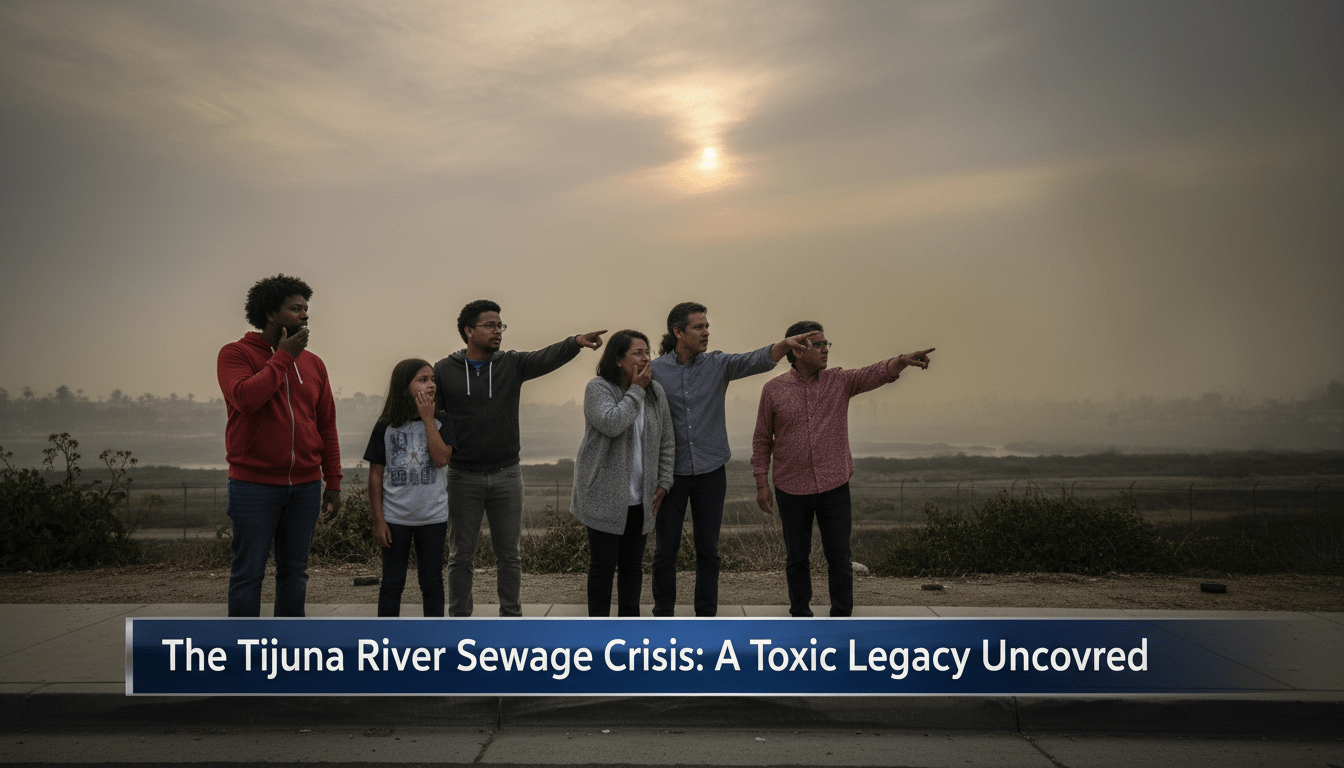
Residents in Southern California face a severe public health emergency today. The Tijuana River valley releases toxic air into the surrounding neighborhoods. This disaster disproportionately harms Black and Brown communities living near the border. Activists sound the alarm as the crisis escalates from polluted water to dangerous, unbreathable air. However, this emergency did not happen overnight. It results from nearly a century of neglected infrastructure and failed policies.
For decades, marginalized populations in the South Bay region have endured the devastating consequences of untreated cross-border sewage. The ongoing catastrophe represents a profound failure of binational cooperation and environmental protection. Black and Brown residents bear the physical and psychological toll of a disaster that wealthier communities would never be forced to accept.
A Century of Neglect Built the Crisis
People often believe this is a modern issue. History tells a completely different story. The current emergency represents a slow-motion disaster that began in the early twentieth century. As early as 1934, the International Boundary Commission investigated severe sewage problems in the region. Tijuana experienced rapid population growth that quickly outpaced its infrastructure. By 1935, a septic tank built for 5,000 people struggled to serve over 11,000 residents (wikipedia.org).
Decades later, the 1944 Water Treaty created the modern International Boundary and Water Commission. This foundational document governed water rights for the Colorado and Tijuana Rivers. It also mandated preferential attention to border sanitation. Unfortunately, officials rarely provided the necessary funding to implement effective solutions. The lack of financial investment created a devastating backlog of infrastructure needs.
The consistent failure to protect border residents mirrors the historical exploitation seen in other global contexts. Marginalized communities repeatedly bear the heaviest burdens of industrial and governmental neglect. The historical record shows that while the United States and Mexico reached numerous agreements, they rarely followed through with the sustained funding needed to maintain the environment. Consequently, the Tijuana River Estuary, a globally important wetland, functioned as an open sewer for over ninety years.
The Failure of Binational Bureaucracy
The International Boundary and Water Commission operates as a binational diplomatic body. It lacks the independent power to force infrastructure upgrades within Mexico. Both the United States and Mexico must agree on projects through formal amendments called Minutes. Once signed, a Minute holds the same legal weight as the original treaty (ibwc.gov). However, bureaucratic delays often paralyze the process, leaving local residents to suffer the consequences.
In 1980, the frustration reached a boiling point. Brian Bilbray, the mayor of Imperial Beach at the time, used a skip loader to physically dam the river. He committed this act of civil disobedience to stop raw sewage from destroying his city. This dramatic event highlighted the deep desperation of border residents who felt entirely abandoned by federal authorities (sdsu.edu).
Despite the construction of the South Bay International Wastewater Treatment Plant in 1997, the facility quickly fell behind the needs of the region. Under Minute 283 of the 1944 Treaty, the plant was built in the United States to treat Mexican sewage. It was designed to process 25 million gallons per day. Meanwhile, the population of Tijuana exploded from 300,000 in 1970 to over two million today. The treatment plant frequently faces flows exceeding 80 million gallons during heavy rain (ibwc.gov).
South Bay Treatment Plant Capacity vs. Peak Flow
Designed Capacity
(25 Million Gallons)
Peak Rain Flow
(100 Million Gallons)
Massive overflow events overwhelm the facility during storms.
The Shift from Water to Toxic Air
For decades, people viewed the Tijuana River disaster solely as a water pollution problem. Imperial Beach recently suffered more than 1,300 consecutive days of beach closures. Now, scientists confirm the danger has moved into the atmosphere. The crisis transformed into a toxic air emergency.
Researchers from San Diego State University and the University of California, San Diego discovered that the sewage is aerosolizing. Turbulent river flows and crashing ocean waves launch dangerous pathogens and toxic chemicals into the air. Airborne pollutants travel miles inland, exposing people who never even touch the water to severe health risks. The air near the border contains industrial chemicals, tire manufacturing byproducts, and illicit drugs like cocaine and methamphetamine (sdsu.edu).
Residents frequently smell a foul, rotten egg odor. This smell comes from aerosolized hydrogen sulfide gas. The gas acts as a severe respiratory and neurological irritant. Public health surveys reveal that almost 65 percent of residents report symptoms linked to the crisis. These symptoms include chronic headaches, eye and throat irritation, nausea, dizziness, and respiratory distress. Research identifies a turbulent hotspot at the Saturn Boulevard River Crossing. During nighttime hours, when wind speeds drop, toxic gas settles into the low-lying neighborhoods of the South Bay (sdsu.edu).
Redlining and Environmental Racism
The disproportionate exposure of Black and Brown communities to these hazards defines environmental racism. Dr. Benjamin Chavis, who coined the term, described it as the intentional placement of polluting and waste facilities in communities primarily populated by people of color. Systemic policies intentionally forced marginalized populations to live near industrial waste and pollution sources.
In South Bay San Diego, the historical practice of redlining laid the foundation for the current emergency. During the 1930s, the federal government graded neighborhoods based on racial composition. Officials assigned poor grades to areas south of Interstate 8 simply because Black and immigrant families lived there. Banks routinely denied home loans to residents in these redlined zones. Consequently, segregation forced minority populations into industrial, flood-prone environments (sohosandiego.org).
Today, these formerly redlined areas carry a pollution burden that is 77 percent higher than wealthier, white neighborhoods in North County. Formerly redlined communities in San Diego suffer from higher urban heat island effects and possess less green space. These factors make them significantly more vulnerable to the effects of aerosolized sewage. The neglect of the Tijuana River infrastructure stands as a direct legacy of those early discriminatory zoning laws.
Hydrogen Sulfide (H2S) Toxicity Levels
California Safety Standard (30 ppb)
Peak South Bay Detection (4,500 ppb)
Tijuana River Valley levels reached roughly 70 times the state health standard.
Black Communities Caught in the Crosshairs
While the South Bay region has a majority Latino population, it also contains significant African American enclaves. The pollution severely impacts these specific neighborhoods. In Otay Mesa West, the Black population sits at approximately 11 percent, nearly double the average for the city of San Diego. San Ysidro also holds a notable African American demographic (wikipedia.org).
When reports group these residents into a broad category, they often obscure the unique health disparities affecting Black families. Historical data reveals that Black residents in San Diego face poverty rates twice as high as white residents. Furthermore, they suffer from substantially higher rates of respiratory illnesses. The toxic air exacerbates these existing vulnerabilities. Families residing in Imperial Beach share the exact same exposure to a coastline closed for over one thousand days.
Generations of working-class citizens endure conditions that heavily impact their financial stability. Residents who fought for economic justice find their progress hindered by mounting medical bills and decreased property values. Community leaders draw parallels between this localized environmental fight and the shared struggles against oppression experienced by marginalized groups worldwide. It requires immense strength and resilience for these families to survive and thrive in such hazardous conditions.
Children Bearing the Heaviest Burden
Children suffer the most devastating consequences from the airborne sewage. Their developing lungs remain highly sensitive to toxic chemicals and pathogens. The combination of proximity to industrial zones, high-traffic border crossings, and aerosolized sewage creates a perfect storm for childhood illness.
Data from CalEnviroScreen shows that children living in the Otay Mesa and San Ysidro zip codes fall into the highest percentile for asthma-related emergency room visits in California. Asthma hospitalization rates for Black and Latino children near the southern border exceed the rates for white children in North County by up to five times. The systemic inequalities present a grim reality for parents trying to raise healthy children in the South Bay (voiceofsandiego.org).
At Berry Elementary School in Nestor, officials detected hydrogen sulfide levels surpassing Environmental Protection Agency safety thresholds for nearly an entire year. Public health experts warn that children with pre-existing conditions face the highest vulnerability to nausea and lung irritation. An alarming public health survey indicated that 97 percent of surveyed South Bay residents expressed deep concern over air quality. Furthermore, 60 percent of parents reported their children missing school entirely due to sewage-related sickness (sdsu.edu).
Childhood Asthma Hospitalization Disparity
White Children
(North County)
Black & Latino Children
(South Bay)
South Bay rates are up to 5x higher than wealthier, whiter neighborhoods.
A Tale of Two Coastlines
The government response to environmental disasters heavily depends on the wealth and race of the affected population. When wealthier, predominantly white coastal communities face pollution, federal and state agencies intervene immediately. The disparities in resource allocation highlight a deeply ingrained systemic bias.
During the 2021 Huntington Beach oil spill, a massive multi-agency response launched within 24 hours. The community successfully secured legal settlements exceeding fifty million dollars within two years. Environmental remediation for sewage spills in wealthy enclaves like Laguna Beach typically results in beaches reopening within a matter of days (sdcoastkeeper.org).
In sharp contrast, the South Bay sewage crisis has persisted for decades. Over 31 billion gallons of raw sewage flowed into the United States from October 2023 onward. Despite this massive volume of waste, funding for repairs remains almost four hundred million dollars short of the one billion dollars required for a complete fix. Government officials only recently began pursuing federal Superfund status for the Tijuana River Valley. This action comes after decades of relentless local lobbying and physical suffering by the community (ibwc.gov).
The Fight for Basic Human Rights
Activists and residents refuse to accept the ongoing contamination of their neighborhoods. They view the toxic air and polluted water as a fundamental violation of international human rights. The inability of South Bay residents to live without inhaling toxic sewage gas crosses a profound moral boundary.
The United Nations formally recognizes that safe drinking water and sanitation represent essential conditions for the full enjoyment of life. International resolutions declare that sanitation connects directly to the highest attainable standard of physical and mental health. Legal claims by local activists argue that the endless days of beach closures systematically deny residents the legal standard of available and accessible safe environments (citizensforcoastalconservancy.org).
Imperial Beach Mayor Paloma Aguirre and other local leaders continuously demand federal emergency declarations. They highlight the urgent need to expand the South Bay International Wastewater Treatment Plant and fix broken facilities in Mexico. Under President Donald Trump, the current federal administration faces immense pressure to finalize and fund these critical infrastructure projects. Environmental justice advocates insist that clean air and water belong to everyone, regardless of zip code or skin color. The community demands an end to incremental progress and a definitive solution to a century of neglect.
About the Author
Darius Spearman is a professor of Black Studies at San Diego City College, where he has been teaching for over 20 years. He is the founder of African Elements, a media platform dedicated to providing educational resources on the history and culture of the African diaspora. Through his work, Spearman aims to empower and educate by bringing historical context to contemporary issues affecting the Black community.
