
Listen & Share
Fatal Pursuit: The Tyrone Mason Lying Troopers Case
By Darius Spearman (africanelements)
Support African Elements at patreon.com/africanelements and hear recent news in a single playlist. Additionally, you can gain early access to ad-free video content.
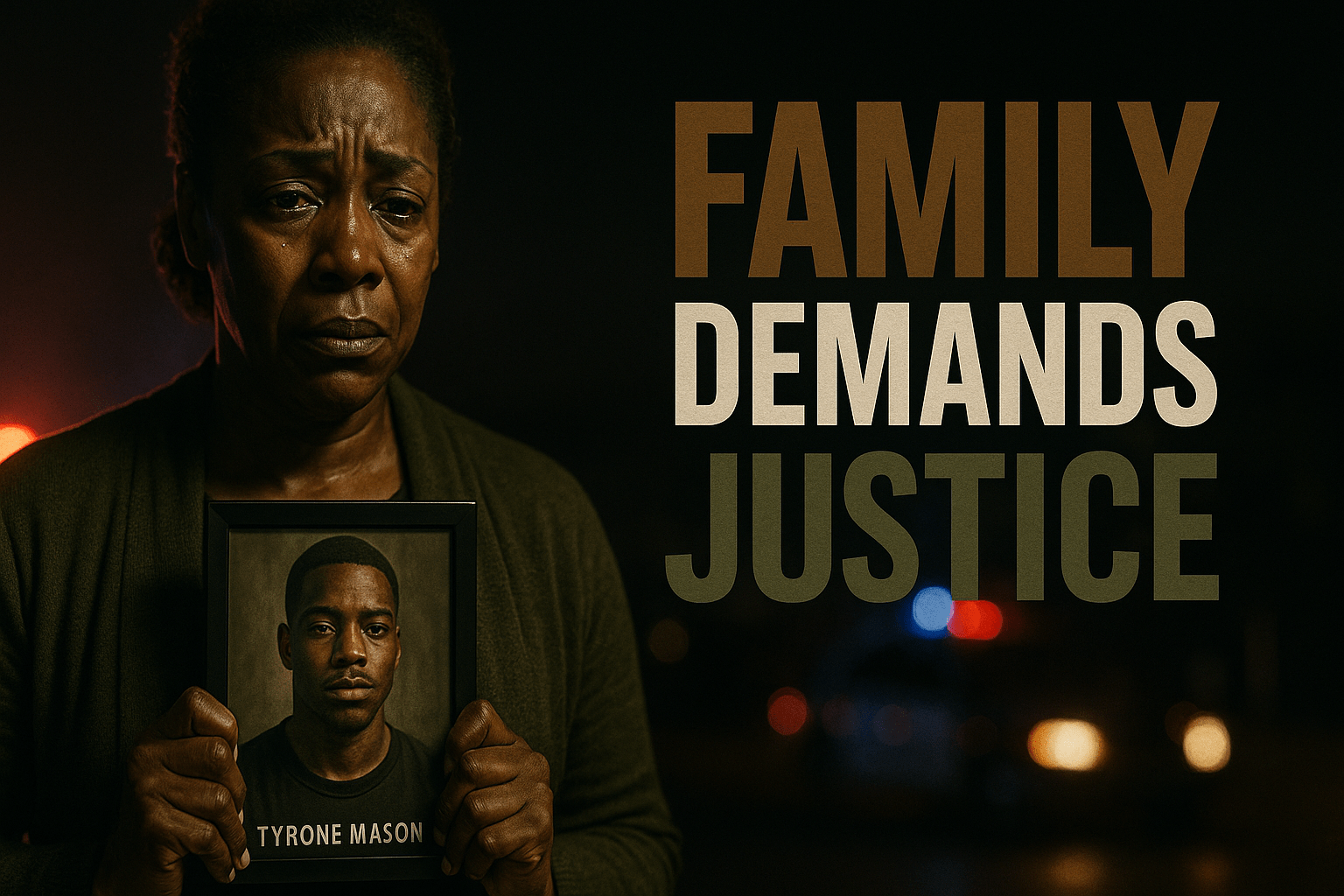
The family of Tyrone Mason, a 31-year-old Black man, expressed deep pain and anger over a decision that felt like a slap in the face. Two North Carolina State Troopers, Garrett Macario and his supervisor Matthew Morrison, allegedly lied about their part in a fatal crash involving Mason. Yet, they faced no criminal charges. This outcome has left Mason’s family feeling betrayed and cheated by a system that promised justice yet delivered disappointment.
This case goes beyond one tragic accident. It highlights many serious questions about police accountability, honesty in law enforcement, and how Black communities are impacted by police actions. It shows the ongoing struggle for transparency and fairness when those in authority are involved in the death of a citizen. Family members, along with their high-profile attorneys, have publicly questioned how such a decision could be made when evidence of deception appears clear.
The Fatal Encounter
The tragic event unfolded on October 7, 2024, when Trooper Macario noticed Tyrone Mason driving at a high speed. Mason was reportedly going around 70 miles per hour in a zone where the limit was 40 miles per hour. Macario began pursuing Mason. However, during the chase, Macario lost sight of Mason. He then decided to abandon the pursuit (WUNC).
Shortly after the chase was called off, Mason crashed fatally into a median. Trooper Macario’s alleged actions after the crash revealed a troubling attempt to hide his involvement. He reportedly provided false information to the Raleigh Police concerning the pursuit. This deception created the immediate question of why a law enforcement officer would try to conceal their true actions in such a serious incident (Axios).
A Web of Deceit Unraveled
The details of the alleged deception came to light through body camera footage gathered after the incident. This footage plainly showed that Trooper Macario had initiated the chase. It also showed that he later lied to the Raleigh Police about his involvement. Furthermore, the recordings revealed that his supervisor, Matthew Morrison, even told Macario not to say anything about the pursuit to the police (Indy Week).
This crucial body camera footage was not easily obtained. News organizations had to file a lawsuit to get a court order for its release (WUNC). The decision to pursue the release of this footage was spurred by the public interest and the need for transparency. Moreover, this footage proved vital in exposing the inconsistencies between the troopers’ sworn accounts and the actual events. It truly highlighted the gap between official statements and what really happened (YouTube).
Key Details of the Tyrone Mason Case
The Family’s Fight for Justice
The refusal to criminally charge the troopers sparked outrage and disappointment from Tyrone Mason’s family. They publicly expressed their heartbreak and called for justice, holding a press conference outside the Wake County Judicial Center in Raleigh (ABC News). They challenged not only the decision itself but also the fairness of the investigation that led to it. Indeed, their press conference served as a powerful demand for accountability in the public eye.
The family was joined by prominent civil rights attorneys, Ben Crump and Bakari Sellers. These legal figures are well-known for their work in police misconduct cases and their advocacy for greater transparency and justice for victims. Their presence underscored the seriousness of the family’s concerns and added significant weight to their calls for an equitable outcome in the case. Furthermore, these attorneys often represent those in the Black community who are deeply affected by similar incidents, amplifying a collective cry for systemic change (Atlanta Black Star).
Unpacking “Pursuit” and “Abandonment”
In law enforcement, a “pursuit” is when officers try to catch a suspect who is driving away to avoid being arrested. These chases often involve high speeds or tricky driving. Police policies require pursuits to be done with great care, using sirens and lights, to keep everyone safe (UCLA Police Department).
“Abandoning the chase” means an officer decides to stop a pursuit. This decision often happens to protect public safety. Officers consider how dangerous the chase is and the seriousness of the crime, deciding if continuing the pursuit is worth the risk to bystanders and officers (UC Santa Cruz Police Department). Therefore, abandoning a chase does not necessarily mean negligence; instead, it is a calculated choice made to prioritize safety (Central Marin Police Authority).
Police pursuits always carry significant risks to public safety. High-speed chases can turn police vehicles into potential weapons themselves, putting officers and innocent people in harm’s way. The decision to chase a suspect means balancing the need to make an arrest against the terrible danger to the community (Office of Justice Programs). Managing these risks is a critical part of police training and protocol (International Association of Chiefs of Police).
The Impact of Law Enforcement Lying
Undermines Trust
When officers lie, it shatters the public’s trust in law enforcement, especially within communities that are already marginalized. This erosion of trust can damage relationships between police and the communities they serve.
Complicates Investigations
False statements create confusion and inconsistencies, making it much harder to discover the truth. This deception can lead to a flawed legal process and prevent justice from being served fairly.
Potential for Obstruction
Lying to investigators or supervisors can be a criminal act, sometimes leading to obstruction of justice charges. This behavior can have serious legal consequences for the officers involved (International Association of Chiefs of Police).
Damages Credibility
An officer’s integrity is vital. Dishonesty not only harms their own reputation but also that of their department and the entire profession. It suggests a lack of accountability within the system (Office of Justice Programs).
Why No Charges? Legal Standards and Accountability
The decision not to charge the troopers criminally is based on certain legal standards. Prosecutors look at all the available evidence and the specific details of the incident. This means they assess whether the pursuit itself was justified, if officers followed departmental policies correctly, and if there is clear evidence of criminal intent or severe negligence. For example, the legal process considers whether the pursuit followed established guidelines (International Association of Chiefs of Police).
When local prosecutors decide not to file charges, other ways to ensure accountability can still exist. These mechanisms include oversight by civilian review boards, which can investigate police conduct and recommend disciplinary action. Besides, internal departmental reviews are conducted within the police force itself. Federal investigations might also occur, especially in cases where civil rights violations are suspected (International Association of Chiefs of Police). Such avenues can offer recourse when local justice feels out of reach.
The Power of Body Camera Footage
Body camera footage has become an irreplaceable tool in police accountability investigations. It provides a visual record of events, which can clarify what happened and help investigators assess an officer’s conduct. Without this footage, many claims of misconduct might remain unproven, leaving victims and their families without clear answers (Office of Justice Programs).
Moreover, transparency laws play a vital role in determining public access to such footage. Often, news organizations or civil rights groups must pursue legal challenges to get court orders that compel the release of body camera footage. These lawsuits argue for the public’s right to know, emphasizing how important transparency is in ensuring accountability for police actions (Office of Justice Programs). Ultimately, the footage helps to reveal discrepancies in officer accounts, making it harder to cover up the truth (International Association of Chiefs of Police).
Pathways to Police Accountability
Broader Implications for the Black Community
When incidents like Tyrone Mason’s occur, and law enforcement officers are not held criminally responsible, the impact on the African American community is profound. It deepens a pre-existing distrust in the police and the justice system. Many in the community feel that their lives are not valued as much as others, contributing to increased tensions and frustration (ABC News).
These cases also fuel widespread calls for significant reform within law enforcement. They highlight the urgent need to address what many perceive as systemic injustices. Families and communities demand transparency and greater accountability for officers’ actions, especially when fatal outcomes occur. Furthermore, the persistence of such incidents reminds us that the fight for equitable treatment and true justice is far from over for Black citizens (Atlanta Black Star).
Community Impact of Police Incidents on Black Communities
The case of Tyrone Mason and the North Carolina State Troopers is a stark reminder of the challenges faced by families seeking justice in the aftermath of police-involved deaths. It underscores the critical role of transparency, especially through tools like body camera footage, in uncovering the truth. The ongoing struggle experienced by Mason’s family echoes the broader fight for accountability and reform within law enforcement, a fight that resonates deeply within African American communities. The pursuit of trust and integrity in policing remains a vital and urgent task for all. Only through continued pressure and advocacy can communities truly ensure that justice is not just a promise but a reality for everyone.
ABOUT THE AUTHOR
Darius Spearman has been a professor of Black Studies at San Diego City College since 2007. He is the author of several books, including Between The Color Lines: A History of African Americans on the California Frontier Through 1890. You can visit Darius online at africanelements.org.
