

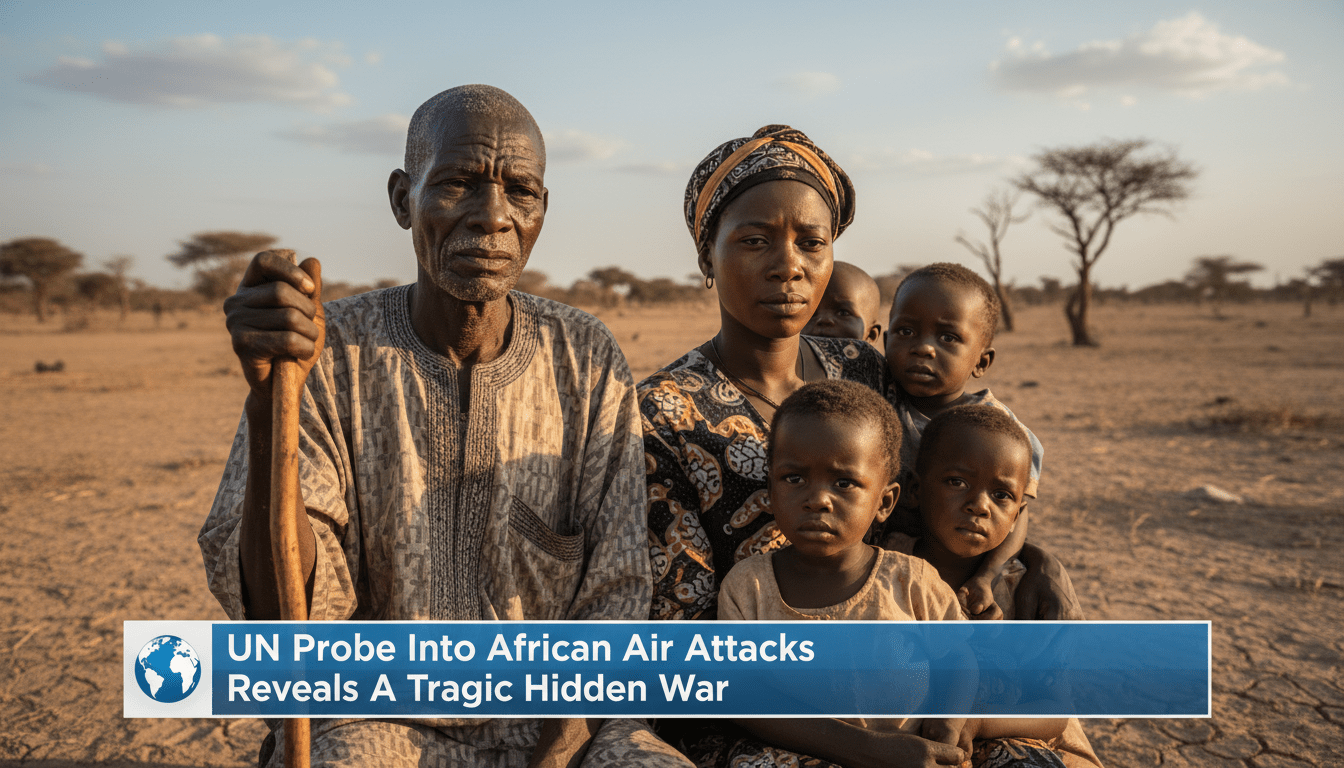
UN Probe Into African Air Attacks Reveals A Tragic Hidden War
By Darius Spearman (africanelements)
Support African Elements at patreon.com/africanelements and hear recent news in a single playlist. Additionally, you can gain early access to ad-free video content.
The United Nations recently issued a highly urgent demand. World leaders are calling for independent investigations into deadly air attacks. These military strikes occurred in Nigeria and Chad. They resulted in massive and devastating civilian casualties. The incidents highlight deep instability across the entire African region. United Nations High Commissioner for Human Rights Volker Türk spoke out. He described the reports of the attacks as deeply shocking. He strongly demanded prompt and impartial investigations into the incidents.
The horrific events of May 2026 expose a tragic reality. This conflict represents a complex web of historical violence. Military actions often completely blur the lines of combat. Innocent civilians suffer the most severe and deadly consequences. The current situation demands intense global scrutiny and immediate accountability. The history of this conflict requires a deep and honest examination.
A Seventeen Year Struggle Unfolds
The current crisis traces back nearly two full decades. The Lake Chad Basin faces severe and ongoing turmoil. Northern Nigeria serves as the absolute center of this conflict. Militant Islamism and criminal banditry constantly drive the regional violence. The deadly insurgency originally began in the year 2002. Mohammed Yusuf started a non-violent religious movement at that time. This specific group operated primarily in the city of Maiduguri. By July 2009, the movement erupted into a violent uprising. The government responded with a massive and deadly military crackdown. Yusuf died while held in police custody. This singular event completely radicalized the remaining group members (wikipedia.org).
Abubakar Shekau quickly took control of the radicalized fighters. He led them through a decade of harsh guerrilla warfare. The violence eventually fractured the organization into different parts. A major faction broke away from Shekau in 2016. They formed the Islamic State West Africa Province. This group is widely known across the globe as ISWAP. ISWAP quickly became a highly capable and dangerous military force. They frequently target government installations and established military bases. The fighters established a sophisticated and highly profitable shadow economy. This insurgency created deep scars across the entire region. Local communities struggle daily to rebuild their completely shattered lives. Entire generations have only known constant and brutal warfare. The northeast insurgency alone caused an estimated 350,000 deaths (reliefweb.int).
Estimated Annual Revenue Comparison
The Shadow Economy heavily outpaces local formal tax collection.
The Rise of Shadow Economies
ISWAP maintains total control over massive expanses of territory. They operate a complex and highly illegal shadow economy. The militants generate massive amounts of untraceable money. Reports suggest they collect an estimated 191 million dollars annually. They gather this staggering wealth through highly structured illicit taxation. This amount represents ten times more than the formal government collects. The local Borno State government constantly struggles to gather revenue. ISWAP intentionally taxes major local industries to fund their war. Fishing, cattle rearing, and local trade remain their primary targets (issafrica.org).
Civilians face impossible and deadly choices every single day. Fishermen must pay roughly 13 dollars for basic lake entry. They also pay a separate tax on every carton of fish. The militants provide a twisted and dark form of security. They prevent cattle rustling in exchange for a specialized tax. ISWAP essentially functions as an unelected shadow state. They fill major governance gaps in remote and ignored island communities. The militants dig boreholes and maintain rudimentary public toilets. They even provide basic healthcare services to gain community favor. This economic control creates a terrifying form of forced loyalty. Civilians face severe and brutal punishment if they refuse to pay. They endure public flogging, violent abduction, or swift execution. The military often targets these bustling economic hubs from the air. Innocent fishermen frequently become completely trapped in the dangerous crossfire. The military previously banned the transportation of fish in the region. They intended to cut off funding for the terrorist organizations. This policy effectively criminalized the livelihoods of thousands of people. Consequently, many fishermen must operate in insurgent-controlled waters to survive (truthnigeria.com).
Shifting Tactics Brings Deadly Results
The violence eventually spread far beyond the northeast region. The northwest region saw a massive and sudden rise in banditry. Zamfara State became a violent hotspot for these non-ideological gangs. Displaced herders and established criminal networks form these groups. They frequently engage in highly organized mass kidnappings. They raid vulnerable villages with absolute impunity and brutal force. The Nigerian government made a major legal shift in 2022. They officially designated these rural bandits as documented terrorists. This legal redesignation carried severe and immediate military consequences (premiumtimesng.com).
It officially allowed the military to deploy heavy air assets. Forces began using Super Tucano jets and heavily armed drones. These advanced weapons were previously restricted to conventional military warfare. The shift dangerously blurred the lines of domestic policing and combat. The military essentially brought full-scale war into populated civilian areas. Social justice advocates strongly criticize this heavily militarized approach. The new rules authorize lethal strikes with much lower evidence standards. Tragic and deadly errors happen far too frequently in the region. A Nigerian military airstrike hit a busy market in Zamfara. This particular strike occurred on May 10, 2026. The devastating bombing reportedly killed at least 100 innocent civilians. Many victims were innocent women and small children. The military heavily disputed these truly staggering casualty figures. They loudly claimed they successfully neutralized high-level terrorists. The armed forces insisted they acted strictly on credible intelligence (theguardian.com). However, the massive civilian death toll continuously sparks immense public outrage.
Major Erroneous Airstrike Casualties
Documented civilian deaths from military strikes (2017-2026).
Multi-National Task Force Fractures
The massive Lake Chad Basin spans four distinct major countries. Nigeria, Niger, Chad, and Cameroon perfectly share these fluid borders. The region covers approximately 2.4 million square kilometers of land. More than 30 million people completely rely on this basin. Insurgent groups constantly exploit these highly porous national borders. They quietly move personnel and heavy supplies between the countries. They easily escape domestic military operations by crossing the water. Multi-national cooperation remains absolutely essential for any lasting peace. The Multi-National Joint Task Force was established to help coordinate efforts. The regional coalition originally started operations in the year 1994. The specific force expanded over the years to include multiple nations (crisisgroup.org).
However, the military coalition suffers from severe internal fractures. Niger officially withdrew from the joint task force in early 2025. They permanently reassigned their troops to protect domestic oil pipelines. This sudden withdrawal created a massive and dangerous security vacuum. ISWAP fighters easily moved through these newly unpatrolled borders. Essential trust between the allied nations completely and rapidly collapsed. Chadian fighter jets recently conducted entirely unilateral air strikes. They aggressively bombed islands in the Lake Chad region on May 8, 2026. These specific strikes reportedly killed dozens of Nigerian fishermen. The fishermen were violently forced to operate in insurgent-controlled waters. Chad executed these deadly strikes without proper regional coordination. They were desperately responding to a jihadist attack on their soldiers (truthnigeria.com). The incident highlights a severe breakdown in critical military communication.
The Forgotten Crisis of Displacement
The human cost of this prolonged conflict is absolutely staggering. The displacement crisis demands immediate and sustained global attention. Internal displacement creates unique legal and severe social challenges. Refugees legally cross international borders to seek safety and shelter. Internally displaced persons flee their homes but stay within their country. Refugees legally receive protection under established international treaties. Internally displaced persons do not possess these same vital protections. They firmly remain under the legal authority of their own government.
This dire situation leaves millions in a constant legal limbo. The Lake Chad Basin faces an overwhelming and tragic humanitarian disaster. The region currently hosts over 3.3 million internally displaced persons. They also currently host more than 325,000 international refugees. Nigeria singlehandedly accounts for 72 percent of this massive displacement caseload (iom.int). Many of these vulnerable individuals lack any official state identification. They easily lose access to essential healthcare and basic voting rights. They often face the severe and terrifying threat of permanent statelessness. International aid agencies strongly struggle to provide adequate assistance. They need official permission from the host government to legally intervene. Families must rely on an astonishing strength and resilience to survive these harsh conditions. The camps continuously suffer from severe overcrowding and poor sanitation. Displaced children lack basic access to formal education. The current situation demands comprehensive and immediate social reforms. Education must become a major priority for displaced youth. Decolonizing African universities and regional schools remains crucial for future stability.
Displacement Caseload
The human toll across the Lake Chad Basin in 2026.
Only 22% of Humanitarian Funding Met
Demanding Accountability and Justice
The intense push for accountability faces massive institutional roadblocks. Internal military reviews frequently lack basic transparency and public trust. True accountability heavily requires truly independent and thorough investigations. These probes must operate completely outside the military chain of command. The National Human Rights Commission loudly demands much higher standards. They insist the military can not legally investigate its own errors. Independent probes deeply require civilian experts and solid forensic evidence. Investigators must gather vital and honest testimony from surviving victims. Victims and their grieving families loudly demand public answers (thecjid.org). They desperately want the findings released to the general public. They also seek necessary and fair financial reparations.
The International Criminal Court maintains a highly active preliminary examination. However, they only intervene when domestic legal systems fail completely. They forcefully act when nations prove unwilling to prosecute war crimes. Airstrikes must strictly follow established international rules of engagement. The military must clearly distinguish between armed targets and civilians. They frequently use highly controversial and flawed pattern of life strikes. They unfortunately bomb targets based on movement rather than positive identity. This practice causes immense harm to highly innocent civilians. The struggle for accountability is an unapologetic call for racial justice. Over 400 Nigerian civilians recently died from deeply erroneous military strikes. These tragic errors happened between 2017 and early 2026. Military leaders rarely release full and detailed investigation reports. The extreme lack of transparency absolutely prevents meaningful institutional reform.
Navigating A Path Toward Peace
The long road ahead requires massive systemic changes. The military must review its standard operating procedures immediately. They must prioritize the protection of innocent civilian life. The United Nations continues to monitor the situation very closely. Their demands for a probe reflect growing and serious international concern. The economic cost of insecurity remains incredibly high and devastating. Experts project the overall cost will reach 14.8 billion dollars by 2029. The region can not sustain this level of immense economic devastation. Diplomatic efforts must passionately rebuild fractured regional trust (issafrica.org). The Multi-National Joint Task Force needs significant and urgent reform. Leaders must honestly address the root causes of the violent insurgency. Economic desperation strongly drives many civilians into highly dangerous situations.
The government must provide secure and viable alternative livelihoods. Fishing communities deeply need safe access to their vital waters. The international community must heavily increase humanitarian funding. Currently, only 22 percent of critical funding needs are met. The people of the Lake Chad Basin firmly deserve lasting peace. The global community must actively support their fight for survival. Workers continue demanding significant change across the continent. The situation clearly exposes the real looters who exploit vulnerable populations. Peace deeply requires justice, accountability, and real economic opportunity. African diaspora communities passionately stand in solidarity with these victims. The history of this conflict serves as a remarkably strong warning. Leaders must choose careful diplomacy over endless and destructive warfare. Future generations completely depend on the choices made today. The United Nations probe could truly spark meaningful change. It firmly provides a rare opportunity for essential global accountability.
About the Author
Darius Spearman is a professor of Black Studies at San Diego City College, where he has been teaching for over 20 years. He is the founder of African Elements, a media platform dedicated to providing educational resources on the history and culture of the African diaspora. Through his work, Spearman aims to empower and educate by bringing historical context to contemporary issues affecting the Black community.
