
Listen & Share
The Bodycam’s Unyielding Truth: Unpacking an Ohio Police Shooting
By Darius Spearman (africanelements)
Support African Elements at patreon.com/africanelements and hear recent news in a single playlist. Additionally, you can gain early access to ad-free video content.
A Violent Encounter on an Ohio Driveway
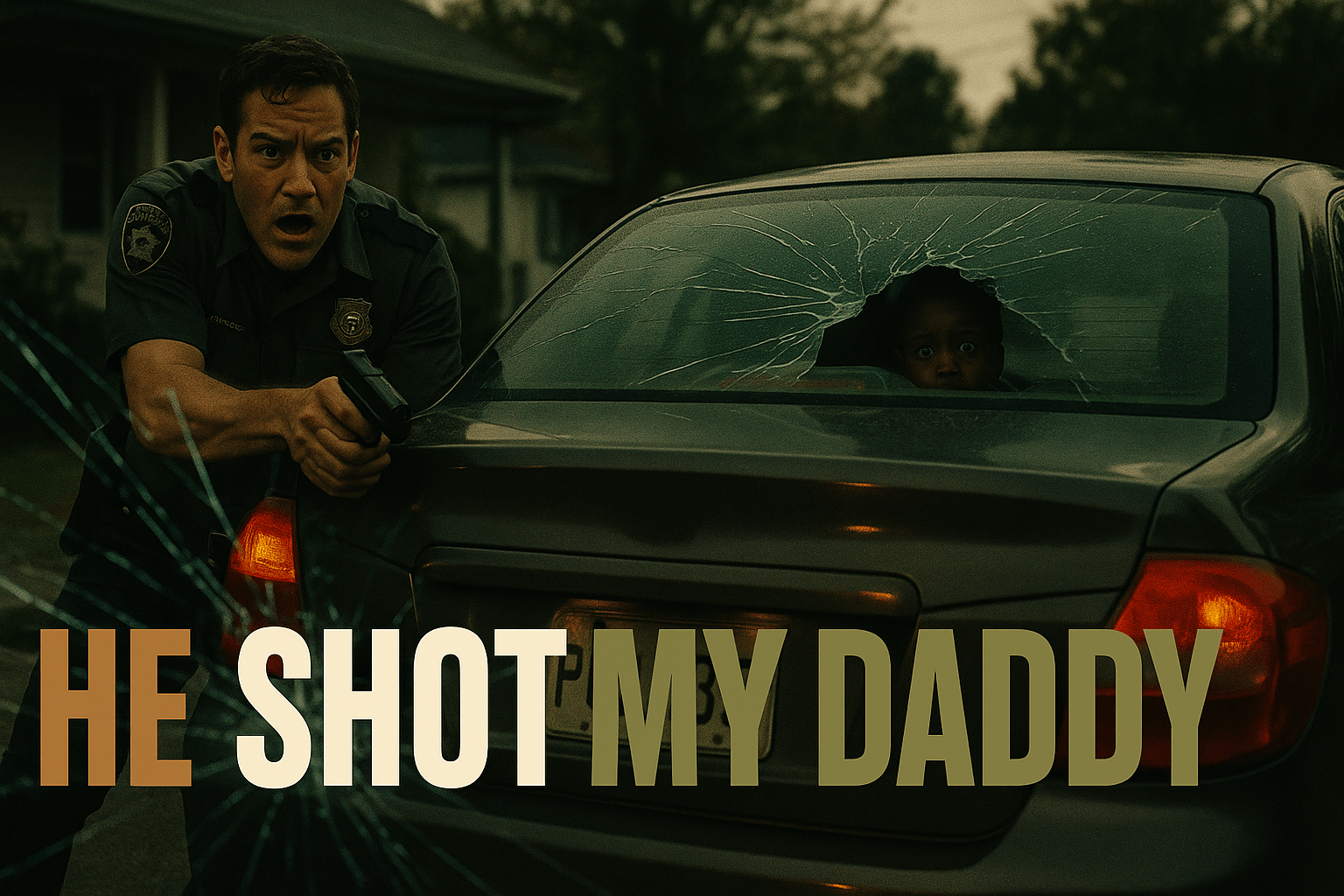
The tragic shooting of Michael Whitmer by Officer Cecil Morrison in Ohio represents a critical moment in discussions of police conduct and accountability. Officer Morrison claimed he acted in fear for his life when he fired multiple shots at Michael Whitmer as Whitmer backed his vehicle out of his own driveway. However, the recorded footage from the officer’s own body camera told a different story, directly contradicting his assertion (Atlanta Black Star). This stark difference between an officer’s testimony and the objective video evidence underscores the vital importance of body camera technology in modern policing.
Further, the bodycam video clearly depicted Officer Morrison positioning himself directly behind Michael Whitmer’s vehicle. This choice placed him squarely in a path that the departing car would likely traverse (Atlanta Black Star). The family of Michael Whitmer therefore argued that the officer’s actions were not merely defensive, but rather, he either intentionally or negligently moved into harm’s way, escalating the risk rather than mitigating it (Atlanta Black Star). This strategic positioning profoundly challenged the officer’s assertion of self-defense.
Legal Repercussions and Officer Accountability
The aftermath of the shooting saw Officer Cecil Morrison facing legal charges. He was charged with misdemeanor negligent homicide and subsequently entered a plea of no contest (Atlanta Black Star). While often considered a serious offense leading to felony charges in many jurisdictions, misdemeanor negligent homicide indicates that, in this specific case, the level of negligence was deemed less severe than that required for a felony charge. However, it still implies that the officer’s actions, through carelessness or neglect, directly resulted in the death of Michael Whitmer. The specifics of such classifications can vary widely depending on state laws and the particular circumstances of the incident.
Ultimately, the judge found Officer Morrison guilty of the charge. As part of his sentence, the judge ordered him to surrender his state law enforcement certification (Atlanta Black Star). This crucial decision means that Morrison can never again work as a police officer in the state of Ohio, marking a significant outcome for accountability. In Ohio, as in other states, certification by organizations such as the Ohio Peace Officer Training Commission is a fundamental requirement for law enforcement employment. The loss of this certification effectively ends an officer’s career in that state, signifying a serious disciplinary measure for misconduct or dereliction of duty.
Consequences of Losing Law Enforcement Certification
The Hidden Dangers and Innocent Casualties
The tragedy of the Michael Whitmer shooting extended beyond the fatal harm inflicted upon him. His 4-year-old son, who was present in the back seat of the car, sustained injuries from flying shrapnel (Atlanta Black Star). This “shrapnel” primarily consisted of shattered glass from the vehicle, which can cause significant harm. While the term “shrapnel” is generally associated with explosive devices, in this context, it metaphorically describes the dangerous, ballistic nature of glass fragments propelled by gunfire. These fragmented pieces can cause serious cuts, puncture wounds, and even eye injuries when traveling at high speeds, posing a severe threat to anyone in the vicinity. The emotional and physical toll on such a young child is incalculable, forming a heartbreaking element of this case.
Another individual also suffered injuries during the incident: Nelsonville police officer KJ Tracy. This second officer was additionally injured by flying shrapnel, underscoring the perilous nature of the shooting beyond the direct target (Atlanta Black Star). The precise circumstances of Officer Tracy’s injury, whether from the very same gunfire directed at Whitmer, or from a reaction to the escalating threat, are crucial for fully understanding the dynamics of the scene. Such an injury to another officer highlights the chaotic and unpredictable environment created by the use of lethal force, even for those trained to operate within it.
Accountability Through Legal Means and Settlements
The Whitmer family pursued justice through a wrongful death lawsuit, a common avenue for families seeking redress after police-involved fatalities. This legal action ultimately resulted in a confidential settlement (Atlanta Black Star). While the specific terms and the amount of compensation remain undisclosed due to the confidential nature of the agreement, such settlements typically aim to provide financial relief for the family’s losses, which include medical expenses, lost income, and emotional suffering. Furthermore, confidential settlements can sometimes include non-monetary provisions, such as acknowledgments of fault or commitments to policy changes by the involved agencies, reflecting a degree of accountability even when specific details are not public.
In addition, the settlement’s confidential terms also mean that details regarding the compensation for the 4-year-old son’s injuries are not public. Settlements in cases involving minors often include structured payments or trust funds to ensure long-term care and support for their physical and emotional recovery. The full extent of the human cost incurred by Michael Whitmer’s death, particularly on his young child, remains an immeasurable aspect of this whole unfortunate situation. The quiet resolution of the lawsuit closes one chapter but leaves many questions for the affected family and the wider community.
Bodycam Footage: The Truth Revealed
Clarifying Elements of Officer Encounters
In cases such as Michael Whitmer’s, understanding the actions of all parties is critical for assessing an officer’s claim of fear or justification for use of force. Legal standards for self-defense often hinge on whether an officer’s fear was reasonable given the circumstances. This includes factors such as whether the individual possessed a weapon, displayed aggressive driving, or engaged in any behavior that could reasonably be perceived as threatening. Such objective details shape the context in which an officer’s split-second decisions are evaluated. Without specific information on Whitmer’s behavior, comprehensive conclusions regarding the justification of force remain ambiguous.
Additionally, Ohio’s legal standards for police use of force, like those in many states, demand that any application of force must be both justified and proportional to the perceived threat. This means officers are typically required to prove their self-defense claims were reasonable, often with the bodycam footage serving as primary evidence. The body camera’s objective recording becomes paramount in showing how officers truly positioned themselves relative to a perceived danger. This documentation ensures that actions are not merely taken at face value but instead subjected to rigorous scrutiny, a process especially poignant in cases involving fatalities.
Impact of the Atlanta Black Star
The ‘He Shot My Daddy!’ article providing detailed coverage of the Whitmer case was published by Atlanta Black Star, a significant online media platform. This publication is recognized as a leading source for news and cultural coverage within the Black community. It provides a unique and essential perspective on events, especially those concerning police accountability and systemic issues. Its mission involves offering a forum for matters pertinent to Black Americans, including vigorous reporting on incidents involving law enforcement and advocating for justice and equality.
Moreover, Atlanta Black Star’s consistent focus on police-involved incidents, particularly those affecting Black communities, highlights its role in raising awareness and fostering discussions about reform. News outlets such as this one play an indispensable part in bringing forth narratives that might otherwise be minimized or overlooked by mainstream media. By illuminating cases like Michael Whitmer’s, the publication strengthens calls for greater transparency and accountability in policing actions that directly impact Black lives.
Community Response to Incidents of Police Violence
A System in Search of Accountability
The Michael Whitmer case, though specific in its details, fits within a larger, troubling pattern of police-involved shootings in Ohio and across the nation. While the provided sources do not offer direct statistical comparisons for this particular incident with broader trends, other recent Ohio police shootings illustrate the ongoing tensions and violence involving law enforcement. For instance, in late May 2025, two Ohio officers were shot during a traffic stop, leading to significant injuries and attempted murder charges against a suspect (YouTube; Police1). These incidents, while different in context, form part of a complex landscape within which issues of police use of force are debated and scrutinized.
The persistent focus on such incidents by media outlets like Atlanta Black Star underscores the urgent need for transparency and accountability in policing, particularly as these events disproportionately affect Black communities. Bodycam footage has become a pivotal tool, frequently revealing crucial details that challenge official narratives and spark demands for justice. The outcome of the Whitmer case—with a guilty plea and career consequences for the officer—serves as a powerful reminder of the impact such evidence can have, and it contributes to the ongoing, pressing conversations surrounding police reform and the pursuit of justice for all. It continues to illustrate the indispensable role of body-worn cameras in providing a clear, objective lens into crucial law enforcement encounters.
ABOUT THE AUTHOR
Darius Spearman has been a professor of Black Studies at San Diego City College since 2007. He is the author of several books, including Between The Color Lines: A History of African Americans on the California Frontier Through 1890. You can visit Darius online at africanelements.org.
