



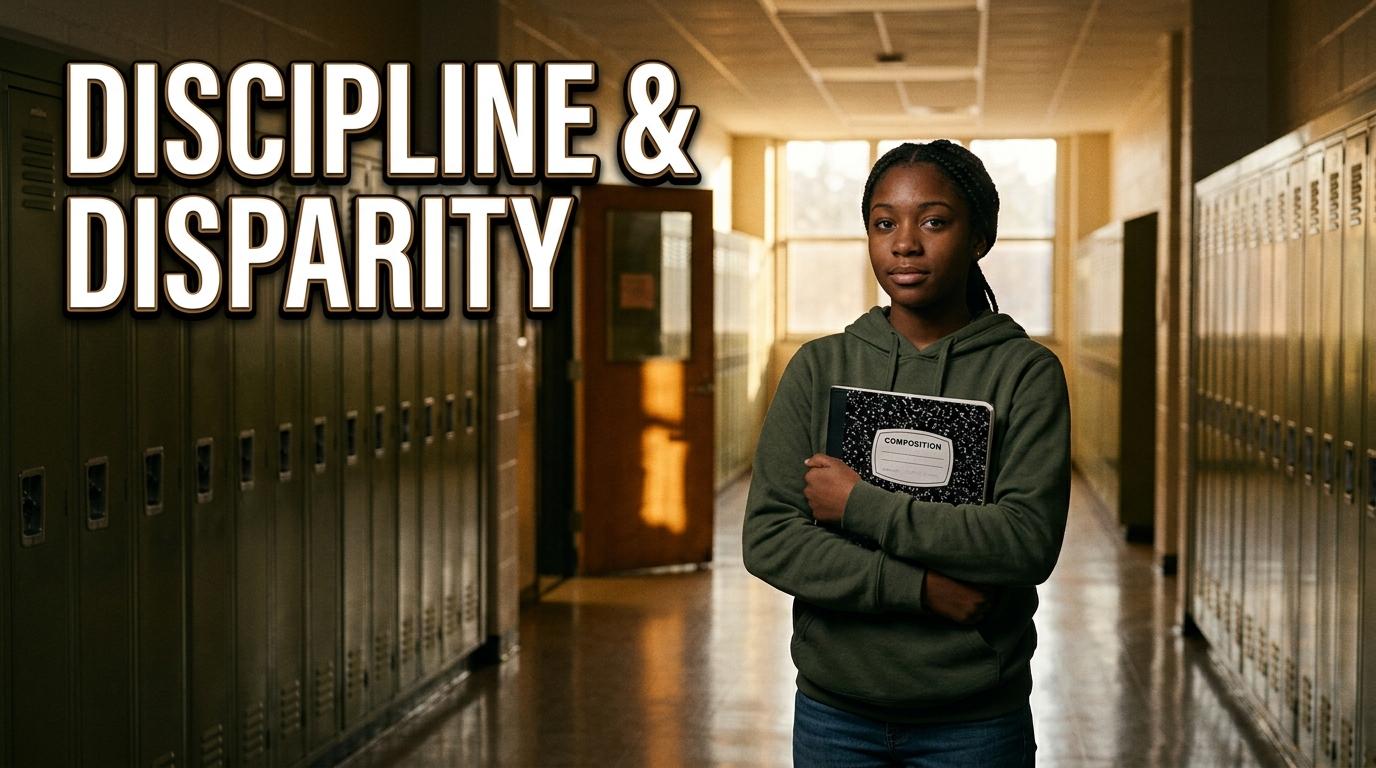
What The End Of School Discipline Civil Rights Rules Means
By Darius Spearman (africanelements)
Support African Elements at patreon.com/africanelements and hear recent news in a single playlist. Additionally, you can gain early access to ad-free video content.
The federal landscape for educational civil rights experienced a major shift in July 2026. The United States Department of Education officially finalized a rule removing disparate impact standards from Title VI enforcement (federalregister.gov). This administrative action alters how federal investigators address claims of systemic racial discrimination in public schools (ed.gov).
For over six decades, civil rights enforcement relied on the principle that policies causing disproportionate harm were vulnerable to federal challenge (nixonpeabody.com). School discipline practices, academic tracking, and advanced placement testing all faced regulatory oversight under this standard (k12dive.com). Under the new rule, federal regulators will strictly limit investigations to cases where complainants can prove explicit, intentional discrimination (federalregister.gov).
The Origins of Title VI and Disparate Impact Standards
Title VI of the Civil Rights Act of 1964 prohibited race discrimination in programs receiving federal funds (oyez.org). Section 601 established the core statutory prohibition against intentional discrimination (coffieldlaw.com). Section 602 authorized federal executive agencies to write specific enforcement regulations to fulfill those civil rights objectives (coffieldlaw.com). The Department of Health, Education, and Welfare soon created rules targeting policies that produced racially disproportionate adverse outcomes (nixonpeabody.com).
The legal backing for these outcome-based regulations grew stronger through landmark judicial rulings. In the 1971 decision Griggs v. Duke Power Co., the Supreme Court established the legal doctrine of disparate impact under Title VII (justia.com). The Court unanimously held that employment rules causing disproportionate harm to Black workers were illegal unless required by genuine business necessity (justia.com). Federal regulatory agencies applied this outcome-focused legal standard directly to public education regulations under Title VI (nixonpeabody.com).
How Court Rulings Eroded Civil Rights Protections
For decades, families could file federal lawsuits challenging school policies that disproportionately harmed Black students (nixonpeabody.com). However, a major legal decision restricted this pathway in 2001. In Alexander v. Sandoval, the Supreme Court ruled in a five to four decision that private individuals have no implied private right of action to sue over disparate impact regulations (oyez.org).
The Sandoval decision stripped individual citizens of the ability to enforce disparate impact rules directly in federal court (oyez.org). After 2001, private lawsuits under Title VI required clear evidence of intentional discrimination (coffieldlaw.com). However, federal administrative agencies still retained independent authority to investigate complaints and withhold federal funds based on regulatory disparate impact claims (nixonpeabody.com). The July 2026 rule permanently eliminates that federal administrative mechanism (federalregister.gov).
Facially Neutral Policies and School Discipline Disparities
Many school disciplinary regulations appear entirely objective on paper (massadvocates.org). These facially neutral policies do not mention race or protected classes (massadvocates.org). However, subjective discretion frequently alters how educators enforce these rules in real classroom settings (gao.gov). Subjective offenses like defiance, disrespect, or dress code violations consistently produce severe racial disparities (gao.gov).
Federal data illustrates the severe real-world impact of these disciplinary patterns across public education. According to reports from the Government Accountability Office, Black students experience disproportionate rates of exclusionary discipline nationwide (gao.gov). Black students made up fifteen point five percent of national public school enrollment but represented thirty-nine percent of suspended students (gao.gov). These disparities persisted across rich and poor school districts alike (gao.gov).
The Intersection of Race and Disability in Classrooms
The concept of intersectionality helps explain how multiple identity markers compound within educational institutions (exceptionalchildren.org). Legal scholar Kimberlé Crenshaw developed this theoretical framework to describe overlapping systems of institutional bias (exceptionalchildren.org). In public school settings, Black youth with disabilities encounter combined obstacles related to both racial prejudice and ableism (gao.gov).
Federal statistics confirm the severity of these intersecting vulnerabilities (gao.gov). Reports show that Black girls receive forty-five percent of out-of-school suspensions despite representing fifteen percent of enrolled female students (gao.gov). Furthermore, Black girls with disabilities face out-of-school suspensions at three point six times the rate of White girls with disabilities (gao.gov). Stripping Title VI regulations of disparate impact provisions removes a tool used to address these compounded inequities (exceptionalchildren.org).
Debates Over Racial Balancing and Classroom Order
The Department of Education cited several legal arguments to justify removing disparate impact regulations (federalregister.gov). Department officials asserted that disparate impact liability created friction with the Equal Protection Clause of the Constitution (federalregister.gov). Regulatory filings claimed the standard forced school administrators into coercive racial balancing practices to avoid federal investigations (federalregister.gov).
Opponents of disparate impact rules argued that federal oversight undermined teacher authority in classroom management (fedsoc.org). They contended that discipline policies should focus strictly on individual student conduct rather than group statistical parity (fedsoc.org). Conversely, civil rights organizations asserted that removing the standard grants educational institutions immunity for practices that harm Black students (lawyerscommittee.org).
Pushing Black Youth into the School-to-Prison Pipeline
Disparate impact enforcement served as a crucial defense against the school-to-prison pipeline (dignityinschools.org). This destructive pipeline pushes vulnerable students out of public classrooms and into juvenile justice systems (dignityinschools.org). Exclusionary disciplinary actions like suspensions directly cause academic failure and chronic absenteeism (dignityinschools.org).
When schools suspend Black students for subjective infractions, those students face elevated risks of grade retention and dropout (dignityinschools.org). Higher dropout rates correlate directly with increased risk of involvement in criminal courts (dignityinschools.org). Over time, these exclusionary practices contributed significantly to the expansion of the mass incarceration system across marginalized communities. Without disparate impact rules, federal regulators lose authority to dismantle these systemic pipeline drivers (educationcivilrights.com).
Navigating the New Legal Landscape for Families
The regulatory rollback drastically alters how families must approach civil rights complaints (nixonpeabody.com). Moving forward, complainants face the difficult challenge of establishing explicit discriminatory intent (nixonpeabody.com). Proving intent requires direct evidence like explicit racial statements or clear proof of differential treatment for identical conduct (coffieldlaw.com).
Despite these regulatory hurdles, several avenues of legal protection still remain active (nixonpeabody.com). Families can file administrative complaints under the Title VI different treatment framework if non-Black students received lesser punishments for identical offenses (coffieldlaw.com). Additionally, families can seek remedies under state anti-discrimination statutes through the broader framework of federalism (csba.org). Independent federal statutes protecting disabled students also remain enforceable (massadvocates.org).
The Future of Educational Opportunity and Civil Rights
The elimination of disparate impact standards represents a major structural change in federal civil rights policy (federalregister.gov). Public educational institutions now operate under reduced federal pressure regarding statistical discipline disparities (k12dive.com). Civil rights advocates warn that this policy shift may diminish accountability for school districts relying on exclusionary practices (lawyerscommittee.org).
Achieving equitable educational opportunity requires ongoing public oversight of local discipline practices (dignityinschools.org). Local communities must now rely heavily on school board transparency, public records requests, and state-level legal protections (csba.org). Understanding the history behind these regulatory changes empowers families to continue advocating for equity across public education.
About the Author
Darius Spearman is a professor of Black Studies at San Diego City College, where he has been teaching for over 20 years. He is the founder of African Elements, a media platform dedicated to providing educational resources on the history and culture of the African diaspora. Through his work, Spearman aims to empower and educate by bringing historical context to contemporary issues affecting the Black community.
