


Why Are Black Mothers Facing a Deadly Crisis in Detroit?
By Darius Spearman (africanelements)
Support African Elements at patreon.com/africanelements and hear recent news in a single playlist. Additionally, you can gain early access to ad-free video content.
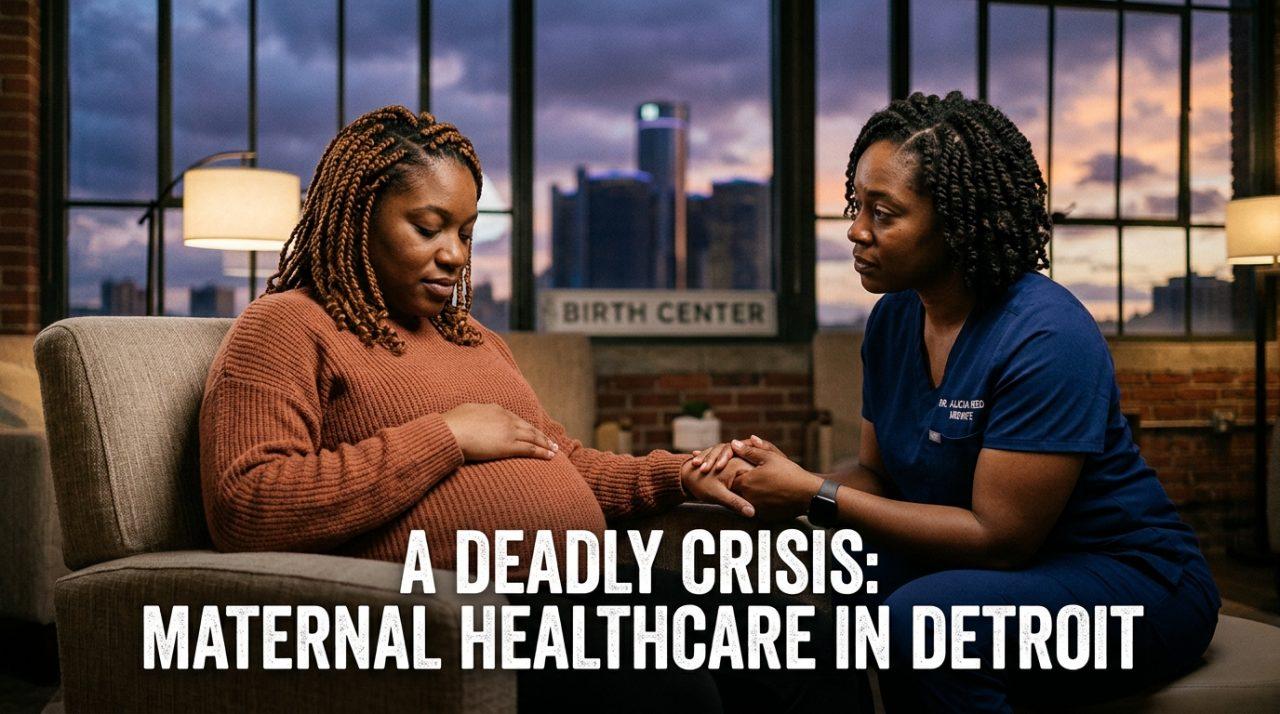
A somber gathering took place at Birth Detroit in the fall of 2026. Former Vice President Kamala Harris joined Dr. Abdul El-Sayed to talk about a growing emergency. Community midwives, doulas, and healthcare workers packed the room. They listened to alarming reports on perinatal health. Black mothers across the country face alarming odds during childbirth. In fact, Black women remain three to four times more likely to die from pregnancy complications than white women (theguardian.com, wfmd.com).
The roundtable shined a light on severe racial disparities that refuse to fade. Leaders pointed out that maternal survival should not depend on postal codes or race. Yet, the crisis deepens even as modern medicine advances. During the discussion, speakers connected these statistics directly to ongoing political battles over federal research grants. Understanding this emergency requires looking past the surface. It demands a serious examination of deep historical roots that continue to shape modern clinical outcomes (wfmd.com).
The Antebellum Roots of Modern American Obstetrics
The roots of American obstetrics contain deep trauma for Black women. During the nineteenth century, physicians built surgical reputations on the bodies of the enslaved. Dr. J. Marion Sims performed dozens of experimental operations in Alabama between 1845 and 1849. He operated on enslaved women like Anarcha, Betsey, and Lucy without anesthesia. He claimed that Black people did not experience physical pain the same way white people did. These false ideas became embedded within early medical education (theguardian.com).
Enslaved women had no legal right to bodily autonomy. After the end of the transatlantic slave trade, their reproductive capacity became an engine for agricultural wealth. Plantation owners treated childbirth as a financial transaction rather than a human event. These historic practices mirrored broader patterns of involuntary servitude that persisted well into subsequent generations. The brutal legacy of treating Black mothers as commodities left lasting scars that modern clinics have yet to heal, demonstrating how kinship resilience tradition remains an essential defense against systemic oppression (theguardian.com).
Pregnancy-Related Mortality Ratios
National Deaths per 100,000 Live Births
Source: Centers for Disease Control and Prevention surveillance records
How Institutional Medicine Displaced Black Midwives
For decades after emancipation, traditional community midwives attended the vast majority of Black deliveries. Known affectionately as “granny midwives,” these women provided supportive care across rural and urban neighborhoods. They carried deep herbal knowledge, delivered babies safely, and supported families through postpartum recovery. They served as vital pillars of public health when hospitals barred Black citizens at the door (theguardian.com, birthdetroit.com).
The twentieth century brought sweeping changes that pushed these experienced healers aside. In 1910, the Flexner Report restructured medical education across North America. The report forced five of the seven historically Black medical colleges to close their doors forever. Soon after, the Sheppard-Towner Act of 1921 funded regulatory campaigns that characterized community midwives as dirty and illiterate. The professionalization of hospital obstetrics replaced communal birth practices with clinical environments that excluded Black clinicians, a development that scholars analyze when examining distinct academic disciplines focused on systemic racism (theguardian.com, umich.edu).
Segregated Wards and the Detroit Parallel Health System
During the Great Migration, thousands of Black families traveled to Detroit searching for factory jobs. However, they met severe segregation across city institutions. Prominent local hospitals like Detroit General and Harper Hospital routinely rejected pregnant Black patients. Facilities that admitted Black women often relegated them to crowded, poorly ventilated basements. Furthermore, white administrators denied hospital admitting privileges to qualified Black physicians (henryford.com).
Faced with danger, the Black community built its own healthcare network. In 1918, thirty Black doctors formed the Allied Medical Society and founded Dunbar Memorial Hospital on Frederick Street. Dunbar offered compassionate maternity care and provided professional training for Black nurses. Over time, more than fifteen Black-owned hospitals operated across the city, including Kirwood General. These institutions sustained generations of mothers against redlining and neglect, showing how political self-determination operates in spaces where shaping political dynamics saves community lives (henryford.com).
Severe Maternal Morbidity in Michigan
Rate per 10,000 Delivery Hospitalizations
Complications include intensive care admissions, cardiac arrest, and massive hemorrhage.
The Biological Toll of the Weathering Hypothesis
For many years, conventional researchers blamed poverty and personal health habits for racial birth disparities. In 1992, Dr. Arline Geronimus challenged these old assumptions through research conducted at the University of Michigan. She introduced the “Weathering Hypothesis.” This scientific framework showed that persistent social inequality causes early biological aging. Constant stress from racism damages vascular systems and accelerates wear on internal organs (umich.edu, umich.edu).
This biological wear-and-tear harms Black mothers across every social bracket. Wealth and advanced education do not shield women from systemic disrespect inside hospital labor rooms. Even prominent individuals experience clinical dismissals during labor. For example, athletic superstar Serena Williams encountered life-threatening pulmonary complications right after childbirth. Hospital staff initially dismissed her direct requests for heparin and diagnostic scans. Her experience revealed how clinical bias puts Black mothers at serious risk regardless of wealth (theguardian.com, umich.edu).
Political Maneuvers and the Threat to Health Grants
During the Detroit roundtable, Vice President Kamala Harris warned that federal maternal health research faces critical danger. Political efforts aimed at ending Diversity, Equity, and Inclusion (DEI) initiatives threaten university research programs. When lawmakers ban diversity language, government agencies alter their grant procedures. Agencies like the National Institutes of Health then struggle to issue notices that prioritize marginalized populations (theguardian.com, wfmd.com).
These policy restrictions disrupt vital studies exploring why Black women experience higher rates of fibroids and preeclampsia. Prohibitions on race-conscious data collection make clinical studies harder to design. State universities also face administrative obstacles that restrict equity offices from operating. Consequently, researchers lose funding needed to study high mortality rates in urban communities. This dynamic shows how political power at national levels directly alters community survival (wfmd.com).
Preventable Perinatal Losses
Percentage of Pregnancy-Related Deaths Deemed Preventable by Medical Reviews
Preventable Through Timely Clinical Intervention
Data Source: Centers for Disease Control and Prevention Maternal Mortality Review Committees
Community Birth Centers as Life-Saving Sanctuaries
Modern activists in Detroit refuse to accept high maternal losses. Facilities like Birth Detroit present a powerful community alternative. Founded by leaders including Leseliey Welch, the center restores community-led care. Birth centers rely on certified nurse midwives and doulas who share cultural backgrounds with their clients. This approach lowers unnecessary surgical interventions and ensures that patients feel heard (theguardian.com, birthdetroit.com).
Safety remains central to how freestanding birth centers operate. Midwives accept low-risk pregnancies and conduct continuous health assessments throughout labor. If complications emerge, centers rely on established emergency transfer agreements with nearby acute hospitals. Emergency medical services receive detailed provider reports during transport. Perinatal registries show that most hospital transfers occur for non-emergency issues, like a mother requesting an epidural (birthdetroit.com).
Safeguarding Federal Safety Nets and Future Generations
Policy solutions must extend outside birth center walls to create lasting security. Medicaid finances over forty percent of all births across the nation. In response to persistent community advocacy, federal and state lawmakers extended postpartum Medicaid coverage from sixty days to twelve months. This policy shift helps protect mothers who develop complications weeks after returning home (theguardian.com, mi.gov).
Yet, these crucial safety nets remain vulnerable to national budget fights. Advocates emphasize that cutting public insurance programs harms working families first. Protecting perinatal health requires constant vigilance in statehouses and voting booths. Detroit has demonstrated that healing begins when communities reclaim birth traditions, protect clinical research, and demand systemic accountability (wfmd.com, mi.gov).
About the Author
Darius Spearman is a professor of Black Studies at San Diego City College, where he has been teaching for over 20 years. He is the founder of African Elements, a media platform dedicated to providing educational resources on the history and culture of the African diaspora. Through his work, Spearman aims to empower and educate by bringing historical context to contemporary issues affecting the Black community.
