


Why Are ICE Operations Targeting Haitian Immigrants in Ohio?
By Darius Spearman (africanelements)
Support African Elements at patreon.com/africanelements and hear recent news in a single playlist. Additionally, you can gain early access to ad-free video content.
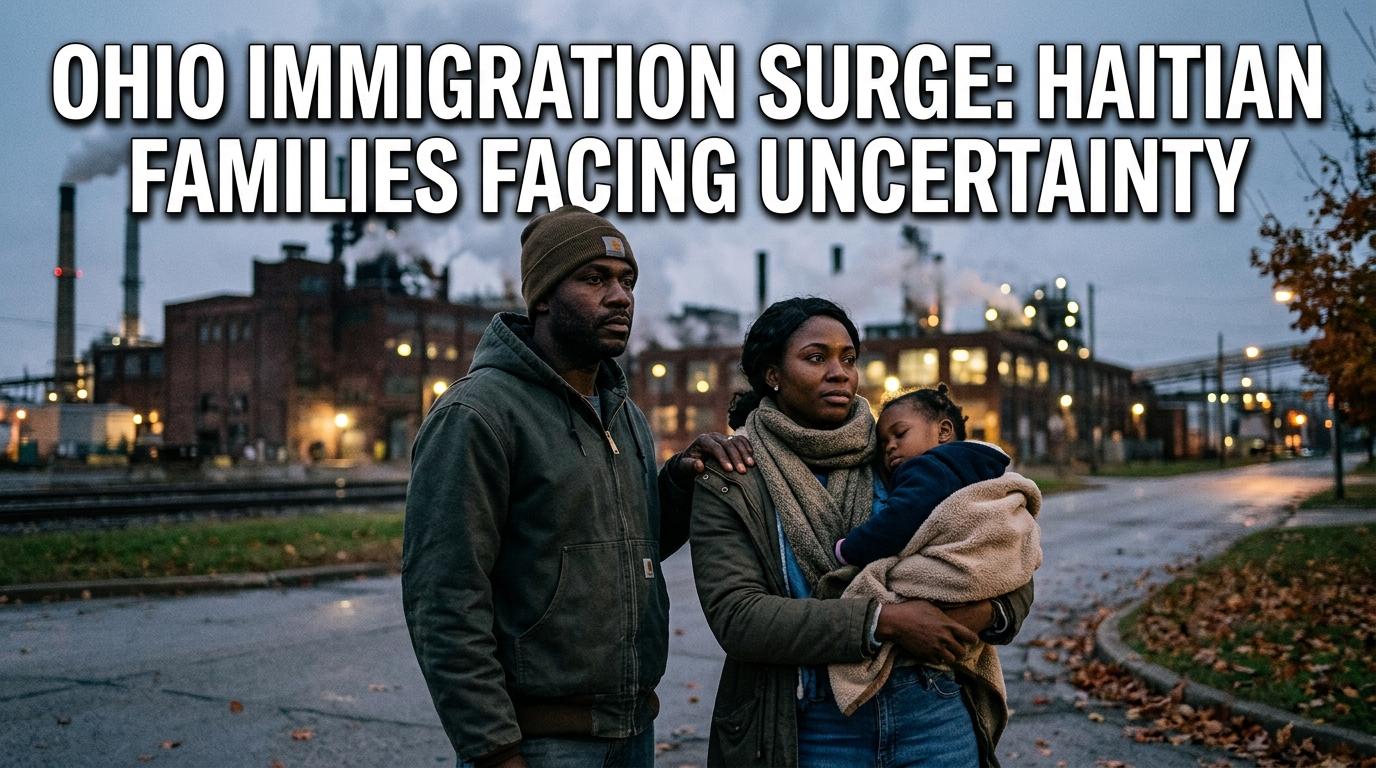
Federal immigration authorities have dramatically increased enforcement actions across the state of Ohio (binnews.com, ablelaw.org). Officers from Immigration and Customs Enforcement have begun issuing mandatory summons letters to Haitian residents living in Rust Belt communities (ablelaw.org, themilitant.com). Many individuals who held legal permissions for years are now facing abrupt surveillance, loss of work authorization, and sudden removal proceedings (ablelaw.org, uscis.gov). This sharp enforcement surge follows major federal shifts regarding Temporary Protected Status (newsfromthestates.com, uscis.gov).
In response to these rapid operations, grassroots coalitions, legal aid attorneys, and faith leaders are organizing emergency networks across Ohio (ablelaw.org, themilitant.com, newsfromthestates.com). Defense groups are setting up rapid-response legal clinics and public demonstrations to assist affected families (ablelaw.org, themilitant.com). Understanding this sudden push requires examining the complex historical ties, economic contributions, and policy shifts that brought thousands of Haitian workers to the Midwest (springfieldohio.gov, cbsnews.com, americanprogress.org).
A Sudden Shadow Over Ohio Manufacturing Towns
Immigration authorities recently initiated a series of aggressive check-in demands across southwestern Ohio (ablelaw.org, themilitant.com). Federal officers ordered former status holders to report directly to regional field offices, including the ICE facility in Blue Ash, Ohio (ablelaw.org, themilitant.com). Upon arriving at these check-ins, many community members had their passports confiscated by officers (ablelaw.org). Agents then fitted individuals with electronic tracking devices before releasing them with strict geographical restrictions (ablelaw.org, detentionwatchnetwork.org).
For several years, Haitian families established deep roots in manufacturing towns across the region (springfieldohio.gov, cbsnews.com). Cities such as Springfield, Columbus, Lima, and Findlay saw significant secondary migration of legal workers (newsfromthestates.com, cbsnews.com). Local factories, logistics warehouses, and healthcare facilities actively recruited these residents to resolve chronic labor shortages (springfieldohio.gov, cbsnews.com). Today, swift administrative decisions have turned stable working neighborhoods into centers of intense fear and uncertainty (themilitant.com, amnesty.org).
The Roots of Migration and Temporary Relief
The journey of most Haitian families living in Ohio began with catastrophic environmental and political shocks in their home country (wlrn.org, americanprogress.org). In January 2010, a devastating magnitude 7.0 earthquake struck Haiti (americanprogress.org). The disaster killed more than 300,000 individuals and completely leveled government infrastructure (americanprogress.org). In response to the humanitarian emergency, the federal government designated Haiti for Temporary Protected Status under the Immigration Act of 1990 (uscis.gov, americanprogress.org).
Over the subsequent decade, consecutive crises continued to impact [the Republic of Haiti](https://www.africanelements.org/news/the-haitian-revolution-the-slave-trade-and-black-women-2/) (wlrn.org, amnesty.org). The country endured major cholera epidemics, severe hurricanes, and profound political instability (wlrn.org, amnesty.org). The 2021 assassination of President Jovenel Moïse caused central state authority to crumble entirely (amnesty.org). Violent criminal cartels quickly expanded control over roughly 90 percent of the capital city, Port-au-Prince (amnesty.org). Due to these severe conditions, federal authorities repeatedly extended humanitarian protections through mid-2024 (uscis.gov, americanprogress.org).
Economic Growth and Political Attacks in Springfield
Between 2020 and 2024, Springfield experienced a major industrial revival driven by new residents (springfieldohio.gov, cbsnews.com). Approximately 12,000 to 15,000 Haitian immigrants moved into the city of 58,000 residents (springfieldohio.gov, axios.com). Most of these individuals arrived through domestic secondary migration from high-cost entry ports like Florida and Texas (cbsnews.com). Arriving workers filled vital positions in assembly plants, food processing facilities, and regional fulfillment centers (springfieldohio.gov, cbsnews.com).
Despite these economic gains, Springfield became the center of extreme national scrutiny during the 2024 presidential campaign (washingtonpost.com, theguardian.com). Prominent public figures amplified unverified social media rumors regarding Haitian neighbors (washingtonpost.com, theguardian.com). Local authorities, including the mayor, city manager, and chief of police, repeatedly stated that no evidence existed to support these false claims (washingtonpost.com, springfieldohio.gov). However, the political rhetoric triggered over thirty bomb threats against municipal offices, elementary schools, and medical facilities (washingtonpost.com, theguardian.com).
The Legal Turning Point: Supreme Court and TPS Rules
The legal status of thousands changed following major federal court decisions (justice.gov, justia.com). In June 2026, the U.S. Supreme Court issued its ruling in Mullin v. Doe (justice.gov, justia.com). The Court determined that federal judicial review over statutory termination decisions remains strictly limited (justice.gov, justia.com). Justices held that lower courts lack jurisdiction to issue procedural stays against executive status revocations under the Administrative Procedure Act (justice.gov, justia.com).
This ruling led directly to rapid implementation measures across administrative agencies throughout late July and August 2026 (justice.gov, aila.org, thomsonreuters.com). Federal district judges formally dissolved previous court injunctions that had paused status terminations (justia.com, aila.org). At the same time, immigration authorities published updated employment document guidance for businesses nationwide (nilanjohnson.com, thomsonreuters.com). Consequently, over 300,000 Haitians lost legal work permits and faced immediate removal risks (newsfromthestates.com, americanimmigrationcouncil.org, americanprogress.org). These rapid changes highlight how vulnerable communities remain subject to shifting [federal policy decisions](https://www.africanelements.org/news/black-politics-state-vs-nation-centered-power-part-1-federalism-black-politics/).
Mechanical Enforcement: NTAs, Parole, and Surveillance
To understand current field operations, specific immigration terms must be examined clearly (uscis.gov, ilrc.org). A major portion of recent arrivals entered the United States through Humanitarian Parole (uscis.gov, welcome.us). Authorized under Section 212(d)(5) of the Immigration and Nationality Act, parole provides temporary lawful entry for urgent humanitarian reasons (uscis.gov, americanimmigrationcouncil.org). While parole permits temporary employment authorization, it does not provide permanent legal status or a direct path to citizenship (uscis.gov, americanimmigrationcouncil.org).
When administrative status expires, federal agents issue a Notice to Appear, known officially as Form I-862 (justice.gov, ilrc.org). This charging document officially opens formal deportation proceedings within the immigration court system (ilrc.org, oregonlawhelp.org). Rather than using physical detention facilities exclusively, authorities rely heavily on Alternatives to Detention (ablelaw.org, detentionwatchnetwork.org). Managed through private government contractors, these tracking initiatives mandate that individuals wear heavy GPS ankle shackles (ablelaw.org, detentionwatchnetwork.org). Legal advocates criticize these electronic monitoring systems as digital cages that cause physical discomfort, severe psychological distress, and social stigma (detentionwatchnetwork.org).
Anti-Black Bias in the Immigration System
The aggressive measures directed at Haitian residents reflect well-documented historical patterns of systemic discrimination (amnesty.org, tminstituteldf.org). Human rights advocates point out that Black immigrants routinely face harsher treatment throughout federal enforcement systems (amnesty.org, tminstituteldf.org). Studies show that Haitian asylum seekers experience disproportionately high detention rates and significantly higher bond amounts than non-Black migrants (amnesty.org, tminstituteldf.org). This punitive enforcement environment reflects a historical [shift toward punishment](https://www.africanelements.org/news/the-political-shift-from-civil-rights-to-mass-incarceration/).
Data indicates that Black noncitizens remain in physical detention centers for longer average periods (tminstituteldf.org). Furthermore, lower median household incomes make hiring private legal representation extremely difficult for many families (tminstituteldf.org). Decades of maritime interdictions and rapid border turnbacks illustrate a long legacy of targeted, security-focused measures applied to Haitian migration (amnesty.org, tminstituteldf.org).
The Human Toll on Mixed-Status Black Families
The abrupt cancellation of status creates severe hardship for thousands of mixed-status households across Ohio (newsfromthestates.com, casey.org). More than 270,000 American-born citizen children reside in families where one or both parents held Temporary Protected Status (americanimmigrationcouncil.org, americanprogress.org). Because citizen children cannot be legally deported, parents facing removal orders are forced into devastating choices (americanimmigrationcouncil.org, casey.org). They must either leave their minor children behind in the United States or bring them into severe foreign turmoil (amnesty.org, casey.org).
This aggressive enforcement creates a glaring policy contradiction (ablelaw.org, amnesty.org). While federal officers order individuals to prepare for departure, the Department of State maintains a Level 4 “Do Not Travel” advisory for Haiti (cbp.gov, amnesty.org). Government warnings emphasize widespread kidnapping, armed gang warfare, and complete breakdown of public safety (cbp.gov, amnesty.org). Forcing parents back into these dangerous conditions causes severe trauma for children, adding another chapter to a long history of [historical racial oppression](https://www.africanelements.org/news/3-ways-the-civil-war-failed-to-end-slaveryand-3-things-black-fol/).
Legal Aid Networks Mobilize on the Ground
Faced with escalating enforcement, legal aid organizations across Ohio are building rapid defense initiatives (ablelaw.org, newsfromthestates.com). Nonprofits including Advocates for Basic Legal Equality, the Haitian Bridge Alliance, and the Ohio Immigrant Alliance have established emergency legal clinics (ablelaw.org, newsfromthestates.com, amnesty.org). Volunteer attorneys are helping residents file for emergency stays of removal and process pending asylum claims (ablelaw.org, newsfromthestates.com). Defense teams are also filing formal challenges against the blanket use of GPS tracking devices on compliant residents (ablelaw.org, detentionwatchnetwork.org).
Faith institutions and civic organizations are providing critical community support (themilitant.com, springfieldohio.gov). The Ohio Sisters Justice Network has organized daily prayer vigils and public support outside the Blue Ash ICE facility (themilitant.com). Meanwhile, local support hubs like the Haitian Community Help and Support Center in Springfield are distributing emergency food aid and housing assistance (springfieldohio.gov, facebook.com). These unified actions demonstrate strong local determination to protect vulnerable neighbors against sudden deportation efforts (ablelaw.org, themilitant.com).
About the Author
Darius Spearman is a professor of Black Studies at San Diego City College, where he has been teaching for over 20 years. He is the founder of African Elements, a media platform dedicated to providing educational resources on the history and culture of the African diaspora. Through his work, Spearman aims to empower and educate by bringing historical context to contemporary issues affecting the Black community.
